Electrifying 2026 Guide: Nashville, Tennessee Travel
The ultimate guide to Nashville, Tennessee in 2026. Discover live music, Southern food, art, and hidden gems in Music City for an unforgettable trip.

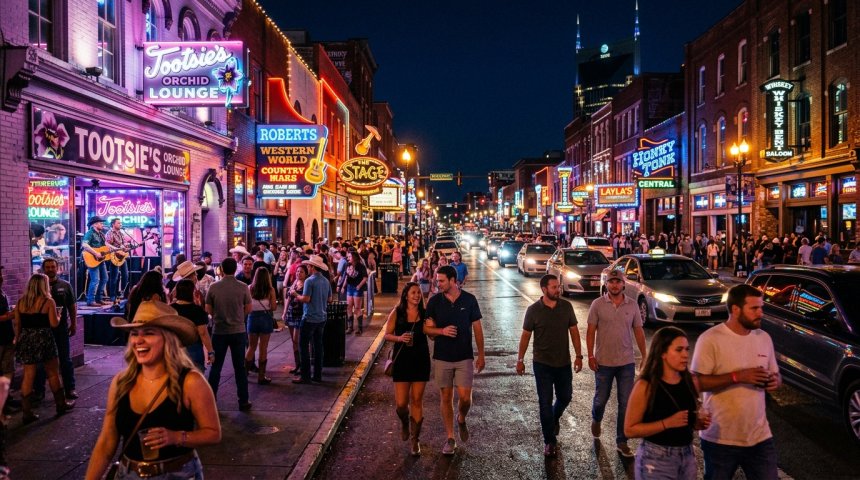
In 2026, travel trends indicate that more than 17 million visitors will follow the sound of live music to the banks of the Cumberland River. This city, known to the world as Music City, serves as a bridge between a storied musical past and a thriving, modern creative economy. Whether you are stepping into a century-old honky tonk on Lower Broadway or watching the sunset from the pedestrian bridge that spans the river, the essence of Nashville remains defined by its sound, its Southern hospitality, and its profound connection to the art of the song.
The Heart of Music City: Nashville in 2026
Nashville is a city that feels like a small town with a global voice. Despite being a powerhouse for healthcare, higher education, and the music industry, its character remains rooted in warmth and informality. In 2026, the city has balanced rapid growth with careful preservation of its historic core, from the Victorian storefronts of Germantown to the brick avenues of downtown. The AT&T "Batman" Building may anchor the skyline, but the soul of the city still lives at street level—in the murals, the meat-and-three counters, and the music venues.
The city's geography is dominated by the Cumberland River, which curves through downtown and acts as a lively divide between the entertainment district and the rising East Bank. Visitors often find that the best way to understand Nashville is to spend a morning walking through Bicentennial Capitol Mall State Park, with its sweeping view of the State Capitol, before heading toward the neon glow of Broadway. Lower Broadway—the famous "Honky Tonk Highway"—remains the city's most iconic attraction, drawing millions who wish to hear live bands play from noon until late into the night, every single day of the year.
The Sound That Built the City: Live Music on Every Corner
Nashville's musical identity is not a marketing slogan; it is an economy, a history, and a daily practice. The Ryman Auditorium, the "Mother Church of Country Music" and former home of the Grand Ole Opry, still hosts unforgettable shows beneath its wooden pews, while the Grand Ole Opry itself continues its century-long broadcast tradition at the Opry House. The Country Music Hall of Fame and Museum anchors the south end of downtown, and nearby RCA Studio B on Music Row offers a pilgrimage into the room where Elvis, Dolly, and the Everly Brothers made records that shaped the world.
But the true magic of Nashville in 2026 is the breadth of its sound. Beyond country, the city pulses with rock, Americana, bluegrass, gospel, hip-hop, and indie. The Station Inn remains the world's most revered bluegrass room, the Bluebird Cafe offers songwriters in the round at a volume so quiet you can hear a lyric being born, and the honky tonks of Broadway deliver three stages of twang in a single block. The rule of the road is simple: live music is not something you schedule in Nashville; it is something you walk through.
The Cultural Fabric of Nashville
The culture of Nashville is a unique blend of old-world Southern sensibilities and forward-thinking creative energy. The region is home to prestigious institutions such as Vanderbilt University, Belmont University, Fisk University, and Tennessee State University. These institutions don't just provide education; they drive the economy, fuel the arts, and shape the city's identity as a center of research, medicine, and music business.
Beyond academia, the arts scene has evolved into one of the most vibrant in the South. The Frist Art Museum brings world-class exhibitions to a landmark Art Deco building, the National Museum of African American Music tells a story that is central to the American songbook, and the full-scale replica of the Parthenon in Centennial Park—complete with its towering statue of Athena—remains one of the most singular monuments in the country. At Cheekwood Estate & Gardens, art and horticulture merge across fifty-five acres of woodland, while the Schermerhorn Symphony Center delivers acoustics ranked among the finest in the world.
The Culinary Scene: Hot Chicken and Beyond
The culinary scene in Nashville has evolved into one of the most exciting in the country. While traditional staples like hot chicken, meat-and-three plates, and buttermilk biscuits remain the backbone of the city's food identity, the modern dining scene is incredibly diverse. International influences have made their way into the local cuisine, with Kurdish, Vietnamese, Mexican, and Somali communities shaping a food landscape that surprises first-time visitors who arrive expecting only barbecue.
Hot chicken, born in Nashville nearly a century ago, remains the essential rite of passage—whether at the historic counter of Prince's, the beloved Hattie B's, or the no-frills Bolton's on the north side. For lunch, the meat-and-three tradition lives on at places like Arnold's Country Kitchen, where the cafeteria line feels like a family reunion. Biscuits anchor breakfast at the legendary Loveless Cafe and the ever-popular Biscuit Love, and no visit is complete without a Goo Goo Cluster, the candy that Nashville invented and never stopped loving. And when the sun goes down, Tennessee whiskey and a new wave of craft cocktails take over, because in Music City, even the drinks have a soundtrack.
Exploring the Neighborhoods: From Germantown to East Nashville
Nashville's neighborhoods are distinct, each with its own personality and history. Germantown, with its Victorian homes and brick sidewalks, is often cited as one of the most beautiful historic districts in the South, and its Saturday farmers market is a weekend ritual. Nearby, the Gulch offers a contrast with its glass towers and murals, including the famous winged "What Lifts You" wall that has become a symbol of the city's optimism.
To the south, 12 South charms with boutiques, coffee shops, and the "I Believe in Nashville" mural, while East Nashville—centered on the Five Points corner—remains the city's indie heart, full of vintage stores, dive bars, and young songwriters. Printer's Alley carries the memory of the city's jazz and blues past, and West End blends stately homes with the energy of the university corridors. For the visitor, the advice is simple: spend one day downtown, then give the neighborhoods the next. That is where Nashville actually lives.
Seasonal Rhythms: Why Timing Matters
The experience of visiting Nashville varies drastically by season. Spring is beloved, with dogwoods blooming, patios reopening, and festival season building toward June's CMA Fest, when the entire downtown becomes a stage. Summer is hot and humid, but the calendar is full of concerts, rooftop shows, and baseball at the ballpark. However, autumn is widely considered the best time to visit: the heat breaks, the light turns golden, and AmericanaFest fills the city's listening rooms with songwriters from around the world.
Winter in Nashville is mild by northern standards but carries its own charm. The holiday season transforms the city, with the spectacular ICE! display and million-light atriums at the Gaylord Opryland Resort, and New Year's Eve on Broadway is a celebration that rivals any in the country. Spring then brings the return of life to the parks and greenways, making it an excellent time for hiking and cycling before the festival crowds arrive.
Day Trips: Franklin, Leiper's Fork, and the Whiskey Trail
Just a short drive south of Nashville lies Franklin, a town that feels like a step back in time. Its Main Street is lined with brick storefronts and independent shops, and the Civil War history of the Battle of Franklin is interpreted with honesty and depth at sites like Carnton and the Carter House. A few minutes further, the artist village of Leiper's Fork offers galleries, antiques, and a slow, rural elegance that has drawn musicians and painters for generations, while nearby Arrington Vineyards turns rolling Middle Tennessee farmland into wine country.
For many travelers, the ultimate day trip is the Tennessee Whiskey Trail. The most famous stop is the Jack Daniel's Distillery in Lynchburg, where the charcoal-mellowing process that defines Tennessee whiskey is demonstrated in the very hollow where it began. Closer to the city, a new generation of urban distilleries—from Nelson's Green Brier to Old Dominick—offers tours and tastings that connect the craft of today with the legacy of the past. And for those who simply want to drive, the northern end of the Natchez Trace Parkway begins just outside the city, offering one of the most scenic slow roads in the American South.
The Outdoors: Radnor Lake, Percy Priest, and the Cumberland
Nashville's identity is musical, but its geography is surprisingly green. Radnor Lake State Park, protected for decades, remains the city's most treasured natural escape, where trails wind past deer, herons, and barred owls just minutes from Midtown. Percy Priest Lake offers boating, paddleboarding, and sunset coves, and the Shelby Bottoms Greenway traces the Cumberland River through wetlands and meadows on the east side of town.
In 2026, environmental conservation efforts have become a primary focus for the city, ensuring that these green spaces remain protected as growth continues. Kayaking the Cumberland at golden hour, with the skyline rising ahead, has become one of the defining Nashville experiences—a reminder that Music City is also a river city.
Growth and Balance in 2026
As we look at the state of the city in 2026, it is impossible to ignore the pressures of its success. Traffic, housing costs, and the pace of development are no longer distant concerns; they are realities that local planners are actively addressing. The transformation of the East Bank into a new mixed-use riverfront district is the largest redevelopment in the city's history, and its outcome will shape Nashville for a century.
There is also a deeper question that Nashvillians ask themselves constantly: how does a city keep its soul while the world moves in? The answer, so far, has been community support for the small venues, rehearsal spaces, and affordable neighborhoods that allow working musicians to survive. For the visitor, this translates into a simple ethic: spend your evenings and your dollars where the local music lives, because that is the ecosystem the whole city depends on.
The Future of Music City Tourism
As we move deeper into 2026, the way people experience Nashville is changing. The expansion of Nashville International Airport makes the city more reachable than ever, digital guides and self-guided music history walks are becoming common, and augmented reality tours allow visitors to overlay historic performances onto modern streets. Yet the core of the experience remains unchanged: the smell of barbecue on a side street, the crack of a snare drum through an open door, and the sight of the river glowing beneath the bridge at dusk.
Tourism boards are increasingly focusing on "slow travel," encouraging visitors to spend more time in fewer locations. This approach not only provides a more meaningful experience for the traveler but also reduces the strain on local infrastructure and helps distribute the economic benefits of tourism into the neighborhoods and small businesses that give Nashville its character.
A Balanced View of Music City Life
Living in Nashville is not without its challenges. The growth is fast, the summers are humid, and the cost of living has climbed. However, for those who choose to call this city home, the trade-offs are worth it. There is a deep sense of community and an unmistakable friendliness—strangers talk to you in line, and "hey y'all" is not a performance but a default.
For the visitor, this translates into a warm welcome and an authentic experience. Whether you are staying in a downtown hotel, a Germantown inn, or a bungalow in East Nashville, you will find that the people of Nashville are proud of their home and happy to share it with those who take the time to listen.
Conclusion
Nashville, Tennessee represents a unique confluence of history, music, and momentum. In 2026, the city stands as a testament to the idea that growth does not have to come at the expense of the past. By carefully balancing the preservation of its musical roots with the energy of a modern, forward-looking city, Nashville continues to be a compelling destination for travelers and a vibrant home for its residents.
The sound of the streets, the depth of the history, and the warmth of the community create an experience that is both grounding and inspiring. Whether you are standing in the Ryman as the lights go down, waiting on hot chicken at a north-side counter, or watching the river from the pedestrian bridge at dusk, you are participating in a story that has been unfolding for generations—and one that continues to evolve with every song.
FAQs
What is the best time of year to visit Nashville? The best times to visit are spring (April to May) and autumn (September to October), when the weather is mild and the festival calendar is rich. Summer is excellent for those who want CMA Fest and rooftop concerts despite the heat, while winter offers holiday lights at Opryland and smaller crowds for museum-going.
How do I get around Nashville? Downtown is very walkable, and the WeGo public transit system, bike share, and rideshares cover the core well. For day trips to Franklin, Lynchburg, or the lakes, renting a car is highly recommended. Nashville International Airport (BNA) is a major hub, making the city easy to reach from almost anywhere in the country.
Is Nashville suitable for families with children? Absolutely. The Adventure Science Center, the Nashville Zoo at Grassmere, Cheekwood's gardens, and the Parthenon are all family favorites. Older kids love the energy of Broadway, a kayak trip on the Cumberland, and even an Opry show, which many families remember as the highlight of the visit.
What are the must-see music attractions? The Ryman Auditorium, the Grand Ole Opry, the Country Music Hall of Fame and Museum, and RCA Studio B form the essential circuit. Add a songwriter night at the Bluebird Cafe (book well ahead), a bluegrass set at the Station Inn, and at least one afternoon of honky tonks on Lower Broadway.
What foods should I not miss? Hot chicken is non-negotiable, followed by a meat-and-three lunch, buttermilk biscuits, Southern barbecue, and a Goo Goo Cluster for dessert. Round it out with Tennessee whiskey or a local craft beer, and you will have eaten the story of the city.
How many days do I need in Nashville? Three to four days allows you to cover downtown, the major music sites, a few neighborhoods, and an evening of live shows. Add one or two more days if you want day trips to Franklin, Leiper's Fork, or the Jack Daniel's Distillery—the slower pace is where the region's charm fully reveals itself.
Beyond Broadway: The Songwriter Culture
While Broadway provides the volume, the songwriter culture provides the depth. Nashville is one of the few cities on Earth where writing songs is a daily trade, and its listening rooms honor that craft. In venues across town, three or four writers take turns performing the songs you know—often written for other artists—alongside the ones that got away, telling the stories behind each. This tradition, perfected at the Bluebird Cafe and carried into rooms from the Listening Room to the Commodore, is the most intimate way to understand why the world's songs are so often written here.
For the visitor, the insight is simple: the most meaningful musical moment of a Nashville trip is rarely the loudest one. It is the quiet room, the single acoustic guitar, and the line that lands like it was written about you.
The Whiskey Heritage of Tennessee
The history of Nashville is, in part, a history of the still. Tennessee whiskey is defined by the Lincoln County Process—charcoal mellowing before barrel aging—a tradition that predates the city's rise as a music capital. In 2026, the urban distillery scene has flourished, with historic brands revived and new makers experimenting with grains grown in Middle Tennessee.
This legacy is not just about the product; it is about the culture of the table and the porch, of slow evenings and long stories. Whether you tour a century-old hollow in Lynchburg or taste a small-batch pour on a downtown distillery tour, you are engaging with one of the oldest crafts in the state.
The Role of the Arts in Music City's Identity
Nashville has long been a muse beyond music. The quality of its light, its river, and its streets has drawn painters, photographers, and filmmakers, and the city has grown into a significant production hub for film and television. Murals have become a public gallery, from 12 South to the Gulch, and theater at TPAC brings national tours and local premieres to the heart of downtown.
This artistic legacy is not a relic of the past; it is a living force that shapes the city's social fabric and continues to attract creative minds from around the globe. In 2026, the phrase "Music City" increasingly means "makers' city"—a place where the song is still first among equals, but no longer alone.
Sustainable Travel in 2026: A Final Word
As you plan your journey through Nashville, consider the impact of your visit. The city's music is delicate in the sense that it depends on people—working musicians, venue owners, bartenders, and sound engineers. Tip the band. Buy the album at the merch table. Eat at the independent counters and shop the neighborhood stores. By choosing to travel thoughtfully, supporting local businesses, and respecting the venues that protect the city's sound, you contribute to the longevity of these remarkable places.
In 2026, the "Nashville experience" is defined by a renewed appreciation for the slow, deliberate enjoyment of the moment. It is found in the time spent listening to a writer tell the story behind a chorus, the conversation shared with a bartender who knows every band on the block, and the moment you realize that the music of this place is not behind glass, but alive in the very rooms, rivers, and streets that surround you. Nashville invites you not just to observe, but to engage—to become a temporary part of a story that, while generations old, remains as vibrant and relevant as the next song on the stage. Enjoy the journey, breathe in the evening air off the Cumberland, and take the time to notice the details; in Music City, the true magic is often found in the quietest verse.
Share
What's Your Reaction?
 Like
0
Like
0
 Dislike
0
Dislike
0
 Love
0
Love
0
 Funny
0
Funny
0
 Angry
0
Angry
0
 Sad
0
Sad
0
 Wow
0
Wow
0