Solar Roof Investment: 5 Measurable Benefits for Long-Term ROI
Explore five quantified benefits of solar roof investment, from electricity savings and backup power to property value, emissions reduction, and long-term system durability.

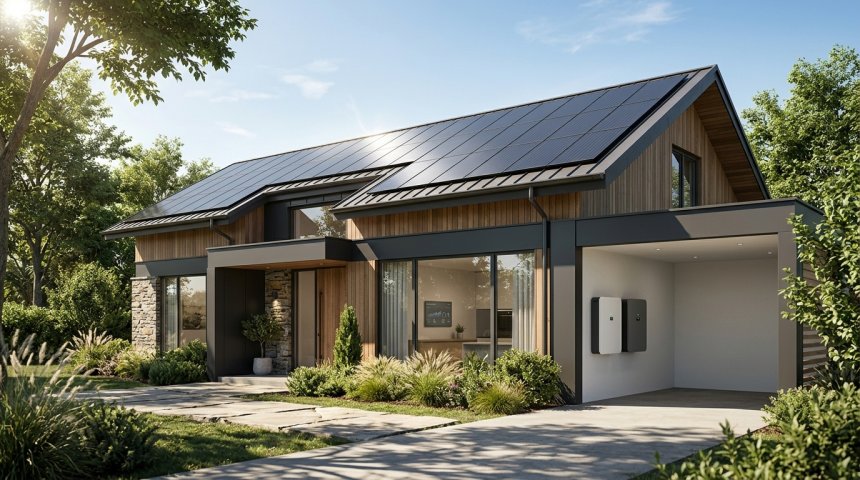
The solar roof represents a fundamental convergence of building envelope technology and distributed energy generation that transcends traditional rooftop solar panel installations. Where conventional photovoltaic systems mount atop existing roofing materials as additive infrastructure, integrated solar roofs replace the roof itself—simultaneously serving as weather barrier, architectural element, and power plant within a unified system. This integration isn't merely aesthetic refinement; it creates distinct technological, economic, and operational advantages that reshape the investment calculus for homeowners, commercial property owners, and institutional facilities evaluating renewable energy adoption. Yet despite growing market maturity and declining costs, solar roof investment decisions remain clouded by marketing hyperbole, incomplete comparisons to traditional solar, and insufficient understanding of the specific conditions under which integrated systems deliver superior returns versus circumstances where conventional panels remain optimal.
This guide cuts through promotional noise providing rigorous, quantified analysis of the five most significant benefits of solar roof investment: long-term energy cost elimination and price hedging, grid independence and resilience enhancement, property value appreciation and market differentiation, environmental impact quantification beyond carbon platitudes, and technological durability exceeding conventional roofing lifespans. Each benefit receives examination through multiple lenses—technical mechanisms enabling the benefit, economic models quantifying its value, contextual factors determining its magnitude, risk considerations affecting its realization, and comparative analysis against alternative approaches. Whether you're a homeowner evaluating residential solar roof options, a facility manager assessing commercial viability, a real estate professional advising clients on green property features, or a technology enthusiast understanding integrated photovoltaic evolution, this analysis delivers the evidence-based perspective needed to make informed investment decisions grounded in engineering reality rather than aspirational marketing.
Let's begin by establishing what distinguishes solar roofs from conventional solar installations—because this distinction underpins every benefit discussed subsequently.
Chapter 1: Understanding Solar Roof Technology — Integration as Foundation
Before examining benefits, we must understand the technological platform generating them. Solar roofs aren't monolithic; they encompass multiple architectures with different performance characteristics, cost structures, and benefit profiles.
Integrated Photovoltaic Roofing Technologies
Solar Shingle and Tile Systems: Individual units mimicking conventional roofing materials (asphalt shingles, clay tiles, slate) while embedding photovoltaic cells. Tesla Solar Roof, GAF Timberline Solar, CertainTeed Apollo II, and Forward Solar represent this category. Active solar units interconnect electrically while inactive units provide aesthetic continuity and weather protection at lower cost. Installation integrates with standard roofing practices enabling contractor familiarity. Efficiency typically 15-22% depending on cell technology and thermal management. Aesthetic integration is primary advantage; efficiency and cost per watt often trail conventional panels.
Solar Metal Roofing: Standing seam or corrugated metal roofing with integrated thin-film or crystalline PV laminates. Uni-Solar, SunTegra, and certain commercial manufacturers offer this approach. Metal substrate provides superior thermal dissipation improving efficiency versus shingle-integrated systems. Durability exceeds asphalt-based products with 40-70 year lifespan potential. Commercial and industrial applications favor this architecture for large roof areas requiring both weather protection and generation. Residential adoption limited by aesthetic preferences and higher upfront costs.
Building-Integrated Photovoltaics (BIPV) Facades and Skylights: PV integration extending beyond roof planes into vertical facades, skylights, canopies, and carports. Onyx Solar, Mitrex, and specialized BIPV manufacturers serve this niche. Architectural flexibility enables solar integration where traditional roof orientation is suboptimal. Efficiency varies widely based on orientation, glazing integration, and thermal management. Premium pricing reflects customization and architectural integration complexity. Best suited for new construction or major renovation where design intent incorporates solar from inception.
Conventional Rack-Mounted Panels (Comparative Baseline): Standard crystalline silicon modules mounted on racking above existing roof. Not integrated but serves as benchmark for cost, efficiency, and performance comparison. Efficiency 20-24% for premium modules. Lowest cost per watt due to manufacturing scale and installation simplicity. Aesthetic impact highest among options. Roof replacement timing independent of solar installation creating potential coordination inefficiencies.
Key Technological Differentiators Enabling Benefits
Unified Weather Barrier Function: Integrated systems eliminate the dual-layer redundancy of conventional roof plus solar array. Single system provides waterproofing, wind resistance, fire rating, and energy generation simultaneously. This unification reduces material complexity, installation labor overlap, and long-term maintenance interfaces where failures typically occur. Benefit foundation: reduced lifecycle complexity enabling durability and cost advantages.
Thermal Management Integration: Roof-integrated PV operates at different thermal regimes than rack-mounted panels. Direct roof attachment can increase operating temperatures reducing efficiency unless specifically engineered with ventilation channels, reflective backings, or phase-change materials. Advanced integrated systems incorporate passive or active cooling maintaining efficiency closer to conventional panel performance. Thermal management quality significantly affects actual energy yield and longevity; not all integrated systems manage heat equally.
Structural Load Distribution: Integrated systems distribute weight across roof deck uniformly versus concentrated point loads from rack mounts. This distribution can reduce structural reinforcement requirements in new construction or enable solar adoption on structures unable to support rack-mounted arrays. Structural compatibility expands viable application scope beyond conventional solar limitations.
Aesthetic Continuity and Architectural Integration: Visual integration eliminates the "appliance on roof" appearance of conventional panels. This isn't merely cosmetic preference; it affects property valuation, HOA approval feasibility, historic district compliance, and neighborhood acceptance. Aesthetic integration transforms solar from visible utility infrastructure to invisible building component enabling adoption in contexts where conventional panels face resistance.
Key Insight: For site-specific solar energy production estimates and financial return modeling essential for quantifying benefits accurately, the NREL PVWatts Solar Energy Production Calculator provides U.S. Department of Energy validated simulation incorporating local weather data, system configuration parameters, and loss factors enabling evidence-based investment analysis.
Benefit 1: Long-Term Energy Cost Elimination and Price Hedging
The most direct and quantifiable solar roof benefit is displacement of purchased electricity with self-generated power, insulating owners from utility rate volatility and providing predictable energy costs over decades.
Energy Production Economics
Site-Specific Generation Modeling: Solar roof energy yield depends on geographic location, roof orientation, tilt angle, shading profile, system size, and module efficiency. NREL PVWatts or equivalent tools model annual production accounting for local weather patterns, temperature coefficients, soiling losses, and system degradation. Typical U.S. residential solar roof (10-15 kW) generates 12,000-22,000 kWh annually depending on location. Southwest desert sites exceed 20,000 kWh; Pacific Northwest sites may produce 10,000-12,000 kWh. Accurate modeling prevents overestimation driving disappointing returns or underestimation missing viable opportunities.
Utility Rate Displacement Value: Electricity savings equal generated kWh multiplied by avoided utility rate. Average U.S. residential rate ~$0.16/kWh but varies enormously: California $0.30+, Northeast $0.22-0.28, Southeast $0.12-0.15, Midwest $0.10-0.14. Higher-rate regions achieve faster payback and greater lifetime savings. Time-of-use rates amplify value when solar generation aligns with peak pricing periods; battery storage further optimizes TOU arbitrage. Net metering policies critically affect compensation for excess generation; favorable net metering credits full retail rate while unfavorable policies compensate at wholesale rates dramatically reducing economics. Policy research is prerequisite to accurate financial modeling.
Rate Escalation Hedging: Utility rates historically escalate 3-5% annually above inflation driven by infrastructure investment, fuel costs, regulatory mandates, and grid modernization. Solar roof locks in energy cost at installation capital expense plus minimal O&M, effectively hedging against future rate increases. Over 25-year system life, 3.5% annual escalation compounds to 2.4x rate multiplier; solar owner avoids this compounding entirely. Hedging value increases with rate volatility and escalation uncertainty; regions with unstable utility finances or aggressive decarbonization mandates carry higher hedge value. Financial models should incorporate conservative escalation assumptions (2-3%) with sensitivity analysis showing outcomes across escalation scenarios.
Lifecycle Cost Comparison Versus Conventional Alternatives
Solar Roof vs. Conventional Roof + Panels: Integrated solar roof combines two capital expenditures (roof replacement + solar installation) into one coordinated project. Separate roof replacement ($15,000-$30,000) plus conventional solar ($20,000-$35,000) totals $35,000-$65,000 before incentives. Integrated solar roof typically $40,000-$70,000 before incentives representing modest premium for integration benefits. When roof replacement is already needed, incremental solar roof cost versus roof-only replacement captures true solar investment; comparing solar roof total cost to solar-only cost misrepresents economics. Timing coordination matters enormously; installing solar roof when roof needs replacement maximizes value versus premature roof tear-off or delayed solar installation.
Levelized Cost of Energy (LCOE) Analysis: LCOE calculates lifetime cost per kWh generated including capital, financing, O&M, and degradation. Residential solar roof LCOE typically $0.06-$0.12/kWh depending on location, system cost, financing terms, and production. Compare against projected utility LCOE over same period incorporating rate escalation. Solar roof achieves grid parity (LCOE ≤ utility rate) in most U.S. markets today; grid superiority (LCOE significantly below utility) in high-rate regions. LCOE comparison provides apples-to-apples metric transcending nominal price differences.
Financing Impact on Realized Savings: Cash purchase maximizes lifetime savings but requires upfront capital. Solar loans (5-7% interest, 10-20 year terms) enable zero-down adoption with monthly payments often below displaced utility bills; loan interest reduces net savings versus cash but preserves liquidity. Leases and PPAs eliminate upfront cost but sacrifice tax incentives and long-term savings; third-party ownership captures majority of economic benefit. Financing choice dramatically affects realized savings and payback period; model multiple scenarios reflecting your capital constraints and return preferences. Federal ITC (30% through 2032) applies to owned systems reducing effective cost; state and utility incentives vary locally.
Quantified Benefit Illustration
Scenario: 12 kW solar roof in Sacramento, CA replacing 20-year-old asphalt roof. System cost $55,000 before incentives. Federal ITC $16,500. Net cost $38,500. Annual production 17,500 kWh. Utility rate $0.32/kWh escalating 4% annually.
- Year 1 savings: $5,600
- Year 10 cumulative savings: $78,000 (exceeds net cost by Year 7)
- 25-year cumulative savings: $245,000
- LCOE: $0.07/kWh vs. projected utility LCOE $0.48/kWh
- Versus separate roof ($22,000) + conventional solar ($28,000): Solar roof premium $5,000 offset by integration benefits and avoided future roof replacement
This scenario illustrates high-rate region economics; low-rate regions show longer payback but still positive lifetime returns when roof replacement timing aligns. Individual results vary; always model your specific situation.
Benefit 2: Grid Independence and Resilience Enhancement
Beyond economics, solar roofs paired with battery storage provide operational resilience increasingly valuable amid grid instability, extreme weather events, and evolving utility reliability challenges.
Energy Autonomy Architecture
Self-Consumption Optimization: Without storage, solar roofs export excess daytime generation and import grid power at night achieving typical self-consumption 30-50%. Battery storage increases self-consumption to 70-95% by time-shifting solar generation to evening and nighttime loads. Self-consumption optimization reduces grid dependency and maximizes value from each generated kWh especially under TOU rates or unfavorable net metering. System sizing should balance generation, consumption patterns, and storage capacity for optimal autonomy; oversized generation without adequate storage wastes export value while undersized generation leaves import dependency unaddressed.
Backup Power Capability: Battery-integrated solar roofs provide backup power during grid outages. Critical load panels isolate essential circuits (refrigeration, lighting, communications, medical equipment, HVAC) from non-essential loads extending backup duration. Typical 10-15 kWh battery supports critical loads 12-24 hours; expanded storage extends to multiple days. Solar recharging during daylight extends backup indefinitely given sufficient sun. Backup capability transforms solar roof from economic asset to safety infrastructure particularly valuable in outage-prone regions (California wildfire PSPS events, Texas winter storms, Florida hurricane seasons, Northeast ice storms).
Grid Services and Virtual Power Plant Participation: Emerging utility programs compensate distributed energy resources for grid services: demand response, frequency regulation, voltage support, and capacity provision. Aggregated solar+battery fleets form virtual power plants providing utility-scale services from distributed assets. Compensation varies by program but can generate $500-$2,000 annually per system. Participation requires compatible equipment, communication infrastructure, and utility program availability. Revenue stream improves solar roof economics while contributing to grid stability. Program landscape evolving rapidly; monitor local utility offerings for emerging opportunities.
Resilience Value Quantification
Outage Cost Avoidance: Quantify historical outage frequency and duration for your location using utility reliability reports and FEMA data. Assign monetary value to outage impacts: spoiled food ($200-$500 per event), business interruption ($500-$5,000+/day for home businesses), temporary relocation costs ($150-$300/night), medical device backup power, and intangible comfort/security value. Expected annual outage cost = probability × impact. Over 25-year system life, cumulative avoided outage cost can reach $5,000-$50,000+ depending on location and vulnerability. High-outage regions justify battery investment on resilience grounds alone independent of TOU arbitrage economics.
Insurance Premium Reduction Potential: Some insurers offer premium discounts for homes with backup power systems recognizing reduced claim risk from spoilage, pipe freezing, and sump pump failure during outages. Discounts typically 5-15% of homeowner premium translating to $100-$300 annually. Not universally available but worth investigating. Documentation of system capability and professional installation may be required. Insurance value supplements but doesn't drive resilience investment; primary value remains operational continuity.
Energy Security During Supply Disruptions: Geopolitical events, fuel supply constraints, and infrastructure failures create episodic energy price spikes and supply disruptions. Solar+battery systems provide insulation from these macro-level vulnerabilities. While difficult to quantify probabilistically, energy security carries option value analogous to insurance; you hope never to need it but value its availability. Security value increases with grid fragility perception and personal risk tolerance; subjective but legitimate investment consideration.
Technology Considerations for Resilience
Battery Chemistry Selection: Lithium iron phosphate (LFP) dominates residential storage offering superior cycle life (6,000+ cycles), thermal stability, and safety versus nickel-manganese-cobalt (NMC). LFP trade-offs include slightly lower energy density and higher upfront cost per kWh. For resilience-focused applications prioritizing longevity and safety over space constraints, LFP is generally preferred. Sodium-ion and other emerging chemistries may offer future alternatives but lack current market maturity. Chemistry selection affects system lifespan, replacement timing, and total cost of ownership.
System Sizing for Resilience vs. Economics: Economic optimization sizes battery for TOU arbitrage maximizing daily cycling revenue. Resilience optimization sizes for extended backup duration maximizing outage survivability. These objectives sometimes conflict; resilience sizing typically larger than pure economic optimum. Multi-objective optimization balances competing goals based on individual priorities. Conduct separate analyses for economic and resilience sizing then select compromise reflecting your risk tolerance and value hierarchy.
Islanding and Interconnection Compliance: Backup operation requires proper islanding capability isolating home electrical system from grid during outages preventing backfeed endangering utility workers. UL 1741 SA and IEEE 1547-2018 standards govern safe islanding. Permitting and inspection verify compliance. Non-compliant installations pose safety risks and may void insurance coverage. Professional installation by certified electricians ensures compliance; DIY backup wiring carries significant safety and legal risks.
For detailed technical specifications, warranty coverage, and performance guarantees of leading integrated solar roof systems, Tesla Solar Roof Product Specifications and Warranty Documentation (nofollow) provides comprehensive manufacturer documentation illustrating current technology benchmarks and long-term performance commitments informing resilience planning.
Benefit 3: Property Value Appreciation and Market Differentiation
Solar roofs enhance property value through multiple mechanisms extending beyond simple energy cost savings to encompass aesthetic appeal, modernization signaling, and buyer preference shifts.
Empirical Valuation Evidence
Hedonic Pricing Studies: Multiple peer-reviewed studies quantify solar property premiums. Lawrence Berkeley National Lab research found average premium $4/watt of installed solar capacity translating to $15,000-$25,000 for typical residential systems. Zillow analysis identified 4.1% sale price premium for homes with solar versus comparable homes without. Premium varies by market, system age, ownership structure (owned > leased), and local electricity rates. Integrated solar roofs command additional premium over conventional panels due to aesthetic integration and roof replacement value embedded in system. Premium quantification should reference local comparable sales rather than national averages; regional variation significant.
Appraisal Methodology Evolution: Appraisers increasingly recognize solar value through income capitalization (discounted future energy savings), cost approach (system replacement cost less depreciation), and sales comparison (paired sales analysis). Fannie Mae and Freddie Mac appraisal guidelines explicitly address solar valuation. However, appraiser competency varies; some undervalue solar due to unfamiliarity or lack of local comparables. Provide appraiser with system documentation, production history, utility bill comparisons, and relevant studies supporting valuation. Third-party solar appraisal specialists available for contested valuations during sale or refinance.
Leased vs. Owned System Valuation Differential: Owned solar systems transfer with property adding value. Leased systems create complications: buyer must assume lease obligations, qualify for lease transfer, or negotiate buyout. Many buyers view leases as liabilities reducing property attractiveness despite zero-cost energy. Owned systems consistently achieve higher premiums and faster sales than leased equivalents. If considering solar roof investment with future sale in mind, ownership structure significantly affects realized value. Lease-to-own conversion options exist but involve transaction costs and potential prepayment penalties.
Market Differentiation Mechanisms
Aesthetic Premium for Integrated Systems: Buyer surveys consistently show preference for integrated solar aesthetics versus visible rack-mounted panels. This preference translates to willingness-to-pay premiums particularly in design-conscious markets, historic districts, and luxury segments. Integrated solar roofs signal architectural intentionality versus utilitarian add-on. Aesthetic premium difficult to isolate from overall solar premium but estimated at 1-3% additional value for well-executed integration versus conventional panels. Premium magnitude depends on neighborhood context and buyer demographics; design-sensitive buyers pay more for integration.
Modernization and Quality Signaling: Solar roof signals recent capital investment, technological sophistication, and owner commitment to property quality. Buyers infer broader maintenance diligence and upgrade likelihood from visible investments. This signaling effect benefits properties where other upgrades are less visible (HVAC, insulation, plumbing). Signaling value particularly relevant for older properties where solar roof represents obvious modernization versus newer construction where baseline expectations already include modern systems.
Future-Proofing Perception: Buyers increasingly factor climate resilience, energy independence, and regulatory trajectory into purchase decisions. Solar roof addresses multiple future-proofing concerns simultaneously: decarbonization compliance anticipation, energy cost protection, and resilience capability. Future-proofing value grows as climate policy tightens, grid reliability concerns increase, and buyer generational shift brings sustainability-native demographics into market dominance. Current premiums may underestimate future value as these trends accelerate.
Contextual Factors Affecting Value Realization
Market Maturity and Buyer Education: Solar value premiums correlate with market maturity and buyer familiarity. Established solar markets (California, Arizona, New Jersey, Massachusetts) show consistent premiums supported by abundant comparables and educated buyers. Emerging markets show more variable premiums reflecting appraiser unfamiliarity and buyer skepticism. Seller education efforts (documentation provision, buyer resource packages) help bridge knowledge gaps in emerging markets accelerating premium realization.
Roof Age and Condition Interaction: Solar roof value includes remaining roof life. New solar roof on property needing roof replacement captures full combined value. Solar roof installed over aging underlying structure creates ambiguity about remaining service life potentially reducing premium. Integrated systems where solar IS the roof avoid this ambiguity; conventional panels on old roofs raise buyer concerns about near-term roof replacement requiring panel removal/reinstallation. Roof condition assessment integral to solar value evaluation.
HOA and Regulatory Environment: Restrictive HOAs historically suppressed solar adoption and value. Solar rights laws in many states limit HOA restriction authority but don't eliminate all barriers. Properties in HOAs with explicit solar approval or established solar precedents realize premiums more reliably than those in restrictive or ambiguous HOA environments. Research HOA covenants and approval processes before investment; post-installation disputes destroy value and create sale obstacles. Favorable regulatory environments (strong net metering, streamlined permitting, solar rights protections) support value realization; hostile environments suppress it.
Benefit 4: Environmental Impact Quantification Beyond Carbon Platitudes
Environmental benefits motivate many solar adopters but require rigorous quantification to inform investment decisions and communicate genuine impact versus greenwashing.
Carbon Displacement Measurement
Generation-Based Emissions Avoidance: Solar generation displaces grid electricity with emissions intensity varying by regional generation mix. EPA AVERT tool and NREL PVWatts estimate CO₂ avoidance based on marginal emission rates for your specific grid region. Typical U.S. solar roof avoids 8-15 metric tons CO₂ annually equivalent to planting 150-300 trees yearly or removing 2-3 gasoline cars from roads. Coal-heavy grids (Midwest, Mountain West) achieve higher displacement per kWh than hydro/nuclear-heavy grids (Pacific Northwest, Northeast). Quantification should use region-specific emission factors not national averages.
Embodied Carbon Payback Period: Solar roof manufacturing, transportation, and installation generate embodied carbon debt repaid through clean generation. Energy payback time for modern crystalline silicon PV ranges 1-3 years depending on manufacturing location, cell efficiency, and installation site irradiance. Integrated solar roofs may have slightly longer payback due to additional manufacturing complexity versus conventional panels but still achieve carbon positivity within 3-5 years typically. Over 25-30 year lifespan, solar roof generates 8-15x more clean energy than embodied in its creation. Embodied carbon awareness prevents overstating net environmental benefit while confirming substantial positive impact after payback period.
Lifecycle Assessment Completeness: Comprehensive LCA includes raw material extraction, manufacturing, transportation, installation, operation, and end-of-life recycling/disposal. Modern LCAs show net positive environmental impact across multiple categories (global warming potential, acidification, eutrophication, resource depletion) after payback periods. Recycling infrastructure for PV continues improving with 90%+ material recovery achievable through specialized recyclers. End-of-life planning should be part of investment decision; responsible recycling commitments distinguish manufacturers and installers.
Broader Environmental Co-Benefits
Water Conservation: Thermoelectric power generation consumes enormous water quantities for cooling. Solar PV uses negligible operational water avoiding 200-500 gallons per MWh versus conventional generation. In water-stressed regions (Southwest, Great Plains), water conservation represents significant environmental co-benefit alongside carbon reduction. Water value increasingly recognized in policy and market mechanisms; solar's water advantage gains monetization potential as water scarcity intensifies.
Air Quality Improvement: Displacing fossil generation reduces SO₂, NOₓ, PM2.5, and mercury emissions contributing to respiratory illness, ecosystem damage, and healthcare costs. Health co-benefits of solar deployment estimated at $0.02-$0.08/kWh in addition to carbon value. Urban and downwind communities benefit disproportionately from air quality improvements. Health co-benefits rarely captured in private investment returns but represent genuine societal value supporting policy incentives and community acceptance.
Land Use Efficiency: Rooftop solar utilizes already-developed land avoiding habitat conversion associated with utility-scale solar farms. Integrated solar roofs maximize dual-use efficiency combining shelter and generation in same footprint. Land-constrained regions and ecologically sensitive areas particularly benefit from rooftop versus ground-mount solar. Land use efficiency increasingly relevant as solar deployment scales and land competition intensifies.
Communicating Environmental Impact Credibly
Third-Party Verification: Self-reported environmental claims lack credibility. Third-party certifications (Green-e, Cradle to Cradle, EPDs) validate environmental performance through independent assessment. Request Environmental Product Declarations documenting lifecycle impacts. Verified claims withstand scrutiny; unverified claims invite skepticism and greenwashing accusations.
Avoidance of Double-Counting: Renewable Energy Certificates (RECs) represent environmental attributes separate from physical electricity. Selling RECs transfers environmental claim rights to buyer; retaining RECs preserves claim rights. Understand REC ownership implications for your environmental messaging. Claiming carbon reduction while selling RECs constitutes double-counting undermining credibility. Align REC strategy with communication objectives.
Contextual Communication: Frame environmental benefits relative to meaningful baselines: household carbon footprint percentage reduction, equivalent tree planting, vehicle miles avoided, or community-scale aggregation. Abstract tonnage figures lack intuitive meaning; relatable analogies enable stakeholder understanding. Transparency about limitations (embodied carbon, recycling challenges) builds credibility versus selective presentation.
Benefit 5: Technological Durability Exceeding Conventional Roofing Lifespans
Integrated solar roofs often match or exceed conventional roofing durability while simultaneously generating energy, creating compound value through extended service life and deferred replacement costs.
Material Science and Engineering Advances
Tempered Glass and Ceramic Composite Surfaces: Leading solar roof products employ tempered glass or ceramic-coated steel surfaces rated for Class A fire resistance, Class 4 hail impact (2" ice ball at terminal velocity), and 110+ mph wind uplift resistance. These ratings meet or exceed premium conventional roofing materials while incorporating active PV functionality. Glass surfaces resist UV degradation, moss growth, and granule loss afflicting asphalt shingles. Material science advances enable roofing functionality previously incompatible with PV integration.
Encapsulation and Cell Protection: PV cells embedded within protective encapsulation layers shielding from moisture ingress, mechanical stress, and thermal cycling. Advanced encapsulants (POE, ionomer) resist yellowing, delamination, and PID (potential induced degradation) better than early-generation EVA encapsulants. Cell interconnection designs accommodate thermal expansion without solder joint fatigue. Encapsulation quality determines long-term performance retention; manufacturer testing protocols and field track records indicate encapsulation reliability.
Thermal Cycling and Mechanical Stress Testing: IEC 61215 and IEC 61730 certification standards require extensive accelerated aging tests simulating 25+ years of thermal cycling (-40°C to +85°C), humidity freeze, damp heat, mechanical load, and UV exposure. Certified products demonstrate performance retention under standardized stress conditions. Additional manufacturer-specific testing (hail, wind-driven rain, foot traffic) addresses real-world stresses beyond IEC minimums. Certification verification ensures baseline durability; supplementary testing indicates premium durability positioning.
Warranty Structures and Performance Guarantees
Product Warranty Coverage: Solar roof product warranties typically 25-30 years covering material defects, workmanship, and power output degradation. Premium products guarantee ≥80% nameplate output at Year 25 representing ≤0.7% annual degradation. Conventional asphalt shingles warrantied 25-50 years but actual service life often 15-25 years due to thermal degradation, storm damage, and biological growth. Integrated solar roof warranties align with or exceed expected service life; conventional roof warranties frequently exceed realistic lifespan creating expectation gaps.
Weatherization and Waterproofing Warranties: Integrated systems warrant waterproofing performance separately from PV performance typically matching product warranty duration. This dual warranty covers both energy generation and weather barrier functions within single responsibility entity eliminating blame-shifting between roofer and solar installer common in conventional roof + panel installations. Unified warranty simplifies claims and reduces dispute risk. Verify waterproofing warranty scope and exclusions carefully; some warranties exclude certain weather events or installation conditions.
Workmanship Warranty Distinction: Installation quality affects realized durability regardless of product quality. Workmanship warranties (typically 5-10 years) cover installation defects distinct from product defects. Installer certification, training documentation, and installation inspection protocols indicate workmanship quality. Manufacturer-certified installers typically receive enhanced warranty backing; uncertified installers may void product warranties. Workmanship warranty strength reflects installer confidence and manufacturer oversight; weak workmanship warranties signal risk.
Lifecycle Cost Advantage Through Extended Service
Deferred Roof Replacement Value: Conventional roofs require replacement every 15-25 years depending on material and climate. Solar roof lasting 30+ years defers one or more replacement cycles. Deferred replacement value equals present value of avoided future roof costs discounted at appropriate rate. At $20,000 replacement cost and 5% discount rate, deferring replacement by 15 years saves $9,600 in present value terms. This savings offsets solar roof premium versus conventional roof + solar calculated on initial cost basis alone. Lifecycle costing reveals true economic advantage obscured by upfront price comparison.
Reduced Maintenance Requirements: Glass and ceramic surfaces resist biological growth, granule loss, and curling requiring less maintenance than asphalt shingles. No rack mounting hardware eliminates fastener penetration points, flashing interfaces, and corrosion-prone metal components. Reduced maintenance translates to lower O&M costs and fewer disruption events over system life. Maintenance savings modest individually but compound over decades contributing to lifecycle advantage.
Performance Degradation Predictability: Crystalline silicon PV degrades predictably at 0.3-0.7% annually enabling reliable long-term production forecasting. Conventional roofing degradation is stochastic and catastrophic—gradual wear punctuated by sudden storm damage or leak events. Predictable degradation enables accurate financial modeling and maintenance planning; stochastic degradation creates uncertainty and emergency repair costs. Predictability has economic value through reduced risk premiums and improved planning accuracy.
Durability Risk Factors and Mitigation
Installation Quality Dependency: Integrated solar roof durability depends heavily on installation quality more than conventional roofing due to electrical integration complexity. Improper flashing, inadequate ventilation, incorrect fastening, or poor electrical connections create failure points manifesting years after installation. Installer selection criteria should emphasize integrated system experience, manufacturer certification, and documented installation quality processes. Installation quality verification through third-party inspection provides additional assurance.
Microclimate and Site-Specific Stressors: Coastal salt spray, industrial pollution, heavy snow loads, extreme thermal cycling, and persistent shade/moisture accelerate degradation beyond standard test conditions. Site-specific stressor assessment informs product selection and maintenance planning. Coastal installations require corrosion-resistant components; heavy snow regions require enhanced structural loading capacity; shaded areas require moisture management strategies. Generic durability claims may not apply to your specific microclimate; verify suitability.
Technology Obsolescence vs. Physical Durability: Physical durability may exceed technological relevance. 30-year durable solar roof may incorporate cell technology superseded within 10-15 years by higher-efficiency alternatives. This doesn't diminish physical durability but affects economic optimization if newer technology offers substantially better returns. Modular designs enabling panel-level replacement mitigate obsolescence risk; monolithic designs lock in original technology for system life. Obsolescence risk assessment balances physical longevity against technological evolution trajectory.
Integrating the Five Benefits: Holistic Investment Decision Framework
Individual benefits matter but investment decisions require integrated evaluation weighing combined value against total cost and risk.
Multi-Criteria Decision Matrix
Score each benefit (energy savings, resilience, property value, environmental impact, durability) on relevance and magnitude for your specific situation. Weight criteria according to personal priorities. Aggregate weighted scores across vendors and alternatives. Quantitative scoring supplements qualitative judgment preventing single-factor dominance. Matrix doesn't replace judgment but structures it systematically.
Scenario Analysis Across Uncertainties
Model outcomes across key uncertainty ranges: utility rate escalation (2-6%), system production (±15%), property value premium (0-6%), battery costs (±30%), and policy changes (ITC extension/reduction, net metering reform). Scenario analysis reveals robustness of investment thesis across futures rather than point-estimate fragility. Investments performing well across scenarios carry lower regret risk than those dependent on optimistic assumptions.
Comparative Alternative Assessment
Compare solar roof against: conventional roof + panels, solar roof without battery, lease/PPA versus ownership, and deferred investment. Each alternative has distinct benefit/cost/risk profiles. Comparative assessment ensures solar roof selection reflects genuine superiority for your situation rather than default assumption. Sometimes conventional panels or deferred investment prove optimal; honest assessment acknowledges this possibility.
Implementation Sequencing and Timing
Optimal timing aligns solar roof installation with roof replacement need maximizing integration value. Premature installation wastes remaining roof life; delayed installation misses energy savings during delay period. Monitor roof condition proactively planning solar roof when replacement horizon reaches 3-5 years. Incentive timelines (ITC step-downs, state program expirations) may accelerate optimal timing; weigh incentive value against premature replacement cost. Timing optimization captures maximum value from integration.
Conclusion: Solar Roof as Integrated Infrastructure Investment
The five benefits examined—energy cost elimination, grid resilience, property value enhancement, environmental impact, and technological durability—aren't isolated advantages but interconnected dimensions of integrated infrastructure investment. Solar roofs succeed when evaluated as unified systems delivering multiple simultaneous values rather than single-purpose energy generators compared narrowly against conventional alternatives.
Investment justification emerges from benefit combination not individual supremacy. Energy savings alone may not justify premium over conventional panels; combined with durability, aesthetics, resilience, and property value, the integrated proposition becomes compelling for many situations. Conversely, situations where integration benefits carry minimal value (low-rate regions, no roof replacement need, minimal outage risk, indifferent buyers) may favor conventional approaches. Context determines optimality; universal prescriptions fail.
Your investment decision deserves rigorous analysis matching the significance of the commitment. Model your specific situation. Verify assumptions with site-specific data. Compare alternatives honestly. Select vendors based on demonstrated capability not marketing claims. Execute with attention to installation quality determining realized benefits. Monitor performance validating projections and adjusting expectations.
Solar roof technology has matured sufficiently to deliver on its promises for appropriately matched applications. The question isn't whether solar roofs work but whether they work for you. Answer that question with evidence, not enthusiasm. Invest accordingly.
Frequently Asked Questions (FAQs)
How does solar roof cost compare to conventional roof plus solar panels?
Combined cost comparison depends on roof replacement timing. If roof needs replacement anyway, solar roof incremental cost versus roof-only replacement typically $15,000-$35,000 after incentives depending on system size and product tier. Conventional solar added to new roof costs $20,000-$35,000 separately. Total cost similar but solar roof provides integration benefits (aesthetics, unified warranty, extended durability) justifying modest premium for many buyers. If roof doesn't need replacement, solar roof requires premature tear-off adding $10,000-$20,000 unnecessary cost making conventional panels economically superior until roof replacement aligns. Always compare total project cost including roof work not just solar component cost. Obtain itemized quotes separating roof and solar portions enabling accurate comparison. Timing alignment is the single largest determinant of relative economics; force-fitting solar roof when roof is mid-life rarely optimizes value.
What is the realistic payback period for a solar roof investment?
Payback varies dramatically by location, utility rates, system cost, incentives, and roof replacement timing. High-rate regions (California, Northeast) with aligned roof replacement: 6-10 years. Moderate-rate regions with aligned replacement: 10-15 years. Low-rate regions or misaligned roof timing: 15-25+ years. Payback calculations should include avoided roof replacement cost when applicable, federal and state incentives, and realistic production estimates. Simple payback ignores time value of money; NPV or IRR analysis provides more sophisticated return assessment. Battery storage extends payback 2-5 years but adds resilience value not captured in pure energy economics. Online calculators provide starting estimates; professional site-specific analysis delivers accurate projections. Beware optimistic payback claims ignoring degradation, maintenance, insurance, and financing costs.
Do solar roofs work effectively in cloudy or northern climates?
Yes, with appropriately adjusted expectations. Solar roofs generate meaningful energy in cloudy and northern climates though less than sunny regions. Seattle produces ~1,100 kWh/kW/year versus Phoenix ~1,800 kWh/kW/year—40% less but still economically viable given higher northern utility rates offsetting lower production. Modern PV cells perform better in diffuse light than earlier generations. Cold temperatures actually improve PV efficiency partially compensating for reduced irradiance. Snow coverage temporarily halts production but slides off steep-pitch integrated roofs faster than flat-mounted panels. Northern installations require larger systems to achieve equivalent generation increasing cost but also increasing absolute savings due to higher rates. Viability depends on local economics not sunshine alone; model your specific location rather than assuming climatic unsuitability.
How do I evaluate solar roof installer quality and avoid poor installations?
Verify manufacturer certification specific to the solar roof product being installed; general solar certification doesn't guarantee integrated system competence. Request 5+ references from installations completed 2+ years ago enabling durability assessment. Review installer's workmanship warranty terms and claim history. Confirm proper licensing, insurance coverage, and bonding. Ask about installation team tenure and training; experienced crews produce better outcomes than newly trained teams. Request detailed installation plan including flashing details, ventilation strategy, electrical diagram, and inspection schedule. Obtain third-party inspection commitment verifying installation quality before final payment. Check BBB, state licensing board, and industry association records for complaints or disciplinary actions. Installation quality determines realized benefits more than product selection; invest adequate time in installer vetting. Lowest bid often reflects inexperience or corner-cutting; value quality over price for 30-year infrastructure investment.
What happens to a solar roof at end of life and are recycling options available?
Solar roof end-of-life involves decommissioning, material separation, and recycling or disposal. Modern PV recycling recovers 90%+ of materials including glass, aluminum, silicon, copper, and silver through specialized processes. First Solar, Recycle PV Solar, and emerging recyclers accept end-of-life modules. Recycling costs currently $15-$30 per module but declining with scale and technology improvement. Some manufacturers offer take-back programs incorporating recycling into product lifecycle. Integrated solar roofs present recycling challenges versus conventional panels due to material integration; manufacturer-specific recycling protocols vary. Plan for end-of-life during investment decision: ask manufacturers about recycling commitments, take-back programs, and anticipated recycling costs. Responsible end-of-life planning distinguishes sustainable investment from deferred waste problem. Regulatory landscape evolving with EU leading mandatory PV recycling requirements; U.S. regulations likely to follow. Early planning positions you for compliance and responsible stewardship.
Share
What's Your Reaction?
 Like
0
Like
0
 Dislike
0
Dislike
0
 Love
0
Love
0
 Funny
0
Funny
0
 Angry
0
Angry
0
 Sad
0
Sad
0
 Wow
0
Wow
0