Office Plants Singapore: 4 Key Workplace Checks Before Buying
Planning to order office plants in Singapore? Check lighting, HVAC conditions, available space, and regulatory requirements for a healthy, sustainable workplace.

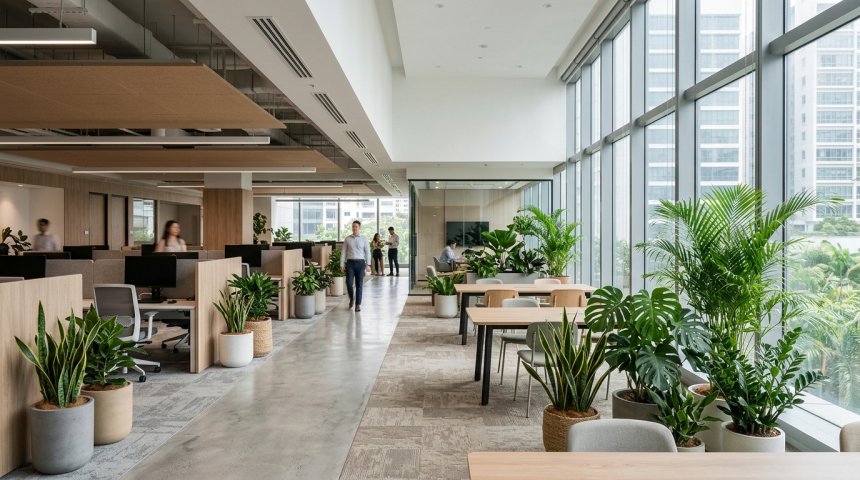
The decision to introduce pot plants into a Singapore office environment appears deceptively simple. Browse a nursery catalog, select aesthetically pleasing specimens, arrange delivery, and watch the workspace transform into a biophilic sanctuary that boosts employee wellbeing, impresses clients, and signals corporate sustainability commitment. But this linear path from intention to installation collapses with predictable frequency across Singapore's commercial real estate landscape. Plants arrive vibrant and perish within weeks. Specimens thrive in showrooms but deteriorate under office fluorescent panels. Lush installations trigger pest infestations requiring expensive remediation. Well-intentioned greening initiatives become recurring cost centers generating employee complaints rather than engagement. The failure rate isn't random; it's systematic, rooted in the mismatch between plant biological requirements and workplace environmental realities that procurement decisions routinely ignore.
Singapore presents a uniquely challenging context for office horticulture. The city-state's equatorial climate creates ambient conditions vastly different from temperate-zone offices where most commercial plant care guidelines originate. Year-round temperatures averaging 27-31°C with relative humidity consistently exceeding 70% create microbial and pest pressures absent in cooler, drier climates. Commercial buildings operate centralized HVAC systems designed for human thermal comfort, not plant physiological needs, producing artificial microclimates that fluctuate dramatically between zones, floors, and times of day. Building management regulations impose restrictions on soil types, water drainage, pest control chemicals, and structural loading that constrain planting options. And the premium cost of Singapore commercial real estate means every square meter allocated to planting must justify its footprint through measurable returns rather than decorative aspiration.
For facilities managers, HR directors, sustainability officers, and office administrators responsible for workplace greening decisions, understanding these contextual constraints before placing orders prevents costly failures and ensures investments deliver intended outcomes. This guide examines four critical workplace conditions that determine office plant success or failure in Singapore: lighting environment characteristics, HVAC and microclimate dynamics, spatial and regulatory constraints, and organizational capacity for ongoing maintenance. Each condition receives detailed analysis covering assessment methodologies, common pitfalls specific to Singapore commercial environments, mitigation strategies for suboptimal conditions, and decision frameworks linking environmental realities to appropriate plant selection. Beyond technical assessment, we address the business case dimensions that transform plant procurement from aesthetic expense into strategic workplace investment with measurable ROI. Whether you're outfitting a new CBD Grade A office, retrofitting an older industrial space, managing a distributed hybrid workplace, or evaluating vendor proposals for managed plant services, this guide provides the operational intelligence needed to make informed, sustainable, and successful office planting decisions in Singapore's unique built environment.
Let's begin by establishing why pre-ordering condition assessment matters more in Singapore than elsewhere—and what happens when organizations skip this step.
Chapter 1: Why Pre-Assessment Matters More in Singapore Than Elsewhere
Understanding Singapore's distinctive challenges prevents applying generic guidance that fails locally.
Equatorial Climate Amplifies Consequences of Mismatch
Singapore's consistent heat and humidity accelerate both plant growth and plant decline. Species marginally unsuited to office conditions deteriorate faster than in temperate climates where cooler temperatures slow metabolic processes. Pest populations reproduce continuously without seasonal die-offs, turning minor infestations into major outbreaks within days rather than weeks. Fungal pathogens thrive in perpetually warm, moist environments making disease management more demanding. The margin for error narrows significantly; conditions that might sustain marginal plants in London or Tokyo prove fatal in Singapore. Pre-assessment identifies whether your specific office environment falls within viable parameters before financial commitment.
Commercial Real Estate Economics Demand Justification
Singapore ranks among the world's most expensive office markets. Prime CBD rents exceed SGD $12 per square foot monthly. Allocating floor area to planting represents significant opportunity cost that must generate commensurate value through productivity gains, retention improvements, wellness benefits, or brand enhancement. Failed plant installations waste not only procurement and maintenance costs but also valuable floor space that could serve revenue-generating functions. Pre-assessment ensures planting investments align with spaces capable of supporting them successfully, maximizing return on scarce real estate resources.
Building Management Regulations Are Strictly Enforced
Singapore commercial properties operate under rigorous building management frameworks governing tenant modifications, common area impacts, and environmental health standards. Unauthorized planting violating fire safety codes, drainage requirements, or pest control protocols triggers enforcement actions ranging from removal orders to lease penalties. Strata-titled developments add layers of MCST approval requirements. Pre-assessment includes regulatory verification preventing post-installation compliance crises that force costly removals or retrofits.
Vendor Ecosystem Quality Varies Dramatically
Singapore's office plant market spans premium managed service providers offering comprehensive care packages to informal nurseries selling specimens without after-sales support. Quality variance is extreme; vendors may supply plants acclimatized to nursery conditions that shock when transferred to office environments, use inappropriate growing media that retains excessive moisture in humid conditions, or provide inadequate species guidance for specific microclimates. Pre-assessment enables informed vendor evaluation matching supplier capabilities to your environment's actual requirements rather than marketing claims.
Key Insight: For authoritative guidance on indoor plant species suitability, care requirements, and pest management protocols validated for Singapore's tropical climate, the Singapore National Parks Board (NParks) Indoor Plant Guidelines provides government-vetted recommendations essential for evidence-based plant selection and regulatory compliance.
Condition 1: Lighting Environment Assessment — Beyond "Bright" vs. "Dim"
Lighting is the single most determinative factor for office plant survival, yet it remains the most frequently misunderstood and inadequately assessed condition. Human perception of brightness correlates poorly with photosynthetically active radiation (PAR) that plants actually use. Offices that feel "bright" to occupants may provide insufficient PAR for even low-light tolerant species, while spaces perceived as dim may offer adequate light if spectrum and duration align with plant requirements.
Understanding Photosynthetically Active Radiation (PAR)
Plants utilize light primarily in the 400-700 nanometer wavelength range for photosynthesis. PAR is measured in micromoles per square meter per second (μmol/m²/s), representing photon flux density available for photosynthetic processes. Human eyes perceive brightness in lux or foot-candles, weighted toward green-yellow wavelengths where human vision peaks but plant photosynthetic efficiency is moderate. A space measuring 500 lux (typical office ambient lighting) may provide only 50-80 μmol/m²/s PAR—insufficient for most foliage plants despite appearing well-lit to humans.
PAR Thresholds for Common Office Plant Categories:
- Low-Light Tolerant: 50-100 μmol/m²/s (ZZ plant, Snake plant, Pothos, Peace lily). Survive but grow slowly; variegation may fade; leggy growth indicates insufficiency.
- Medium-Light Requiring: 100-200 μmol/m²/s (Philodendron, Monstera, Dracaena, Ferns). Optimal growth range for most popular office species.
- High-Light Requiring: 200-400+ μmol/m²/s (Ficus, Bird of Paradise, succulents, flowering species). Typically unsuitable for interior office zones without supplemental lighting.
These thresholds represent minimum sustained levels during photoperiod (typically 8-12 hours daily). Brief peaks don't compensate for prolonged insufficiency. Cumulative daily light integral (DLI) matters more than instantaneous readings; DLI = PAR × seconds of exposure / 1,000,000. Target DLIs: low-light 4-6 mol/m²/day, medium-light 8-12 mol/m²/day, high-light 12-20+ mol/m²/day.
Assessment Methodology for Singapore Offices
Quantitative Measurement Protocol: Invest in a PAR meter ($150-$400 for reliable handheld units) rather than relying on lux meters or subjective assessment. Measure at plant canopy height (not desk or floor level) at multiple points throughout intended planting zones. Record measurements at different times capturing variation from natural light cycles and artificial lighting schedules. Map PAR distribution identifying bright zones, transition areas, and dark corners. Document measurement dates, times, weather conditions, and lighting system settings for reproducibility.
Natural Light Evaluation: Singapore's equatorial location provides relatively consistent day length (~12 hours year-round) but intensity varies dramatically based on orientation, glazing type, external shading, adjacent buildings, and atmospheric conditions. North-facing windows receive diffuse light most suitable for many office plants; south-facing receive intense direct sun requiring filtration; east/west receive strong directional light creating hot spots and glare issues. Modern curtain wall glazing often incorporates solar control coatings reducing PAR transmission by 30-60% compared to clear glass—specifications rarely disclosed to tenants but critically affecting plant viability. External shading devices, neighboring tower proximity, and sky view factor further modify available natural light. Assess each planting zone individually; generalizations about "window-side" versus "interior" lighting mislead due to micro-scale variation.
Artificial Lighting Characterization: Most Singapore offices rely primarily on artificial lighting during occupied hours. Fixture type, spectrum, intensity, placement, and operating schedule determine plant-available light:
- LED Panels: Dominant in modern offices. Spectrum varies widely; horticulturally optimized LEDs include red/blue peaks enhancing PAR efficiency but may appear unnatural to humans. Standard office LEDs prioritize human visual comfort with reduced PAR output. Request spectral data sheets from building management or lighting contractors.
- Fluorescent Tubes: Still present in older buildings. Moderate PAR output with reasonable spectrum for foliage plants. Aging tubes degrade output significantly; measure actual output rather than assuming rated specifications.
- HID/Metal Halide: Rare in offices but sometimes used in atriums or feature areas. High PAR output but excessive heat generation problematic in Singapore's already warm environments.
- Operating Schedules: Many offices reduce lighting after core hours or implement occupancy sensors. Plants require consistent photoperiods; intermittent lighting disrupts circadian rhythms and photosynthetic accumulation. Verify actual operating hours match plant requirements.
Common Singapore Office Lighting Pitfalls:
- Overreliance on Ambient Lighting: Ceiling-mounted general illumination rarely provides sufficient PAR at plant canopy level beyond 1-2 meters from fixtures. Dedicated plant lighting or strategic placement near light sources necessary.
- Glare Control Misalignment: Blinds and shades adjusted for human visual comfort may block PAR essential for plants. Coordinate blind operation schedules with plant light requirements or install separate plant-focused lighting.
- Reflective Surface Assumptions: White walls and ceilings reflect some PAR but far less than commonly assumed. Reflectance doesn't substitute for direct light sources.
- Seasonal Variation Ignorance: While Singapore lacks dramatic seasonal changes, monsoon periods bring extended overcast conditions reducing natural light availability by 40-60%. Species selection should account for worst-case rather than average conditions.
Mitigation Strategies for Suboptimal Lighting
When assessment reveals insufficient PAR for desired species:
Supplemental Lighting Installation: Dedicated horticultural LED fixtures provide controlled PAR independent of building lighting. Modern fixtures offer adjustable spectrum, programmable photoperiods, and aesthetic designs compatible with office interiors. Calculate required fixture density based on target PAR levels and mounting height. Factor electricity costs into maintenance budget; efficient LEDs consume 20-40W per fixture adding modest but cumulative operational expense.
Species Selection Alignment: Match plant choices to measured conditions rather than aspirational aesthetics. Low-light zones suit ZZ plants, Sansevieria, Aglaonema, and certain ferns. Medium-light areas accommodate Philodendrons, Monsteras, Dracaenas, and Calatheas. Reserve high-light species for atriums, skylights, or supplemented zones. Accept that some desired species won't thrive in your environment; forcing mismatches generates recurring replacement costs and negative perceptions.
Strategic Placement Optimization: Position plants where measured PAR meets requirements rather than where decoration plans dictate. Rotate specimens periodically if light distribution uneven, allowing recovery periods in brighter zones. Use reflective surfaces strategically to redirect available light toward planting areas. Elevate plants closer to light sources when floor-level PAR insufficient.
Lighting System Coordination: Engage building management early discussing plant lighting needs alongside human lighting requirements. Integrated design achieves both objectives more efficiently than retrofitted solutions. Negotiate lighting schedule accommodations ensuring adequate photoperiods. Explore shared infrastructure reducing duplicate fixture costs.
Condition 2: HVAC and Microclimate Dynamics — The Invisible Killer
Singapore's commercial HVAC systems create artificial environments optimized for human thermal comfort that frequently conflict with plant physiological requirements. Temperature fluctuations, humidity extremes, air velocity patterns, and chemical exposures interact creating microclimates that vary dramatically within single floors or even individual rooms. Understanding these dynamics prevents placing plants in locations where invisible environmental stressors guarantee failure despite adequate lighting and proper watering.
Temperature Regime Analysis
Human Comfort vs. Plant Optima Misalignment: Singapore commercial buildings typically maintain 22-24°C during occupied hours per SS 554 indoor air quality standards. Most tropical foliage plants prefer 24-29°C daytime temperatures with minimal diurnal variation. The 2-7°C gap between human comfort setpoints and plant optima creates chronic cold stress manifesting as slowed growth, chlorosis, leaf drop, and increased disease susceptibility. Nighttime and weekend setback temperatures often drop to 26-28°C when HVAC reduces operation, paradoxically providing better plant conditions during unoccupied periods but insufficient compensation for weekday stress.
Spatial Temperature Variation Mapping: HVAC supply diffusers create localized cold zones where discharge air temperatures may reach 16-18°C before mixing with room air. Plants positioned directly in supply airstreams experience temperatures 4-8°C below room average causing acute cold damage. Return air grilles create warmer zones where temperatures exceed room average by 2-4°C. Perimeter zones adjacent to glazing experience solar heat gain raising temperatures 3-6°C above interior zones during afternoon hours. Server rooms, pantry areas, and equipment closets generate localized heat islands. Map temperature distribution using data loggers recording at 15-minute intervals across multiple days capturing temporal and spatial variation. Identify stable zones suitable for planting and volatile zones requiring avoidance or environmental buffering.
Thermal Shock Prevention: Rapid temperature changes damage plants more severely than steady-state suboptimal temperatures. Common shock scenarios in Singapore offices include: Monday morning HVAC startup after weekend shutdown, lunchtime system adjustments responding to occupancy changes, meeting room systems cycling on/off with occupancy sensors, and after-hours cleaning crew thermostat modifications. Position plants away from direct supply registers and high-traffic zones where door openings create drafts. Allow newly delivered plants gradual acclimatization rather than immediate placement in final locations. Monitor temperature stability over full weekly cycle before committing to planting placements.
Humidity Assessment and Management
Ambient Humidity Reality vs. Perception: Singapore's outdoor humidity averages 70-90% year-round, creating assumption that indoor environments share similar moisture levels. In reality, HVAC cooling coils dehumidify supply air aggressively maintaining indoor relative humidity at 40-60% for human comfort and mold prevention. This 20-40 percentage point reduction from outdoor conditions creates significant moisture deficit for tropical plants adapted to consistently high humidity. Low humidity increases transpiration rates, accelerates soil drying, causes leaf tip burn, and stresses plants physiologically even when soil moisture adequate.
Micro-Humidity Variation: Humidity distributes unevenly within office spaces. Supply air from cooling coils carries lowest humidity (often 30-40% RH immediately post-coil). Mixing with room air raises humidity gradually with distance from diffusers. Occupied zones with human respiration and perspiration generate localized humidity elevation. Kitchenettes, pantries, and restroom adjacencies show elevated humidity from water use. Glazing surfaces cool below dew point during rainy periods creating condensation and locally saturated microclimates. Measure humidity at intended planting locations rather than assuming uniformity. Data loggers capturing 24-hour cycles reveal patterns invisible to spot measurements.
Humidity Enhancement Strategies: When ambient humidity falls below species requirements (most tropical foliage prefers 50-70% RH):
- Grouping Effect: Clustering plants creates collective transpiration raising local humidity 5-15% above ambient. Strategic grouping serves both aesthetic and environmental functions.
- Pebble Trays: Shallow trays filled with water and pebbles beneath pots increase evaporation surface area without root saturation risk. Maintain water level below pot base preventing wicking.
- Misting Protocols: Manual or automated misting temporarily elevates humidity but effects dissipate rapidly in air-conditioned environments. Useful as supplement rather than primary strategy. Avoid misting species prone to foliar diseases (Calathea, Begonia) in already humid Singapore conditions.
- Humidifier Integration: Dedicated humidifiers effective but require maintenance, water quality management, and coordination with building HVAC to prevent condensation or mold issues. Evaluate building management acceptance before installation.
- Species Selection Adaptation: Choose humidity-tolerant species for low-humidity zones. Sansevieria, ZZ plant, Dracaena, and certain succulents tolerate 30-40% RH better than Calathea, Ferns, or Anthurium which require 60%+ RH consistently.
Air Quality and Chemical Exposure Considerations
VOC and Ozone Sensitivity: Office environments contain volatile organic compounds from furniture, carpets, cleaning products, printers, and building materials. Some plants demonstrate phytoremediation capacity absorbing VOCs, but others exhibit sensitivity showing leaf damage, chlorosis, or growth inhibition. Ozone generated by laser printers and photocopiers damages sensitive species (Spider plant, Boston fern, Peace lily show visible injury at concentrations common near equipment). Locate plants away from concentrated emission sources. Select tolerant species for areas with known air quality concerns.
Airflow Velocity Impact: Excessive air movement accelerates transpiration causing desiccation stress even when humidity and soil moisture adequate. Supply diffusers, fan coil units, and open-plan layouts with cross-ventilation create high-velocity zones unsuitable for delicate foliage. Measure air velocity at planting locations; velocities exceeding 0.25 m/s cause stress for many species. Position plants outside direct airflow paths or use physical barriers deflecting air currents. Gentle air movement beneficial preventing stagnation and fungal issues; balance required.
HVAC Maintenance Coordination: Filter changes, coil cleaning, duct treatments, and pest control activities introduce temporary environmental disruptions. Chemical treatments may be phytotoxic. Dust accumulation during filter changes settles on foliage reducing photosynthesis. Schedule plant maintenance around HVAC activities allowing recovery periods. Communicate planting locations to facilities teams preventing accidental damage during servicing. Establish protocols protecting plants during disruptive maintenance events.
Condition 3: Spatial Planning and Regulatory Compliance — Navigating Singapore's Built Environment Constraints
Singapore's dense urban development and stringent building regulations create spatial and compliance considerations absent in less regulated markets. Successful office planting requires navigating fire safety codes, structural loading limits, drainage requirements, pest control restrictions, and strata management approvals alongside aesthetic and functional objectives.
Fire Safety and Emergency Egress Compliance
Egress Pathway Clearance: Singapore Civil Defence Force (SCDF) fire code mandates unobstructed egress pathways with minimum widths based on occupancy load. Plants cannot encroach on designated escape routes, corridor widths, or stairwell landings. Planter placement must maintain required clearances even at mature plant size accounting for growth spread. Temporary decorations during festive periods receive special consideration but permanent installations require permanent compliance. Engage fire safety engineer or qualified person reviewing planting plans against approved fire safety documentation before installation.
Combustible Material Restrictions: Certain planter materials, growing media, and decorative mulches classified as combustible may face restrictions in fire-rated compartments, escape staircases, or refuge areas. Plastic planters, dried moss, bark mulch, and coconut coir carry higher combustibility ratings than ceramic, metal, mineral wool, or expanded clay aggregates. Verify material classifications against building fire safety specifications. Non-combustible alternatives available for restricted zones without sacrificing aesthetic quality.
Sprinkler and Detection System Interference: Tall plants or hanging installations cannot obstruct sprinkler head spray patterns, smoke detector coverage, or emergency lighting. Minimum clearance distances specified in SS CP 52 and related standards. Plant canopy height limited below sprinkler deflector planes. Hanging baskets prohibited directly beneath detection devices. Coordinate planting heights and locations with fire protection system drawings. Post-installation verification ensures compliance maintained as plants grow.
Structural Loading and Waterproofing Verification
Floor Loading Capacity: Large planters with saturated soil impose significant dead loads. Wet soil weighs approximately 1,600-1,800 kg/m³; a 60cm diameter planter at 40cm depth weighs 180-220 kg when saturated. Concentrated loads at planter feet exceed distributed floor design loads in some older buildings. Verify floor loading capacity with building structural engineer or facilities management before installing large or heavy planters. Distribute weight across larger footprint using load-spreading bases. Upper floors and raised access flooring systems have lower capacities than ground-level slabs; verify specifically for each installation zone.
Waterproofing Integrity Protection: Water leakage from planters damages ceiling finishes, electrical systems, and tenant fitouts below creating liability exposure. All planters in multi-story buildings require waterproof containment systems: sealed saucers, double-walled containers, or integrated drainage collection. Capillary matting or self-watering systems reduce overflow risk versus traditional top-watering. Regular inspection protocols detecting leaks before damage occurs. Waterproofing verification particularly critical for heritage shophouse conversions and older commercial buildings where slab integrity uncertain.
Raised Floor Compatibility: Many Singapore offices use raised access flooring for cable management. Planters on raised floors concentrate loads on pedestal points risking tile cracking or system collapse. Specialized lightweight planters designed for raised floor applications distribute loads appropriately. Alternatively, position heavy planters only on structural slab areas avoiding raised floor zones entirely. Coordinate with facilities management verifying raised floor load ratings and acceptable planter types.
Drainage and Water Management Protocols
Overflow Prevention Systems: Indoor planters must incorporate overflow protection preventing water escape during watering or rainfall ingress near windows. Self-watering reservoirs with overflow ports, saucer systems with capacity exceeding maximum single watering volume, or drain-to-waste systems connected to building plumbing each offer solutions matched to context. Overflow protocols documented and staff trained preventing accidental flooding. Water damage incidents create significant liability and tenant relations issues in multi-tenant buildings.
Water Source Accessibility: Convenient water access determines maintenance feasibility and consistency. Distance to nearest sink or water source impacts labor time and spill risk during transport. Dedicated watering stations with fill hoses simplify maintenance for large installations. Water quality considerations: Singapore tap water generally suitable but chlorine-sensitive species benefit from standing water allowing dissipation or filtered sources. Rainwater harvesting systems increasingly integrated in Green Mark certified buildings providing alternative water source with ecological benefits.
Drainage Disposal Compliance: Drainage water from planters cannot discharge to storm drains or common areas without treatment in some jurisdictions. Nutrient-rich runoff contributes to eutrophication concerns. Closed-loop recirculating systems eliminate discharge. Filtered drainage to sanitary sewer acceptable in most cases. Verify building drainage policies and BCA environmental requirements before designing drainage systems. Compliance documentation retained for audit purposes.
Pest Management and Biosecurity Considerations
Integrated Pest Management (IPM) Requirements: Singapore's tropical climate supports continuous pest pressure requiring proactive IPM rather than reactive treatment. Preventive measures include quarantine protocols for new arrivals, regular inspection schedules, beneficial organism introduction where appropriate, and cultural practices reducing pest habitat. Chemical pesticide use restricted in occupied office environments; NEA-approved products only with application during unoccupied periods and adequate ventilation. Biological controls (predatory mites, parasitic wasps, entomopathogenic fungi) increasingly preferred for occupied spaces. IPM plan documented and communicated to building management and occupants.
Import and Quarantine Compliance: Plants imported into Singapore require phytosanitary certificates and may face quarantine inspection by NParks. Soil imports restricted preventing pathogen introduction; many suppliers use approved growing media alternatives. Verify supplier compliance with import regulations preventing shipment seizures or biosecurity breaches. Local nursery sourcing avoids import complications but may limit species selection. Documentation retained demonstrating regulatory compliance.
Allergen and Irritant Awareness: Some common office plants produce allergenic pollen (flowering species), irritating sap (Dieffenbachia, Philodendron), or volatile compounds triggering sensitivities. Employee health declarations collected identifying known plant allergies or respiratory sensitivities. Species selection excludes known irritants when sensitive individuals present. MSDS documentation maintained for all species enabling medical response if exposure occurs. Communication to employees about planted species and reporting procedures for adverse reactions.
For comprehensive understanding of how biophilic design integrates with Singapore's green building standards and sustainability certifications, the Green Mark Scheme by Building and Construction Authority (BCA) (nofollow) provides certification criteria including indoor environmental quality benchmarks and biophilic design credits informing compliant planting strategies.
Condition 4: Organizational Capacity and Maintenance Commitment — The Sustainability Determinant
Even perfect environmental conditions fail without organizational capacity sustaining plant health over time. Maintenance commitment represents the most frequently underestimated condition leading to progressive deterioration, employee dissatisfaction, and eventual removal of initially successful installations. Honest assessment of organizational capacity before ordering prevents investing in outcomes the organization cannot sustain.
Maintenance Model Selection and Resourcing
Self-Maintenance Viability Assessment: Internal maintenance feasible only when dedicated staff possess horticultural knowledge, allocated time, appropriate tools, and supervisory accountability. Common failure mode: assigning plant care as secondary duty to cleaning staff, receptionists, or junior administrators without training, time allocation, or performance metrics. Result: inconsistent watering, missed pest detection, delayed problem response, and gradual decline blamed on "unsuitable plants" rather than inadequate care. Honest assessment asks: Who specifically will maintain plants? Do they have verified horticultural competency? How many hours weekly are formally allocated? What happens during leave, turnover, or competing priorities? If answers unclear or unsatisfactory, self-maintenance inappropriate regardless of budget savings versus professional services.
Professional Managed Services Evaluation: Managed plant services range from basic watering visits to comprehensive care packages including replacement guarantees, pest management, fertilization, pruning, and seasonal rotation. Service quality varies dramatically; evaluation criteria include:
- Staff Qualifications: Certified horticulturists versus general laborers. Training documentation and continuing education evidence.
- Service Frequency and Scope: Visit frequency matched to environmental conditions and species requirements. Comprehensive task lists beyond watering.
- Replacement Policies: Guarantee terms, replacement speed, credit/refund provisions for persistent failures.
- Pest Management Protocols: IPM approach, chemical usage policies, notification procedures, safety documentation.
- Reporting and Communication: Regular condition reports, issue escalation processes, responsive account management.
- Insurance and Liability: Coverage for property damage, plant loss, and pest-related incidents.
- References and Track Record: Verified client references in similar Singapore office environments. Longevity and stability indicators.
Contract terms should specify service levels, performance metrics, remedy provisions, and termination rights. Lowest-cost providers often deliver corresponding quality; value assessment considers total cost including replacements, pest remediation, and employee satisfaction impacts.
Hybrid Model Design: Combining internal daily care (watering, visual inspection) with professional periodic services (fertilization, pest management, pruning, health assessments) optimizes cost and quality when internal capacity exists for basic tasks but not specialized care. Clear role delineation prevents gaps or duplication. Communication protocols ensure issues identified internally receive professional response timely. Hybrid models require more coordination than pure outsourced or self-maintained approaches but can deliver superior outcomes at moderate cost when well-designed.
Budget Realism and Lifecycle Costing
True Cost Recognition: Plant procurement represents 15-25% of first-year total cost. Remaining costs include: professional maintenance services (SGD $3-8 per plant monthly depending on service level), replacement losses (10-20% annual attrition typical even with good care), pest management interventions, fertilizer and supplies, planter depreciation, water and electricity for supplemental systems, and internal staff time. Five-year lifecycle costing reveals true investment magnitude informing realistic budgeting and ROI expectations. Underbudgeting guarantees progressive deterioration as cost-cutting sacrifices maintenance quality.
Contingency Planning: Budget contingencies address predictable uncertainties: pest outbreak remediation, unexpected replacements due to environmental fluctuations, HVAC system changes altering microclimates, renovation disruptions, and vendor price adjustments. Contingency reserves of 15-25% above baseline maintenance costs prevent crisis-driven decision-making when issues arise. Unused contingency rolls forward or funds enhancement opportunities; absence forces reactive cuts compromising long-term viability.
ROI Measurement Framework: Define success metrics before installation enabling value demonstration:
- Employee Wellbeing: Survey-based measures of satisfaction, stress reduction, perceived air quality, and workspace preference. Pre/post comparisons and control group studies where feasible.
- Productivity Indicators: Absenteeism rates, sick leave utilization, self-reported focus and creativity metrics. Correlation analysis acknowledging confounding variables.
- Retention and Recruitment: Exit interview mentions, candidate feedback on workspace attractiveness, retention rate trends. Qualitative and quantitative evidence combined.
- Brand and Client Perception: Visitor feedback, social media mentions, media coverage, award nominations. Reputation value quantified where possible.
- Sustainability Metrics: Green Mark certification contributions, carbon sequestration estimates, biophilic design credits achieved. Alignment with corporate ESG reporting.
Measurement infrastructure established concurrently with planting ensuring baseline data capture. Regular reporting maintains visibility and accountability. ROI evidence sustains budget support through leadership transitions and economic cycles.
Knowledge Transfer and Institutional Memory
Documentation Standards: Comprehensive records enable continuity through staff turnover and vendor changes: species inventory with locations and care requirements, maintenance schedules and procedures, pest management history and treatment records, environmental monitoring data, vendor contracts and performance evaluations, incident logs and resolutions, and budget tracking. Digital documentation accessible to authorized personnel prevents knowledge loss. Documentation updated continuously reflecting changes and learnings.
Training and Succession Planning: Internal staff involved in plant care receive formal training covering species identification, watering techniques, pest recognition, problem escalation, and safety protocols. Training refreshed annually and upon staff changes. Cross-training multiple personnel prevents single-point-of-failure dependency. Vendor-provided training supplements internal programs ensuring alignment with contracted services. Training documentation retained demonstrating competency and compliance.
Vendor Relationship Management: Active vendor management beyond contract signing ensures sustained service quality. Regular performance reviews against SLAs. Open communication channels for issue resolution. Collaborative problem-solving when environmental changes affect plant health. Contract renewal evaluations incorporating performance history and market benchmarking. Strong vendor relationships enable proactive issue prevention rather than reactive dispute resolution. Backup vendor identification prevents service disruption if primary vendor fails or exits market.
Integrating the Four Conditions: Decision Framework and Implementation Sequence
Assessing conditions independently necessary but insufficient; integration reveals interactions and trade-offs determining overall feasibility and optimal approach.
Sequential Assessment Protocol
Phase 1: Preliminary Screening (Week 1) Rapid assessment identifying obvious disqualifiers: insufficient lighting throughout intended zones, prohibitive regulatory constraints, confirmed absence of maintenance budget or capacity, severe HVAC incompatibilities. Early screening prevents wasted investment in detailed assessment for fundamentally unsuitable situations. If preliminary screening reveals insurmountable barriers, consider alternative biophilic interventions (living walls with integrated systems, preserved botanical elements, digital nature experiences) or defer planting until conditions improve.
Phase 2: Detailed Environmental Assessment (Weeks 2-3) Comprehensive measurement of lighting, temperature, humidity, and airflow across all candidate planting zones. Data logging capturing temporal variation. Spatial mapping documenting regulatory constraints, structural limitations, and utility access. Findings compiled into environmental profile report with zone-by-zone suitability ratings. Professional environmental assessment recommended for large or complex installations; smaller projects may proceed with competent internal assessment using appropriate instrumentation.
Phase 3: Species Selection and Design Development (Weeks 3-4) Match species to verified environmental conditions using NParks guidelines and vendor expertise. Develop planting designs integrating aesthetic, functional, and environmental requirements. Prepare specifications including species lists, quantities, sizes, planter types, growing media, and installation details. Obtain preliminary cost estimates for procurement and maintenance. Design review with stakeholders ensuring alignment with objectives and constraints.
Phase 4: Regulatory and Stakeholder Approval (Weeks 4-6) Submit planting plans for building management, fire safety, and MCST approval as applicable. Address feedback and revise plans accordingly. Secure budget approval based on refined cost estimates. Communicate plans to affected employees gathering feedback and managing expectations. Finalize vendor selection through competitive evaluation. Execute contracts and procurement orders.
Phase 5: Installation and Commissioning (Weeks 6-8) Staged installation allowing acclimatization and adjustment. Environmental monitoring verifying conditions match assessment predictions. Initial maintenance protocols established and staff trained. Baseline documentation completed. Post-installation inspection confirming compliance and quality. Issue resolution process activated for early problems.
Phase 6: Performance Monitoring and Optimization (Ongoing) Regular condition assessments comparing actual performance to projections. Maintenance quality audits. Employee feedback collection. Budget tracking against forecasts. Adaptive adjustments to species, placement, or care protocols based on observed performance. Annual comprehensive review informing next-cycle planning. Continuous improvement mindset preventing stagnation and decline.
Go/No-Go Decision Criteria
Proceed with planting only when all four conditions meet minimum thresholds:
- Lighting: Measured PAR meets or exceeds species requirements in ≥80% of intended planting zones, or supplemental lighting budget approved and feasible.
- HVAC/Microclimate: Temperature and humidity within species tolerance ranges for ≥90% of operating hours, or mitigation measures implemented and validated.
- Spatial/Regulatory: All compliance requirements satisfied with documented approvals, structural loading verified, and drainage/water management protocols established.
- Organizational Capacity: Maintenance model selected and resourced with confirmed budget covering full lifecycle costs, trained personnel or contracted services in place, and documentation systems established.
Failure to meet any threshold triggers either remediation efforts addressing specific deficiencies or project deferral until conditions improve. Proceeding despite unmet thresholds predicts failure with high confidence; discipline at decision gate prevents wasteful expenditure and organizational frustration.
Conclusion: Smarter Planting as Strategic Workplace Investment
Office pot plants in Singapore succeed or fail based on conditions assessed before ordering, not enthusiasm expressed during selection. The four conditions examined—lighting environment, HVAC dynamics, spatial/regulatory constraints, and organizational maintenance capacity—form interconnected system determining outcomes. Excellence in one dimension cannot compensate for deficiency in another. Comprehensive pre-assessment transforms planting from hopeful gamble into evidence-based investment with predictable outcomes.
Smarter planting recognizes that plants are living organisms with non-negotiable biological requirements, not decorative accessories adaptable to any environment. It respects Singapore's unique climatic, regulatory, and economic context rather than importing generic guidance from dissimilar markets. It acknowledges that organizational capacity matters as much as environmental suitability. And it treats planting decisions as strategic workplace investments requiring the same rigor applied to technology, furniture, or real estate decisions.
The organizations achieving lasting success with office greening in Singapore share common characteristics: they assess thoroughly before committing, select species matched to verified conditions rather than aspirational aesthetics, invest adequately in ongoing maintenance, measure outcomes systematically, and adapt continuously based on evidence. They understand that biophilic design's benefits emerge from healthy, thriving plants integrated thoughtfully into workplace ecosystems—not from struggling specimens serving as reminders of good intentions poorly executed.
Your workplace deserves better than decorative failure. Assess first. Select wisely. Resource adequately. Sustain deliberately. The living elements of your workspace will reward disciplined preparation with enduring vitality that enriches every person who inhabits the space daily. That's the return on smarter planting. Build it intentionally.
Frequently Asked Questions (FAQs)
What are the easiest office plants to maintain in Singapore's air-conditioned environment?
Low-maintenance species tolerant of Singapore office conditions include Sansevieria trifasciata (Snake Plant), Zamioculcas zamiifolia (ZZ Plant), Epipremnum aureum (Pothos/Devil's Ivy), Aglaonema commutatum (Chinese Evergreen), and Dracaena fragrans (Corn Plant). These species tolerate 22-24°C AC temperatures, 40-60% humidity, and low-to-medium light levels common in Singapore offices. They resist common pests, forgive occasional watering inconsistency, and maintain appearance under suboptimal conditions. However, "easy" is relative to verified conditions; even tolerant species fail in extremely low light (<50 μmol/m²/s PAR), direct cold air streams, or complete neglect. Always verify your specific environment matches species requirements before assuming ease of maintenance. Start with proven tolerant species establishing successful baseline before experimenting with more demanding varieties.
How do I measure if my office has enough light for plants without expensive equipment?
While PAR meters provide accurate measurements, preliminary assessment possible using observational methods: photograph white paper at intended plant location during typical working hours; if paper appears bright white with distinct shadows, light likely adequate for medium-light species; if grayish with soft shadows, probably low-light range only; if dim with no shadows, insufficient for most plants. Smartphone light meter apps provide rough lux readings (multiply by 0.018-0.025 for approximate PAR conversion, though accuracy varies). Observe existing plants in similar locations noting health indicators. Consult building management for lighting specifications and schedules. These methods inform preliminary screening but shouldn't replace PAR measurement for final species selection and placement decisions. Invest in basic PAR meter ($150-250) for any installation exceeding few plants; cost negligible versus replacement expenses from incorrect assessment.
Do I need building management approval for office plants in Singapore?
Generally yes, especially for commercial strata-titled properties under MCST jurisdiction. Approval requirements vary by building but commonly address: fire safety compliance (egress clearance, combustible materials, sprinkler interference), structural loading verification for large/heavy planters, waterproofing and drainage protocols preventing leakage damage, pest management plans using approved methods, and aesthetic guidelines for common areas or visible exterior zones. Tenancy agreements often specify modification approval processes. Engage building management early sharing planting plans, species lists, planter specifications, and maintenance protocols. Written approval obtained before procurement preventing post-installation removal orders or lease violations. Heritage buildings and conservation areas impose additional restrictions requiring URA consultation. Professional plant service providers familiar with local building requirements streamline approval processes.
How much should I budget for office plant maintenance in Singapore?
Professional managed services typically cost SGD $3-8 per plant monthly depending on service scope, plant size, accessibility, and visit frequency. Basic watering-only services occupy lower range; comprehensive care including fertilization, pest management, pruning, replacement guarantees, and seasonal rotation occupies upper range. For 50-plant installation expect SGD $200-400 monthly. Self-maintenance costs lower in direct labor but include hidden expenses: staff time (calculate fully-loaded hourly rate × hours weekly), replacement losses (10-20% annual attrition without professional care), pest remediation, supplies, and training. Lifecycle costing over 3-5 years often reveals professional services cost-competitive with self-maintenance when all factors included. Budget 15-25% contingency above baseline for unexpected issues. Premium locations (CBD Grade A) and specialized installations (living walls, large specimen trees) command higher rates. Obtain multiple quotes specifying identical scope for valid comparison. Cheapest option frequently costs more long-term through replacements and dissatisfaction.
Can office plants improve air quality enough to matter in Singapore workplaces?
NASA Clean Air Study findings frequently cited but overstated for real-world office contexts. Research demonstrates plants remove VOCs and CO2 in sealed chamber conditions, but actual office air exchange rates dilute plant effects significantly. Meaningful air purification requires plant densities impractical for most offices (10-100 plants per person depending on study). However, plants provide documented psychological and physiological benefits independent of air purification: stress reduction, improved mood, enhanced cognitive performance, increased satisfaction, and perceived air quality improvement even when objective measurements show minimal change. Biophilic design value lies primarily in human wellbeing responses to nature connection rather than measurable air quality improvement. Position plants as wellbeing and productivity intervention with air quality as secondary benefit rather than primary justification. Communicate realistic expectations preventing disappointment from overstated claims. Measurable benefits emerge through employee surveys, productivity metrics, and retention data rather than air quality monitors.
Share
What's Your Reaction?
 Like
0
Like
0
 Dislike
0
Dislike
0
 Love
0
Love
0
 Funny
0
Funny
0
 Angry
0
Angry
0
 Sad
0
Sad
0
 Wow
0
Wow
0