Authentic 2026 Guide to Sedona, Arizona: Red Rocks & Trails
Authentic Sedona, Arizona travel guide for 2026: explore red-rock hikes, vortexes, local food, stargazing, and smart tips for avoiding the crowds.

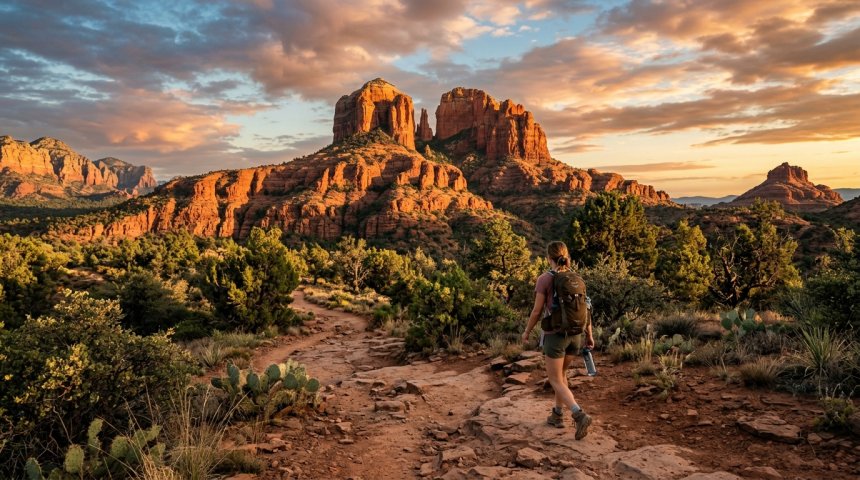
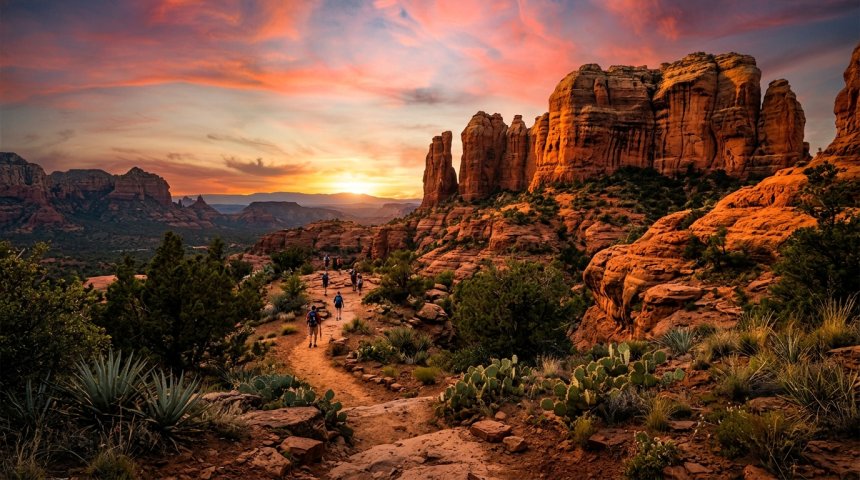
I still remember the exact bend in the road where Sedona got me. I was driving up from Phoenix, slightly jet-lagged, mostly skeptical, and honestly a little annoyed that everyone I'd ever met had told me to "just wait until you see it." And then the highway crested, the valley opened up, and there they were — Cathedral Rock, Bell Rock, the whole red congregation — glowing like they'd been lit from the inside by someone who wanted to show off. I pulled over at a turnout, killed the engine, and just stood there like an idiot in the best possible way. The air smelled like juniper and warm dust. A hawk was doing slow circles over the rocks. And I thought: okay. Okay, I get it now.
That was a few trips ago. I've been back enough times since to have opinions, habits, and a favorite parking spot, which is really what this guide is. Not a brochure. Not a list of ten generic things to do. This is the Sedona I'd hand to a friend, complete with the mistakes I made so you don't have to.
Why This Place Gets Under Your Skin
Sedona is not the prettiest town in Arizona, and I say that with love. The strip malls and roundabouts and traffic on State Route 179 can genuinely frustrate you at 5 p.m. on a Saturday. But here's the thing: none of that matters, because the rocks are always right there. You're waiting for a table at a restaurant and you look up and the cliffs are turning pink. You're brushing your teeth at your rental and the window frames a butte. The landscape refuses to let you stay in a bad mood for long.
The light is the real secret. Painters have been trying to explain it for a century, and the short version is that red rock is a terrible liar — it tells you a different color every hour. Rust at noon. Orange at four. A deep, bruised purple ten minutes after sunset, and then a soft pink the locals call "the blush." You will find yourself taking the same photo every evening and being surprised every time, like the rocks are doing a new trick.
And then there's the human weirdness, which I mean as a compliment. Sedona is one of the only towns I know where a cowboy-hat hiker, a crystal-healing retreat leader, a retired dentist from Ohio, and a professional landscape photographer can all be standing on the same overlook, all completely in their element. The town runs on a mix of outdoor grit and new-age sincerity that should not work together and absolutely does. You don't have to believe in any of the energy stuff to feel it. Sometimes "it" is just quiet, and attention, and a very big view. But quiet and attention are exactly what most of us came here to find.
Getting There (the Drive Is Part of the Deal)
Most people fly into Phoenix Sky Harbor and drive north — about 115 miles, roughly two hours if nobody stops, two and a half if you're human and need a coffee at the Camp Verde turnoff. The I-17 climb is one of those drives where the desert slowly changes its mind about you: saguaro give way to scrub, scrub gives way to juniper, and then suddenly you're up on the rim and the whole Verde Valley is spread out below like a map someone left on a table.
If you can swing it, enter Sedona the scenic way: up through Oak Creek Canyon on State Route 89A. It's a narrow, winding, cliff-hugging ribbon of road that follows the creek past swimming holes and old stone cottages, and it is genuinely one of the most beautiful drives in the American Southwest. Go slow. Use the turnouts. There's a spot near Midgley Bridge where the creek goes turquoise over the rocks and first-timers always make a small audible noise. I've heard it. I've made it.
Flagstaff's little airport is the closer option (about 45 minutes), and some people route through there to avoid Phoenix traffic. Either way, rent a car. I'll be honest about this: Sedona is not a place you can do with rideshares alone. The trailheads are spread out, the shuttles cover only a slice of the action, and half the joy is chasing a viewpoint at odd hours.
Field note: gas is noticeably cheaper in Camp Verde and Cottonwood than in Sedona. Fill up on the way in. Your future self says thanks.
When to Go: An Honest Season-by-Season Breakdown
People ask me "when is the best time for Sedona?" and the truthful answer is that every season has a personality, and you should pick the personality you like.
Spring (March to May) is the postcard. Highs in the 70s and 80s, wildflowers doing their thing in April, cottonwoods leafing out green in the canyon. It's also the busiest, and lodging prices prove it. If spring is your window, book rooms three to six months out and accept that trailhead parking is a competitive sport before 9 a.m.
Summer (June to August) gets hot — 90s, sometimes touching 100 — but here's what the brochures don't tell you: summer mornings in Sedona are glorious. Hike at 6 a.m., nap or read by a pool at 2, watch the sky do impossible things at 7. July and August bring monsoon storms, which means sudden thunderheads, brief dramatic downpours, and the best sunset light of the year. Respect flash-flood warnings in Oak Creek, though. The creek rises faster than you'd believe.
Fall (late September to November) is my personal favorite and I'm not even going to pretend to be objective about it. The heat breaks, the crowds thin after October's first weeks, and in late October and early November the cottonwoods in West Fork turn a gold that does not look real against the red walls. This is the Sedona I miss when I'm not there.
Winter (December to February) is the quiet bargain. Crisp days, empty trails, cheap rooms, and — if you get lucky — a dusting of snow on red rock, which is the single most unfair photograph in Arizona. Some mornings are below freezing and a few shaded trails stay icy, but a sunny 60-degree January day on a quiet trail is a gift.
The pattern to remember: weekdays beat weekends, always. A Tuesday in November will feel like a different, gentler town than a Saturday in March.
How Long Should You Stay?
One day is a crime against the place. Two days is a teaser. Three nights is the minimum I'd recommend to actually feel settled, and four or five is the sweet spot — enough for a couple of proper hikes, a slow town afternoon, a night under the stars, and one day trip without turning your vacation into a schedule. Sedona rewards people who leave white space in the plan. Some of my best memories there are unplanned: a wrong turn that found a viewpoint, a long lunch that became a two-hour conversation.
Getting Around Without Losing Your Mind
The town is basically one long corridor (179/89A) with side roads climbing into the red rock neighborhoods, and traffic bunches up at meal times and sunset. The trick is to move against the flow: trails at sunrise, town at midday, and if you must drive at golden hour, accept it as scenic time rather than commute time.
Parking at the popular trailheads — Cathedral Rock, Devil's Bridge, Bell Rock — fills early on weekends and during peak seasons. This is not an exaggeration; rangers turn cars away by 8 a.m. on spring Saturdays. The free-to-cheap Sedona Shuttle runs on weekends and busy periods from Posse Grounds to the Cathedral Rock trailhead, and using it is genuinely easier than circling for parking like a shark. There's also a trolley for hopping around town, which is charming and useful in equal measure.
Field note: download offline maps before your hikes. Cell service is spotty in the canyons, and "I'll just check the trail on my phone" is how people get lost.
The Hikes I Actually Recommend
Sedona has something like a hundred miles of trails, which is overwhelming, so here's the honest shortlist — what each one feels like, who it's for, and the one mistake to avoid.
Cathedral Rock Trail
Short, steep, and famous. It's only about a mile and a half round trip, but you'll use your hands, your nerve, and your lungs. The payoff is the saddle between the spires, with the whole valley laid out and the rock curving around you like a cathedral that missed its appointment with being a building. Sunset here is a crowd event; sunrise is a private one. Take the shuttle on weekends, wear shoes with grip, and if heights make your soul leave your body, this is the one to skip. There's no shame in admiring Cathedral Rock from the creek below. That view is also a masterpiece.
Bell Rock Pathway
The gentle one. A mostly flat walk around the base of Bell Rock and toward Courthouse Butte, perfect for your first morning, your last evening, your parents, your kids, or your own need to just move slowly and look up a lot. You'll pass people meditating on the rocks, and after about ten minutes you'll stop finding it strange. Bell Rock is one of the famous "vortex" sites, and even as a skeptic I'll say the light hits it at 7 a.m. in a way that makes you sit down on a warm boulder and lose track of twenty minutes.
Devil's Bridge
The arch you've seen on other people's phones. About four miles round trip, moderate, with a fun final scramble up to a natural sandstone bridge that spans a drop you will feel in your stomach. Yes, there's a line for the photo at midday. Go at 7:30 a.m. and you'll have the arch nearly to yourself, or go at noon and accept the line as a social event — I've met three great people waiting for that photo. The Mescal Trailhead route is the classic approach; the trail is exposed in places, so it's not the one for storm days.
West Fork Trail
My favorite, no contest. West Fork heads up Oak Creek Canyon through a narrow gorge where the walls close in, the creek babbles over boulders, and the shade is so deep it feels like the canyon is keeping a secret. You'll cross the creek a few times (expect wet feet in spring snowmelt; stepping stones appear in drier months), and every bend is more photogenic than the last. In late fall the cottonwoods go gold and the whole gorge looks like it was painted by someone showing off. It's 6+ miles if you turn around at a reasonable point, and it's the hike I send every single friend to.
Boynton Canyon and the Subway Cave
Boynton Canyon is a gorgeous, shaded canyon walk that ends beneath towering walls, with the ruins of an old enclave resort site adding a strange, quiet history. The "Subway Cave" — that long, smooth, photo-famous rock trough — is a social-media detour that involves a steep, unofficial scramble. I'll be straight with you: the cave is fun if you're comfortable with exposure, but the canyon is beautiful without it, and the off-trail traffic has chewed up the hillside. If you go, tread lightly, and don't risk the climb for a photo. The canyon already gave you a better one.
Airport Mesa
The sunset classic, and the easiest big payoff in town. You can drive up and walk a short loop, or climb from town for a better workout. It's a vortex site, it faces west, and when the sun drops, the whole valley goes from orange to pink to purple in about fifteen minutes while everyone on the rocks goes quiet at the same time. Bring a headlamp and a layer; the walk down happens in the dark and the desert cools fast.
If You Have Extra Days
Doe Mountain for a steep little climb with a huge mesa-top view. Fay Canyon for a short, shaded arch walk. Soldier Pass and the Seven Sacred Pools for a mellow wander through sinkholes and dry pools. Brins Mesa if you want to feel like you've left the crowd entirely. And Munds Wagon if you're an experienced hiker who read the route description twice and brought extra water — it's a tough one with a ridiculous payoff.
The Safety Stuff, Said Once
More water than you think you need (a gallon a person on hot days), sun protection even in winter, and tell someone your plan. Altitude sits around 4,300 to 5,000 feet, which is enough to make flatlanders puff. Rattlesnakes exist and are polite if you are — watch where you step and put your hands, and give them space. In monsoon season, never sit in a wash or a narrow canyon when storms build upstream. The desert is generous with beauty and completely unsentimental about preparation. Bring both.
The Vortex Thing: A Skeptic's Honest Take
Let's address it, because you're wondering. Sedona is famous for "vortexes" — spots where, the story goes, the earth's energy swirls upward and you can feel it, heal from it, or at least get a very good meditation out of it. The four big ones are Cathedral Rock, Bell Rock, Airport Mesa, and Boynton Canyon.
My honest take, as someone who rolls their eyes at magnets sold as miracles: I don't know what a vortex is, and I don't think it matters. What I know is that I've sat on Bell Rock at sunrise and felt my shoulders drop two inches. I know the wind through the junipers makes a sound my nervous system interprets as permission to slow down. I know that putting your phone away on a red rock for an hour does something measurable to your mood, whether or not the earth is spinning a little extra hard under you.
So go do a vortex meditation if it calls to you. Book the guided sunrise session if that's the nudge you need. Just don't let anyone sell you a $200 "energy reading" as science, and don't skip the experience because you're too cool for it. The real magic, in my experience, is attention. Sedona is simply one of the best places on earth to pay it.
Town Time: Uptown, Tlaquepaque, and the Chapel
You'll need breaks between hikes, and the town delivers them in its own quirky way. Uptown is the touristy core — crystal shops, turquoise jewelry, fudge, a rotating cast of people-watching gold. It's easy to mock and impossible not to enjoy for an hour or two. Buy the silly crystal. Eat the overpriced ice cream. It's part of the texture.
Tlaquepaque Arts & Crafts Village is the opposite energy: a faux-Mexican village of whitewashed courtyards, sycamore shade, and working galleries, where the loudest thing is usually a kettle-corn stand. It's perfect for a slow afternoon of browsing art you can't afford and snacks you can. The light in the courtyards around 4 p.m. is a photographer's secret.
The Chapel of the Holy Cross is the architectural knockout — a Catholic church built straight into the red rocks in 1957, with a cross rising between the cliffs and a view that silences the tour groups for a genuine few seconds. Go early morning or near dusk on a weekday; midday is a parking battle. It's a working church, so keep the reverence dial on. And if you want a quieter, lesser-known moment, drive out to the Amitabha Stupa and Peace Park in West Sedona — free, gentle, strung with prayer flags, and deeply calming regardless of your anything.
Eating and Drinking in Sedona
Let me set expectations: Sedona dining is not cheap, and the good places fill up fast. But the hits are real hits.
Elote Café is the one everyone names, and the roasted corn (elote) that made it famous is worth the ritual. The line is real too. Beat it by going at opening or putting your name in and walking the neighborhood. The green chile dishes are the sleeper stars of the menu.
The Hudson is my pick for the classic Sedona dinner view — patio, red rocks going pink, a good burger, a better old fashioned. Go early or late; the sunset seating rush is a tide.
Mariposa does Latin-inspired plates with a view that competes with the food, and at golden hour, honestly, the view wins. Order a margarita, watch the light, accept that some meals are about the hour as much as the plate.
Dahl & Di Luca is the charming oddball: a cozy Italian spot that's BYOB, which means your dinner math suddenly works and the vibe feels like a friend's very good dinner party. Bring a bottle from a Verde Valley tasting room and feel clever.
Creekside at the Amara Resort puts your table next to Oak Creek, which is exactly as lovely as it sounds, especially at happy hour with the water moving past.
For casual fuel: Wildflower Bread Company for a breakfast pastry that will ruin other pastries for you, Sedona Coffee Roasters for the latte that starts every good day, Oak Creek Brewery for the post-hike pint you've earned, and the Whole Foods in Uptown for the picnic supplies that power half my Sedona dinners. Because here's my honest tip: some of the best meals in Sedona cost eleven dollars and are eaten on a rock at sunset — a good sandwich, a local apple, and the whole red skyline for a dining room.
Where to Stay, by Budget
If you're splurging: L'Auberge de Sedona puts you in a cottage on Oak Creek with the water outside your door; Enchantment Resort sits inside Boynton Canyon with the walls glowing around the pool; Amara gives you creekside calm in the middle of town; and Mii amo is the legendary wellness destination — pricey, immersive, and the reason some people's entire Sedona story is "I slept ten hours a night and cried once, happily."
The comfortable middle: the Matterhorn Inn, the Inn on Oak Creek, and Sky Ranch Lodge (which earns its keep with one of the best sunset views you can get without leaving your balcony) all deliver real Sedona charm without the resort invoice.
If you're watching money: the Forest Service campgrounds in and near Oak Creek Canyon (Manzanita is a favorite) put you in the scenery for pocket change; vacation rentals in the Village of Oak Creek or West Sedona split nicely between friends; and the classic budget move is staying in Cottonwood, 25 minutes away, where rooms cost meaningfully less and Old Town's wineries become your evening plan. Book spring and fall stays early — like, months early — and look hard at midweek rates, which can be dramatically kinder than weekends.
After Dark: The Sky Does a Second Show
People plan Sedona around sunsets and sleep through the encore. Don't. The area's skies are dark enough that the Milky Way shows up on summer nights, and the red rocks as black silhouettes under a star field is the image I think about in winter. Guided stargazing tours bring telescopes and stories and will find you Saturn's rings, which is a genuinely silly thing to get emotional about and yet. If you go solo, drive a few minutes out of town, kill your lights, use a red torch to save your night vision, and give your eyes twenty minutes. Bring a jacket even in July — desert nights don't care about your summer.
Field note: my favorite cheap Sedona luxury is a blanket, a turnout off 89A after dark, and zero plans. Ten out of ten, would lose track of time again.
Day Trips Worth Stealing a Day For
Sedona sits in the middle of a remarkably good neighborhood, and one day of your trip should go to it.
Jerome is the star: a copper-mining town that went boom, busted, and refused to die, now clinging to a mountainside at a comical tilt, full of artists, coffee shops, and a hotel with a haunted reputation it neither confirms nor denies. The drive up is white-knuckle scenic; the view down the Verde Valley is huge; the history signs are genuinely good.
Old Town Cottonwood, just below Jerome, is the relaxed wine capital of the Verde Valley — a Main Street of tasting rooms where you can spend an afternoon discovering Arizona viognier you didn't know existed. Pair it with the Verde Canyon Railroad, a slow, gorgeous train ride through a canyon most people never see, open-air cars included. It's touristy and worth it.
Montezuma Castle and Tuzigoot give you the region's deeper story — Sinagua cliff dwellings and hilltop ruins, both quick to visit and quietly moving. Flagstaff, 45 minutes north, is a cool mountain town of breweries and pines, home to Lowell Observatory, where they found Pluto — a good summer escape when Sedona bakes. And yes, the Grand Canyon is about two hours north; do it as a long day for sunrise over the rim if your schedule allows, or save it for another trip without guilt. Sedona alone is a full meal.
Beating the Crowds: The Tips I Wish I'd Known
Sedona's crowds are predictable, which means they're avoidable. The 6:30 a.m. rule solves almost everything — trails before breakfast, parking solved, light perfect, wildlife still out. Swap one sunset for a sunrise; everyone photographs the same evening and misses the morning entirely. Visit Tuesday through Thursday and the town exhales. Eat dinner at 5 p.m. or after 8:30 and skip the wait. Use the shuttle where it exists. Come in November or early December for the gentlest version of the place. And when a trailhead lot is full, don't sulk — pick the second-choice trail. In Sedona, the second choice is still better than most places' first.
Respect the Rocks: How to Be a Good Guest
The red rocks are not a theme park; they're a living landscape and somebody's home. Stay on the trail — the desert's biological soil crust takes decades to recover from footprints. Don't stack rocks for photos; those little cairns confuse hikers and erode the very thing people came to see. Pack out everything, yield on narrow trails, keep voices and speakers low, and skip the drone unless you've checked the rules twice (much of this land says no). Give javelinas and snakes space, carry water out for the trail you wish you'd met, and remember the town itself is a real community. Shop local where you can, tip like the service economy depends on it (it does), and leave the quiet a little louder than you found it — meaning, don't.
A Realistic Three-Day Plan
Day one: Arrive, drop bags, walk the Bell Rock Pathway while the light is still soft. Lunch in town, browse Uptown without buying anything (you'll buy tomorrow), then drive to the Chapel of the Holy Cross near dusk. Dinner casual, and if your eyes are still open, ten minutes of stars from a turnout.
Day two: Cathedral Rock at sunrise via the shuttle — coffee in a thermos, you've earned the ritual. Slow breakfast after. Midday at Tlaquepaque in the shade. Late afternoon up Airport Mesa for the sunset encore, headlamp down, jacket on. Dinner at Elote or your picnic rock, dealer's choice.
Day three: West Fork in the morning, taking your time, getting your feet wet, turning around whenever it feels right. Picnic by the creek. Afternoon: Jerome and a Jerome coffee, or a spa hour if your body is filing complaints about day two. One last sunset, one last pink blush on the rocks, and an early night.
Treat this as a skeleton, not a law. Sedona's best hours are the ones you leave open.
"Is It Worth the Hype?" — An Honest Answer
Friends ask me this, and here's my truth: the hype is real, but it's fragile. If you arrive expecting a party town with nightlife and nonstop stimulation, you'll be bored by 9 p.m. If you arrive expecting every viewpoint to be empty, you'll be annoyed by 10 a.m. on a Saturday. Sedona's gift is narrower and deeper than the hype: it's a place that makes it easy to slow down, look up, and remember that your shoulders can drop. Go with that expectation — quiet, rocks, early mornings, good food — and it will over-deliver. It's one of the few places I've been where the photographs are accurate and still don't prepare you.
FAQs
Do I need to hike to enjoy Sedona? Not at all. Some of the best views are drive-up or short-walk overlooks — Airport Mesa loop, the Chapel, the 89A canyon drive, Bell Rock's flat pathway. Galleries, spas, and patios are a legitimate Sedona itinerary. That said, even one real trail gets you past the crowd line, and the crowd line is where the magic thins.
Are the vortexes real? The measurable-energy version is a belief, not a science, and you're free to skip it. The experiential version — that certain spots make you stop, breathe, and feel small in a good way — is real enough that thousands of sensible people swear by it. Go sit on a rock at sunrise and decide for yourself. Either answer is correct.
What's the single best month to visit? If you force me to pick one: late October into early November, for gold cottonwoods, kind temperatures, and thinning crowds. April is the runner-up with wildflowers and green canyon growth, at the price of peak crowds.
Can I do Sedona on a budget? Yes. Camp in the national forest or stay in Cottonwood, hike free trails (they're the best part anyway), picnic at sunset, use the shuttle, and save one sit-down dinner for a splurge. The rocks don't check your wallet.
Is Sedona good for kids? Genuinely yes, with judgment calls attached. Bell Rock, Tlaquepaque, creek splashing at Slide Rock in summer, and easy overlooks are family gold. Cathedral Rock's scramble and long exposed hikes are not toddler material. Bring more snacks than feels reasonable. You will use them.
How many days do I really need? Three nights minimum to feel it, four or five to love it, plus a day for Jerome or the Verde if you can. One-day trips through Sedona mostly produce traffic stories, and you deserve better.
What to Pack (the Short, Honest List)
Broken-in trail shoes with real grip, more water capacity than you think (two liters minimum per hike, more in heat), a daypack, sun hat and sunscreen for every season, a warm layer for every season (desert nights are dramatic), a headlamp, a small first-aid kit with a tick tool, offline maps, and one nice-ish shirt for the patio dinners. Leave the itinerary perfectionism at home; it doesn't survive contact with the rocks anyway.
A Final Word
On my last morning of every Sedona trip, I do the same thing. Coffee in hand, out before full light, parked somewhere the rocks catch the first pink, doing absolutely nothing for twenty minutes. And every single time, as the color moves across the stone, I catch myself making the same quiet promise: not forever. Just again.
That's what Sedona is, in the end. It doesn't ask you to believe in vortexes or buy a crystal or hike a single mile. It asks for something smaller and harder: your attention, for a few unhurried days. Give it that, and the red rocks will do what they've done to me, and to millions before me, and — if the light keeps hitting them like that — to everyone after: they'll ruin every other sunset for you, gently, forever. Go. Take the early trail. Watch the blush. And when you pull over at that first turnout, don't fight it. Stand there like an idiot in the best possible way.
Share
What's Your Reaction?
 Like
0
Like
0
 Dislike
0
Dislike
0
 Love
0
Love
0
 Funny
0
Funny
0
 Angry
0
Angry
0
 Sad
0
Sad
0
 Wow
0
Wow
0