7 Creative Ways Large Format Graphics Boost Business Visibility
Discover 7 creative ways businesses use large format graphics to increase visibility, drive foot traffic, and boost brand recognition with strategic design and placement.

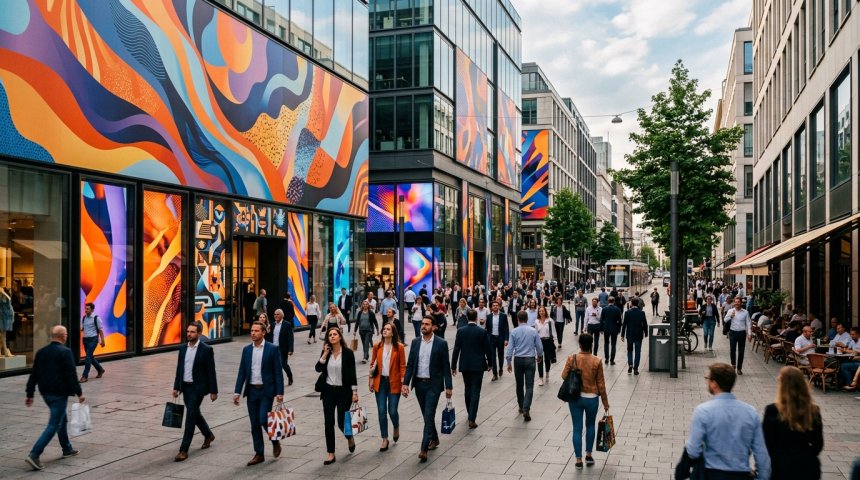
In a world saturated with digital noise—where the average person encounters between six thousand and ten thousand advertisements every single day—visibility has become the scarcest currency in business. Digital ads are scrolled past in milliseconds. Email subject lines compete with hundreds of unread messages. Social media posts vanish into algorithmic feeds before they're ever seen. Against this backdrop of perpetual digital distraction, large format graphics have reemerged not as relics of old-school advertising, but as one of the most powerful, underutilized tools for cutting through the clutter and commanding genuine attention.
Large format graphics aren't just big signs. They're immersive brand experiences that occupy physical space in ways digital media simply cannot. They exist in three dimensions, interact with natural light and architectural context, create emotional responses through scale and presence, and reach audiences at moments when they're physically present, mentally receptive, and geographically proximate to your business. A well-executed large format graphic doesn't ask for attention—it earns it through sheer physical inevitability. You can scroll past a banner ad; you cannot scroll past a forty-foot mural on the side of a building you walk past every morning.
But here's where most businesses fail: they treat large format graphics as enlarged versions of digital ads. They take a Facebook post, blow it up to billboard size, and wonder why it doesn't work. Large format isn't about scaling up digital creative; it's about designing for an entirely different medium with its own rules of perception, engagement, and environmental integration. The businesses that succeed with large format graphics understand that scale changes everything—the way messages are processed, the way environments are transformed, and the way brands are remembered.
This guide explores seven creative, strategically grounded ways businesses can leverage large format graphics to increase visibility in ways that digital channels cannot replicate. Each approach is rooted in environmental psychology, consumer behavior research, and practical business application. Whether you're a retail store seeking foot traffic, a B2B company building brand authority, a restaurant driving local awareness, or a service provider establishing community presence, these seven strategies will transform how you think about physical visual communication and unlock visibility that compounds over time.
Let's begin by understanding what makes large format fundamentally different—and why that difference matters more than ever.
Chapter 1: Why Large Format Graphics Matter in the Digital Age
Before diving into specific strategies, we need to establish why large format graphics deserve investment in an era dominated by digital marketing. The case isn't nostalgic; it's empirical, psychological, and increasingly urgent.
The Attention Crisis and Physical Presence
Digital advertising faces a fundamental paradox: as spending increases, effectiveness decreases. Banner blindness, ad blockers, algorithmic filtering, and cognitive overload have created an environment where digital visibility is expensive, fleeting, and increasingly unreliable. Large format graphics operate outside this ecosystem entirely. They don't compete for screen space; they create their own space. They don't require opt-in; they exist in shared physical environments where presence equals exposure.
Research from the ISA International Sign Association's Industry Research (dofollow) consistently demonstrates that physical signage drives measurable business outcomes: increased foot traffic, improved brand recall, higher purchase intent, and stronger local market penetration. These outcomes persist because physical graphics engage multiple senses simultaneously—visual scale, spatial context, environmental lighting, and even tactile proximity—creating memory encoding that pure digital stimuli cannot match.
The Psychology of Scale
Human brains process scale differently than any other visual attribute. Large objects trigger automatic attention mechanisms evolved over millennia for detecting threats, resources, and landmarks. This isn't learned behavior; it's hardwired neurology. When a business occupies significant visual space in an environment, it triggers subconscious associations with importance, permanence, credibility, and relevance.
Scale also creates what environmental psychologists call "place-making"—the transformation of generic space into meaningful place. A blank wall is background; a mural-covered wall is destination. An empty storefront is vacancy; a window-wrapped storefront is activity. Large format graphics don't just communicate messages; they redefine environments, creating contexts in which your brand becomes inseparable from the physical experience of a location.
The Longevity Advantage
Digital ads expire when budgets stop. Large format graphics persist. A well-produced building wrap, mural, or monument sign continues generating impressions for years without additional media spend. This longevity creates compounding visibility: each day of existence adds to cumulative exposure, brand familiarity, and community integration. Over a five-year lifespan, a single large format installation may generate millions of impressions at a fraction of the cost-per-impression of equivalent digital campaigns.
This longevity also builds trust. Temporary digital ads signal transience; permanent physical graphics signal commitment. Businesses that invest in lasting visual presence communicate stability, community investment, and long-term intention in ways that rotating digital campaigns cannot. In markets where trust determines purchasing decisions, this signaling effect translates directly to revenue.
Integration with Digital Ecosystems
The most effective large format strategies don't replace digital—they amplify it. Physical graphics serve as anchors that give digital campaigns geographic specificity, experiential dimension, and real-world credibility. QR codes bridge physical-to-digital journeys. Social media amplifies physical installations through user-generated content. Location-based targeting reinforces physical presence with digital messaging. The synergy between physical and digital creates visibility multiplication that neither channel achieves alone.
Key Insight: For businesses evaluating large format materials, substrates, and production technologies, 3M Commercial Graphics Solutions (nofollow) provides comprehensive resources on vinyl films, protective overlaminates, adhesive technologies, and durability specifications essential for selecting materials matched to environmental conditions and longevity requirements.
With this foundation established, let's explore the seven creative strategies that transform large format graphics from static signage into dynamic visibility engines.
Strategy 1: Environmental Storytelling Through Architectural Integration
The first creative strategy moves beyond treating buildings as billboards and instead uses large format graphics as integral elements of architectural storytelling—transforming structures into narrative experiences that communicate brand identity through environmental immersion rather than message transmission.
Beyond the Billboard Mentality
Traditional large format treats architecture as neutral canvas: apply graphic to surface, maximize visibility, minimize context. Environmental storytelling inverts this approach: the building is the story, and the graphic reveals rather than overlays it. This distinction matters because integrated narratives create deeper cognitive processing than superimposed messages. When graphics feel inherent to a space rather than applied to it, viewers process them as environmental features rather than advertisements, bypassing ad-avoidance reflexes and engaging with content as experiential discovery.
Principles of Architectural Integration
Respect Existing Architecture: Effective integration enhances rather than obscures. Work with architectural lines, window patterns, material textures, and structural rhythms. Graphics that fight architecture create visual tension that undermines both; graphics that harmonize create coherence that elevates both.
Layer Narrative Depth: Single-message graphics communicate once; layered narratives reward repeated viewing. Design graphics with multiple reading levels: immediate impact for passersby, secondary details for closer inspection, hidden elements for regular visitors who notice new aspects over time. Layered narratives create ongoing engagement rather than one-time exposure.
Contextual Relevance: Integrated graphics should feel inevitable to their location, not transplantable. Reference local history, cultural symbols, neighborhood character, or site-specific stories. Contextual relevance transforms generic branding into place-specific identity that resonates with community members and distinguishes your business from chain competitors using standardized templates.
Temporal Awareness: Buildings exist across seasons, weather conditions, and times of day. Design graphics that respond to temporal variation: colors that shift appearance in different light, elements that become visible only at certain angles, materials that age gracefully rather than deteriorating visibly. Temporal awareness ensures graphics remain engaging across extended lifespans rather than becoming stale.
Business Applications and ROI
Environmental storytelling works exceptionally well for:
Retail Destinations: Transform storefronts into immersive brand worlds that attract foot traffic through curiosity and aesthetic appeal. Customers don't just see your store; they experience your brand before entering. This pre-entry experience increases dwell time, social sharing, and conversion rates.
Corporate Campuses: Communicate organizational values, history, and culture through integrated environmental graphics that reinforce identity for employees, clients, and visitors. Internal environmental storytelling improves employee engagement, retention, and brand ambassadorship while externally communicating organizational substance to stakeholders.
Hospitality Venues: Create distinctive atmospheric experiences that differentiate properties in competitive markets. Integrated environmental graphics become Instagram-worthy destinations that generate organic social media exposure and word-of-mouth referrals worth far more than paid advertising.
Community Institutions: Libraries, museums, schools, and civic organizations use environmental storytelling to communicate mission, celebrate heritage, and foster community pride. These installations build goodwill, strengthen community relationships, and position institutions as cultural anchors rather than service providers.
Implementation Framework
- Site Analysis: Document architectural features, sight lines, pedestrian flow patterns, lighting conditions, and contextual elements before designing. Understanding precedes creation.
- Narrative Development: Identify stories inherent to the site, brand, and community. What makes this place unique? What narrative emerges from the intersection of brand identity and physical context?
- Design Integration: Develop graphics that enhance architectural features rather than covering them. Test designs against actual site conditions through mockups, renderings, or temporary installations.
- Material Selection: Choose substrates and printing technologies appropriate for environmental conditions, expected lifespan, and maintenance capabilities. Material failure undermines narrative integrity.
- Community Engagement: Involve community stakeholders in narrative development when appropriate. Co-created narratives generate stronger community ownership and advocacy than imposed messaging.
- Documentation and Amplification: Photograph installations professionally, document community response, and share through digital channels. Physical installations become digital content that extends reach beyond geographic proximity.
Practical Application: Environmental storytelling requires upfront investment in site analysis and custom design, but returns compound through sustained visibility, social amplification, and community integration that paid media cannot purchase. Budget accordingly: allocate resources to quality execution rather than maximizing square footage at minimum cost.
Strategy 2: Wayfinding as Brand Experience Design
The second creative strategy reconceives wayfinding systems not as utilitarian navigation aids but as comprehensive brand experience platforms that communicate identity, values, and personality through every directional interaction.
Wayfinding Beyond Direction
Most wayfinding systems prioritize function over form: get people from point A to point B efficiently. Functional wayfinding solves navigation problems but misses branding opportunities. Experiential wayfinding solves navigation problems while reinforcing brand identity at every decision point. Every sign becomes a touchpoint; every directional cue becomes a brand expression; every navigational moment becomes an opportunity to communicate personality, values, and differentiation.
This reframing matters because wayfinding is high-frequency, high-attention communication. People actively seek and carefully read wayfinding signs when navigating unfamiliar environments. This voluntary attention is rare and valuable. Unlike passive advertising encountered during distracted transit, wayfinding captures focused cognitive engagement precisely when viewers are most receptive to environmental information.
Designing Wayfinding as Brand Expression
Visual Language Consistency: Wayfinding should extend brand visual language into functional contexts. Typography, color palettes, iconography, and spatial composition should feel continuous with other brand touchpoints. Consistency doesn't mean identical replication; it means coherent translation of brand identity into navigational contexts with distinct functional requirements.
Personality Through Tone: Wayfinding copy communicates personality through word choice, sentence structure, and tonal register. Clinical precision communicates efficiency; warm conversationality communicates hospitality; playful wit communicates creativity. Tone should align with brand positioning and audience expectations while maintaining navigational clarity. Personality shouldn't compromise function; it should enhance memorability and emotional connection.
Cultural and Contextual Sensitivity: Wayfinding exists within cultural and linguistic contexts. Multilingual considerations, universal design principles, accessibility compliance, and cultural symbol awareness ensure wayfinding serves diverse populations respectfully. Inclusive wayfinding communicates brand values through action rather than assertion, demonstrating commitment to serving all community members.
Progressive Disclosure: Complex environments overwhelm when all information appears simultaneously. Progressive disclosure presents information hierarchically: primary destinations at decision points, secondary details at confirmation points, tertiary information at arrival points. Hierarchical information architecture reduces cognitive load while maintaining comprehensive guidance. Brand expression integrates at each level appropriately.
Business Value of Experiential Wayfinding
Reduced Friction, Increased Satisfaction: Confusing navigation creates frustration that contaminates entire customer experiences. Clear, branded wayfinding reduces friction, decreases support inquiries, and improves satisfaction scores. Satisfied customers spend more, return frequently, and recommend willingly.
Extended Dwell Time: Intuitive navigation encourages exploration. When people navigate confidently, they venture further, discover more, and stay longer. Extended dwell time correlates directly with increased spending, deeper engagement, and stronger memory formation.
Brand Reinforcement Through Repetition: Wayfinding creates dozens of micro-interactions per visit. Each interaction reinforces brand identity through consistent visual and verbal expression. Cumulative repetition builds familiarity and preference more effectively than single high-impact exposures.
Operational Efficiency: Well-designed wayfinding reduces staff time spent answering directional questions, managing crowd flow, and resolving navigation-related complaints. Operational savings offset wayfinding investment while improving service quality.
Implementation Considerations
- User Journey Mapping: Trace actual navigation paths through observation and user testing before designing. Assumed paths often differ from actual behavior. Design for reality, not theory.
- Stakeholder Alignment: Coordinate wayfinding with facilities management, security, operations, and marketing teams. Wayfinding intersects multiple departments; siloed development creates inconsistencies and operational conflicts.
- Accessibility Compliance: Ensure ADA compliance and universal design principles from inception, not retrofit. Accessibility isn't add-on; it's foundational to inclusive brand expression.
- Maintenance Planning: Wayfinding degrades through wear, vandalism, and environmental exposure. Plan maintenance schedules, replacement protocols, and update procedures before installation. Neglected wayfinding damages brand perception more than absent wayfinding.
- Performance Measurement: Track navigation success rates, support inquiry volumes, dwell time metrics, and satisfaction scores before and after implementation. Quantitative validation justifies investment and guides optimization.
Strategy 3: Retail Window Transformation as Immersive Merchandising
The third creative strategy transforms retail windows from product display cases into immersive brand environments that tell stories, create atmospheres, and convert pedestrians into customers through experiential engagement rather than passive viewing.
Windows as Three-Dimensional Narratives
Traditional retail windows arrange products attractively behind glass. Immersive window design creates complete environments that transport viewers into brand worlds. Products become props within larger narratives; merchandise becomes part of experiential storytelling; commercial intent becomes embedded within aesthetic and emotional engagement.
This transformation matters because immersive environments trigger different cognitive processing than product displays. Product displays activate evaluative thinking: Do I need this? Is it worth the price? Immersive environments activate imaginative thinking: What would it feel like to be there? How does this connect to my aspirations? Imaginative engagement precedes and enables evaluative engagement; people must first desire the lifestyle before they purchase the product.
Design Principles for Immersive Windows
Depth and Dimensionality: Flat graphics against glass create posters; layered depth creates worlds. Use foreground, midground, and background elements to create spatial illusion. Position products within environments rather than against backdrops. Depth invites viewers to look into windows rather than at them, extending engagement duration and increasing memorability.
Lighting as Atmosphere Creator: Lighting determines whether windows feel inviting or clinical, warm or sterile, dramatic or mundane. Strategic lighting highlights focal points, creates mood, guides visual flow, and ensures visibility across daylight and evening conditions. Lighting design should be intentional and adjustable, not default overhead illumination.
Seasonal and Temporal Rotation: Static windows become invisible through habituation. Regular rotation maintains novelty and gives repeat passersby reasons to re-engage. Seasonal themes, product launches, cultural moments, and promotional events provide natural rotation triggers. Rotation frequency should balance novelty with production feasibility; monthly rotations maintain freshness without exhausting resources.
Interactive and Participatory Elements: Windows that invite participation extend engagement beyond passive viewing. QR codes linking to digital experiences, augmented reality activations, social media prompts, or tactile elements encourage active engagement. Participation transforms viewers into participants, creating stronger memory encoding and social sharing motivation.
Conversion Mechanics
Immersive windows drive conversion through multiple mechanisms:
Attention Capture: Distinctive window design stops pedestrians in high-traffic environments. Stopped pedestrians become potential customers; passing pedestrians remain anonymous traffic. Attention capture is the prerequisite for all subsequent conversion steps.
Desire Creation: Immersive environments create aspirational contexts that make products desirable as lifestyle enablers rather than functional objects. Desire precedes purchase intent; people buy feelings before features.
Information Delivery: Windows communicate pricing, promotions, product benefits, and brand values without requiring store entry. Pre-entry information reduces purchase anxiety and qualifies interest before sales interactions.
Social Proof Generation: Photogenic windows generate user-generated content that extends reach organically. Customers photograph distinctive windows and share on social media, creating free advertising that carries peer endorsement credibility.
Operational Framework
- Strategic Calendar: Plan window rotations aligned with product launches, seasonal peaks, cultural moments, and promotional campaigns. Advance planning ensures quality execution and resource availability.
- Production Workflow: Establish efficient production processes for design, fabrication, installation, and teardown. Standardized workflows reduce costs, improve quality consistency, and enable faster rotation cycles.
- Performance Tracking: Measure foot traffic changes, entry rates, social media mentions, and sales correlations for each window installation. Data-driven optimization improves ROI over successive iterations.
- Cross-Channel Integration: Coordinate window themes with digital campaigns, in-store merchandising, email marketing, and social media content. Integrated campaigns create cohesive brand experiences across touchpoints.
- Community Connection: Feature local artists, collaborate with neighboring businesses, or highlight community stories in window designs. Community-connected windows generate local media coverage, community goodwill, and differentiated positioning.
Strategy 4: Vehicle Fleet Graphics as Mobile Brand Ambassadors
The fourth creative strategy transforms business vehicles from transportation assets into mobile brand platforms that generate thousands of daily impressions across diverse geographic and demographic contexts while performing core operational functions.
Vehicles as High-Frequency Touchpoints
Business vehicles are uniquely valuable advertising mediums because they combine mobility, frequency, and contextual relevance. Unlike static signage reaching fixed audiences, vehicles reach diverse audiences across multiple locations daily. Unlike digital ads appearing in irrelevant contexts, vehicles appear in contexts related to business operations—service vehicles in residential neighborhoods, delivery trucks in commercial districts, company cars at client sites. Contextual relevance increases message receptivity and brand association strength.
Fleet graphics also benefit from repetition. Regular routes create familiar presences in communities. Familiarity breeds trust; trust enables consideration; consideration precedes purchase. Vehicles that residents see weekly become neighborhood fixtures; neighborhood fixtures become preferred providers when needs arise.
Design Strategies for Mobile Visibility
Readability at Speed: Vehicle graphics must communicate instantly to moving viewers. Prioritize bold typography, high contrast, simple compositions, and minimal text. Test readability at various speeds and distances. What reads clearly stationary may become illegible at thirty miles per hour. Design for worst-case viewing conditions, not optimal ones.
Brand Recognition Over Information Transfer: Moving vehicles cannot convey detailed information. Focus on brand recognition elements: logo, name, tagline, contact information, website. Detailed service descriptions belong on websites and landing pages; vehicles drive awareness and recall that enable subsequent digital engagement.
Wrap vs. Decal Strategy: Full wraps maximize impact but require significant investment. Partial wraps and strategic decals offer cost-effective alternatives that maintain visibility while reducing expense. Match coverage level to vehicle usage patterns, expected lifespan, and budget constraints. High-mileage vehicles justify full wraps; occasional-use vehicles may warrant partial treatments.
Regulatory and Safety Compliance: Vehicle graphics must comply with DOT regulations, local ordinances, and safety standards. Reflective elements, proper placement away from driver sightlines, and compliant color usage ensure legal operation and safe visibility. Non-compliant graphics risk fines, insurance issues, and liability exposure.
Maximizing Fleet Graphic ROI
Route Optimization for Exposure: Analyze route patterns to maximize visibility in target demographics and geographic areas. Strategic routing increases impression quality alongside quantity. Vehicles passing through target neighborhoods generate more valuable impressions than vehicles traveling exclusively on highways.
Driver as Brand Ambassador: Drivers represent brands during customer interactions. Train drivers on brand messaging, professional conduct, and customer service. Vehicle graphics create expectations; driver behavior confirms or contradicts those expectations. Alignment between visual branding and human interaction strengthens overall brand perception.
Digital Integration: Include QR codes, URLs, phone numbers, and social media handles prominently. Track response rates through dedicated landing pages, promo codes, or call tracking numbers. Digital integration enables attribution and converts mobile impressions into measurable leads.
Maintenance and Cleanliness: Dirty, damaged, or faded graphics damage brand perception more than absent graphics. Implement regular cleaning schedules, damage inspection protocols, and timely repair procedures. Vehicle condition communicates operational standards; neglected vehicles suggest neglected service.
Fleet Consistency: Maintain visual consistency across all fleet vehicles regardless of size, type, or age. Inconsistent branding fragments brand recognition and suggests organizational disarray. Template systems ensure consistency while accommodating vehicle-specific adaptations.
Strategy 5: Event and Activation Graphics as Experiential Brand Platforms
The fifth creative strategy leverages large format graphics at events, trade shows, pop-ups, and activations to create immersive brand environments that generate high-intensity engagement, memorable experiences, and qualified lead generation in concentrated timeframes.
Events as Concentrated Attention Environments
Events gather target audiences in focused, receptive states. Attendees have self-selected into relevant contexts, invested time and money to participate, and entered mindsets oriented toward discovery and engagement. This concentration of motivated attention creates unparalleled opportunities for brand impact—if executed properly.
Too many event graphics fail because they treat events as oversized print ads. Booth backdrops replicate website headers. Banner stands repeat brochure copy. Table throws display logos without purpose. These approaches waste event potential by applying broadcast logic to interactive environments. Events demand experiential design that engages attendees as participants rather than spectators.
Designing Event Graphics for Engagement
Environmental Immersion: Transform booth spaces into brand environments through coordinated graphics across walls, floors, ceilings, furniture, and interactive elements. Immersive environments create photo-worthy moments that generate social media amplification and extend event reach beyond physical attendance.
Interactive Integration: Graphics should facilitate interaction, not just display information. Touch-responsive surfaces, gamified elements, photo opportunities, product demonstration zones, and consultation areas transform passive viewing into active participation. Participation creates stronger memory encoding and emotional connection than observation.
Modular Flexibility: Events vary in scale, configuration, and context. Modular graphic systems adapt to different booth sizes, venue layouts, and activation types without requiring complete redesign. Modularity reduces long-term costs while maintaining brand consistency across diverse applications.
Lead Capture Integration: Event graphics should facilitate lead generation naturally, not intrusively. QR codes linking to gated content, interactive assessments collecting contact information, photo opportunities requiring email submission, and consultation booking stations integrate lead capture into engaging experiences rather than interrupting them with forms.
Post-Event Amplification
Event graphics generate value beyond event duration through strategic amplification:
Professional Documentation: Photograph and video installations professionally during events. High-quality documentation becomes marketing content for future events, website galleries, social media posts, and sales presentations. Documentation extends event ROI across months and years.
User-Generated Content Encouragement: Design photogenic moments specifically for social sharing. Provide branded hashtags, social media prompts, and sharing incentives. User-generated content extends reach organically with peer endorsement credibility.
Sales Enablement Assets: Repurpose event graphics into sales collateral, proposal templates, presentation backgrounds, and digital ads. Event-tested visuals carry proven engagement credentials that strengthen subsequent marketing efforts.
Community Building: Use event graphics and documentation to build online communities around shared experiences. Post-event engagement maintains connections formed during events and nurtures prospects through consideration cycles.
Budget Optimization
Event graphics represent significant investments. Optimize returns through:
Reuse Planning: Design graphics for multi-event lifespans. Durable materials, modular systems, and timeless designs extend utility beyond single events. Reuse amortizes investment across multiple activations.
Rental vs. Purchase Analysis: Evaluate rental options for infrequent events versus purchase for regular activations. Rental reduces upfront costs and storage requirements; purchase reduces long-term costs for frequent users. Match acquisition strategy to event frequency.
Multi-Purpose Design: Create graphics serving multiple functions: booth backdrops that become office wall art, banner stands that become retail displays, table throws that become packaging inserts. Multi-purpose design maximizes utility per dollar invested.
Vendor Partnerships: Negotiate multi-event contracts with production vendors for volume discounts. Long-term partnerships also improve quality consistency and turnaround reliability compared to transactional vendor relationships.
Strategy 6: Community Murals and Public Art as Brand Goodwill Generators
The sixth creative strategy uses large format murals and public art installations to build community goodwill, generate organic media coverage, and establish brands as cultural contributors rather than commercial extractors.
Beyond Advertising: Brands as Cultural Patrons
Traditional advertising extracts attention; community murals contribute value. This distinction matters profoundly in an era of advertising skepticism and corporate distrust. Communities welcome contributions; they resist extractions. Murals that genuinely serve communities—beautifying neglected spaces, celebrating local culture, addressing social issues, or honoring community history—generate goodwill that advertising cannot purchase.
This goodwill translates to business value through multiple pathways: positive media coverage, community advocacy, customer preference, employee pride, and regulatory goodwill. Brands perceived as community assets receive benefit of doubt during controversies, preference during purchasing decisions, and support during expansion efforts. Community capital compounds over decades, creating competitive advantages that survive market fluctuations and competitive pressures.
Creating Authentic Community Murals
Community Co-Creation: Authentic murals emerge from community input, not corporate imposition. Engage community stakeholders—residents, business owners, cultural organizations, youth groups—in concept development, artist selection, and design approval. Co-created murals generate ownership and advocacy; imposed murals generate resentment and criticism.
Artist Partnership: Commission local artists whenever possible. Local artists bring cultural authenticity, community relationships, and stylistic relevance that outside artists cannot replicate. Artist partnerships also support local creative economies, reinforcing community investment narratives.
Site-Specific Relevance: Murals should respond to specific sites, histories, and communities rather than applying generic brand messaging. Site-specific relevance demonstrates genuine engagement rather than opportunistic appropriation. Research site history, consult longtime residents, and honor existing cultural significance.
Longevity Planning: Community murals represent long-term commitments. Plan for durability through quality materials, protective coatings, maintenance agreements, and restoration funds. Neglected murals communicate abandonment; maintained murals communicate ongoing commitment.
Measuring Community Mural ROI
Community mural ROI differs from traditional advertising metrics:
Media Value: Track earned media coverage, social media mentions, and influencer content generated by murals. Earned media carries credibility that paid media lacks and often reaches audiences inaccessible through paid channels.
Sentiment Analysis: Monitor community sentiment through social listening, survey feedback, and stakeholder interviews. Positive sentiment indicates successful community integration; negative sentiment signals misalignment requiring correction.
Foot Traffic and Economic Impact: Measure foot traffic changes, adjacent business revenue impacts, and property value effects. Murals that activate previously neglected areas generate economic value that benefits entire communities, including sponsoring businesses.
Employee Engagement: Survey employee pride, satisfaction, and brand ambassadorship. Employees who feel proud of their employer's community contributions become stronger brand advocates and more engaged workers.
Longitudinal Tracking: Community mural ROI accrues over years, not weeks. Establish baseline measurements before installation and track changes over extended periods. Short-term measurement misses long-term value accumulation.
Strategy 7: Interior Environmental Graphics as Culture and Experience Amplifiers
The seventh creative strategy extends large format graphics into interior environments, transforming workplaces, retail spaces, hospitality venues, and institutional facilities into immersive brand experiences that shape behavior, reinforce culture, and enhance user experience from within.
Interiors as Continuous Brand Contact
Exterior graphics create first impressions; interior graphics sustain engagement throughout extended experiences. Customers spending hours in retail environments, employees working eight-hour days in offices, patients waiting in healthcare facilities, and guests staying overnight in hotels experience interiors continuously. Interior graphics shape these extended experiences through constant, ambient brand presence that operates below conscious awareness while cumulatively reinforcing identity, values, and emotional associations.
Interior environmental graphics also serve functional purposes beyond branding: wayfinding, education, motivation, acoustic treatment, spatial definition, and atmosphere creation. Multi-functional graphics justify investment through operational utility alongside brand communication, improving ROI calculations and stakeholder buy-in.
Interior Graphic Applications by Environment
Workplace Culture Reinforcement: Office environmental graphics communicate organizational values, mission, history, and aspirations through visual presence. Mission statements become wall installations; company timelines become corridor narratives; team achievements become celebration displays; core values become integrated design elements. Culture reinforcement through environmental graphics improves employee alignment, retention, and performance more effectively than handbook policies or orientation presentations.
Retail Experience Enhancement: Retail interior graphics create atmospheric contexts that influence shopping behavior, extend dwell time, and increase basket size. Zone definitions through graphics guide customer flow; product storytelling educates and inspires; lifestyle imagery creates aspiration; promotional messaging drives conversion. Strategic interior graphics transform shopping from transactional necessity to experiential enjoyment.
Hospitality Atmosphere Creation: Hotels, restaurants, and entertainment venues use interior graphics to create distinctive atmospheres that differentiate properties and enhance guest satisfaction. Thematic environments, local cultural references, artistic installations, and branded wayfinding create memorable experiences that generate positive reviews, repeat visits, and premium pricing justification.
Healthcare and Institutional Calming: Healthcare facilities, educational institutions, and government buildings use environmental graphics to reduce anxiety, improve wayfinding, educate users, and humanize institutional environments. Calming imagery, clear navigation, educational content, and welcoming aesthetics improve user experiences, reduce stress, and enhance perceived quality of care or service.
Design Considerations for Interior Environments
Scale Appropriateness: Interior graphics must respect human scale and intimate viewing distances. Exterior-scale graphics overwhelm interior spaces; appropriately scaled graphics create comfort and engagement. Consider viewing distances, ceiling heights, furniture arrangements, and sight lines when determining graphic scale.
Material and Finish Selection: Interior materials affect acoustics, lighting, maintenance, and sensory experience. Matte finishes reduce glare; textured surfaces add tactile interest; acoustic materials manage sound; durable finishes withstand wear. Material selection should balance aesthetic goals with functional requirements and maintenance realities.
Lighting Integration: Interior lighting dramatically affects graphic appearance and legibility. Coordinate graphic design with lighting plans to ensure proper illumination, avoid glare, and create intended atmospheric effects. Lighting should enhance graphics, not compete with or obscure them.
Change Management: Interior environments evolve through renovations, rebranding, and operational changes. Design graphics with flexibility for future updates. Modular systems, replaceable panels, and adaptable frameworks accommodate change without complete replacement.
Implementation Best Practices
- Stakeholder Engagement: Interior graphics affect daily experiences of employees, customers, patients, students, or guests. Engage end-users in design processes to ensure relevance, acceptance, and effectiveness. Imposed graphics risk rejection; co-created graphics generate ownership.
- Phased Implementation: Large interior graphic projects benefit from phased rollout allowing testing, feedback, and adjustment before full deployment. Pilot installations reveal issues invisible in renderings and build stakeholder confidence through demonstrated results.
- Maintenance Protocols: Interior graphics face wear from cleaning, touching, sunlight, and environmental conditions. Establish cleaning procedures, repair protocols, and replacement schedules before installation. Proactive maintenance preserves appearance and extends lifespan.
- Accessibility Compliance: Interior graphics must meet ADA requirements for contrast, height, tactile elements, and braille where applicable. Accessibility isn't optional; it's legal requirement and ethical imperative.
- Performance Evaluation: Define success metrics before installation and measure outcomes afterward. Employee surveys, customer feedback, behavioral observations, and operational metrics validate investment and guide optimization.
Chapter 2: Strategic Planning Framework for Large Format Graphics Success
Creative execution matters, but strategic planning determines whether creative execution achieves business objectives. This framework ensures large format investments align with business goals, audience needs, and environmental contexts.
Objective Definition and Alignment
Begin every large format project by defining specific, measurable business objectives. "Increase visibility" is insufficient; "increase foot traffic by 15% within six months" provides direction and measurement criteria. Objectives should connect to broader business goals: revenue growth, market share expansion, brand awareness improvement, customer acquisition cost reduction, or employee retention enhancement.
Align objectives with audience insights. Who needs to see this graphic? Where do they encounter it? What do they need to feel, think, or do after seeing it? Audience-centered objective definition prevents self-referential design that satisfies internal preferences without achieving external results.
Environmental Context Assessment
Large format graphics exist within physical environments that determine visibility, legibility, and impact. Conduct thorough environmental assessments before designing:
Sight Line Analysis: Map pedestrian and vehicular sight lines to identify optimal placement locations. Consider viewing angles, distances, obstructions, and competing visual stimuli. Placement determines whether graphics are seen or ignored.
Lighting Conditions: Document natural and artificial lighting across times of day and seasons. Lighting affects color appearance, contrast, legibility, and mood. Design for actual lighting conditions, not idealized assumptions.
Competitive Visual Audit: Catalog existing signage, graphics, and visual stimuli in the environment. Understand visual competition and identify differentiation opportunities. Graphics that blend into visual clutter fail regardless of creative quality.
Regulatory Review: Research zoning regulations, sign ordinances, historic district restrictions, landlord requirements, and permitting processes before committing to concepts. Regulatory non-compliance wastes investment and delays implementation.
Budget Realism and ROI Projection
Large format graphics range from hundreds to hundreds of thousands of dollars. Establish realistic budgets aligned with objectives, lifespan expectations, and quality requirements. Under-budgeting produces poor quality that damages brand perception; over-budgeting wastes resources better allocated elsewhere.
Project ROI through multiple lenses: direct revenue attribution where possible, media value equivalency for earned exposure, operational savings from improved wayfinding or reduced support inquiries, employee retention value from enhanced workplace environments, and community goodwill value from public art investments. Multiple ROI perspectives justify investments that single-metric calculations undervalue.
Vendor Selection and Quality Assurance
Production quality determines whether creative vision translates to physical reality. Select vendors based on portfolio quality, technical capability, material expertise, installation experience, and client references—not solely on price. Lowest-cost vendors often produce lowest-quality results that require premature replacement, negating initial savings.
Establish quality assurance protocols: approve material samples, review print proofs, inspect installations before final acceptance, and document warranties and maintenance agreements. Quality assurance prevents costly corrections and ensures longevity matching investment expectations.
Chapter 3: Measurement and Optimization — Proving Large Format ROI
Visibility without measurement is guesswork. Establishing measurement frameworks before installation enables optimization, justifies continued investment, and demonstrates accountability to stakeholders.
Attribution Challenges and Solutions
Large format graphics face attribution challenges because they operate within multi-touchpoint customer journeys. Customers exposed to building wraps may later search online, visit stores, or respond to digital ads. Isolating large format contribution requires methodological sophistication.
Geo-Fenced Digital Attribution: Use geo-fencing around large format installations to track digital behaviors of exposed audiences. Compare search volume, website visits, and conversion rates within geo-fenced areas against control areas without large format exposure. Geo-fenced attribution provides quantitative evidence of large format impact on digital behaviors.
Promo Code and URL Tracking: Include unique promo codes, QR codes, or vanity URLs in large format graphics to track direct response. Direct response tracking captures immediate conversions attributable to specific installations, providing clear ROI evidence for performance-oriented graphics.
Survey-Based Attribution: Survey customers about awareness sources and purchase influences. While less precise than digital attribution, surveys capture influence that digital tracking misses. Combined with digital data, surveys provide comprehensive attribution pictures.
Longitudinal Trend Analysis: Track key metrics before, during, and after large format installations. Trend analysis reveals correlation between installation timing and metric changes, suggesting causal relationships even without perfect attribution.
Continuous Optimization Cycles
Measurement informs optimization. Establish regular review cycles assessing performance against objectives, identifying underperforming installations, testing improvements, and documenting learnings. Optimization transforms static installations into evolving assets that improve over time rather than depreciating.
A/B test variables where feasible: different messaging, visual treatments, placement locations, or call-to-action formats. Testing reveals what works in specific contexts rather than relying on generalizations. Document test results systematically to build institutional knowledge guiding future decisions.
Conclusion: Visibility as Strategic Asset
Large format graphics represent more than advertising; they represent strategic assets that create lasting visibility, build community relationships, shape environmental experiences, and generate compounding returns over extended lifespans. In an era of digital saturation and attention scarcity, physical presence carries unique value that digital channels cannot replicate.
The seven strategies outlined here—environmental storytelling, wayfinding as brand experience, retail window transformation, fleet graphics, event activations, community murals, and interior environmental graphics—aren't mutually exclusive options; they're complementary approaches that work synergistically when integrated thoughtfully. Businesses that approach large format graphics strategically, execute creatively, measure rigorously, and optimize continuously transform physical visibility into sustainable competitive advantage.
The question isn't whether large format graphics matter in the digital age. They matter more than ever precisely because digital channels have become saturated, ephemeral, and distrusted. The question is whether your business will leverage large format strategically or continue treating it as an afterthought.
Visibility isn't accidental. It's designed, built, measured, and optimized. Start designing yours today.
Frequently Asked Questions (FAQs)
How much do large format graphics typically cost?
Costs vary dramatically based on size, materials, complexity, installation requirements, and location. Small window decals may cost hundreds of dollars; building wraps may cost tens of thousands; community murals may exceed $50,000 including artist fees. Budget based on objectives and expected lifespan rather than minimizing upfront cost. Higher-quality installations with longer lifespans often deliver better cost-per-impression than cheaper alternatives requiring frequent replacement. Obtain multiple quotes, request material samples, and evaluate total cost of ownership including maintenance and replacement, not just initial production cost.
How long do large format graphics last?
Lifespan depends on materials, environmental exposure, and maintenance. Interior graphics with proper materials can last 10+ years. Exterior graphics range from 3-7 years for standard vinyl to 10+ years for premium materials with protective overlaminates. Vehicle wraps typically last 3-5 years depending on mileage and washing frequency. Community murals with quality paints and protective coatings can last 15-20 years with periodic maintenance. Discuss lifespan expectations with vendors during material selection and factor replacement cycles into long-term budgeting.
Do I need permits for large format graphics?
Permitting requirements vary by jurisdiction, location, size, and type. Most exterior signage requires permits; interior graphics typically don't. Historic districts, highway adjacencies, and residential zones often have additional restrictions. Research permitting requirements early in planning to avoid delays, fines, or forced removal. Professional sign companies typically handle permitting as part of installation services; verify permitting responsibility before contracting.
How do I measure ROI on large format graphics?
ROI measurement combines multiple approaches: geo-fenced digital attribution tracking online behaviors near installations, unique promo codes or URLs tracking direct response, customer surveys capturing awareness sources, foot traffic counting measuring physical visits, and longitudinal trend analysis correlating installation timing with metric changes. No single method provides complete attribution; combined approaches provide comprehensive ROI pictures. Establish measurement frameworks before installation to enable before/after comparisons and continuous optimization.
What makes large format graphics effective versus ineffective?
Effective large format graphics share common characteristics: site-specific design responding to environmental context rather than generic templates, appropriate scale and readability for viewing conditions, clear hierarchy prioritizing essential information, quality materials and production ensuring longevity and professional appearance, strategic placement maximizing visibility to target audiences, and integration with broader marketing ecosystems rather than isolated execution. Ineffective graphics typically fail through poor site analysis, inappropriate scale, excessive information density, low-quality production, unfortunate placement, or disconnection from other marketing efforts. Invest in strategic planning and quality execution rather than maximizing size at minimum cost.
Share
What's Your Reaction?
 Like
0
Like
0
 Dislike
0
Dislike
0
 Love
0
Love
0
 Funny
0
Funny
0
 Angry
0
Angry
0
 Sad
0
Sad
0
 Wow
0
Wow
0