Balancing Sustainability and Cost in Data Center Energy
Learn how data centers can balance sustainability and power costs with smarter energy procurement strategies that reduce emissions and improve efficiency.

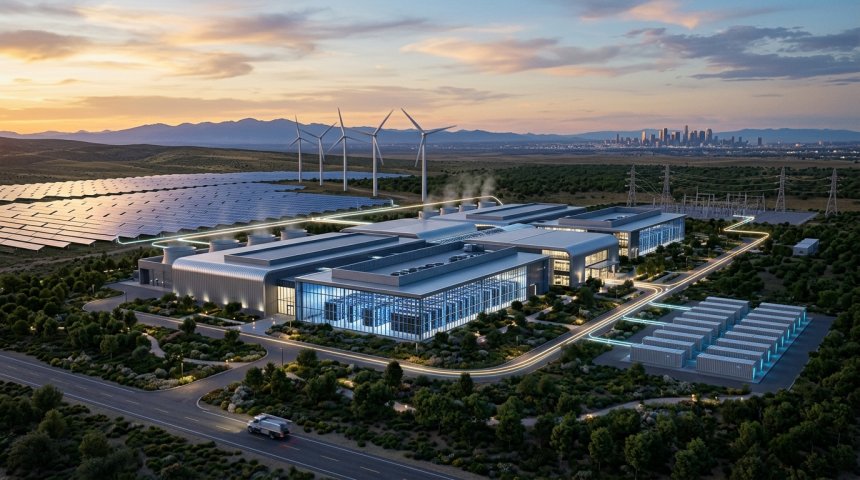
Introduction: The Growing Challenge of Balancing Cost, Reliability, and Sustainability in Data Center Power Procurement
In 2024, data centers consumed an estimated 192 terawatt-hours (TWh) of electricity in the United States alone. That accounted for roughly 4.7% of the nation's total power, according to an analysis detailed in a Department of Energy report by Lawrence Berkeley National Laboratory. By 2030, this baseline could swell to 649 TWh, potentially drinking up nearly 12% of all U.S. electricity.
These numbers reveal an unprecedented challenge for infrastructure leaders. Data center operators no longer have the luxury of shopping simply for the cheapest wholesale power rates. Today, every facility deployment faces a triple-threat balancing act:
- Protecting thin operational profit margins
- Satisfying corporate and investor sustainability mandates
- Securing uninterrupted, 24/7 uptime
Modern computing clusters run intensive cloud workloads and artificial intelligence training. As a result, power needs have grown from modest utility taps to massive, campus-scale allocations. Finding a provider that offers low-cost power is tough enough. Finding one that can deliver zero-carbon electrons without compromising uptime makes it harder.
Choosing an energy supplier requires looking past headline marketing. Operators must weigh complex tariff structures, fuel volatility, and carbon accounting rules against budget limits. Clean power procurement cannot be treated as a detached corporate social responsibility initiative. It is a fundamental operational choice that impacts site viability, balance sheets, and long-term compliance.
Assessing Data Center Load Growth, Grid Capacity Constraints, and Rising Energy Costs
A Moving Target for Power Demand
Energy planning for data centers is tricky because computing demand is constantly shifting. The LBNL study underscores this reality: while the 2030 reference case sits at 649 TWh, the broader uncertainty range spans 521 to 843 TWh (or 9.5% to 15.3% of national electricity). This huge variance stems from volatile hardware shipment rates, varying server chip power profiles, and fluctuating server utilization.
When operators negotiate multi-year energy agreements, they often guess how quickly their computing footprints will expand. If you contract for too little power, your expansion stalls and server racks sit idle. If you reserve too much capacity, you risk steep "take-or-pay" penalties or stranded capital charges on idle substations.
U.S. Data Center Electricity Demand Forecast (LBNL/DOE)
┌─────────────────────────────────────────────────────────────┐
│ 2024 Actual: 192 TWh (4.7% of U.S. grid)                    │
├─────────────────────────────────────────────────────────────┤
│ 2030 Low Bound:  521 TWh (9.5%)                             │
│ 2030 Reference:  649 TWh (11.8%)                            │
│ 2030 High Bound: 843 TWh (15.3%)                            │
└─────────────────────────────────────────────────────────────┘
Local Grids Under Pressure
Data centers do not pull power evenly across the country. They cluster around major fiber networks, water access, and low-latency transport hubs. These clusters can quickly overwhelm regional electric systems.
As detailed in the DOE clean energy resources analysis, data center loads are accelerating rapidly, differ sharply by region, and are often restricted by strict latency-driven siting demands. Meanwhile, server halls demand firm, round-the-clock power.
This creates a serious bottleneck. Regional utilities face lengthy queues for transmission upgrades and substation interconnects. In high-density markets, getting a new grid hookup can take years. Where transmission lines are congested, local utilities often pass the cost of network upgrades directly to large users.
Rising Rates and Grid Reliability
Electricity is no longer a stable operational expense. Transmission constraints, shifting regional fuels, and extreme weather events push wholesale power prices around unpredictably.
Operators must also consider grid stability. When local utilities lean on legacy fossil-fuel peaking plants to support data center growth, local emissions spike alongside carbon compliance costs. On the other hand, relying exclusively on intermittent local renewables can expose facilities to spot-market spikes or force them onto diesel backup generators. To build a solid procurement plan, companies must look closely at their regional grid mix, transmission queues, and local power regulations.
Evaluating Total Contract Economics Beyond Quoted Energy Rates in Provider Proposals
Looking Beneath the Flat Rate
When energy providers submit competitive bids, they often lead with a clean, headline-grabbing number: a simple dollar-per-megawatt-hour ($/MWh) energy rate. Focusing strictly on that nominal unit price is an expensive mistake.
As outlined in EPA procurement considerations, total contract economics vary by:
- Generation technology and resource mix
- Project geography and regional congestion
- Local market supply and demand balances
- Policy incentives and tax credits
- Contract duration and counterparty risk structures
A supplier might propose a cheap rate backed by off-site solar, but hide transmission losses, imbalance charges, and peak demand adjustments in the fine print.
| Contract Element | Low-Risk Structure | High-Risk Structure | Financial Impact |
|---|---|---|---|
| Volumetric Terms | Fixed-for-floating hedge | Unhedged index/spot | High exposure to price spikes |
| Ancillary Charges | Bundled, full-wrap rate | Pass-through cost model | Unexpected line losses and capacity fees |
| Price Escalation | Predictable, fixed index | Variable inflation adjustments | Compounding rate increases over time |
| Attribute Handling | Bundled, retired RECs | Unbundled / buyer-procured | Hidden secondary compliance costs |
Uncovering Hidden Tariff Costs
To calculate the true cost of an energy contract, finance teams must run detailed scenario models that include every line item:
- Capacity and Demand Charges: Utilities bill customers based on their single highest consumption window each month. An unexpected computing spike during a regional heatwave can inflate electric utility bills for months.
- Basis Risk and Nodal Differentials: In a synthetic or virtual power purchase agreement (VPPA), the clean energy project generates electricity at one pricing node, while the data center draws power from another. If transmission congestion drives a wedge between those two market prices, the buyer must make up the cash difference.
- Shaping and Balancing Fees: Solar panels shut down at sunset, and wind turbines lull on calm days. Data halls, however, run continuously. Providers charge balancing fees to step in with firm replacement power when green assets fall short.
- Transmission and Ancillary Fees: Getting power from a distant wind farm to a regional facility requires paying local grid operators for transmission usage, voltage support, and operating reserves.
Managing Price Escalators and Inflation
Energy contracts run for years, which leaves plenty of room for compounding costs to add up. While fixed-price bundled arrangements help shield data center operators from wild spot-market swings, many proposals feature annual escalation clauses. A contract that starts at a bargain rate with a 2.5% to 4% annual escalator can easily end up costing far more over a decade than a slightly higher flat-rate offer.
Buyers need to model these contracts across various inflation environments. Understanding the full cost picture makes it much easier to balance clean-energy goals with long-term financial health.
Strategic Contract Structuring: Balancing Long-Term Cost Predictability Against Operational Flexibility
Choosing an energy provider directly allocates operational risk. Facility operators balance predictable power prices against the agility to adjust as IT architectures evolve. Lock into the wrong agreement, and a data center risks paying above-market rates for unused capacity. Remain unhedged, and seasonal price swings can wreck operational margins.
The Trade-Off: Tenor Versus Premium
According to the EPA green power procurement guidelines, contract duration plays a fundamental role in overall procurement costs. Short-term products, such as annual retail energy options or unbundled certificates, offer operational flexibility. If a facility consolidates servers or migrates workloads to another region, it faces minimal exit friction.
However, that flexibility carries a steep financial penalty. Suppliers charge a noticeable cost premium on short commitments to protect themselves against market volatility.
Contract Duration vs. Operational Profile
┌─────────────────────────────────────────────────────────────┐
│ SHORT-TERM CONTRACTS (1–3 Years)                            │
│ • Higher per-unit cost premium                              │
│ • Low commitment and easy operational exit                  │
│ • Limited leverage to finance new clean generation          │
├─────────────────────────────────────────────────────────────┤
│ LONG-TERM PPAs (10–20 Years)                                │
│ • Lower base unit pricing                                   │
│ • Strong price hedge against fuel inflation                 │
│ • Direct "additionality" support for new assets             │
│ • Heightened volume and stranded capacity risk              │
└─────────────────────────────────────────────────────────────┘
By contrast, project-specific, long-term power purchase agreements (PPAs) running 10 to 15 years offer significant advantages. They lock in stable base pricing over the contract term and insulate the balance sheet from broader fuel inflation. Furthermore, these long-term commitments provide project developers with the revenue certainty required to secure debt financing, directly bringing new solar and wind farms to the grid.
The downside is a loss of maneuverability. If compute efficiency doubles or regional AI workloads shift, the enterprise remains bound to offload or settle huge volumes of contracted power.
Hybrid Portfolios and Staggered Commitments
Leading operators avoid an "all-or-nothing" strategy by blending diverse contract horizons. A resilient procurement portfolio often incorporates:
- Long-Term Anchor PPAs: Sized to cover a reliable, unmovable baseload (roughly 40% to 60% of forecast draw), locking in the lowest available rates.
- Medium-Term Utility Tariffs: Running three to five years, bridging anticipated capacity expansions while monitoring local market conditions.
- Short-Term Spot and Market Purchases: Absorbing top-tier load swings and sudden computing spikes without creating long-term liabilities.
This layered structure ensures budget predictability while keeping enough leeway to adopt emerging clean technologies as they mature.
The Integrity of Green Claims: Navigating Renewable Energy Certificates (RECs) and Attribute Ownership
Procuring physical electricity from a clean provider is only half the battle. A business cannot claim its servers run on green energy unless it tracks the environmental attributes of that power. In corporate accounting, electricity delivered through the common utility grid is an undifferentiated pool of electrons. To separate clean power from fossil generation, buyers must own and retire the underlying environmental attributes.
What Makes a Claim Defensible?
A data center cannot legally or credibly claim to use green power simply because an on-site substation connects to a clean grid. As the EPA guidance on energy attribute certificates makes clear, buyers must hold explicit contractual ownership of the associated Renewable Energy Certificates (RECs). Without retaining and retiring those RECs, a company cannot claim to run on green power.
Grid Flow vs. Attribute Accounting
Physical Grid:   [Solar Farm] ──> (Regional Grid Pool) ──> [Data Center Hall]
                                          ▲
Attribute Track: [1 MWh REC] ─────────────┴─────────────> [Retire for Claim]
                 (Without REC Retirement = Null Grid Power Claim)
If an energy provider sells electricity to a data center while quietly stripping off the RECs to sell into compliance markets, the buyer is consuming ordinary, undifferentiated grid power. Publicly marketing that capacity as "100% clean" exposes the operator to greenwashing scrutiny from auditors, regulators, and enterprise clients.
Retained Versus Arbitraged Certificates
Some suppliers pitch contracts offering a "REC swap" or arbitrage structure. The provider sells intermittent wind power generated in an expensive local zone, strips the high-value RECs, sells them to local utilities facing clean-energy mandates, and replaces them with cheaper, out-of-market certificates from distant regions.
While financially tempting, this approach undermines sustainability reporting. High-integrity agreements require contractually bundled RECs sourced directly from the specific asset supplying the contract. Contracts must clearly mandate that:
- The project produces recognizable, tracked certificates within the relevant regional tracking system.
- The certificates are formally retired on behalf of the customer rather than monetized twice.
- Contract language prevents secondary resale or re-bundling by the supplier.
Annual Volume Matching Versus 24/7 Hourly Matching: Cost Implications and Decarbonization Impact
For years, corporate sustainability teams relied on a straightforward metric: annual volume matching. Under this model, if a data facility consumes 1,000,000 megawatt-hours (MWh) across a calendar year, it purchases and retires 1,000,000 MWh worth of clean energy certificates.
On paper, the balance sheet zeroes out. In real-world physics, it does not.
The Physics Behind the Gap
The real power grid runs in continuous balance. Solar fields overproduce power during sunny spring afternoons, and wind generation peaks during breezy nights. Server racks, however, process compute jobs every second of the day.
When a facility leans on annual matching, it often buys massive blocks of inexpensive solar energy at noon, over-supplying the grid when electricity is already plentiful. Yet during peak evening hours, that same facility pulls power generated by fossil-fuel units. As the EPA analysis on 24/7 hourly matching demonstrates, annual-volume accounting promotes renewable asset construction, but it fails to guarantee carbon-free power for every hour of operation.
Hourly Profile: Baseline Annual Matching vs. Real Demand
MWh
 ▲
 │   [ Midday Clean Surplus ]          [ Evening Deficit ]
 │       ┌─────────┐
 │───────│ Solar   │─────────────────── Server Baseload Demand
 │       │ Output  │                   (Runs on Fossil Peakers)
 │       └─────────┘
 └──────────────────────────────────────────────────────────► Time (24 Hours)
The Transition to 24/7 Matching
To achieve actual zero-carbon operations, advanced buyers are transitioning to 24/7 hourly matching. This framework matches hourly consumption directly with clean generation produced within the same regional transmission boundary.
| Feature | Annual Volume Matching | 24/7 Hourly Matching |
|---|---|---|
| Accounting Cadence | Single annual ledger reconciliation | Real-time, hour-by-hour matching |
| Grid Boundary | Often national or loosely regional | Strictly within local grid footprint |
| Systemic Impact | Oversaturates peak renewable hours | Drives adoption of clean firm capacity |
| Procurement Cost | Standard, lowest capital outlay | Premium for storage and clean firm power |
| Data Visibility | Simple monthly utility bills | High-resolution, granular metering data |
Cost Implications and Tracking Barriers
Pursuing real-time hourly alignment demands a far more complex, costly energy portfolio. Solar and wind alone cannot solve the evening equation. Buyers must finance advanced battery storage or contract clean firm generation like nuclear and next-generation geothermal.
Market barriers remain high. As documented by the EPA, access to hourly matching is not evenly distributed across regions. Many territories lack detailed, hourly load metering, and regional tracking platforms are often not configured to issue time-stamped certificates with hourly granularity.
Data center operators must weigh these economic and technical hurdles carefully. While 24/7 matching delivers authentic grid decarbonization, building that portfolio requires higher near-term capital commitments and sophisticated energy analytics.
Regional Market Dynamics and Data Availability Barriers in Hourly Carbon-Free Energy Procurement
Siting a modern compute cluster is no longer just about cheap real estate or fast fiber. Today, the local electricity market decides what kind of clean power a facility can actually buy.
In some organized wholesale markets, regional grid operators publish transparent, real-time pricing and generation figures. In other parts of the country, regulated monopoly utilities control everything behind closed doors. This split creates very different realities for operators aiming for true round-the-clock clean energy.
Access to Granular Tracking & Clean Firm Supply:
[Deregulated RTOs / ISOs] ─── High data access ───► Easy hourly settlement
[Vertically Integrated]   ─── Low data access  ───► Custom utility tariffs required
The Regional Data Divide
To match energy hour by hour, engineers need two basic numbers: the exact kilowatt-hours consumed by the building every sixty minutes, and the exact output from contracted clean generators during that same window.
Yet getting those basic numbers is surprisingly tough. As noted in the EPA analysis on 24/7 hourly matching, access to hourly matching is not evenly distributed across regions. Many regions still rely on mechanical meters or monthly bill summaries that wipe out hourly detail.
Even worse, the regional tracking registries that mint Renewable Energy Certificates (RECs) were originally built for annual accounting. Most cannot issue time-stamped certificates that prove a megawatt-hour came from a solar farm at 2:00 PM rather than 9:00 PM.
Latency Demands Versus Clean Power Locations
Data centers face another tough balancing act: physical location. Cloud applications and AI inference systems must sit close to end users to keep connection delays low.
According to research from the DOE Office of Electricity on data center resources, data center loads are expanding rapidly, differ widely by region, and face real physical constraints from latency needs.
If a company must build near a major metro hub to hit its network latency targets, it often gets stuck with an electric grid powered by fossil fuels. Buying clean power from a windy region three states away does not solve the local grid problem.
Bridging this gap requires complex financial contracts, regional advocacy for modern tracking systems, and sometimes paying extra for custom green tariffs from the local utility.
Managing Intermittency: Integrating Cost-Effective Renewables with Clean Firm Power and Battery Storage
Because cloud servers cannot turn off when the wind stops blowing, data center buyers must think carefully about resource mix. Betting the entire sustainability plan on just wind and solar creates massive reliability headaches.
Hourly Generation Mix Strategy:
Generation (MW)
▲
│   [Solar Output]         [Wind Generation]
│      (Midday)             (Night / Early Morning)
│         ▲                         ▲
│         │                         │
├─────────┴─────────────────────────┴─────────┤ ◄── Total Demand
│   Battery Storage Discharge (Peak Gaps)      │
├─────────────────────────────────────────────┤
│   Clean Firm Power (Geothermal / Nuclear)   │ ◄── Always-On Baseload
└─────────────────────────────────────────────┘
00:00                    12:00               23:59
The Balance Between Speed, Cost, and Reliability
A practical energy plan uses a layered portfolio. Variable resources like solar panels and land-based wind farms are cheap and fast to build. They generate large amounts of zero-carbon power at very competitive rates.
However, intermittent power needs backup. Short-duration lithium-ion battery systems help smooth out sudden drops in solar or wind output over two to four hours. But batteries alone cannot handle three straight days of freezing, overcast, windless weather.
That is why energy planners look toward clean firm power—unbroken, non-weather-dependent electricity. The DOE notes that while wind, solar, and battery storage offer the most rapidly scalable near-term options, long-term balance requires deploying clean firm technologies such as advanced nuclear reactors and next-generation geothermal systems.
| Power Generation Type | Relative Cost | Scalability Speed | Operational Role |
|---|---|---|---|
| Solar Photovoltaic | Low | Fast (1–2 Years) | Bulk daytime energy |
| Onshore Wind | Low to Moderate | Moderate (2–4 Years) | Bulk overnight energy |
| Battery Storage (BESS) | Moderate | Fast (1–2 Years) | Intra-day peak shaving (2–8 hrs) |
| Clean Firm (Geothermal/Nuclear) | High | Extended (5–10+ Years) | Unbroken baseload stability |
Hedging Against Extreme Market Volatility
Relying entirely on short-term market purchases when local renewables drop off exposes an operator to massive price spikes. When grid reserves drop, market clearing prices can swing from $30 per megawatt-hour to $2,000 or more in minutes.
Pairing cheap renewables with dedicated firm contracts acts as an insurance policy. It protects the company against extreme market swings while keeping carbon emissions low every hour of the day.
Navigating Utility Rate Designs, Tariff Structures, and Infrastructure Cost Allocation for Large Loads
When a multi-hundred-megawatt facility plugs into a regional power network, it can strain local substations, transformers, and transmission wires. Regulated utilities and state utility commissions must decide who pays for those expensive network upgrades: the data center developer or everyday residential ratepayer.
Evolving Tariff Structures for Large Energy Users
State regulators are updating rules so that regular utility customers do not end up paying for high-voltage data center gear. As detailed in the DOE review on large-load electricity rate designs, modern utility frameworks focus on fair allocation of system costs to prevent cost-shifting to other customers.
Energy managers now see new commercial tariffs that depart from standard industrial rate sheets:
- Take-or-Pay Minimums: Long-term commitments requiring the data center to pay for a set capacity volume each month, even if the building operates below that capacity.
- Marginal Cost Upgrades: Upfront line-item charges where the data center pays directly for substation additions, transformer gear, and transmission tap lines.
- Variable Coincident Peak Charges: High demand fees triggered when a facility draws maximum power during the local grid's highest-demand hours of the year.
Aligning Rate Contracts with Green Goals
When picking an energy provider, operators must look closely at how tariff charges are structured. A contract that looks cheap on a pure kilowatt-hour basis might hide steep standby fees or demand charges.
Smart energy teams use on-site battery storage and flexible software workloads to trim compute demand during peak alert hours. This lowers peak utility fees and prevents local utilities from firing up dirty fossil-fuel plants.
Structuring fair utility tariffs keeps overall power bills predictable while keeping local community utility rates affordable.
Latency Constraints, Siting Considerations, and On-Site Generation Strategies
Where an operator builds a facility directly affects both the bottom line and the carbon footprint. Many digital workloads, such as online gaming, streaming, and real-time financial trades, demand ultra-low latency. Because signals can travel only so fast over fiber optic cables, these facilities must sit near major population centers.
Unfortunately, those metro areas often have crowded transmission corridors and grids that depend heavily on fossil fuels. According to insights from the DOE Clean Energy Resources guidance, data center loads face strict spatial constraints because real-time processing requires physical proximity to end users.
Workload Split & Siting Approach:
┌─────────────────────────────────┐      ┌─────────────────────────────────┐
│     Latency-Sensitive Tasks     │      │     Batch / AI Training Jobs    │
│  (Real-Time Inference, Edge)    │      │    (Delayed Processing Model)   │
└────────────────┬────────────────┘      └────────────────┬────────────────┘
                 │                                        │
                 ▼                                        ▼
   Metro Hub / Urban Interconnect            Rural / Resource-Rich Basin
   - High real estate costs                  - Low-cost land & transmission
   - Congested regional grid                 - Direct access to wind & solar
   - Relies on microgrids & on-site assets   - High hourly carbon-free energy
Navigating Dense Metropolitan Regions
When a facility must locate near an urban hub, finding open ground for sprawling utility-scale solar farms or wind projects is impossible. In these markets, operators frequently encounter stiff interconnection queues. Power providers might take three to seven years just to bring high-capacity transmission wires to the site.
To bridge this timeline without relying entirely on carbon-heavy grid mixes, facilities explore on-site microgrids. Operators combine rooftop solar panels, industrial battery systems, and backup power plants configured to run on cleaner fuels. While on-site assets rarely supply 100% of a massive campus load, they provide crucial peak shaving that trims utility demand charges.
Siting Flexibility for Artificial Intelligence and Batch Compute
Not every server rack needs microsecond response times. Large-scale artificial intelligence model training and batch data backups can easily run hundreds of miles away from major cities.
This operational freedom lets developers place batch-focused campuses directly inside resource-rich zones, such as windy rural plains or sunny desert valleys. Tapping directly into these regional power basins lowers land acquisition expenses, reduces grid connection delays, and delivers higher volumes of cheap, carbon-free energy right from day one.
A Decision Framework for Scoring and Selecting Data Center Energy Providers
Choosing the right utility or retail power provider requires balancing financial risk with environmental claims. A single metric—like the raw price per kilowatt-hour—does not tell the whole story. As outlined in the EPA Green Power Procurement Considerations guide, total contract economics vary by resource, location, and contract duration, requiring buyers to look well beyond the initial headline rate.
A structured scorecard helps procurement teams evaluate competing power proposals across both fiscal and green priorities:
| Evaluation Category | Key Metrics & Verification | Target Weight |
|---|---|---|
| All-In Economics | Base energy rate, demand ratchets, capacity charges, exit fees | 35% |
| Emissions Impact | Bundled EAC delivery, hourly generation match, regional grid displacement | 25% |
| Reliability & Delivery | Substation redundancy, outage history, transmission congestion risk | 20% |
| Contract Structure | Escalation caps, volume tolerance windows, change-in-law terms | 10% |
| Development Feasibility | Interconnection queue priority, site permitting, commercial operation date | 10% |
Scrutinizing the Total Contract Economics
A supplier might present an attractively low energy price, only to tack on steep riders for grid modernization, fuel cost adjustments, and ancillary network services. Energy buyers must tally the all-in cost of electricity. This includes evaluating fixed-price bundled structures that safeguard against market volatility versus indexed pricing that leaves budgets vulnerable to fuel shocks.
Enforcing Strict Environmental Integrity
Claims of 100% green power mean very little if the underlying legal ownership is flawed. The [EPA guidance on Energy Attribute Certificates](https://www.epa.gov/green-power-markets/energy-attribute-certificates-eacs) makes it clear: buyers must secure contractual ownership of the associated renewable energy certificates to substantiate any clean energy claim. Procurement managers must verify whether their supplier retires these certificates in an official tracking registry or merely resells unbundled attributes to outside parties.
Risk Mitigation Strategies for Regulatory Shifts, Volatility, and Decarbonization Mandates
Energy markets and public policies change constantly. Between evolving environmental standards and volatile wholesale markets, signing a multi-year power contract brings significant long-term risk. Data center buyers need clear contractual and operational defenses to keep their budgets stable.
Three Pillars of Procurement Risk Defense:
┌───────────────────────────┐
│     Contract Guardrails   │ ──► Limits on price spikes & clear regulatory clauses
└───────────────────────────┘
┌───────────────────────────┐
│     EAC Ownership Rules   │ ──► Verified certificate retirement to prevent fraud
└───────────────────────────┘
┌───────────────────────────┐
│     Demand Flexibility    │ ──► Workload shifting away from extreme market hours
└───────────────────────────┘
Crafting Resilient Power Purchase Agreements
Long-term power purchase agreements (PPAs) can lock in stable prices over ten to fifteen years. However, if regional market rules shift, those contracts can cause unexpected losses. Savvy operators write specific protective clauses directly into supply agreements:
- Change-in-Law Protections: Clear guidelines stating who covers costs if clean energy mandates, capacity market structures, or carbon taxes shift during the contract term.
- Volume Flexibility Allowances: Bandwidths that let a facility draw slightly more or less power without triggering heavy financial penalties.
- Market Floor and Ceiling Collars: Defined limits on financial contracts that shield the buyer from runaway price spikes while keeping the power producer financially viable.
Mitigating Price Volatility Through Operational Flexibility
Modern data centers do not have to behave as flat, immovable energy consumers. By taking advantage of software scheduling, operators can shift non-urgent computing jobs across different regions or pause non-critical workloads during market emergencies.
When regional grid prices spike, a facility can switch temporarily to on-site batteries or dialed-back server states. This responsiveness protects the business from painful spot-market energy costs, eases strain on local power networks, and minimizes the need for utilities to turn on expensive, highly polluting peaking generators. Combining sound contracts with responsive operations gives data centers a reliable path to run sustainably and affordably.
Frequently Asked Questions About Data Center Energy Sourcing and Sustainability
How much electricity will data centers consume in the coming years?
Data center demand is expanding quickly, but projections cover a wide range. According to a research report published by [Lawrence Berkeley National Laboratory and the DOE](https://www.energy.gov/documents/united-states-data-center-energy-usage-report-2025-update), facilities used 192 terawatt-hours in 2024, or roughly 4.7% of all electricity across the nation. By 2030, baseline estimates expect load to reach 649 terawatt-hours (11.8% of national demand). Because server power, hardware shipments, and computing usage change quickly, researchers note the 2030 demand could reasonably fall anywhere between 521 and 843 terawatt-hours.
How does annual energy matching differ from 24/7 hourly matching?
Annual matching compares your total yearly megawatt-hour consumption against the total volume of clean power purchased over that same year. In contrast, round-the-clock matching links power use to clean generation hour-by-hour within the same regional grid. As explained in the [EPA 24/7 hourly matching guidance](https://www.epa.gov/green-power-markets/247-hourly-matching-electricity), annual matching helps finance new green facilities, but it does not ensure servers run on clean electricity during every single hour of operation.
Can a data center claim to run on clean energy without owning certificates?
No. Under established accounting standards, an environmental claim requires clear ownership of the underlying renewable energy certificates (RECs). If a supplier produces solar or wind power but sells the resulting certificates to someone else, the electricity delivered to the data center is legally considered standard grid power. Purchasing, tracking, and officially retiring these specific attributes remains mandatory for validating public sustainability claims.
Why is hourly clean energy tracking difficult to implement today?
Hourly tracking requires granular data that many regional markets simply do not provide yet. Many local utilities lack interval meters that measure hourly output, and regional attribute tracking systems rarely issue certificates with hourly timestamps. While software tools are improving, access to hourly matching remains limited across many parts of the country.
Which clean energy resources offer the fastest deployment at scale?
Near-term renewable additions rely heavily on well-established technologies. According to analysis from the [DOE Office of Electricity](https://www.energy.gov/oe/clean-energy-resources-meet-data-center-electricity-demand), solar arrays, land-based wind farms, battery storage systems, and aggressive energy-efficiency measures are the most rapidly scalable, cost-competitive solutions available right now. Meeting 24/7 base demands down the road will also require scaling clean, firm resources like advanced nuclear and next-generation geothermal power.
Do longer power contracts help reduce procurement costs?
Generally, yes. Short-term retail products and spot REC purchases often carry higher price premiums due to transaction costs and short-term volatility. Committing to a long-term contract provides a predictable revenue stream that allows developers to finance and build new renewable installations, which typically yields a lower price per megawatt-hour over time.
Conclusion: Building a Long-Term, Cost-Effective Clean Energy Strategy for Modern Data Infrastructure
Modern computing demand continues to surge, but digital expansion does not have to come at the expense of fiscal discipline or environmental responsibility. The secret to long-term success lies in treating energy procurement as a core strategic discipline rather than a routine utility bill.
Navigating this transition requires a balanced perspective. Clean energy strategies cannot rely solely on distant, unbundled certificates, nor can they ignore bottom-line realities. By thoroughly evaluating the all-in cost of electricity, demanding strict contractual ownership of energy attributes, and deploying firm round-the-clock resources alongside wind, solar, and battery storage, operators can protect their budgets while driving genuine grid decarbonization.
The most resilient data center operators will not choose between sustainability and cost. Instead, they will use proactive contract terms, regional awareness, and smart load management to achieve both. Facilities that master this balance will secure predictable power costs, maintain high system reliability, and lead the way toward a cleaner digital future.
Share
What's Your Reaction?
 Like
0
Like
0
 Dislike
0
Dislike
0
 Love
0
Love
0
 Funny
0
Funny
0
 Angry
0
Angry
0
 Sad
0
Sad
0
 Wow
0
Wow
0