Remarkable 2026 Guide: Desert Hot Springs & Joshua Tree
Explore Desert Hot Springs & Joshua Tree in 2026: mineral spas, boulder hikes, stargazing, Pappy & Harriet's, and honest local desert tips.

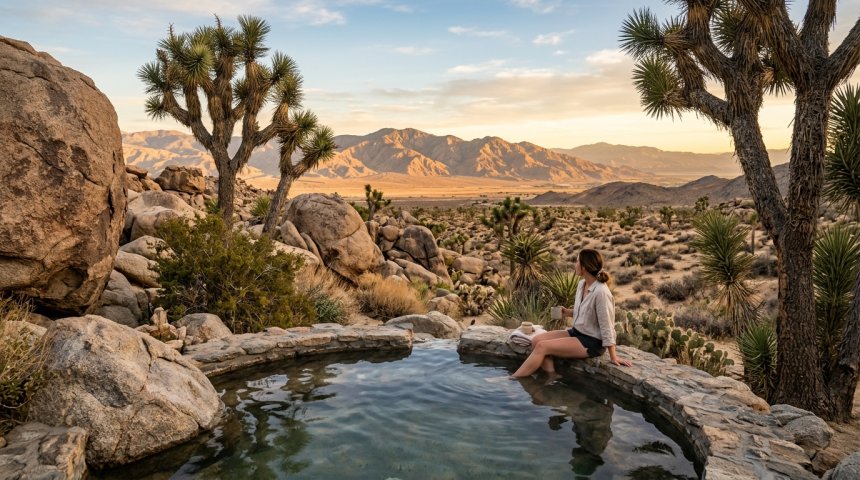
The first night I stayed in Desert Hot Springs, I nearly skipped the pool. It was almost ten, I was tired from the drive, and the room looked more comfortable than anything involving a bathing suit. But the brochure said the mineral water runs hot out of the ground, and some part of me — the part that still listens to my grandmother's advice about not wasting a miracle — got up, wrapped a towel around myself, and walked out into the dark.
Steam was coming off the pool in slow ribbons. The water was the temperature of a bath someone else drew for you. Above me, the sky was doing the thing the desert does at night: too many stars, arranged with total confidence. Somewhere far off, a coyote yipped twice and quit. I sat in that water for an hour and didn't think about a single thing, which I'm told is the entire point of meditation and the entire point of this town.
The next morning I drove twenty minutes and stood in Hidden Valley while a mile of ancient boulders stacked around me like a cathedral that gave up on religion and took up geology. That's the trip, right there. Soak and stare. Water and rock. Night sky and morning boulders. Desert Hot Springs and Joshua Tree are two halves of one very good idea, and this guide is how to do both without melting, overspending, or missing the good parts.
Why These Two Towns Belong Together
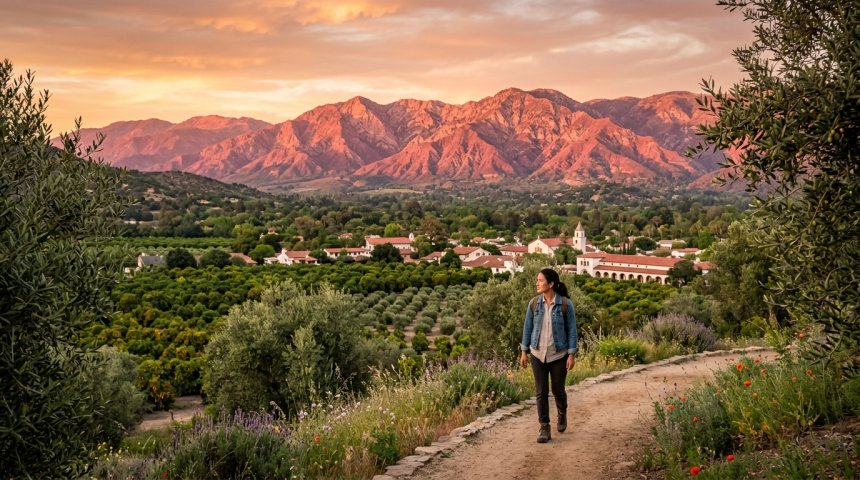
On paper they're neighbors; in practice they're a circuit. Desert Hot Springs sits on the northern edge of the Coachella Valley, a small, sleepy spa town built over one of the most remarkable aquifers in North America — water that arrives as rain on the San Bernardino Mountains, travels underground for decades, and surfaces either ice-pure or genuinely hot, loaded with minerals. The town's whole identity is the soak: a couple of dozen boutique spa hotels, most of them small, many of them gorgeous, all of them orbiting the pool.
Joshua Tree, meanwhile, is the dry half of the prescription. The national park is a high-desert museum of boulders, Joshua trees, and silence, and the little town at its western gate is a quirky colony of coffee roasters, vintage shops, sound baths, and artists who came out for a weekend at some point and never left.
Together they solve each other's problem. The park gives you the beautiful exhaustion; the spas give you the repair. The desert gives you the silence; the water gives you the sleep. I've watched this combination turn chronically wired city people into humans who nap at 3 p.m. and feel no shame. That's not a vacation. That's maintenance.
Getting There (and the Drive That Sets the Mood)
Most people fly into Palm Springs — a twenty-to-thirty-minute hop to Desert Hot Springs — or drive from Los Angeles, which runs two and a half to three hours on the I-10, depending on traffic and on how many times you stop to photograph windmills. The drive from LA is part of the therapy, honestly: the freeway climbs out of the basin, the air dries out, the mountains sharpen, and somewhere around the San Gorgonio Pass the desert opens up like a door.
If you're doing both halves of the trip, base yourself once and radiate out. Desert Hot Springs makes the better home base for most people — the spas are the evening plan, and the park is an easy morning drive. Rent a car. This is not an optional sentence. The desert looks walkable on a map and is absolutely not.
Field note: gas up before you climb into the park side, and do your grocery run in Palm Springs or on the highway. The little markets out here are fine for emergencies and priced like they know it.
When to Go: The Desert Has Two Seasons and One Warning
October through May is the season, full stop. Fall arrives like an exhale — highs in the 80s and 70s, nights crisp, the light already ridiculous. Winter days are perfect sweater weather, and winter nights are made for hot tubs, which is the whole thesis of this trip. Spring is the wildcard: warm days, wildflowers, and in a good year — when the winter rains cooperate — the desert does a superbloom and the hillsides freckle with color. Nobody can promise it; check the bloom reports and be grateful for whatever you get.
Summer is the warning. June through September regularly runs 100 to 110 degrees, and that is not a number to negotiate with. If summer is your only window, the trip still works on a modified schedule: hikes at sunrise only, spa and shade from eleven to four, everything else after six. The upside is real — spa rates drop, crowds vanish, and a July night soak under the Milky Way is a top-tier experience. Just respect the clock, because the desert does not do second warnings.
How Long to Stay, and the Heat Talk
Two nights is the minimum that makes sense — one park day, one soak day, one good night sky. Three nights is the sweet spot, and four lets you add Pioneertown or Palm Springs without turning the trip into a schedule. Elevation here is modest (about 1,000 feet in Desert Hot Springs, 2,700 in Joshua Tree village), so altitude isn't the factor. Heat and dryness are. You will lose water faster than you feel it, your skin will announce the climate within a day, and your city-instincts about "how much water is enough" will be wrong. More on that in the safety bit — I'm putting it twice because it's the only thing on this list that's genuinely non-negotiable.
Getting Around
Everything is a drive, and the drives are short and stupidly scenic. Budget twenty to thirty minutes between Desert Hot Springs and the Joshua Tree area, and another twenty to forty into the park itself depending on which trailhead you want. Cell service goes spotty to nonexistent inside the park, so download maps the night before and screenshot your plan like it's a boarding pass. The park has two main entrances — the west gate through Joshua Tree village and the north gate through Twentynine Palms — and choosing the right one can save you half an hour and most of the crowd.
Desert Hot Springs: How to Do the Spa Town Right
Let me set expectations with love: Desert Hot Springs is not a polished resort city. It's a small, slightly sleepy desert town with a strip of ordinary life and a constellation of extraordinary pools. Some blocks are charming, some are tired, and the magic is entirely inside the gates of the spa properties. Once you accept that, the town becomes wonderful, because what it does, it does better than almost anywhere.
The water is the story. The aquifer under town produces both cold, famously pure water and hot mineral water, and the spa hotels built their identities around one or the other or both. The ritual to learn is contrast: hot soak for fifteen minutes, cold plunge for thirty terrible, perfect seconds, repeat three times, then a nap you did not plan. It is the oldest trick in the bathhouse world and it works on every human body I have ever observed, including mine.
The range of places is the fun part. At the splurge end, Two Bunch Palms is the legend — a historic property with a grotto, a serious spa menu, and the kind of pool that makes you understand why people drove out here in the 1930s with nothing but faith and a bathing suit. The mid-range is where I live: small boutique spa hotels — places like Azure Palm, The Mesquite, Sandpiper Lodge — each with its own personality, mineral pools, and a quiet-adults energy that turns the volume of your life down a full notch. Even a day pass at a good spa is a legitimate version of this trip if the budget says no to the room rate.
My rules for doing it right: book the soak for the evening, not the morning — desert nights are the payoff, and a hot pool under stars is a different product than a hot pool at noon. Bring a book you will not read. Hydrate absurdly. And schedule nothing after the soak. The water does something to time; appointments made for "after the pool" are lies you tell yourself.
Field note: most spa hotels here are adults-oriented and clothing-optional policies vary by property — read the fine print before you book if that matters to your party either way.
Joshua Tree National Park: The Greatest Hits, in the Right Order
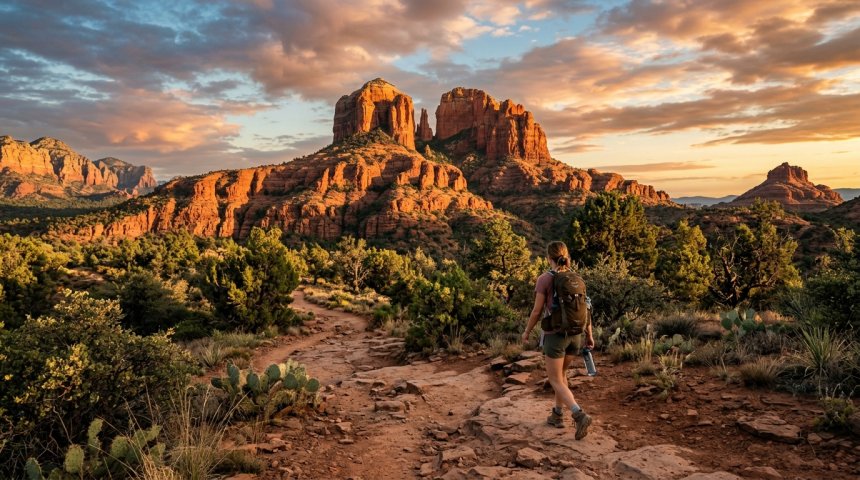
The park is two deserts in one — the lower, warmer Colorado Desert on the south and the higher Mojave on the north, where the Joshua trees and the big boulder piles live. It's bigger than people expect (roughly the size of Rhode Island), so the trick is to cluster your day instead of zigzagging. Here's the order I'd hand a friend, west gate in.
Hidden Valley first. It's an easy mile loop inside a walled basin of boulders that cattle rustlers supposedly used to hide herds in the 1800s, and now it hides you from the world instead. It's also the heart of the climbing scene, so even if you don't climb, you get the free show of watching someone fifty feet up a rock face doing something your body declines to relate to.
Barker Dam next, a short walk to a tiny man-made reservoir with petroglyphs nearby and, at the right hour, bighorn sheep coming down to drink. It's the park's gentlest, sweetest walk.
Midday: do not hike. This is the spa hour, the shade hour, the long lunch hour. The desert is giving you a break; take it.
Cholla Cactus Garden at late afternoon or, if you can manage one sunrise in your life, make it this one. A boardwalk through a field of teddy-bear cholla that goes neon when the light rakes across it. The cacti look soft and are absolutely not; the boardwalk is a promise you keep.
Keys View for sunset, where the whole Coachella Valley drops away below you, the San Andreas Fault runs through the view like a scar in the earth, and on a clear day you can see all the way to the Salton Sea. Everyone goes quiet at about the same minute. It's involuntary.
And if you have one more hour of energy, Skull Rock is a drive-up oddity and Arch Rock a short, fun scramble through a boulder maze. Ryan Mountain is the honest workout — three miles round trip, a thousand feet up, and a summit view that makes the lungs forgive you. 49 Palms Oasis is the sweaty, wonderful hike to a fan-palm oasis that proves water hides in this landscape rather than缺席 — sorry, that proves water hides here rather than being absent. Save the long southern-desert stuff (Lost Palms, Cottonwood) for a winter return trip.
The Climbing Thing (Yes, You Can Try It)
Joshua Tree is one of the world's great climbing areas, thousands of routes on perfect friction rock. Here's the secret for non-climbers: you don't have to be a climber to love it here, because watching is genuinely entertaining, and the beginner experience is excellent. Book a half-day with a licensed guide and they'll put you on easy rock, tie the knots, and talk you up a face you will be absurdly proud of. I have watched accountants become different people forty feet up a boulder. It's the best $150-ish self-improvement money in the desert.
The Night Sky: The Desert's Second Show
Joshua Tree's nights are the reason photographers lose their minds out here. Light pollution is minimal, the air is dry, and on moonless nights the Milky Way shows up like it's been waiting for you. Summer is prime galaxy season; winter trades the band for crisp, hard starlight that makes constellations look drawn with a ruler.
Do it properly: pick a moonless night, drive a few minutes away from town lights (the park after dark, a turnout, your spa hotel's quiet corner), kill the headlights, use a red light, and give your eyes twenty minutes. That last part is the tax everyone refuses to pay and everyone should — the sky doubles in size at minute fifteen. Bring a jacket even in summer; desert nights drop fast. And if a coyote comments on your stargazing session, take it as the desert signing your guestbook.
The Town of Joshua Tree, Pioneertown, and the Art Out in the Dirt
The village of Joshua Tree is a small, delightful anomaly: coffee people, crystal shops, vintage stores, and a general vibe of friendly strangeness. Start the morning at Joshua Tree Coffee Co. — the local roast that fuels half the trailheads — and let yourself browse slowly. The town rewards aimlessness.
Two stops are non-negotiable for me. Noah Purifoy's Outdoor Desert Art Museum is a free, open field of massive assemblage sculptures — burnt wood, found objects, desert wind — made by an artist who came out here after the Watts years and built a career out of wreckage and light. It is one of the most moving art experiences in California and it costs zero dollars. Go near sunset if you can.
Then drive the back road to Pioneertown, a 1940s movie-set town that never fully stopped being one, with its false-front Mane Street and, at the end of it, Pappy & Harriet's Palace — a legendary BBQ-and-live-music roadhouse hidden in the high desert that bands genuinely route tours around. Check who's playing, arrive early, order the ribs, and accept that the drive back will be worth it. It always is.
And if the schedule and the current calendar allow, the Integratron near Landers — a strange domed machine built by a ufologist in the 1950s, now famous for its sound baths — is the desert's weirdest and somehow most peaceful hour. Book ahead, and check its operating status before you plan around it; odd landmarks keep odd hours.
Food: An Honest Briefing
Let's be straight: Desert Hot Springs is a spa town, not a food town, and planning dinners there is planning to be mildly disappointed. The move is to eat on the Joshua Tree side or stock up and picnic. In the village: Natural Sisters Cafe for smoothies and health-food plates that taste better than they have to, Crossroads Cafe for the diner energy, the Joshua Tree Saloon for a beer and a burger in a room with antlers on the walls, and the coffee place again tomorrow because the desert makes you a coffee person whether you were one or not. Pappy & Harriet's is the dinner event of the trip. And the highest-value meal of this entire region remains the eleven-dollar grocery-store sandwich eaten on a boulder at sunset while Keys View does its thing.
Field note: spa hotels often have small menus or none; confirm food plans at booking, not at 8 p.m. when you're pool-drunk and hungry.
Where to Stay, by Mood and Budget
Splurge: Two Bunch Palms, full stop — the historic grotto, the spa, the palm shade. The sweet middle: the boutique spa lodges of Desert Hot Springs (Azure Palm, The Mesquite, Sandpiper, Miracle Springs) where the pool is the point and the room is the bonus. Character on the cheap: Joshua Tree village motels with lore — the Joshua Tree Inn (yes, the Gram Parsons room; yes, people ask), the retro Harmony Motel — or an adobe-ish Airbnb with a fire pit and a view of the boulders, which is the canonical Joshua Tree experience at this point. Cheapest and arguably best: camping inside the park — Jumbo Rocks, Black Rock, Indian Cove — where your campsite is the itinerary. Book campsites the moment the window opens; they go like concert tickets.
Day Trips Worth the Gas
Palm Springs is thirty minutes of luxury contrast: the Aerial Tramway up to alpine air (a 40-degree temperature drop in ten minutes, which never stops being funny), mid-century architecture drives, and a downtown that knows how to do a patio lunch. Big Morongo Canyon Preserve is the quiet gem on the way to the park — a cottonwood-and-willow oasis with boardwalks and absurd birding. And Route 66 enthusiasts can run west to Amboy and Roy's Motel for the end-of-the-world photograph. Each of these is a half-day; don't stack more than one per trip, or you'll commit the cardinal desert sin of being busy.
Beating the Heat and the Crowds
The desert's crowds are a morning-and-weekend phenomenon, so the counters are simple: enter the park at opening, do the famous stops before ten, save the drive-ups for the hot middle hours, and let sunset belong to Keys View. Weekdays thin everything out. November through February is the gentlest window overall. And the eternal desert rule: the second-choice trail at 8 a.m. beats the famous trail at noon, every single time, in every single season.
Safety, said once and meant forever: one gallon of water per person per day in heat, more if you hike; electrolytes, not just water; a hat and real sun protection; closed shoes on rock; tell someone your plan; and when a sign says the trail is harder than it looks, the sign has hiked it. Flash floods, rattlesnakes, and heat exhaustion are the desert's only real negotiators, and they don't negotiate.
Respect: Being a Good Guest in a Fragile Place
This landscape looks tough and is fragile. Stay on trails — the cryptobiotic crust under your boot takes decades to heal. Don't stack rocks, don't carve anything, don't touch the cholla, and give the Joshua trees their space; some of them are centuries old and all of them are the point. Pack out everything, keep music to yourself (the silence is a shared resource), fly drones only where explicitly allowed (mostly nowhere in the park), and remember the park is dark and quiet at night on purpose. The town communities out here are real homes, not a backdrop. Tip well, buy local art, and leave the desert the exact amount of quieter you found it.
A Realistic Three-Day Plan
Day one: arrive, check into your spa hotel, do nothing until late afternoon. Sunset soak, contrast plunge, early dinner in Joshua Tree village or a stocked picnic, night sky from the pool if your body lasts. Day two: park day — Hidden Valley and Barker Dam early, shade and long lunch midday, Cholla Cactus Garden late, Keys View for sunset, then food and stars. Day three: sunrise at the Cholla Garden if you didn't do it, or Ryan Mountain if your legs vote yes; Noah Purifoy in the afternoon; Pappy & Harriet's if the calendar blessed you; one last soak before bed, because the trip should end the way it started — in the water, under the stars, thinking about nothing at all.
"Is It Worth It?" — An Honest Answer
If your happy place is nightlife, room service, and a packed schedule, the high desert will feel empty and the spa town will feel sleepy. But if what you actually need is the thing modern life keeps interrupting — silence, heat, water, stars, and permission to do one thing at a time — this pairing is one of the best two-or-three-day resets in the American West. It's affordable if you camp, luxurious if you don't, and transformative somewhere in between. I've sent a lot of tired people out here. They come back different. That's the whole review.
FAQs
How many days do I need for Desert Hot Springs and Joshua Tree? Two nights minimum, three ideal. One day for the park, one for the soak-and-stare rhythm, and an evening for the night sky. Add a day if Pioneertown or Palm Springs is calling.
When is the best time to go? October through May, with fall and early spring as the gold standard. Summer works only on a sunrise-and-spa schedule and is genuinely dangerous at midday — plan around it, not through it.
Do I need to book spa hotels far ahead? Weekends and winter book out weeks ahead; holidays and superbloom springs, months. Midweek and shoulder seasons are kinder. Day passes are the budget fallback and still deliver the water.
Is Joshua Tree good for beginners and kids? Very. Hidden Valley, Barker Dam, and the Cholla boardwalk are easy and spectacular, and kids treat the boulder fields like a natural playground. The heat rules apply double to small humans, and summer midday is a hard no.
Can I see the Milky Way? On moonless nights, yes — summer is prime season. Check the lunar calendar before you plan, because a full moon turns the sky into a streetlight and the galaxy goes home.
What's the one thing people forget? Water, then cell service, then a jacket. There is no water anywhere in the park, your phone will be a camera with no signal, and desert nights get cold even when the day was brutal. Pack all three and you'll look like a genius.
What to Pack
A gallon jug per person per day, electrolytes, a real hat, sunscreen, layers for the night drop, closed shoes with grip, a headlamp with a red mode, a paper map or offline maps, a bathing suit and a cold-plunge towel, and exactly one nice outfit if Pappy & Harriet's is on the plan (the room has a dress code of "effort," which is the most desert-appropriate dress code in America).
A Final Word
On the last night of every trip out here, I do the same thing I did the first night, because the desert taught me to: towel, pool, dark, stars. The water is hot, the air is cool, the coyotes do their small strange opera in the distance, and for one hour nothing in my head is urgent, which is a sentence I cannot write about normal life.
That's what this place is. Not a checklist — a correction. The rocks teach you scale, the water teaches you to stop, and the sky teaches you the one lesson every desert trip ends with: you are small, the night is enormous, and somehow that is the most comforting fact in the world. Go. Soak. Stare. Drink more water than feels reasonable, and then some. And when the steam rises off the pool and the stars come out over the boulders, don't reach for the phone right away. The desert has been doing this show for a few million years. It can hold your attention for ten more minutes before the camera gets its turn.
Share
What's Your Reaction?
 Like
0
Like
0
 Dislike
0
Dislike
0
 Love
0
Love
0
 Funny
0
Funny
0
 Angry
0
Angry
0
 Sad
0
Sad
0
 Wow
0
Wow
0