Ojai, California: The Complete 2026 Travel Guide
Explore Ojai, California in 2026: experience the Pink Moment, Bart's Books, Topa Topa hikes, local olive oil, and honest tips for a slower getaway.

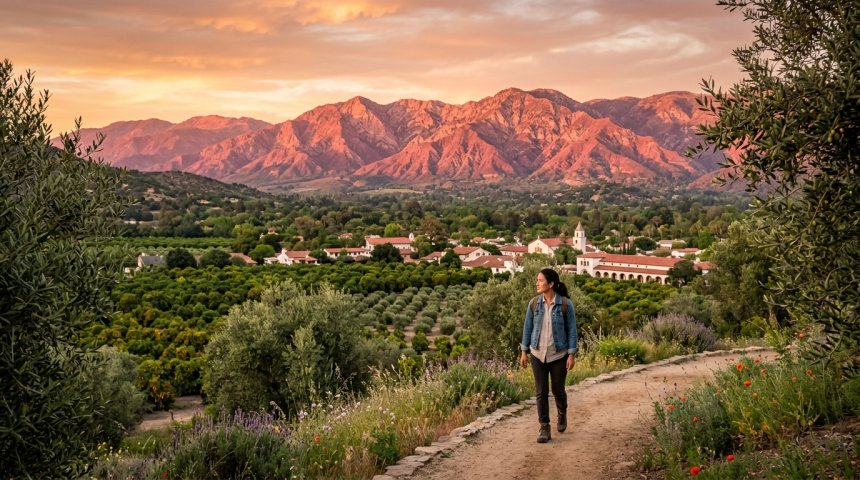
The transition happens somewhere around the fifteenth mile of Highway 33. You’ve just left the sprawling, concrete nervous system of Los Angeles behind, navigated the concrete labyrinth of Ventura, and started climbing. The radio signal starts to stutter. The air coming through the vents stops smelling like exhaust and hot asphalt, and starts smelling like warm dust, wild sage, and something faintly sweet. Then you crest Casitas Pass, the road dips, and the Ojai Valley opens up below you like a secret someone forgot to keep.
The first time I drove into Ojai, I was expecting a tourist trap. I’d seen the photos of the Spanish-style arcades and the endless wellness retreats, and I assumed it would feel like a curated movie set. But pulling into town on a Tuesday afternoon, the only thing I found was a profound, almost aggressive sense of quiet. A guy was reading a paperback on a bench under a three-hundred-year-old oak tree. A dog was sleeping in a patch of shade outside a bookstore. Nobody was rushing. It felt less like arriving in a new city and more like stepping into a long, collective exhale.
Ojai (pronounced OH-high, though locals will forgive you the first time you say OH-jay) is a place that demands you match its pace. It’s a valley tucked between the Topa Topa mountains and the Ventura backcountry, famous for its citrus groves, its spiritual history, its fiercely protected local businesses, and a sunset phenomenon that turns the mountains the color of crushed roses. I’ve been back enough times to know which coffee shop has the best patio, which hiking trail will humble you, and why the locals guard their Sunday mornings so fiercely. This guide is the culmination of those trips. No brochure speak, no generic lists. Just the honest, human reality of how to do Ojai right.
The Philosophy of the Valley: Why Ojai Feels Different
To understand Ojai, you have to understand what it refuses to be. In the 1990s, when big-box stores and sprawling chain developments were swallowing up small California towns, Ojai’s residents and city council drew a line in the sand. They passed ordinances that effectively banned national chains and big-box retailers. There is no Target here. There is no Walmart. You won’t find a McDonald's or a Starbucks on the main drag.
What you get instead is a masterclass in human-scale architecture and local commerce. The buildings are low, the sidewalks are wide, and the storefronts are owned by people who live in the hills above you. This isn’t just an aesthetic choice; it’s a philosophical one. Ojai was built on the idea that a community should be designed for walking, for lingering, and for conversation, not for drive-through efficiency.
This extends to the town’s spiritual undertones. Ojai has been a magnet for thinkers, mystics, and seekers since the early 20th century. Theosophists, artists, and philosophers like Jiddu Krishnamurti found refuge in the valley’s oak-shaded groves. You don’t need to buy into any specific doctrine to feel the residual energy of that history. It manifests today in a culture that values wellness, mindfulness, and a deep respect for the natural landscape. It’s a town where a conversation about soil health at the farmers market can easily pivot into a discussion about meditation, and nobody bats an eye.
Getting There and the Art of the Approach
Ojai is located about 90 miles north of Los Angeles and 15 miles inland from the Pacific coast at Ventura.
The Drive: The most common route is taking the US-101 North to CA-33 North. The drive up the 33 is beautiful but demands your attention. It’s a winding, two-lane canyon road that cuts through the Los Padres National Forest. Don’t try to speed through it; the curves are tight, and the local wildlife (including the occasional deer or bobcat) doesn’t respect the speed limit.
The Arrival: As you drop down into the valley, the temperature usually shifts. Ojai is slightly inland, meaning it gets the coastal breeze but also holds the desert heat.
Getting Around: Once you are in the town center, park the car. Ojai is incredibly walkable, and even better by bicycle. Many local inns and hotels offer complimentary cruiser bikes, and riding down Ojai Avenue with the wind in your face and the mountains framing your peripheral vision is one of the purest joys of the trip. If you plan to visit the surrounding olive oil farms or trailheads, you’ll need your car, but keep it parked while you’re in town.
Field Note: Cell service in the valley is generally fine, but the moment you start driving up into the Los Padres National Forest toward the trailheads or Matilija Canyon, your phone will become a very expensive paperweight. Download your offline maps before you leave your hotel.
When to Go: The Scent of the Seasons
Ojai doesn’t have a bad season, but it has very distinct personalities depending on when you visit.
Spring (March to May): This is the valley’s most intoxicating time. The citrus groves are in bloom, and the air is heavy with the scent of orange blossoms—a perfume so thick and sweet it feels like you could bottle it. The hills are green from winter rains, the wildflowers are popping, and the weather is a perfect, mild 70 degrees. It’s also the busiest time, so book your lodging months in advance.
Summer (June to August): Ojai gets hot. We’re talking mid-90s and occasionally pushing past 100 degrees by mid-afternoon. But the locals know how to handle it: mornings are for hiking and farmers markets, afternoons are for napping by a pool or reading in the shade of an oak tree, and evenings cool down beautifully for outdoor dining. The summer nights are alive with music festivals and outdoor concerts.
Fall (September to November): My personal favorite. The brutal heat breaks, the crowds thin out after Labor Day, and the valley takes on a golden, dusty hue. The oak trees turn slightly brown, the light gets softer, and the evenings require a light sweater. It’s the perfect time for long hikes and wine tasting.
Winter (December to February): The insider’s secret. The valley turns lush and green, the mountains occasionally catch a dusting of snow on their highest peaks, and the town is wonderfully quiet. Fireplace season is in full effect at the local inns, and you can have hiking trails entirely to yourself. Just pack rain gear, as this is when the valley gets its precipitation.
The Heart of Town: Ojai Avenue and The Arcade
You will spend a lot of time on Ojai Avenue, and you won’t mind it one bit. The street is lined with pepper trees and massive, ancient oaks that form a canopy over the sidewalks. But the architectural crown jewel of the town is The Ojai Arcade.
Built in 1896, the Arcade is a sweeping, Spanish-colonial structure with a terracotta roof, arched walkways, and a central bell tower. It was designed to protect pedestrians from the harsh summer sun and the winter rains, and it still serves that exact purpose today. Walking through the Arcade feels like stepping onto a vintage movie set. Inside the arches, you’ll find independent boutiques, art galleries, and cafes.
Bart’s Books: You cannot visit Ojai without spending time at Bart’s Books. Established in 1964, it’s widely considered the largest outdoor bookstore in the United States. The shelves literally face the street, shaded by a massive, ancient oak tree. You can buy rare first editions, cheap paperbacks, and local history books. In the back corner, there’s an honor-system box where you can drop a few coins for a used paperback if the shop is closed. It smells like old paper, sun-baked wood, and dust. It is a sanctuary for introverts and a mandatory stop for anyone who loves the written word.
Libbey Park: Right across the street from the Arcade is Libbey Park, the town’s communal front yard. It’s a massive expanse of manicured green grass dotted with some of the oldest and largest oak trees in the county. Bring a blanket, grab a coffee, and just sit. On any given day, you’ll see people doing tai chi, kids climbing the low-hanging branches, and locals reading the Sunday paper.
The Ojai Certified Farmers Market: If you are in town on a Sunday morning, this is non-negotiable. Located in the parking lot behind the Arcade (and spilling into the adjacent park), this isn’t just a place to buy vegetables; it’s the town’s primary social event. The "Certified" part is crucial—it means the people selling the food actually grew it on their own farms within a few miles of where you’re standing. You’ll find heirloom tomatoes, fresh-picked pixie tangerines, raw honey, artisan cheeses, and live local bands playing folk or bluegrass. Grab a tamale or a fresh-baked pastry, sit on the grass, and watch the town wake up.
Into the Wild: Hiking the Topa Topas
Ojai is flanked by the Topa Topa mountains to the north and the Sulphur Mountain ridge to the south. The hiking here is spectacular, ranging from gentle creekside strolls to brutal, calf-burning climbs.
Gridley Trail
This is the classic Ojai hike, and it is not for the faint of heart. The trailhead starts right on the edge of town, meaning you can literally walk from your hotel to the trail. It’s a steep, relentless 3.5-mile climb up to the Topa Topa bluff. You will sweat, you will question your life choices, and then you will reach the top. The panoramic view of the entire Ojai Valley, the distant Channel Islands, and the Pacific Ocean is the reward. Go at sunrise to beat the heat and watch the valley fog burn off.
Rose Valley Falls
If you want a waterfall without a twelve-hour expedition, this is your spot. Located about 15 minutes north of town up Highway 33, the trail is relatively short and takes you through a beautiful, shaded canyon to a lovely, multi-tiered waterfall. In the spring, the water is roaring; by late summer, it’s a delicate, misty trickle. The drive up there alone, winding through the Matilija Canyon, is worth the price of admission.
Fox Canyon and Pratt Trail
For a gentler, shaded experience, head to the Pratt Trail near the Ojai Valley Inn. It follows a seasonal creek through a dense canopy of oaks and sycamores. It’s flat, peaceful, and feels like you’ve been transported to a fairy tale forest. It’s the perfect "recovery hike" for the day after you’ve destroyed your legs on Gridley.
Meditation Mount
While technically a private non-profit organization, Meditation Mount offers miles of pristine, beautifully maintained hiking trails that wind through oak woodlands and sage-covered hills. The views from the upper trails are staggering. It’s quiet, it’s respectful, and it perfectly encapsulates the Ojai ethos of blending physical exertion with mental stillness. Check their website for trail hours and donation suggestions before you go.
The Golden Rule of Ojai Hiking: The trails are dry, dusty, and often exposed to the sun. Bring twice as much water as you think you need, wear a hat, and never underestimate the California sun. Also, respect the wildlife—mountain lions and rattlesnakes call these hills home. Give them space, stay on the marked trails, and leave your Bluetooth speaker at the hotel. The silence of the hills is a shared resource.
Tasting the Valley: Olive Oil, Wine, and Citrus
Ojai’s agricultural heritage isn’t just a backdrop; it’s the foundation of its culinary scene. The valley’s microclimate is uniquely suited for three things: citrus, olives, and grapes.
The Olive Oil Pilgrimage
Ojai is famous for its olive oil, and the undisputed king of the local scene is the Ojai Olive Oil Company. This isn’t a massive corporate operation; it’s a family-run farm that has been pressing oil for decades. They offer guided walking tours through the groves where you learn about the history of olive cultivation in California, followed by a tasting session that will ruin supermarket olive oil for you forever. You’ll taste oils infused with local Meyer lemons, blood oranges, and wild herbs. Buy a bottle (or three) to take home; it’s the ultimate edible souvenir.
The Wine Tasting Rooms
Unlike Santa Barbara or Napa, Ojai doesn’t have a massive concentration of sprawling vineyard estates with tasting rooms right on the property. Instead, the town has cultivated a brilliant, walkable "tasting room" culture right in the downtown Arcade and along Ojai Avenue.
- Topa Mountain Winery: Known for their robust reds and beautiful, relaxed tasting room.
- Casa Dumetz: A fantastic spot specializing in Rhone varietals, with a beautiful patio tucked away from the main street.
- Human Beingz: A wine and beer tasting room with a funky, laid-back vibe, often featuring live music and food trucks in their courtyard.
The Citrus Heritage (and the Pixie Tangerine)
Ojai is citrus country. Drive any of the backroads (like Thacher Road or Creek Road) and you’ll be flanked by endless rows of orange, lemon, and avocado trees. But the local superstar is the Pixie Tangerine. A late-ripening, seedless, incredibly sweet mandarin hybrid that was actually developed right here in the valley. If you visit in the spring (March to May), you will see "Pixie Season" signs everywhere. Buy a bag from a roadside honor stand, sit on a tailgate, and eat them until your hands are sticky. It’s a local ritual.
The Food and Drink Scene: Farm-to-Table by Default
Because the farms are literally three miles away, "farm-to-table" in Ojai isn’t a marketing buzzword; it’s just how the supply chain works. The dining scene punches way above its weight for a town of its size.
Breakfast & Coffee: Start your morning at Knead Baking Co. for incredible, artisanal pastries and breakfast sandwiches that sell out by noon. For coffee, Ojai Coffee Roasters or Roaming Fig offer excellent, locally roasted brews in cozy, community-focused environments. Grab a latte, sit on a patio bench, and watch the town slowly wake up.
Lunch & Casual: For a quick, phenomenal lunch, hit up Ojai Valley Deli. It’s a no-frills, old-school deli that makes some of the best sandwiches in Ventura County. If you want something more sit-down, Soulstone offers fantastic, healthy, globally-inspired bowls and plates in a bright, modern space.
Dinner & Upscale: When the sun goes down, Ojai’s dining scene elevates. The Vine is a local favorite, offering a brilliant seasonal menu built entirely around local produce, paired with an exceptional wine list. For a classic, old-money Ojai experience, book a table at Jimmy’s Pub inside the historic Ojai Valley Inn. It’s dark wood, leather booths, and perfect steaks. For Italian, Osteria Delicada offers handmade pastas and a warm, bustling atmosphere that feels like a neighborhood secret.
Drinks & Nightlife: Ojai isn’t a party town, and that’s the point. The nightlife consists of long dinners, craft beers, and quiet conversations. Topa Topa Brewing Company is the local anchor for craft beer, featuring a massive, family-and-dog-friendly patio, great IPAs, and often live local bands. The Brass Goat is a cozy, dimly lit spot perfect for a late-night cocktail and a charcuterie board.
Where to Stay: From Historic Grandeur to Citrus Groves
Ojai’s lodging options reflect its dual nature: historic luxury and rustic, grounded charm.
The Splurge: Ojai Valley Inn This isn’t just a hotel; it’s an institution. Established in the late 1800s, the Inn sits on over 200 acres of oak-shaded grounds, complete with a world-class spa, a championship golf course, and multiple dining options. The rooms are luxurious but retain a classic, California-mission feel. Even if you don’t stay here, you should visit for a drink at the bar or a walk through the grounds. It is the gravitational center of Ojai’s hospitality.
Boutique & Mid-Range: The Capri is a fantastic, newly renovated boutique hotel right in the center of town. It’s walkable to everything, features a beautiful pool, and has a cool, mid-century-meets-modern aesthetic. For something more intimate, look into the various Bed and Breakfasts scattered through the residential neighborhoods, like the Lavender Inn, which offers a quiet, romantic, and highly personalized experience.
The Rustic & Nature-Immersed: If you want to wake up in the citrus groves, look for Airbnb rentals or boutique farmstays along Creek Road or in the nearby town of Meiners Oaks. Blue Elk Cove and the local KOA/campgrounds offer great options if you want to pitch a tent or park an RV and sleep under the oak canopy. Just be prepared for the sounds of coyotes singing to each other at 2 a.m.—it’s the soundtrack of the valley.
The Wellness Factor: More Than Just a Trend
You can’t talk about Ojai without addressing the wellness industry. The town is dotted with yoga studios, sound healing centers, reiki practitioners, and day spas. But unlike some places where wellness feels like a performative, expensive status symbol, in Ojai, it feels integrated into daily life.
You’ll find people doing yoga on the grass in Libbey Park for free. You’ll find sound baths hosted in historic, wooden barns. The Ojai Spa (often associated with the Inn, but independent practitioners abound) offers treatments that utilize local botanicals, clays, and essential oils.
My recommendation? Don’t over-schedule the wellness. The most healing thing you can do in Ojai is simply turn off your phone, sit under an oak tree, and listen to the wind in the leaves for an hour. The valley does the heavy lifting for you.
Day Trips: The Coast and the Canyons
Ojai is perfectly positioned as a basecamp. You are close enough to the ocean to smell the salt on a good breeze, but tucked far enough inland to feel entirely separate from the coastal fog.
Ventura and the Coast (20 Minutes): When the valley heat gets too intense, drive down the 33 to Ventura. Hit the Ventura Pier for a walk over the Pacific, grab fish tacos at a local harbor shack, or rent a kayak and paddle out to the Channel Islands National Park (the launch point is in nearby Oxnard/Ventura harbor). It’s a brilliant way to combine a mountain morning with an ocean afternoon.
Santa Barbara (45 Minutes): Head west on the 101, and you’re in the American Riviera. Santa Barbara offers world-class dining, the historic Mission, and incredible wine country. It’s an easy day trip, though you’ll likely find yourself wishing you had booked a hotel there instead, once you see the prices.
Matilija Hot Springs (The Rugged Adventure): If you are adventurous and don’t mind getting dirty, look into the current status of Matilija Hot Springs. Located deep up the canyon north of Ojai, these natural, wilderness hot springs require a rugged hike (or a very bouncy drive, depending on road conditions and current access rules, which change frequently due to fire damage and land ownership). It’s wild, undeveloped, and profoundly beautiful. Always check local trail conditions before attempting this.
A Realistic 3-Day Ojai Itinerary
Day 1: Arrival and The Arcade
- Afternoon: Arrive, check into your hotel, and immediately walk to Bart’s Books. Buy a book, sit under the oak tree, and decompress from the drive.
- Late Afternoon: Stroll through the Ojai Arcade, browse the local boutiques, and grab an early dinner at a patio restaurant like Casa Dumetz or The Vine.
- Evening: Walk off dinner through Libbey Park at dusk, listening to the crickets and the distant hum of the valley.
Day 2: Sweat, Citrus, and Sips
- Morning: Wake up early and tackle the Gridley Trail before the sun gets high. The view from the top is your reward.
- Late Morning: Head to the Ojai Olive Oil Company for a tour and tasting.
- Lunch: Grab a sandwich at Ojai Valley Deli and eat it on a bench on Ojai Avenue.
- Afternoon: Rent a bike and ride the Ojai Valley Trail (a paved, flat path that runs through the backcountry). Stop at a roadside honor stand to buy fresh citrus.
- Evening: Dinner at Osteria Delicada, followed by a craft beer at Topa Topa Brewing.
Day 3: The Pink Moment and Departure
- Morning: If it’s Sunday, spend the morning at the Certified Farmers Market. If not, take a gentle hike on the Pratt Trail or Fox Canyon.
- Lunch: A long, lazy lunch at Soulstone or a picnic in the park.
- Afternoon: Do some final shopping, grab a coffee, and find a spot with a clear view of the western mountains.
- The Finale: Stay just long enough to witness the Pink Moment before you hit the road back to reality.
The "Pink Moment": Ojai’s Daily Magic Trick
I saved this for last because it’s the thing everyone talks about, and the thing that truly defines the Ojai experience.
The Topa Topa mountains that form the northern wall of the valley are made of a specific type of sandstone and shale. Because of their angle, and the way the smog-free, crystal-clear valley air refracts light, something optical and magical happens right at sunset.
As the sun dips below the western horizon, its dying rays hit the face of the mountains. For about ten to fifteen minutes, the rugged, brown rock transforms. It glows. It shifts from a dusty orange to a vibrant, impossible, neon pink. It looks like the mountains are lit from within by a massive neon sign.
Locals call it "The Pink Moment." It happens almost every clear evening. When it starts, conversations on restaurant patios pause. People walking their dogs stop and point. It’s a daily, communal moment of awe that never really gets old.
How to see it: You don’t need a special vantage point. Anywhere in town with a view of the northern mountains works. The lawn at Libbey Park, the patio at the Ojai Valley Inn, or just standing in the middle of Ojai Avenue. Just make sure you aren’t looking at your phone when it happens.
Respecting the Vibe: How to Be a Good Guest
Ojai is a small, tight-knit community that relies heavily on tourism but is fiercely protective of its quiet, slow-paced identity. Being a good guest is easy if you follow a few unwritten rules:
- Respect the Quiet: People come here to escape noise. Keep your music in your headphones, don’t rev your engine, and keep your voices down when walking through residential neighborhoods at night.
- Support Local: The town fought hard to keep chains out. Honor that by spending your money at the independent bookstores, local farms, and family-owned restaurants.
- Stay on the Trails: The backcountry is fragile. Cryptobiotic soil and native plant life take decades to recover from a single boot print.
- Acknowledge the History: The land Ojai sits on is the ancestral home of the Chumash people. Take a moment to learn about their history and their ongoing presence in the region.
- Slow Down: If a line at the coffee shop is moving slowly, don’t sigh and check your watch. The barista is probably chatting with a regular. Take a breath. You’re in Ojai now.
FAQs
Do I need a car to visit Ojai? You need a car to get to Ojai and to reach the outlying trailheads, olive farms, and wineries. However, once you are in the town center (Ojai Avenue and the Arcade), a car is a burden. Park it and use your feet or a bicycle.
Is Ojai expensive? It can be. Ojai is a highly desirable, affluent enclave. Luxury hotels and high-end dining will drain a budget quickly. However, you can do it on a moderate budget by camping, staying in neighboring Ventura, eating at the local delis and food trucks, and enjoying the free hikes and parks.
What is the "Pink Moment" and is it guaranteed? It’s the optical phenomenon where the northern mountains turn bright pink at sunset. It’s not guaranteed—cloud cover, marine layer fog, or wildfire smoke can obscure it—but on a clear day, it happens every single evening.
Is Ojai a good place for a family vacation? Absolutely. The flat, paved Ojai Valley Trail is perfect for kids on bikes. The farmers market has face painting and music. Bart’s Books has a great children’s section. The only caveat is that the high-end dining and quiet spas are more geared toward adults and couples.
How far is the beach from Ojai? Very close! The Pacific Ocean (via Ventura) is only about a 20 to 25-minute drive down Highway 33. Many visitors split their days between morning hikes in the mountains and afternoon swims in the ocean.
Conclusion: The Valley Leaves a Mark
On the drive out of Ojai, heading back up the 33 toward the pass, the valley always feels reluctant to let you go. You watch the citrus groves blur past, the oak trees thin out, and the majestic wall of the Topa Topas shrink in your rearview mirror. The radio static clears, the cell service bars multiply, and the low hum of the Los Angeles basin starts to creep back into your consciousness.
But you take something back with you. Ojai doesn’t just offer a change of scenery; it offers a change of rhythm. In a world that constantly demands we optimize, hustle, and scroll, Ojai insists that we sit, taste, and observe. It asks you to notice the smell of the orange blossoms, to feel the rough bark of an ancient oak, and to watch a mountain turn pink just because the sun decided to set.
Go to Ojai. Walk the Arcade. Hike the bluff. Drink the olive oil. And when the sky starts to dim and the mountains catch that final, impossible light, don’t take a picture. Just stand there, take a deep breath, and let the valley slow you down.
Share
What's Your Reaction?
 Like
0
Like
0
 Dislike
0
Dislike
0
 Love
0
Love
0
 Funny
0
Funny
0
 Angry
0
Angry
0
 Sad
0
Sad
0
 Wow
0
Wow
0