Washington, D.C.: A Powerful Travel Guide to Top Things 2026
Explore Washington, D.C. in 2026. Washington, D.C.: a complete guide to iconic landmarks, rich history, and vibrant culture in America’s capital city.

Washington, D.C., the heart of American democracy, stands as a testament to history, architecture, and political power. As of 2026, the city remains one of the most visited destinations in the world, drawing millions of people who come to witness the inner workings of the federal government and explore the vast cultural treasures housed within its borders. Unlike any other city in the United States, Washington, D.C. was specifically designed to be the seat of government, a vision brought to life by Pierre Charles L'Enfant in the late 18th century. Today, it is a bustling metropolis that balances its solemn responsibilities with a vibrant, modern lifestyle.
The city is more than just a collection of marble monuments and office buildings. It is a place where neighborhoods flourish with unique character, where culinary scenes are constantly evolving, and where the echoes of history meet the innovations of the future. Whether you are a student of history, an architecture enthusiast, or simply someone looking for an engaging urban experience, Washington, D.C. offers a depth that few other cities can match. In this guide, we explore the facets of the District, from its iconic landmarks to its hidden gems, providing a roadmap for understanding this fascinating capital.
The Architectural Legacy of the District
The visual identity of Washington, D.C. is defined by its neoclassical architecture. The city's skyline is intentionally kept low, governed by the Height of Buildings Act, which ensures that no building overwhelms the majesty of the Capitol dome or the Washington Monument. This design choice creates an expansive, airy feel that is quite rare in major metropolitan areas.
At the center of it all is the United States Capitol, a masterpiece of neoclassical design. The building serves as the meeting place for the United States Congress and is the centerpiece of the city's grid layout. Walking through the halls of the Capitol, one is struck by the immense weight of history. The rotunda, with its frescoed ceiling and iconic paintings, tells the story of a nation in its infancy. Surrounding the Capitol are the massive office buildings that house the legislative staff, creating a campus that feels like a city within a city.
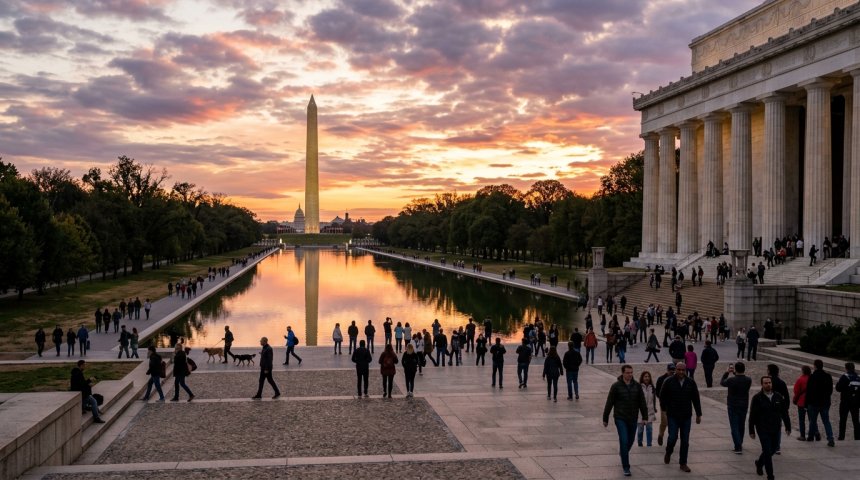
Moving westward from the Capitol, one enters the National Mall, often referred to as "America's Front Yard." This two-mile stretch is flanked by the Smithsonian museums and culminates in the Lincoln Memorial. The Lincoln Memorial itself is a site of profound reflection. Sitting at the feet of the seated Abraham Lincoln, overlooking the Reflecting Pool toward the Washington Monument, provides a perspective on American history that is both humbling and inspiring. The memorial has served as the backdrop for some of the most significant civil rights speeches in history, making it a sacred space for the public.
The Smithsonian Institution and Cultural Preservation
No visit to Washington, D.C. is complete without engaging with the Smithsonian Institution. Established in 1846, it has grown into the world's largest museum, education, and research complex. In 2026, the Smithsonian continues to lead the way in preserving artifacts that define human achievement and natural history.
The National Museum of Natural History is perhaps the most famous of the Smithsonian properties. From the Hope Diamond to the vast collection of dinosaur fossils, the museum serves as an educational powerhouse. Families and researchers alike flock to its exhibits to understand the complexities of the natural world. Nearby, the National Museum of American History offers a deep dive into the cultural and technological evolution of the United States. Here, visitors can see everything from the original Star-Spangled Banner to the invention of the lightbulb.
Beyond these staples, the Smithsonian has expanded its reach to include more specialized institutions like the National Museum of African American History and Culture. This museum, which opened its doors in recent years, has quickly become one of the most significant cultural sites in the country. Its architecture, inspired by Yoruba art, and its comprehensive exhibits documenting the African American experience, provide a necessary and poignant look at the challenges and triumphs that have shaped the nation.
The Neighborhoods of Washington, D.C.
While the tourist areas focus on the monuments, the true life of the city is found in its neighborhoods. Washington, D.C. is a city of distinct communities, each with its own personality and history.
Georgetown, established even before the city itself, is perhaps the most famous neighborhood. With its cobblestone streets, federal-style row houses, and high-end boutiques, it feels like a step back in time. The waterfront area has been revitalized into a bustling hub of restaurants and outdoor activities, making it a favorite for both residents and visitors.
Across the city lies Adams Morgan, a neighborhood known for its vibrant nightlife and diverse culinary scene. Historically a hub for international communities, Adams Morgan is where you go to find the best global cuisine, from Ethiopian injera to Latin American street food. The energy in this part of the city is palpable, especially on weekends when the music spills out from the many bars and clubs that line 18th Street.
For those interested in a more historic and residential feel, Capitol Hill offers a beautiful array of Victorian-era townhomes. Being close to the legislative center, the area is home to many political staffers and journalists, giving it a unique, intellectual atmosphere. Eastern Market, located within this neighborhood, remains a cornerstone of the community. It is a place where local farmers, artists, and food vendors come together, offering a glimpse into the daily lives of the people who call the District home.
The Political Climate and Governance
Washington, D.C. is the undisputed political capital of the world. The decisions made within the White House, the Supreme Court, and the halls of Congress affect not just the United States, but the entire globe. As of 2026, the city continues to navigate the complexities of modern governance, balancing the needs of its local residents with the demands of its status as the nation's capital.
The White House, located at 1600 Pennsylvania Avenue, remains the most iconic residence in the country. While security measures have increased significantly over the decades, the building remains a symbol of executive power. The surrounding Lafayette Square is often the site of peaceful protests and demonstrations, serving as a reminder that in a democracy, the people have the right to voice their dissent directly to the doorstep of their leaders.
The Supreme Court building, with its grand marble facade, houses the highest judicial body in the land. The Court's decisions in 2026 continue to shape the social and legal landscape of the country. For those who visit, the opportunity to witness an oral argument is a rare and solemn experience, offering a front-row seat to the interpretation of the Constitution.
The Culinary Renaissance in the District
For many years, Washington, D.C. had a reputation for being a city where people ate to live, rather than lived to eat. That has changed dramatically over the last decade. Today, the city is home to a world-class culinary scene that rivals that of New York or San Francisco.
The rise of D.C.'s food scene is due in part to the city's diverse international population. Ethiopian cuisine, in particular, has found a home here, with the city boasting one of the largest Ethiopian populations outside of Addis Ababa. You will find incredible Ethiopian restaurants in neighborhoods like U Street and Adams Morgan, where sharing a communal platter is a standard dining experience.
The fine-dining scene has also exploded. Several restaurants in the city have earned Michelin stars, showcasing the innovative techniques of local chefs who are using fresh, regional ingredients from the Chesapeake Bay area and the surrounding farmland of Virginia and Maryland. Whether you are looking for a quick bite from a food truck or a multi-course tasting menu, the culinary diversity of the District is a highlight of any visit.
Public Transportation and Urban Planning
Navigating Washington, D.C. is relatively straightforward thanks to the Metrorail system. The Metro, with its iconic brutalist architecture and vaulted ceilings, is the backbone of the city's transportation network. Even in 2026, the system continues to expand, connecting the suburbs of Northern Virginia and Maryland to the core of the city.
The city is also highly walkable, especially in the areas around the National Mall and the central business district. For those who prefer to cycle, the Capital Bikeshare program has made it easy to pick up a bike and explore the city's extensive network of bike lanes and trails. The Rock Creek Park trail, which runs through the heart of the city, provides a green escape for those looking to avoid the noise of traffic.
Urban planning in the District is a constant balancing act. Planners must respect the historical integrity of the city while accommodating the needs of a growing population. The redevelopment of areas like The Wharf, a massive project on the Potomac River, shows how the city is successfully blending historic charm with modern, sustainable urban design. By creating mixed-use spaces that include housing, commercial offices, and public parks, the city is ensuring that it remains a livable and dynamic place for generations to come.
The Role of Media and Think Tanks
Washington, D.C. is the global center of political intelligence. The presence of major news organizations like The Washington Post and a vast network of think tanks creates an atmosphere of constant debate and analysis. In 2026, as the world becomes increasingly complex, the role of these institutions is more important than ever.
Think tanks such as the Brookings Institution and the Heritage Foundation serve as the intellectual engines of the city. These organizations provide the research and policy recommendations that inform lawmakers and the public alike. For a visitor, attending a panel discussion or an expert talk at one of these institutions can be an eye-opening experience, providing insights into the issues that are currently being debated in the halls of power.
The journalistic culture of the city is equally intense. The press corps, which follows the activities of the federal government with scrutiny, plays a vital role in maintaining transparency. The city’s bookstores, many of which specialize in political history and current affairs, are popular hangouts for those who want to stay informed and engaged with the issues of the day.
Education and Academic Life
Washington, D.C. is home to several prestigious universities, including Georgetown University, George Washington University, and Howard University. These institutions contribute to the city's youthful energy and intellectual vitality. Students from all over the world come to the District to study international relations, law, and public policy, knowing that they are at the center of the action.
Howard University, in particular, holds a special place in the city's history. As a historically Black university, it has been a center for intellectual and civil rights activism for over a century. The campus is a hub of cultural activity, and the university's influence on the city's political and social fabric cannot be overstated.
The academic presence in the city also means that there are always lectures, seminars, and conferences happening. Whether you are interested in climate science, foreign policy, or the arts, there is almost always an event happening on one of the local campuses that is open to the public.
Nature and Green Spaces
Despite its urban density, Washington, D.C. is a remarkably green city. The National Park Service manages a surprising amount of land within the city limits, including the massive Rock Creek Park. This park, which stretches from the Maryland border to the Potomac River, offers miles of hiking and biking trails, a planetarium, and a zoo.
The United States Botanic Garden, located near the Capitol, is another gem. It is one of the oldest botanic gardens in North America and features a stunning conservatory that houses plants from all over the world. It is the perfect place to escape the heat of the summer or the chill of the winter, providing a lush, tropical oasis in the heart of the city.
The Tidal Basin is perhaps the most famous green space in the city, especially during the spring when the cherry blossoms are in bloom. These trees, a gift from Japan in 1912, have become a symbol of the city's international spirit. Thousands of people visit the Tidal Basin every year to witness the blossoms, creating a festive atmosphere that signals the arrival of spring in the capital.
The Future of Washington, D.C.
As we look toward the future, Washington, D.C. is positioning itself as a leader in sustainability and technology. The city has set ambitious goals for reducing its carbon footprint and investing in green infrastructure. New buildings are being designed to meet high energy-efficiency standards, and the city is actively working to make public transit more accessible and reliable.
The economy of the city is also diversifying. While the federal government remains the largest employer, the private sector, particularly in the fields of cybersecurity, biotechnology, and technology services, is growing rapidly. This shift is helping to create a more resilient and dynamic economy that is less dependent on the fluctuations of federal spending.
The city's challenge in the coming years will be to maintain its affordability and inclusivity. As property values rise, the city must find ways to support its long-term residents and ensure that the benefits of its growth are shared by all. This is a challenge faced by many major cities, but in the nation's capital, where the ideals of equality and justice are so central to the identity of the place, it carries an even greater weight.
Conclusion
Washington, D.C. is a city of layers. On the surface, it is the home of the federal government, a place of marble monuments and political posturing. But beneath that surface lies a city of rich history, diverse neighborhoods, world-class culinary experiences, and a thriving intellectual community. It is a place that reflects the aspirations and the struggles of the United States, a living laboratory of democracy that is constantly evolving.
In 2026, the city stands as a beacon for those who are interested in the mechanics of power and the beauty of civic life. Whether you are walking through the halls of the Smithsonian, exploring the historic streets of Georgetown, or taking in the view from the steps of the Lincoln Memorial, you are participating in a tradition that spans centuries. Washington, D.C. is not just a destination; it is an experience that challenges you to think, to learn, and to appreciate the complexities of the world we live in. As the city continues to grow and adapt, it remains a vital part of the American story, inviting everyone to come and see for themselves what it means to be at the center of it all.
What is the best time of year to visit Washington, D.C.?
The best time to visit Washington, D.C. is generally during the spring (late March to early April) or the fall (September to October). During the spring, the city's famous cherry blossoms are in bloom, creating a beautiful landscape around the Tidal Basin. Fall offers milder temperatures and less humidity, making it ideal for walking between the many museums and monuments. Summer can be quite hot and humid, while winter is generally cold, though it offers the advantage of smaller crowds at major attractions.
Do I need a car to get around Washington, D.C.?
No, you do not need a car in Washington, D.C. In fact, driving in the city can be difficult due to heavy traffic and limited, expensive parking. The city has an excellent public transportation system, including the Metrorail and a comprehensive bus network. Furthermore, the central areas of the city, especially the National Mall, are highly walkable. For those who enjoy cycling, the Capital Bikeshare program is a very convenient and popular way to navigate the city.
Is Washington, D.C. safe for tourists?
Like any major metropolitan area, Washington, D.C. has areas that are safer than others. The primary tourist zones, such as the National Mall, Georgetown, and the area around the Capitol, are generally very safe and highly patrolled by local and federal law enforcement. Visitors should exercise standard urban precautions, such as staying aware of their surroundings, especially at night, and avoiding isolated areas. It is always a good idea to research the specific neighborhoods you plan to visit and stick to well-lit, populated areas.
Are the museums in Washington, D.C. free?
Yes, many of the most popular museums in Washington, D.C. are free to the public. This includes all of the Smithsonian Institution museums, such as the National Museum of Natural History, the National Museum of American History, and the National Air and Space Museum. The National Gallery of Art is also free. However, some special exhibitions or certain private museums may require an admission fee or a timed-entry reservation, so it is always recommended to check the official websites of the institutions before your visit.
How much time should I spend in Washington, D.C.?
To see the major highlights of Washington, D.C., a minimum of three to four days is recommended. This allows enough time to visit the primary monuments, explore two or three of the Smithsonian museums, and walk through at least one or two historic neighborhoods like Georgetown or Capitol Hill. If you have a week, you can delve much deeper into the city's offerings, including visiting the National Zoo, exploring the U Street corridor, or taking a day trip to nearby historical sites like Mount Vernon or Old Town Alexandria.
Can I visit the inside of the White House and the Capitol?
Yes, but both require advanced planning. To tour the White House, U.S. citizens must submit a request through their Member of Congress up to three months in advance, and international visitors must contact their home country's embassy in Washington, D.C. Tours are limited and fill up quickly. For the U.S. Capitol, you can book a tour online through the Capitol Visitor Center website. While the Capitol is more accessible than the White House, it is still highly recommended to book your tour in advance, especially during peak tourist seasons.
The Culinary Landscape: A Global Melting Pot
Beyond the corridors of power, Washington, D.C. has emerged as a world-class culinary destination. Once dismissed by food critics as a "steak-and-potatoes" town, the city has undergone a dramatic transformation over the last two decades. Today, the D.C. dining scene is a reflection of the city’s international character, blending global influences with the bounty of the Chesapeake Bay and the fertile Mid-Atlantic region.
The city’s neighborhoods serve as the epicenters for this gastronomic evolution. Adams Morgan and Mount Pleasant remain hubs for Latin American cuisine, where you can find authentic Salvadoran pupusas and Ethiopian injera—a staple of the city’s large and vibrant Ethiopian community, which is widely considered the largest outside of Addis Ababa. Meanwhile, the H Street Corridor and the Wharf have become playgrounds for modern, experimental chefs who prioritize farm-to-table sustainability.
For those looking to experience the city through its palate, the Michelin Guide’s expanded presence in the District has highlighted a range of options, from high-end, multi-course tasting menus in Penn Quarter to rustic, inventive neighborhood bistros. The local seafood scene is particularly worth noting; Maryland blue crabs and Chesapeake oysters are celebrated in many local restaurants, often prepared with a contemporary twist that respects traditional coastal flavors. Visiting D.C. without sampling the local food culture is missing out on a vital element of the city's modern identity.
Navigating the Hidden Gems: Beyond the Monuments
While the National Mall captures the world's attention, the true character of Washington, D.C. is found in its lesser-known enclaves. For travelers who have already checked the Lincoln Memorial and the Washington Monument off their list, the city offers a wealth of "hidden" treasures that provide a more intimate look at local life.
The Hillwood Estate, Museum & Gardens, once the home of Marjorie Merriweather Post, offers an exquisite collection of Russian imperial art and 18th-century French decorative arts set within 25 acres of manicured gardens. It is a tranquil escape from the noise of the city center. Similarly, the Phillips Collection in Dupont Circle—America’s first museum of modern art—provides a more personal, domestic atmosphere compared to the cavernous halls of the Smithsonian. Its famous "Rothko Room" is a place of quiet reflection that many visitors find deeply moving.
For those interested in the darker or more eccentric side of history, the Mansion on O Street is a labyrinthine collection of themed rooms, secret doors, and historical artifacts that defies easy categorization. It serves as a reminder that Washington is not just a city of marble and policy; it is also a city of curiosities, private passions, and eccentric personalities. Exploring these secondary sites allows visitors to appreciate the depth of D.C.’s cultural footprint beyond the federal facade.
The Role of Sports and Community Spirit
In recent years, the sports scene in Washington, D.C. has become a significant driver of local pride and community engagement. The city’s professional sports teams—the Nationals (MLB), the Capitals (NHL), the Wizards (NBA), and the Commanders (NFL)—have fostered a sense of unity that transcends the political divisions often associated with the capital.
The construction of Nationals Park in the Navy Yard district acted as a catalyst for the complete revitalization of the Anacostia riverfront. What was once an industrial, underutilized area is now a bustling hub of residential living, waterfront parks, and entertainment venues. This pattern of stadium-led development is a hallmark of the modern D.C. urban planning strategy, aimed at integrating sports facilities into the fabric of daily life rather than isolating them on the outskirts of the city.
Beyond professional sports, the city’s recreational culture is robust. From the weekend cyclists on the Capital Crescent Trail to the community soccer leagues that populate the fields of RFK stadium’s grounds, there is an emphasis on active living. This culture of movement and health is visible in the way the city prioritizes bike lanes and pedestrian-friendly infrastructure, making it one of the most active capitals in the world.
The Intersection of Art and Activism
Washington, D.C. has long been the stage for the American protest movement. From the 1963 March on Washington to the massive demonstrations of the 21st century, the city’s streets are a permanent record of the nation’s ongoing struggle for social justice. This history is not just in the past; it is woven into the present-day culture of the city.
Many of the city’s public art installations and murals serve as expressions of this activist spirit. In the U Street corridor, the "Black Broadway" of the mid-20th century, vibrant murals celebrate the legacy of jazz musicians like Duke Ellington and the civil rights leaders who marched through these streets. Art in D.C. is rarely just decorative; it is often a statement of identity, history, and civic aspiration.
For a visitor, engaging with this side of the city means acknowledging that D.C. is a place of continuous dialogue. Whether through the temporary exhibits at the National Museum of African American History and Culture or the spontaneous gatherings that occur at Lafayette Square, the city serves as a mirror for the nation. It is a place where the abstract ideals of the Constitution are tested, debated, and fought for on the sidewalk.
Final Reflections: The Pulse of the Capital
As you conclude your journey through Washington, D.C., the most lasting impression is often the sheer density of history and potential. It is a city that feels both permanent and fleeting—permanent in its stone monuments, yet fleeting in the constant turnover of its political inhabitants.
The city demands that you pay attention. It asks you to reconcile the beauty of its cherry-blossom-lined streets with the intensity of its legislative chambers, and the quiet dignity of its war memorials with the lively energy of its jazz clubs. It is a city of profound responsibility and remarkable beauty. By the time you board your train or plane to leave, you realize that Washington, D.C. is not just the seat of a government, but the beating heart of a complex, evolving, and enduring democratic experiment. It is a place that invites you to be a witness, a participant, and a student of history in the making.
Share
What's Your Reaction?
 Like
0
Like
0
 Dislike
0
Dislike
0
 Love
0
Love
0
 Funny
0
Funny
0
 Angry
0
Angry
0
 Sad
0
Sad
0
 Wow
0
Wow
0