Top 20 Micro-Adventure Business Ideas for 2026: Local Travel Guide
Discover 20 micro-adventure business ideas for 2026, from stargazing and forest bathing to urban walks and other profitable local travel experiences.

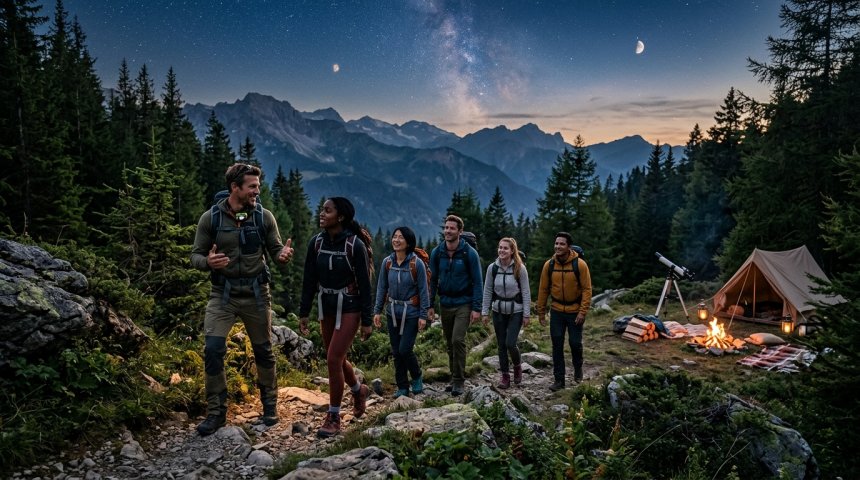
There was a time when the word "travel business" conjured images of massive overhead costs: leasing commercial vans, securing expensive liability insurance for international treks, managing complex flight itineraries, and competing with mega-agencies that could undercut your prices by a fraction of a cent. It felt like a game reserved for venture-backed startups or legacy tour operators with decades of capital.
But somewhere between the global lockdowns and the return to normalcy, the psychology of the traveler shifted permanently. People realized that they didn't need to fly eight hours to feel a sense of wonder. They didn't need a two-week vacation to disconnect from their screens. They craved novelty, yes, but they craved it in doses that fit into a Saturday morning or a Friday evening. They wanted to step out of their front door and feel like they had entered a different world, without the carbon footprint, the jet lag, or the five-figure price tag.
Enter the micro-adventure.
Coined by British adventurer Alastair Humphreys, the concept is beautifully simple: an adventure that is short, simple, local, and cheap—yet still genuinely exciting. It’s sleeping under the stars in a nearby state park. It’s kayaking a local river at sunset. It’s a guided walk through a neighborhood you’ve driven past a thousand times but never actually seen.
For the entrepreneur in 2026, this shift represents one of the most lucrative, low-barrier entry points into the travel industry. You don't need a fleet of buses. You don't need a storefront on a main tourist drag. You need a deep knowledge of your local geography, a magnetic personality, a basic liability waiver, and a smartphone to process payments. The margins are extraordinary because your primary inventory is your time and your expertise, both of which scale beautifully when packaged correctly.
This guide is a deep dive into the twenty most viable micro-adventure business models for 2026. We aren't just listing ideas; we are breaking down the operational mechanics, the pricing psychology, the target demographics, and the marketing hooks for each one. Whether you live near a mountain range, a coastal inlet, or a dense urban center, there is a micro-adventure waiting to be packaged, priced, and sold. Let’s get into the field.
1. Sunrise Hiking Experiences: Selling the First Light
Most people associate hiking with the midday sun, but those in the know understand that the mountain belongs to the early risers. A sunrise hiking experience is not just a fitness activity; it is a spiritual reset packaged as a cardio workout. You are selling the moment the sky shifts from indigo to violent orange, the temperature is crisp, and the trails are completely devoid of the midday crowds.
The Operational Model: You identify a moderate, 3-to-5-mile trail within a 45-minute drive of a major population center. The hike must be accessible to beginners but steep enough to feel like an accomplishment. You meet the group at a centralized location at 5:00 AM, carpool to the trailhead, and summit exactly as the sun breaches the horizon.
The Value Add: The magic isn't the trail; anyone can find a trail on AllTrails. The magic is the logistics and the atmosphere. You provide the headlamps for the pre-dawn ascent. You carry a high-quality thermos of locally roasted coffee and pour it at the summit. You bring a lightweight, packable sitting pad so people aren't resting on cold rocks. You act as the pace-setter, ensuring no one falls behind in the dark.
Pricing & Demographics: Target corporate professionals, wellness enthusiasts, and couples looking for a unique date. Price this at $65-$95 per person. A group of six people generates $400-$570 for a three-hour commitment. Your only costs are gas, coffee, and your time. The profit margin is north of 85%.
Marketing Hook: "Trade your snooze button for a summit. Join us for a guided sunrise ascent, complete with hot local coffee at the peak, before the city even wakes up."
2. Stargazing Micro-Tours: Monetizing the Dark Sky
Light pollution has robbed an entire generation of the Milky Way. Most urban dwellers have never seen more than a dozen stars at once. A stargazing micro-tour takes advantage of the dark-sky pockets that exist within a 60-to-90-minute drive of major cities. This is part astronomy lesson, part existential therapy, and entirely magical.
The Operational Model: You need to scout locations with a Bortle scale rating of 4 or lower (minimal light pollution). State parks, high desert plateaus, or remote agricultural lands work perfectly. You schedule tours around the new moon phase to ensure maximum darkness. You transport a small group (max 8 people) in your vehicle, or meet them at a designated dark-sky pullout.
The Value Add: You cannot just point at the sky and say "look." You need equipment. Invest in a decent 8-inch Dobsonian telescope ($400-$600) and a high-quality red-light flashlight (red light preserves night vision). Learn the constellations, the planets visible that month, and a few deep-sky objects like the Orion Nebula or the Andromeda Galaxy. Provide heavy blankets or zero-gravity camping chairs, because standing in the cold for two hours gets old fast. Offer hot cider or tea in thermoses.
Pricing & Demographics: Families, photographers, and romantics. Price at $85-$120 per person. Because this happens at night, it doesn't interfere with your daytime income. You can run this every weekend of the month when the moon is dark.
Marketing Hook: "When was the last time you saw the Milky Way? Escape the city glow for a two-hour guided journey through the cosmos, complete with telescope viewing and hot cider under the stars."
3. Local Waterfall Walks: Chasing the Cascade
Waterfalls are universally captivating, but finding the good ones usually requires navigating confusing trail networks, dealing with washed-out bridges, and risking getting lost. A waterfall walk curates the best cascades in your region into a single, seamless, half-day experience.
The Operational Model: Map out a route that hits two or three distinct waterfalls in one geographic area. Ensure the trails are well-maintained and the water flow is consistent (or know the seasonal variations so you don't promise a roaring cascade in late August when it's a trickle). Keep the total hiking distance under four miles so it remains accessible.
The Value Add: Safety and curation. You know which rocks are slippery. You know the exact angle for the best photograph at each fall. You carry a dry bag so guests can safely store their phones and wallets near the spray zone. You provide a waterproof Bluetooth speaker for ambient acoustic music during the rests. You share the geological history of how the falls were formed and the indigenous history of the land.
Pricing & Demographics: Active singles, content creators, and nature lovers. Price at $75-$110 per person. Run these on Saturday mornings.
Marketing Hook: "Skip the crowded tourist traps. Join our curated half-day trek to three hidden local waterfalls, complete with photography tips, geological history, and a riverside picnic snack."
4. Urban Photo Walks: Seeing the City Through a New Lens
You don't need mountains to run a micro-adventure. Cities are dense with texture, history, and visual chaos. An urban photo walk is designed for people who want to improve their photography skills (even if they just use an iPhone) while exploring neighborhoods they usually ignore.
The Operational Model: Pick a visually rich, walkable neighborhood—perhaps an old industrial district turned artsy, a historic immigrant enclave, or a street art corridor. Plan a 1.5-mile route that takes about two hours to walk slowly. Schedule it during the "golden hour" (the hour before sunset) for the best natural light.
The Value Add: You aren't just a tour guide; you're a visual coach. Teach basic composition rules: rule of thirds, leading lines, framing, and playing with shadows. Stop at specific spots and give the group a "prompt" (e.g., "For the next five minutes, only take photos of reflections in windows"). Share the architectural history of the buildings. End the walk at a local independent coffee shop or brewery for a casual review of everyone's favorite shots.
Pricing & Demographics: Hobbyist photographers, tourists, and locals wanting to reconnect with their city. Price at $55-$85 per person. You can easily fit 12-15 people on this walk, maximizing revenue per hour.
Marketing Hook: "Unlock the hidden geometry of [City Name]. A two-hour golden hour photography walk through the [Neighborhood] district, ending with a craft beer and photo review session."
5. Secret-Food Neighborhood Tours: Tasting the Unseen
Generic food tours that hit the obvious, Yelp-famous restaurants are a dime a dozen. The secret-food tour focuses on hyper-local, unmarked, or culturally specific eateries that tourists would never find on their own, and that even many locals overlook.
The Operational Model: Focus on a specific ethnic enclave or a working-class neighborhood undergoing a culinary renaissance. Partner with 4-5 small, family-owned businesses. Negotiate a fixed price for a "tasting portion" of their best dish. Route the walk so that the portions are spaced out enough that people aren't overly stuffed, but substantial enough that it replaces a meal.
The Value Add: Access and storytelling. You have the relationship with the owner of the 30-year-old Oaxacan bakery who lets your group peek into the back kitchen. You explain the cultural significance of the spices used in the Somali sambusa. You aren't just feeding people; you are translating a culture through its food. You handle all the tipping and payments in advance so guests just show up and eat.
Pricing & Demographics: Foodies, couples, and out-of-town visitors. Price at $95-$140 per person. Food tours command a premium because the perceived value includes the cost of the food itself. Keep groups small (max 8) to ensure intimacy in small restaurants.
Marketing Hook: "Forget the tourist menus. Taste the real [City Name] on a guided walking tour through [Neighborhood], featuring hidden bakeries, family recipes, and stories from the owners themselves."
6. Kayak-at-Sunset Experiences: Paddling into the Gold
Water-based micro-adventures are incredibly popular, but daytime kayak rentals are a logistical headache of waivers and damaged equipment. The sunset paddle elevates the rental into a curated, guided experience. The light changes everything on the water.
The Operational Model: You need access to a calm body of water—a protected bay, a slow-moving river, or a small lake. Launch 90 minutes before sunset. Keep the paddling distance short (2-3 miles round trip) so people aren't exhausted in the dark. You must check weather and wind conditions religiously; cancel if winds exceed 10 mph.
The Value Add: Safety and ambiance. You lead the pace. You provide high-quality, stable sit-on-top kayaks, Coast Guard-approved PFDs (life jackets), and waterproof phone pouches. As the sun dips, the water turns to liquid gold, and the wildlife comes out—herons, ospreys, maybe even seals or otters depending on your location. Bring a small, waterproof speaker for low-fi acoustic beats. Pack a dry bag with a celebratory non-alcoholic sparkling cider or local hard seltzer to toast the sunset at the turnaround point.
Pricing & Demographics: Couples, active friends, and wellness seekers. Price at $85-$125 per person. Limit groups to 6-8 kayaks so you can easily manage safety.
Marketing Hook: "Paddle into the golden hour. A guided, beginner-friendly sunset kayak tour on [Body of Water], complete with wildlife spotting, ambient music, and a sparkling toast on the water."
7. Forest Bathing Sessions: The Art of Doing Nothing
Shinrin-yoku, or forest bathing, originated in Japan in the 1980s as a physiological practice to reduce stress. It is not hiking. It is not exercise. It is the practice of immersing oneself in nature using all five senses, moving at a glacial pace. In our hyper-connected, screen-addicted society, this is a radical act, and people will pay a premium for someone to give them permission to slow down.
The Operational Model: Find a quiet, densely wooded area with soft footing—mossy floors, fern groves, or old-growth forests. The session lasts 2 to 2.5 hours, but you might only cover half a mile. You act as a guide, not a leader. You offer "invitations" rather than instructions.
The Value Add: You create the container for silence. You start with a grounding exercise. You invite people to touch the bark of a specific tree, to listen to the difference between wind in the pine needles versus the oak leaves, to smell the damp earth after a rain. You carry a beautiful, weighted blanket and a thermos of herbal tea for the final sharing circle. You hold the space so participants don't feel awkward being silent and slow.
Pricing & Demographics: Stressed professionals, burnout victims, yoga practitioners, and mental health advocates. Price at $75-$110 per person. Keep groups very small (max 6) to maintain the intimate, quiet energy.
Marketing Hook: "Unplug and unwind. A two-hour guided forest bathing immersion designed to lower cortisol, quiet the mind, and reconnect you with the natural world through mindful sensory exploration."
8. Scenic Picnic Setups: The Zero-Effort Date Night
People love the aesthetic of a beautiful outdoor picnic, but they hate the logistics: packing the cooler, finding a good spot, carrying the heavy blanket, cleaning up the trash. A scenic picnic setup business removes all friction, delivering a Pinterest-perfect experience directly to the client.
The Operational Model: You can operate this in two ways. Option A: You scout and reserve the best scenic spots in your city (rooftops, hidden parks, beach overlooks) and set up the picnic before the clients arrive. Option B: You deliver a premium "picnic in a box" kit to their Airbnb or hotel. Let's focus on Option A for the micro-adventure angle. You arrive an hour early, lay down a luxury waterproof blanket, set up low-profile wooden tables, arrange cushions, light battery-operated candles, and display a charcuterie board, local wine, and artisanal bread.
The Value Add: Aesthetics and convenience. You partner with local caterers or delis for the food. You provide the decor, the cleanup, and the privacy. When the couple arrives, it looks like a movie set. You take a few professional-looking photos of them with your phone, leave them alone for two hours, and return to pack everything up silently.
Pricing & Demographics: Couples celebrating anniversaries, proposals, or birthdays. Price at $250-$450 per couple. This is a high-ticket, low-volume model. You only need two bookings a weekend to make excellent money.
Marketing Hook: "The perfect date night, minus the prep. Reserve a private, fully styled luxury picnic at [City]'s most scenic hidden overlooks. We handle the setup, the gourmet food, and the cleanup. You just show up."
9. Local History Walking Experiences: The Stories in the Sidewalks
Every town has ghosts, scandals, triumphs, and forgotten heroes buried in its architecture. A local history walk transforms a boring downtown stroll into a gripping narrative experience. This isn't a dry recitation of dates; it's true crime, political intrigue, and architectural mystery wrapped into a two-hour walk.
The Operational Model: Pick a theme. "The Prohibition Smugglers of Downtown," "The Women Who Built the Industrial District," or "Murder and Mayhem in the Old Quarter." Do deep archival research at the local library. Map a 1.5-mile route that hits 6-8 key locations.
The Value Add: Storytelling and visual aids. Don't just point at a brick building. Print out historical photographs from 1920 and hold them up so people can see the ghost sign that used to be there. Wear a period-appropriate hat or carry a prop to establish character. Project your voice. End the tour at a historic pub or cafe where the story concluded, offering a discount code for a drink.
Pricing & Demographics: Tourists, history buffs, schools, and corporate team-building groups. Price at $45-$75 per person. This scales well; you can comfortably lead 20-30 people if you have a good voice and a portable microphone system.
Marketing Hook: "Think you know [City Name]? Uncover the scandals, speakeasies, and secrets hidden in plain sight on our two-hour 'Murder and Mayhem' historical walking tour through the Old Quarter."
10. Dark-Sky Weekend Trips: The Two-Night Escape
While the stargazing micro-tour (Idea #2) is a single evening event, the dark-sky weekend trip is a slightly larger operation that captures the growing demand for multi-day digital detoxes. This is for people who want to fully immerse themselves in the night sky without rushing back to the city the same night.
The Operational Model: Partner with a remote campground, a cluster of yurts, or a small off-grid cabin network within a certified International Dark Sky Place. The trip runs Friday evening to Sunday morning. You handle the booking, the meal planning, and the astronomical programming.
The Value Add: Total immersion. Friday night is arrival and a campfire orientation. Saturday is daytime hiking or resting, followed by a massive, multi-hour stargazing session with multiple telescopes, laser pointers, and astrophotography lessons. Sunday morning is a sunrise coffee and departure. You provide all the heavy gear: telescopes, red lights, star charts, and perhaps a portable planetarium projector for cloudy nights. You cook simple, high-quality meals (think cast-iron dutch oven chili or breakfast burritos).
Pricing & Demographics: Photographers, couples, and serious astronomy hobbyists. Price at $350-$550 per person for the weekend. Limit to 8-10 people. This is a high-margin, high-effort model that builds intense brand loyalty.
Marketing Hook: "Leave the light pollution behind. A two-night immersive dark-sky retreat featuring expert-led astrophotography, telescope viewing, campfire cooking, and total digital disconnection."
11. Beginner Rock-Hounding Tours: Hunting for Treasure
Rock-hounding—the recreational collection of rocks, minerals, and fossils—is having a massive resurgence, driven by TikTok and Instagram aesthetics. People love the idea of finding a hidden gem in the dirt, but they don't know where to look, what is legal to collect, or how to identify what they've found.
The Operational Model: Research public lands (BLM land in the US is often open for recreational rock collecting) where specific minerals are known to exist—agate, petrified wood, amethyst, or fossils. Ensure you have the proper permits and understand the daily collection limits. Plan a half-day excursion to a safe, accessible digging site.
The Value Add: Access, tools, and education. You provide the rock hammers, chisels, safety goggles, and gloves. You teach people how to read the terrain to spot likely mineral veins. You bring a reference library of field guides to help identify finds on the spot. You provide the buckets and newspaper for wrapping delicate specimens. You ensure everyone stays safe on unstable slopes.
Pricing & Demographics: Families with kids, geology nerds, and crafters looking for raw materials. Price at $85-$120 per person. Families love this because kids can dig in the dirt guilt-free.
Marketing Hook: "Keep what you find. Join our guided half-day rock-hounding expedition to uncover hidden agates, fossils, and crystals. All tools, safety gear, and expert identification provided."
12. Birdwatching Micro-Tours: The Feathered Migration
Birding used to be stereotyped as a retirement hobby, but it has exploded among millennials and Gen Z as a accessible, free, and deeply engaging way to interact with nature. A guided birdwatching micro-tour lowers the barrier to entry for beginners who don't own $2,000 binoculars and don't know a sparrow from a finch.
The Operational Model: Identify the prime migration windows in your region (spring and fall are usually best). Scout locations known for high biodiversity—wetlands, estuaries, or specific forest corridors. Schedule the tour for the early morning when birds are most active and vocal.
The Value Add: Equipment and expertise. You invest in 4-5 pairs of high-quality, mid-range binoculars (Vortex or Nikon) and a spotting scope on a tripod. You loan these out to guests. You use a directional microphone and speaker to amplify bird calls so the whole group can hear. You teach the basics of identification by shape, size, and behavior, not just color. You maintain a checklist for the day and celebrate every new species spotted.
Pricing & Demographics: Nature lovers, retirees, and eco-conscious travelers. Price at $75-$110 per person. Keep groups small (max 6) so everyone gets a turn on the spotting scope.
Marketing Hook: "Discover the hidden world above us. A beginner-friendly guided birdwatching walk featuring premium binoculars, expert identification, and the thrill of spotting migratory species in their natural habitat."
13. Sunrise Coffee Adventures: Caffeine and Cardio
This is a hybrid model that combines the physical exertion of a short hike or bike ride with the reward of a premium, locally sourced coffee experience. It targets the "wellness but make it social" demographic.
The Operational Model: Partner with a local specialty coffee roaster or a highly regarded independent cafe. Plan a 2-to-3-mile loop (hiking, trail running, or cycling) that starts and ends at the cafe, or ends at a scenic viewpoint where you brew the coffee. If brewing on-site, you need a high-quality portable espresso maker (like a Wacaco Nanopresso) or a reliable Jetboil pour-over setup.
The Value Add: The narrative of the bean. Don't just hand out coffee. Explain where the beans were sourced, the roast profile, and the brewing method. If you partnered with a local cafe, have the barista join you for the final pour to talk about their craft. Provide high-quality, reusable insulated cups. The physical activity makes the caffeine hit differently, and the shared effort creates instant camaraderie.
Pricing & Demographics: Young professionals, runners, cyclists, and coffee snobs. Price at $55-$85 per person. This is a high-volume, low-friction model. You can easily run this every Saturday and Sunday morning.
Marketing Hook: "Earn your espresso. A guided 3-mile sunrise trail run/hike culminating in a freshly brewed, single-origin pour-over coffee session overlooking the valley."
14. Small-Town Art Trails: The Creative Detour
Many rural areas and small towns adjacent to major cities are filled with working artists—potters, painters, glassblowers, and woodworkers—who have studios in converted barns and garages. These artists are often isolated and lack foot traffic. An art trail connects them into a cohesive, bookable experience.
The Operational Model: Curate a route of 3-4 working artist studios within a 30-mile radius. Coordinate with the artists to ensure they are available and willing to host a small group for 30-45 minutes each. Arrange transportation (a rented sprinter van or a carpool convoy) from the nearest major city hub.
The Value Add: Access and curation. You are giving urban dwellers a peek behind the curtain of the creative process. You facilitate the conversation between the guests and the artists. You might arrange for a small, hands-on demonstration (e.g., throwing a small clay pinch pot or mixing a custom paint color). You handle the logistics of the route, the timing, and the lunch stop at a local farm-to-table diner. You also take a commission on any art purchased by guests during the tour.
Pricing & Demographics: Art lovers, creatives, and weekend trippers. Price at $120-$180 per person (including transport and lunch). Limit to 8-10 people to respect the artists' workspace.
Marketing Hook: "Step inside the studio. A curated half-day art trail through the hidden creative heart of [Region], featuring private demonstrations from working potters, painters, and glassblowers."
15. Farm-to-Table Day Experiences: From Dirt to Dinner
The farm-to-table restaurant concept is ubiquitous, but consumers are increasingly disconnected from the actual dirt. A farm-to-table day experience is a hands-on, immersive journey that traces a meal from the soil to the plate, supporting local agriculture directly.
The Operational Model: Partner with a diversified organic farm and a local private chef (or a skilled home cook). The day starts at the farm in the late morning. Guests participate in a harvest activity—pulling carrots, picking tomatoes, gathering eggs, or feeding animals. After the harvest, the group moves to a rustic outdoor kitchen or a barn table where the chef prepares a multi-course meal using exclusively the ingredients harvested that day, plus pantry staples from the farm.
The Value Add: Connection and education. The farmer explains the soil health, the crop rotation, and the challenges of sustainable agriculture. The chef explains the preparation techniques. Guests are doing light physical labor, which makes the subsequent meal taste exponentially better. You provide the aprons, the harvesting baskets, and the wine pairings from a local vineyard.
Pricing & Demographics: Foodies, families, and eco-conscious consumers. Price at $150-$220 per person. This is a premium, high-touch experience. Limit to 10-12 people to ensure everyone gets hands-on time with the chef and farmer.
Marketing Hook: "Harvest your lunch. A hands-on farm-to-table immersion where you gather seasonal ingredients straight from the soil and watch a local chef transform them into a rustic, multi-course feast."
16. Seasonal Wildflower Walks: Chasing the Bloom
Wildflower blooms are fleeting, spectacular, and highly dependent on weather patterns. When a super-bloom happens, or even just a standard spring bloom, people flock to see it, but they often trample fragile ecosystems and don't know what they're looking at. A guided wildflower walk protects the environment while educating the public.
The Operational Model: Monitor local botanical reports and rainfall data to predict peak bloom times. Secure permits for state parks or national forests if required for commercial guiding. Plan a slow, 2-mile loop through meadows, alpine tundras, or desert washes known for specific blooms (bluebonnets, poppies, lupines, paintbrush).
The Value Add: Botanical expertise and conservation. You bring macro-lenses or jeweler's loupes so guests can see the intricate details of tiny flowers. You teach the difference between native species and invasive weeds. You enforce strict "leave no trace" principles, keeping people on durable surfaces to protect the root systems. You provide a laminated field guide or a digital PDF download after the tour. You time the walk for the best photographic light.
Pricing & Demographics: Photographers, hikers, families, and botany enthusiasts. Price at $65-$95 per person. Because blooms are seasonal, this is a high-intensity, short-window revenue generator (usually 4-6 weeks in spring). You can run multiple groups per weekend during peak bloom.
Marketing Hook: "Witness the fleeting super-bloom. A guided, eco-conscious wildflower walk featuring macro-photography tips, botanical identification, and strict leave-no-trace practices to protect the fragile ecosystem."
17. Geology Discovery Tours: Reading the Rocks
Most people look at a canyon or a cliff face and just see "rocks." A geologist sees a 300-million-year-old story of ancient oceans, volcanic eruptions, tectonic collisions, and ice ages. A geology discovery tour translates that deep time into a comprehensible, awe-inspiring narrative.
The Operational Model: Identify a location with exposed stratigraphy, interesting fault lines, volcanic features, or glacial moraines. Plan a 3-to-4-mile hike that stops at 5-6 key geological features.
The Value Add: Tools and translation. You bring a rock hammer to break open fresh samples (where legal), a hand lens for examining crystal structures, and a bottle of dilute hydrochloric acid to test for limestone (it fizzes!). You use analogies to explain deep time (e.g., "If the history of the earth was a 24-hour clock, humans showed up at 11:59 PM"). You teach people how to read the layers of sedimentary rock like pages in a book. You provide a small, legal sample of a common rock for each guest to take home as a tactile memory.
Pricing & Demographics: STEM enthusiasts, teachers, homeschooling families, and curious hikers. Price at $85-$120 per person. This pairs beautifully with Idea #11 (Rock-hounding) but is more educational and less focused on collection.
Marketing Hook: "Read the history of the earth written in stone. A guided geological discovery hike featuring hands-on rock identification, deep-time storytelling, and exploration of ancient volcanic and oceanic formations."
18. Local Craft Workshops: The Maker’s Micro-Adventure
Sometimes the best adventure is inward, focusing on creating something with your hands. A local craft workshop micro-adventure takes the traditional "paint and sip" class and elevates it into a skill-building, immersive experience tied to the local culture or environment.
The Operational Model: Instead of generic canvas painting, focus on regional crafts: willow basket weaving using locally foraged branches, natural dyeing using local plants (indigo, madder root, onion skins), traditional blacksmithing, or leatherworking. Partner with a master artisan to lead the technical instruction, while you handle the marketing, booking, and hospitality. Host it in a unique location—a working barn, a forest clearing, or a historic workshop.
The Value Add: Skill acquisition and tangible results. People aren't just killing time; they are leaving with a functional, beautiful object they made themselves. You provide all the raw materials, the tools, and the protective gear. You serve high-quality local snacks and beverages during the session. You document the process with photos and send them to the guests afterward.
Pricing & Demographics: Creatives, couples, corporate teams, and hobbyists. Price at $120-$250 per person, depending on the cost of materials (leather and metal are more expensive than willow). Limit to 8-10 people to ensure the artisan can give individual attention.
Marketing Hook: "Make something that lasts. A hands-on, immersive workshop in [Craft Type] led by a master artisan, using locally foraged materials. Leave with a functional heirloom and a new skill."
19. Digital-Detox Day Trips: The Forced Disconnection
We are chronically overstimulated. The average person checks their phone dozens of times an hour. A digital-detox day trip is a structured, facilitated environment where people voluntarily surrender their devices and engage in analog activities for 6-8 hours. It sounds simple, but the psychological resistance is high, which is why people need a guide to enforce it.
The Operational Model: Choose a location with naturally poor cell service—a deep canyon, a remote island, or a dense forest. The trip runs from 9 AM to 5 PM. Upon arrival, guests place their phones in a locked, padded Faraday bag (which blocks all signals) that you provide.
The Value Add: Structure and permission. Without a phone, people feel naked and anxious for the first hour. You fill that void with structured analog activities: journaling prompts, guided nature observation, woodworking, cooking over a fire, or deep conversation games. You provide high-quality paper notebooks, pens, board games, and acoustic instruments. You cook a incredible, slow-cooked lunch over a wood fire. You hold the boundary so no one cheats and checks their email.
Pricing & Demographics: Burned-out tech workers, executives, stressed parents, and couples. Price at $175-$250 per person. This is a premium wellness product. Limit to 8 people to maintain a safe, intimate container for vulnerability.
Marketing Hook: "Log off and tune in. A facilitated 8-hour digital detox immersion in a remote, cell-service-free zone. Surrender your phone, reconnect with your senses, and remember what it feels like to be fully present."
20. “48-Hour Local Escape” Packages: The Curated Weekend
This is the capstone of the micro-adventure business model. Instead of selling a single two-hour activity, you are selling a complete, fully managed 48-hour itinerary for people who want to explore their own backyard but don't want to do any of the planning.
The Operational Model: You act as a hyper-local travel agent and concierge. You package together accommodation (a boutique hotel, a unique Airbnb, or a glamping tent), two meals (one nice dinner, one casual lunch), and two micro-adventures (e.g., a sunrise hike and a sunset kayak). You negotiate corporate rates with the local businesses or take a commission on the referrals.
The Value Add: Zero friction. The client pays one flat fee. You send them a beautifully designed digital itinerary. You make all the reservations. You arrange the transport or provide detailed driving directions. You include a physical "welcome box" delivered to their room with local snacks, a map, and a handwritten note. If something goes wrong—a restaurant closes, the weather turns bad—you are on call to pivot the plan instantly. You sell peace of mind and curated perfection.
Pricing & Demographics: Busy professionals, couples celebrating milestones, and locals wanting a staycation. Price at $600-$1,200 per couple (depending on the accommodation level). You make your margin on the packaging fee (typically 20-30% on top of the hard costs) and the commissions from the vendors. You only need to sell 4-6 of these packages a month to generate significant full-time income.
Marketing Hook: "Re-discover your backyard, without lifting a finger. A fully curated, all-inclusive 48-hour local escape featuring boutique lodging, hidden culinary gems, and guided micro-adventures. Just pack a bag; we handle the rest."
The Business Mechanics: How to Actually Launch
Having 20 great ideas is useless if you don't know how to execute them. The beauty of the micro-adventure model is its lean startup methodology. You do not need to quit your day job to test these concepts. Here is the operational blueprint for launching your first micro-adventure in the next 30 days.
Step 1: Legal and Liability Protection
This is the most critical step. You are taking people into environments that carry inherent risks—trails, water, weather.
- Form an LLC: Protect your personal assets. It costs a few hundred dollars and takes a week online.
- Get Insurance: You need General Liability Insurance specifically tailored for tour operators and outdoor guides. Companies like World Nomads or specialized outdoor recreation insurers offer policies starting around $500-$800/year. Do not skip this. One twisted ankle and a lawsuit could bankrupt you personally without it.
- The Waiver: Have a lawyer draft a robust Assumption of Risk and Liability Waiver. Every single participant must sign this digitally before they are allowed on the trip. Use a platform like Smartwaiver or DocuSign to integrate this into your booking flow.
Step 2: The Tech Stack for Booking
Do not try to manage bookings through DMs and Venmo. It looks unprofessional and leads to double-bookings.
- Booking Platform: Use FareHarbor, Peek Pro, or Checkfront. These are industry standards for tour operators. They handle the calendar, the waivers, the automated reminder emails, and the payment processing. They take a percentage (usually 3-5%), but the time they save you is worth it.
- Payment Processing: Stripe is integrated into most of these platforms. Require 100% payment upfront at the time of booking. Do not allow "pay at the trailhead." No-shows will destroy your margins.
- Cancellation Policy: Be strict but fair. "Full refund if canceled 48 hours in advance. No refunds within 48 hours. Weather cancellations initiated by the guide receive a full refund or reschedule."
Step 3: Pricing for Profit, Not Just Volume
New entrepreneurs always underprice. They think, "If I charge $40, I'll get 20 people. If I charge $80, I'll only get 5." In the micro-adventure space, the math favors the higher price.
- 20 people at $40 = $800 revenue. But managing 20 people on a trail is exhausting, loud, and degrades the experience. Your attention is diluted.
- 5 people at $80 = $400 revenue. You only have half the revenue, but you have 75% less work, your profit margin is higher because your time is the fixed cost, and the 5 people get a premium, intimate experience that leads to 5-star reviews. Price for the experience you want to deliver, not the volume you think you need.
Step 4: Marketing Without a Budget
You don't need Facebook ads to sell out your first ten trips. You need local trust and visual proof.
- The "Friends and Family" Beta: Run your first trip for free or at cost for 5 friends. Tell them their only job is to take incredible photos and videos on their phones, and to tag you when they post them. User-generated content is your primary marketing engine.
- Local SEO: Create a simple one-page website (Carrd or Squarespace). Optimize it for search terms like "guided sunrise hike [City Name]" or "stargazing tour near [City]." Most people search for experiences within 50 miles of their zip code.
- Partnerships: Approach local boutique hotels, Airbnbs, and corporate HR departments. Offer the hotel a 15% commission if they refer their guests to your tour. Provide HR directors with a PDF brochure of your "Corporate Team-Building Micro-Adventures."
- Instagram/TikTok: Post the behind-the-scenes. Show the coffee brewing at the summit. Show the telescope setup. Show the mud on your boots. People buy the vibe, not just the itinerary.
Step 5: The Delivery and The Follow-Up
The experience doesn't end when the hike is over.
- The Send-Off: Within 24 hours of the trip, send a personalized email. Thank them for coming. Include 3-4 high-quality photos you took of them during the adventure. Include a link to leave a Google Review.
- The Review Loop: Google Reviews are the lifeblood of local search. A tour with 50 five-star reviews will automatically rank above a tour with zero reviews, even if the zero-review tour has a better website. Incentivize reviews ethically—perhaps enter everyone who leaves a review into a drawing for a free future trip.
- The Retention Hook: In that follow-up email, include a 15% discount code for their next micro-adventure with you, valid for the next 6 months. Turn a one-time buyer into a repeat customer.
The Psychology of the Micro-Adventure Consumer
To sell these experiences effectively, you must understand the emotional drivers of your customer. They are not buying a hike; they are buying a solution to a modern problem.
1. The Antidote to Decision Fatigue Modern life is a relentless barrage of choices. What to eat, what to wear, which email to answer, which show to stream. When someone books a micro-adventure with you, they are paying for the luxury of having decisions made for them. "Be at the parking lot at 6 AM. Wear these shoes. Drink this coffee. Walk this path." The relief of surrendering control for three hours is a massive part of the value proposition.
2. The Craving for Authentic Connection Digital interaction has replaced physical community for many people. A micro-adventure forces strangers to interact in a shared, slightly challenging physical environment. Breaking bread at a summit, paddling in sync on a lake, or shivering together under a blanket watching stars creates instant, genuine bonds. You are facilitating human connection as much as you are facilitating outdoor recreation.
3. The "Local Tourist" Identity There is a growing sense of guilt associated with long-haul air travel due to carbon emissions. Simultaneously, people still want the novelty and status associated with being a "traveler." The micro-adventure allows them to adopt the identity of an explorer without leaving their time zone. They can post a stunning photo of a waterfall on Instagram with the caption "Just 30 minutes from my house!" and receive the same dopamine hit of wanderlust validation, coupled with the moral high ground of sustainability.
4. The Tangible Memory We consume digital media at an alarming rate, but it evaporates instantly. A micro-adventure leaves a physical residue. The soreness in the legs the next day. The smell of pine needles on a jacket. The smooth piece of agate in a pocket. The taste of the coffee at the summit. These sensory anchors create durable memories that justify the price tag long after the credit card statement clears.
Scaling the Micro-Adventure Empire
Once you have one successful micro-adventure running every weekend, the temptation is to just work harder—run two trips a day, seven days a week. This is the fastest path to burnout. The goal is to build a business, not a job that owns you. Here is how you scale intelligently.
Phase 1: The Solo Operator (Months 1-6) You do everything. You guide, you market, you clean the kayaks, you answer the emails. You cap your groups at 6-8 people. You run 2-3 trips a week. You are generating $3,000-$6,000 a month in pure profit. You are validating the model and building your review base.
Phase 2: The Contractor Model (Months 6-18) You hire 2-3 part-time guides. You pay them a flat rate per trip (e.g., $100 for a sunrise hike) or a percentage of the ticket sales (e.g., 20%). You train them extensively on your safety protocols, your storytelling script, and your hospitality standards. You now run 6-10 trips a week across multiple ideas (e.g., sunrise hikes on Saturday, stargazing on Friday, photo walks on Sunday). Your revenue doubles, but your personal time commitment remains the same. You focus on marketing, partnerships, and quality control.
Phase 3: The Productized Package (Months 18-36) You launch the "48-Hour Local Escape" (Idea #20). You transition from selling low-ticket activities to high-ticket curated packages. You hire a virtual assistant to handle the customer service and booking logistics. You formalize your partnerships with local hotels and restaurants, negotiating better commission rates based on your volume. You are now operating a legitimate local travel agency with a proprietary brand.
Phase 4: The Franchise or Licensing Play (Year 3+) Your systems are documented. Your waivers are bulletproof. Your marketing funnel is automated. You package your operational playbook—the exact scripts, the vendor lists, the tech stack, the marketing templates—and license it to other entrepreneurs in different cities. You become the "Micro-Adventure Co." brand, taking a royalty fee from operators in Austin, Denver, Asheville, and Portland who run your proven model in their local markets.
Conclusion: The Wealth in Your Own Backyard
The greatest illusion in the travel industry is that opportunity only exists in exotic, far-flung destinations. We convince ourselves that we need to be in Bali, or Patagonia, or the Swiss Alps to sell wonder.
But wonder is not a geographic coordinate. Wonder is a perspective. It is the ability to look at a familiar patch of woods, a overlooked urban alleyway, or a stretch of local river, and see the potential for transformation.
The micro-adventure business is built on this alchemy. You are taking the mundane and making it magical through the application of intention, logistics, and hospitality. You are giving people permission to play in their own neighborhoods. You are curing their cabin fever without requiring a passport.
The barriers to entry have never been lower. The demand for local, authentic, low-impact experiences has never been higher. The technology to book, manage, and market these experiences is sitting in your pocket right now.
Pick one idea from this list. The one that made you nod your head. The one that aligns with the geography outside your window and the skills inside your head. Draft the waiver. Buy the domain name. Scout the trail. Pour the coffee.
Your first group is waiting. They just don't know you exist yet. Go find them, and show them the world they've been ignoring.
Share
What's Your Reaction?
 Like
0
Like
0
 Dislike
0
Dislike
0
 Love
0
Love
0
 Funny
0
Funny
0
 Angry
0
Angry
0
 Sad
0
Sad
0
 Wow
0
Wow
0