Shipping Container Costs: A Complete Buyer’s Budget Guide
Understand shipping container costs for business purchases, including unit pricing, delivery, foundations, modifications, hidden expenses, and ROI.

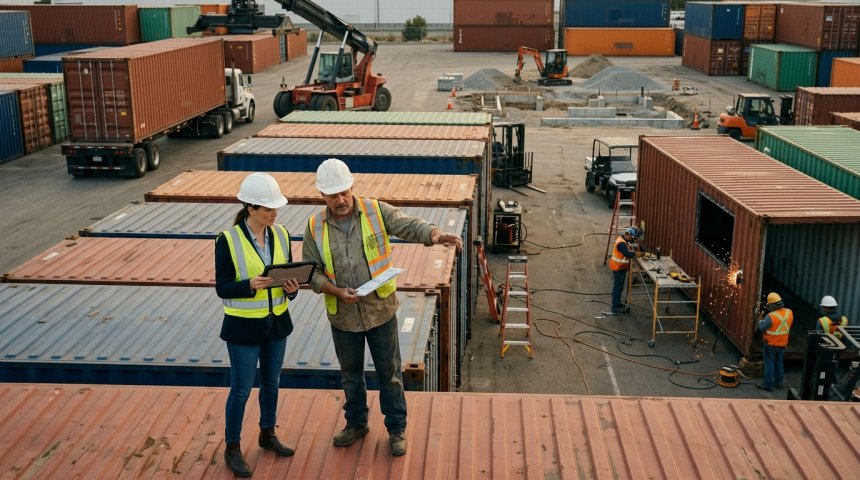
The shipping container has transcended its original purpose as standardized cargo transport to become one of the most versatile building blocks in modern commercial construction, storage, logistics, and experiential design. Businesses deploy containers for pop-up retail, modular offices, workforce housing, secure storage, mobile clinics, event venues, agricultural facilities, and countless other applications. The appeal is compelling: speed of deployment, structural durability, modularity, sustainability narrative, and perceived cost advantage over traditional construction. But that perceived cost advantage evaporates quickly when buyers underestimate the true total cost of ownership.
The sticker price of a used 40-foot container—often advertised at $2,500-$4,000—is merely the entry fee to a multi-component expenditure that routinely reaches $15,000-$75,000+ per unit once delivered, sited, founded, and modified for actual use. Businesses that budget based on unit price alone face catastrophic overruns, project delays, scope reductions, or abandoned investments. Those who understand the complete cost architecture from the outset make better procurement decisions, negotiate more effectively, avoid expensive surprises, and achieve predictable returns on container-based investments.
This guide provides exhaustive, operationally grounded cost breakdowns across every component of container acquisition and deployment. We'll dissect unit pricing dynamics including condition grades, size specifications, regional market variations, and sourcing channels. We'll analyze delivery costs driven by distance, equipment requirements, site accessibility, and permitting. We'll examine foundation systems ranging from simple gravel pads to engineered concrete solutions with associated soil testing and regulatory compliance. We'll detail modification costs spanning insulation, electrical, plumbing, HVAC, fenestration, structural alterations, and interior finishes. Beyond these visible categories, we'll expose hidden costs that ambush unprepared buyers: permits, inspections, insurance, maintenance, depreciation, and disposal. Throughout, we'll provide budgeting frameworks, ROI calculation methodologies, and procurement strategies enabling confident financial planning.
Whether you're a facilities manager evaluating container storage versus traditional warehousing, a developer assessing modular construction economics, a retailer planning pop-up deployments, an agricultural operator building climate-controlled facilities, or a finance team validating capital expenditure requests, this guide delivers the granular cost intelligence needed to transform container projects from speculative gambles into predictable business investments.
Let's begin with the foundation of all container budgeting: understanding what you're actually buying when you purchase a "shipping container."
Chapter 1: Unit Cost Dynamics — What You're Really Paying For
Container unit pricing isn't commodity pricing despite appearances. Multiple variables create significant price dispersion that uninformed buyers misinterpret as arbitrage opportunities when they're actually quality, location, or specification differences.
Condition Grade Classification and Pricing Tiers
The container market operates on condition grading systems that directly determine price. Understanding grades prevents paying premium prices for inferior units or accepting unsuitable units because they were cheap.
New / One-Trip Containers: Manufactured within 12 months, used for single international shipment then sold. Essentially new condition with minimal wear. No rust, dents, or repairs. Factory paint intact. Floors clean and undamaged. Doors operate smoothly. CSC plate current. Premium pricing reflects near-new condition: 40' HC typically $5,500-$7,500; 20' standard $3,500-$5,000. Justified for visible applications (retail, offices, hospitality) where aesthetics matter or for long-term deployments where longevity offsets higher initial cost. Warranty often available from reputable dealers.
Cargo-Worthy (CW) / Wind & Water Tight (WWT): Used containers meeting minimum standards for international cargo transport. Structurally sound with functional doors, floors, and weatherproofing. May show surface rust, minor dents, paint wear, and floor staining. No active leaks or structural damage. CSC plate may be expired but structure certifiable. Mid-range pricing: 40' HC $3,500-$5,000; 20' standard $2,200-$3,500. Appropriate for storage, workshops, agricultural use, and modified structures where cosmetic imperfections are acceptable or will be covered. Represents best value for many commercial applications balancing cost and functionality.
As-Is / Used: Containers sold without warranty or certification guarantee. Visible wear including moderate rust, dents, patch repairs, floor damage, door alignment issues, and paint deterioration. May have odors from previous cargo. Structural integrity varies; some units serviceable with repair, others suitable only for parts or non-critical storage. Discount pricing: 40' HC $2,000-$3,500; 20' standard $1,200-$2,500. Appropriate only for buyers with repair capability, tolerance for uncertainty, and applications where failure consequences are manageable. High-risk option for businesses lacking inspection expertise.
Damaged / Salvage: Units with significant structural compromise, extensive corrosion, major dents, broken components, or contamination. Sold at steep discount ($500-$1,500) primarily for parts harvesting, scrap metal, or extreme renovation projects by experienced builders. Generally unsuitable for commercial deployment without substantial rehabilitation investment exceeding savings versus higher-grade units. Niche applications only.
Grade Verification Protocol: Never purchase sight-unseen based solely on seller grade claims. Require recent photographs (all six sides, interior, floor, doors, roof, undercarriage), video walkthrough, or third-party inspection. Verify CSC plate presence and legibility. Request repair history if available. Physical inspection before payment ideal; remote inspection minimum. Grade disputes common in container transactions; documentation protects buyer. Reputable dealers provide accurate grading; discount sellers frequently overstate condition. Price differential between grades reflects real value differences; false bargains cost more long-term.
Size and Specification Pricing Variations
Container dimensions and features significantly impact pricing beyond simple length differences.
Standard vs. High Cube: High cube containers (9'6" height vs. 8'6" standard) command $500-$1,500 premium due to additional volume and market preference for vertical space. High cubes dominate new production making standard heights increasingly scarce in good condition. For modification projects, high cube premium often justified by usable interior volume gain and improved headroom after insulation and ceiling installation. Storage applications may not justify premium if stacking or clearance constraints exist. Evaluate cost-per-cubic-foot rather than linear cost for accurate comparison.
Specialized Container Types: Refrigerated (reefer) containers: $8,000-$20,000+ depending on age, machinery condition, and refrigerant type. Operating reefers require power infrastructure and maintenance budgets; non-operating reefers serve as insulated shells at lower cost ($4,000-$8,000). Open-top containers: $4,000-$7,000 for oversized loading applications. Flat-rack containers: $3,000-$6,000 for heavy equipment transport or specialized structures. Side-door containers: $4,500-$7,000 for improved access. Specialized units priced by scarcity and utility; verify application necessity before paying premium.
Regional Market Dynamics: Container pricing varies dramatically by geography reflecting supply-demand imbalances, port proximity, transportation costs, and local economic activity. Port cities (Los Angeles, Houston, New York, Savannah) typically offer lowest prices due to surplus inventory from import flows. Inland markets add $500-$2,000+ for repositioning costs. Rural areas may carry additional premiums due to limited dealer networks and longer haul distances. Seasonal fluctuations occur with peak demand in spring/summer construction seasons and holiday retail periods. For real-time pricing intelligence and regional availability data, Container xChange Market Insights & Pricing Data (dofollow) provides transparent marketplace information enabling buyers to benchmark quotes against actual transaction prices and identify optimal purchasing windows.
Timing purchases counter-seasonally (late fall/winter) can yield 10-20% savings versus peak season. Multi-unit purchases negotiate better per-unit pricing through volume discounts and consolidated delivery efficiencies. Long-term supplier relationships unlock preferential pricing and priority access during shortages.
Sourcing Channel Economics
Where you buy determines not just price but risk exposure, warranty coverage, and post-sale support.
Direct from Shipping Lines / Leasing Companies: Lowest potential pricing but highest transaction friction. Minimum order quantities common. Limited selection visibility. No warranty or return options. Requires industry knowledge and self-managed logistics. Best for sophisticated buyers purchasing fleet quantities with established relationships. Not recommended for first-time or small-quantity buyers.
Container Dealers / Traders: Mid-range pricing with curated inventory, condition grading, delivery coordination, and basic warranties. Dealer margins reflect value-added services. Reputation varies widely; vet through reviews, references, and industry association membership. Established dealers worth premium for risk reduction and convenience. Request multiple quotes comparing equivalent grades and specifications.
Online Marketplaces: Wide selection and price transparency but variable seller quality and limited recourse. Platforms facilitate discovery but don't guarantee condition accuracy. Buyer assumes verification responsibility. Suitable for experienced buyers comfortable with remote assessment and dispute resolution. Never wire payment without verification; use escrow or platform protection when available.
Private Sellers / Auctions: Potentially lowest prices but highest risk. No warranty, limited inspection opportunity, uncertain title, possible liens. Appropriate only for buyers with inspection capability, repair resources, and risk tolerance. Auction terms favor seller; understand fees, removal deadlines, and liability before bidding. Private sales require thorough due diligence including title verification and lien search.
Rental-to-Own Programs: Higher total cost but lower upfront capital requirement. Monthly payments typically $150-$400 depending on unit and term. Ownership transfers after predetermined period. Suitable for cash-flow-constrained businesses or temporary needs potentially converting to permanent. Calculate total cost versus outright purchase; rental premiums can exceed 30-50% over purchase price. Read contract terms carefully regarding maintenance responsibility, early termination, and purchase option pricing.
For comprehensive guidance on container delivery logistics including equipment requirements, site preparation standards, and carrier selection criteria, Western Intermodal Freight Guide on Container Delivery Logistics (nofollow) provides industry-standard protocols ensuring safe, compliant, and cost-efficient container placement.
Chapter 2: Delivery Cost Architecture — Getting Your Container Where It Needs To Be
Delivery represents the second-largest cost component after the unit itself and the most frequent source of budget overruns due to underestimated complexity. Delivery pricing isn't simply mileage-based; it's a function of equipment requirements, site conditions, regulatory constraints, and risk factors.
Transport Equipment and Method Selection
Delivery method determines base cost and site requirements.
Tilt-Bed Truck (Rollback): Most common for single-container deliveries. Hydraulic bed tilts allowing container to slide off ground-level. Requires 60-80 feet of straight, level approach space plus overhead clearance. Suitable for sites with adequate maneuvering room and stable ground. Base rate $3-$5 per mile plus fuel surcharge. Minimum charges $250-$500 regardless of distance. Limitations: cannot stack containers, requires clear drop zone, unsuitable for soft ground or steep grades.
Side Loader: Trailer-mounted crane lifts container from side of truck placing it perpendicular to travel direction. Requires less approach space than tilt-bed (30-40 feet) enabling tighter site access. Can place containers adjacent to structures or in confined spaces. Higher hourly rate ($150-$250/hour) reflecting specialized equipment. Best for urban sites, restricted access locations, or precision placement requirements. Operator skill critical; verify experience with similar placements.
Crane-Assisted Delivery: Mobile crane required when ground-level placement impossible (rooftop, elevated platform, over obstacles, stacked configurations). Crane rental $200-$500/hour plus mobilization fees ($500-$2,000). Rigging crew additional cost. Permitting often required for street closures or oversize loads. Essential for complex placements but exponentially increases delivery cost. Obtain detailed lift plan and insurance certificates before engagement. Weather-dependent; wind restrictions may delay operations.
Flatbed with Forklift Unload: Container delivered on flatbed trailer; recipient provides forklift or crane for unloading. Lowest transport cost but shifts unloading responsibility and risk to buyer. Suitable only if buyer has adequate equipment, trained operators, and safe unloading area. Equipment rental if not owned ($300-$800/day for rough-terrain forklift). Liability clarification essential; damage during buyer-managed unload typically buyer responsibility.
Distance and Routing Factors
Mileage drives variable costs but routing nuances create significant variance.
Local Deliveries (<50 miles): Often flat-rated rather than per-mile. Minimum charges apply. Urban traffic congestion adds time-based charges. Parking restrictions and delivery windows may require off-hours scheduling premiums. Local permits for oversize loads vary by municipality.
Regional Deliveries (50-300 miles): Per-mile pricing dominant. Fuel surcharges fluctuate with diesel prices. Driver hours-of-service regulations limit daily range potentially requiring overnight stays for longer routes. Backhaul availability affects pricing; carriers prefer round-trip loads reducing empty miles. Flexible scheduling enables backhaul matching lowering costs.
Long-Distance (>300 miles): National carriers with dedicated container fleets offer competitive long-haul rates. Intermodal options (rail + truck) reduce cost for very long distances but increase transit time and handling. Cross-country deliveries $2,000-$5,000+ depending on route and urgency. Expedited service premiums 30-100%. Seasonal capacity constraints affect availability and pricing.
Access Challenges and Surcharges: Remote locations without paved roads add $200-$1,000+ for specialized equipment or reduced load speeds. Mountainous terrain increases fuel consumption and brake wear triggering surcharges. Low bridges, weight-restricted roads, or narrow passages require route surveys and potential escort vehicles. Residential neighborhood deliveries may require police escorts or off-hour scheduling. Construction site deliveries coordinate with general contractor schedules avoiding conflicts. Each access complication adds cost; pre-delivery site assessment prevents surprise charges.
Site Preparation Requirements
Delivery success depends on site readiness. Inadequate preparation causes failed deliveries, rescheduling fees, and damage liability.
Ground Conditions: Stable, compacted surface capable of supporting 80,000+ pound gross vehicle weight. Soft soil, mud, sand, or recently backfilled areas risk truck sinking or tipping. Gravel base minimum 6-8 inches compacted for tilt-bed operations. Concrete or asphalt preferred for repeated deliveries. Ground slope maximum 3-5% for safe unloading. Site grading cost $500-$3,000 depending on extent. Soil testing recommended for questionable conditions ($300-$800). Failed delivery due to inadequate ground conditions incurs full trip charge plus potential recovery costs.
Overhead Clearance: Minimum 20 feet vertical clearance along entire approach path and at drop zone. Tree limbs, power lines, building eaves, and signage commonly obstruct. Utility company coordination required for line lifting or temporary de-energizing ($200-$1,000+). Tree trimming $150-$500 per tree. Clearance verification through physical measurement not estimation; assumptions cause costly contact damage.
Maneuvering Space: Tilt-bed requires 60-80 feet straight approach plus container length for slide-off. Side loader needs 30-40 feet lateral space. Turning radii minimum 40-60 feet depending on truck configuration. Space constraints may necessitate smaller equipment or alternative placement methods. Pre-delivery walk-through with carrier identifies issues before truck arrives. Virtual site surveys via video call increasingly common reducing assessment costs.
Utility Markouts: Call-before-you-dig services mandatory in most jurisdictions. Underground utilities marked free but require 2-10 business days advance notice. Private utilities (septic, irrigation, gas lines beyond meter) require private locator services ($200-$500). Striking unmarked utilities creates massive liability and repair costs. Documentation of markout requests protects against negligence claims.
Permitting and Regulatory Costs
Oversize load permits required when container dimensions exceed legal limits (typically 8'6" width, 13'6" height, 40' length without permit).
State Permits: Vary by jurisdiction, route, and load dimensions. Single-trip permits $50-$200. Annual permits $500-$2,000 for frequent shippers. Processing time 1-10 business days; expedited processing available at premium. Route restrictions may require detours adding mileage and cost. Escort vehicle requirements triggered by extreme dimensions or specific routes ($1-$3 per mile per escort).
Local Permits: City/county oversize permits additional to state permits. Street closure permits for crane operations or blocking public right-of-way ($100-$500). Noise ordinance variances for early/late deliveries. Historic district approvals for visible placements. Zoning variances if container placement violates setback or use restrictions. Local permit timelines unpredictable; initiate early preventing delivery delays.
Insurance and Liability: Carrier cargo insurance covers container during transport but verify limits adequacy for your unit value. Additional insurance rider if unit value exceeds standard coverage. Site insurance covering delivery operations protects against property damage or injury claims. Certificate of insurance required by many sites and municipalities. Insurance cost typically 1-3% of insured value. Deductibles apply; understand exposure before incident.
Chapter 3: Foundation Systems — The Hidden Cost Multiplier
Foundation represents the most underestimated cost category because buyers assume containers are "ready to place." While containers are structurally self-supporting, proper foundations ensure longevity, regulatory compliance, safety, and performance. Foundation costs range from $500 for basic gravel pads to $20,000+ for engineered systems depending on application, soil, and code requirements.
Foundation Type Selection Matrix
Match foundation to application requirements, soil conditions, and budget constraints.
Gravel Pad / Crushed Stone Base: Simplest and least expensive option. 6-12 inches compacted crushed stone providing drainage and load distribution. Cost: $500-$2,000 depending on size and site prep. Suitable for: temporary storage, non-habitable structures, well-draining soils, low-seismic zones, and applications where slight settlement acceptable. Limitations: no frost protection, vulnerable to erosion, insufficient for occupied structures in most jurisdictions, limited lifespan (5-10 years before replenishment). Best for budget-constrained temporary deployments or interim solutions pending permanent foundation.
Concrete Piers / Sonotubes: Discrete concrete columns supporting container corner castings. 4-8 piers per container depending on span and load. Depth below frost line (varies regionally 12"-60"+). Cost: $1,500-$4,000 including excavation, forming, rebar, and concrete. Suitable for: permanent installations, moderate loads, frost-prone regions, sites with good soil bearing capacity. Advantages: allows under-container ventilation and utility routing, adjustable height for leveling, less concrete than full slab. Limitations: requires precise positioning, point loads concentrate stress, insufficient for heavy interior loads or seismic zones without engineering.
Concrete Slab / Monolithic Pad: Continuous reinforced concrete slab providing uniform support. Typical thickness 4-6 inches with perimeter thickening. Vapor barrier and reinforcement standard. Cost: $4,000-$12,000 depending on size, thickness, reinforcement, and finish. Suitable for: occupied structures, heavy equipment storage, vehicle parking, high-load applications, code-compliant permanent installations. Advantages: superior load distribution, moisture barrier, finished floor option, meets most building codes. Limitations: highest material cost, irreversible placement, cracking potential without proper joints and curing, site drainage critical.
Helical Piers / Screw Piles: Steel shafts with helical plates screwed into soil to bearing depth. Installed with hydraulic equipment without excavation or concrete. Cost: $3,000-$8,000 depending on quantity and depth. Suitable for: poor soil conditions, flood zones, environmentally sensitive sites, rapid deployment, retrofit underpinning. Advantages: immediate load capacity, minimal site disturbance, installable in any weather, removable/reusable, no curing time. Limitations: specialized installer required, higher per-point cost than concrete piers, limited availability in some regions.
Railroad Ties / Timber Sleepers: Pressure-treated timber beams supporting container rails. Historically common but declining due to environmental concerns and code restrictions. Cost: $800-$2,500. Suitable for: temporary agricultural use, non-regulated rural applications, budget-limited projects with accepted risk. Limitations: rot and insect vulnerability, chemical leaching concerns, insufficient for occupied structures, code non-compliance in most jurisdictions. Generally not recommended for new commercial installations despite low cost.
Soil Investigation and Engineering
Foundation design requires understanding subsurface conditions. Skipping investigation risks foundation failure costing far more than testing.
Geotechnical Investigation: Soil borings or test pits revealing soil type, bearing capacity, water table depth, and contamination. Basic investigation $800-$2,500. Comprehensive investigation with lab testing $2,500-$6,000. Required for engineered foundations, problem soils, or code compliance. Investigation cost negligible versus foundation failure remediation ($10,000-$50,000+). Always investigate for permanent installations; optional for temporary gravel pads on known-good sites.
Structural Engineering: Stamped foundation design required for permitted structures, multi-story stacking, heavy loads, or seismic/wind zones. Engineering cost $1,500-$5,000 depending on complexity. Includes load calculations, reinforcement specifications, connection details, and code compliance documentation. DIY foundation design without engineering stamp rejected by building departments and voids insurance coverage. Engineering investment protects against liability and ensures insurability.
Frost Depth Considerations: Foundations in freezing climates must extend below frost line preventing heave. Frost depths range from 0" (southern coastal) to 60"+ (northern continental). Local building department provides authoritative frost depth maps. Shallow foundations in frost zones guarantee seasonal movement causing door binding, structural stress, and utility damage. Frost protection non-negotiable in cold climates; cost incorporated into foundation budget.
Drainage and Waterproofing: Water management integral to foundation longevity. Positive grading away from container minimum 2% slope. French drains or swales for high-water-table sites. Vapor barriers under slabs preventing moisture migration. Waterproofing membranes for below-grade walls if applicable. Drainage cost $500-$3,000 depending on site hydrology. Neglected drainage causes premature foundation deterioration, interior moisture problems, and mold growth. Cheaper to install during construction than retrofit after damage.
Regulatory Compliance Costs
Foundation permitting and inspection costs vary significantly by jurisdiction and application.
Building Permits: Required for permanent foundations supporting occupied structures. Permit fees typically $500-$3,000 based on valuation. Plan review 2-8 weeks depending on department workload. Inspections at footing, reinforcement, and final stages. Unpermitted foundations create liability, insurance, and resale issues. Permit cost factored into project budget not treated as optional.
Zoning and Setback Compliance: Foundation placement must satisfy zoning setbacks, easements, and land use restrictions. Variance applications if non-compliant ($500-$2,000 plus hearing timeline). Survey verification of property boundaries preventing encroachment ($500-$1,500). Wetland buffers, floodplain restrictions, and conservation easements further constrain placement. Early zoning review prevents costly relocation or variance denial.
Environmental Review: Sites with potential contamination, wetlands, endangered species habitat, or cultural resources trigger environmental review. Phase I ESA $1,500-$3,500. Remediation if contamination found ($5,000-$100,000+). Wetland delineation and mitigation expensive and time-consuming. Environmental due diligence before purchase prevents inheriting liability. Seller representations insufficient; independent verification essential.
Chapter 4: Modification Costs — Transforming Steel Boxes Into Functional Spaces
Modifications convert generic containers into purpose-built assets. Modification costs frequently exceed unit cost and represent the largest variable in total project budget. Accurate modification estimating requires detailed scope definition; vague concepts produce vague budgets producing change orders and overruns.
Envelope Modifications
Building envelope upgrades enable habitability, energy efficiency, and code compliance.
Insulation Systems: Uninsulated containers transfer heat/cold rapidly making them uninhabitable without climate control. Insulation options vary dramatically in cost and performance:
- Spray foam (closed-cell): R-6/inch, air barrier, moisture resistant. Cost: $2.50-$4.00/board foot installed. Best performance but highest cost. Professional installation required.
- Rigid foam board: R-5/inch, DIY-friendly, moderate cost. Cost: $1.50-$2.50/board foot installed. Good balance of performance and affordability. Vapor barrier integration critical.
- Batt insulation (fiberglass/mineral wool): R-3.5/inch, lowest cost, requires framing. Cost: $0.80-$1.50/board foot installed. Budget option but susceptible to moisture and compression. Vapor barrier mandatory.
- Panelized SIPs: R-6/inch, structural, fast installation. Cost: $3.00-$5.00/board foot. Premium option combining structure and insulation. Factory fabrication reduces field labor.
Insulation scope includes walls, ceiling, and floor. Floor insulation often overlooked but critical for thermal comfort and condensation prevention. Total insulation cost for 40' HC: $3,000-$8,000 depending on system and R-value target. Energy code compliance may mandate minimum R-values exceeding basic comfort thresholds.
Vapor Barriers and Air Sealing: Moisture management prevents condensation, mold, and corrosion. Vapor barrier placement climate-dependent (warm-side in heating climates, cold-side in cooling climates, dual-barrier in mixed climates). Air sealing at penetrations, seams, and transitions prevents convective moisture transport. Materials cost $500-$1,500; labor intensive detailing adds $1,000-$3,000. Skipping vapor/air barriers saves short-term but guarantees long-term moisture damage. Non-negotiable for occupied spaces.
Framing and Interior Linings: Interior framing creates attachment surfaces for finishes, accommodates insulation, and provides utility chases. Metal stud framing preferred over wood for fire resistance, dimensional stability, and corrosion resistance. Framing cost $2,000-$5,000 for 40' HC depending on complexity. Interior linings (drywall, plywood, FRP panels, metal liner) protect insulation and provide finished surfaces. Drywall $1.50-$3.00/sf installed; plywood $2.00-$4.00/sf; FRP $4.00-$8.00/sf. Finish selection driven by use case, durability requirements, and budget.
Exterior Cladding and Paint: Original corten steel weathers to rust patina acceptable for some aesthetics but problematic for longevity and professional appearance. Exterior paint extends life and improves appearance: $1,500-$4,000 for professional prep and coating. Cladding (metal panels, wood siding, composite) provides additional protection and aesthetic upgrade: $5,000-$15,000 depending on material and complexity. Cladding also improves thermal performance by creating rainscreen gap. Exterior treatment cost justified by extended service life and improved marketability.
Fenestration and Access Modifications
Openings transform sealed boxes into functional spaces but compromise structural integrity requiring reinforcement.
Windows and Glazing: Cut openings weaken corrugated wall panels requiring steel header and sill reinforcement. Reinforcement cost $200-$500 per opening. Window units themselves range from $200-$800 each for commercial-grade aluminum/vinyl; custom sizes or specialty glazing higher. Installation labor $150-$400 per unit. Egress window requirements for occupied spaces dictate minimum sizes and operability. Security glazing or bars additional cost for vulnerable applications. Natural light dramatically improves occupant comfort and reduces lighting energy; window investment pays dividends.
Door Modifications: Personnel doors, roll-up doors, overhead doors, and custom entries each carry different costs. Standard personnel door cut-in: $800-$1,500 including reinforcement, frame, and hardware. Roll-up doors: $1,500-$3,500. Overhead sectional doors: $2,000-$5,000. Door placement affects structural integrity; corner placements less disruptive than mid-span. Fire-rated doors required for certain occupancies adding $500-$1,500 premium. Accessibility compliance (ADA) may mandate specific widths, hardware, and thresholds adding cost but ensuring legal compliance and market access.
Ventilation and Louvers: Mechanical ventilation required for occupied spaces; passive ventilation supplements or serves non-occupied applications. Roof vents, wall louvers, and soffit vents range $100-$500 each installed. Powered exhaust fans $300-$1,000. Make-up air provisions required when exhausting significant volumes. Ventilation design integrated with HVAC and insulation preventing condensation and pressure imbalances. Code-mandated ventilation rates drive sizing and cost.
Mechanical, Electrical, and Plumbing (MEP)
MEP systems enable functionality and represent significant cost components.
Electrical Systems: Service entrance, panel, branch circuits, lighting, and receptacles sized for intended load. Basic electrical package (lights, outlets, panel) for 40' HC: $3,000-$6,000. Heavy-duty packages (HVAC-ready, equipment power, data) $6,000-$12,000. Service connection cost varies wildly by utility and distance ($500-$10,000+). Generator backup if grid unreliable: $3,000-$15,000 depending on capacity. Electrical work must be permitted and inspected; unpermitted work voids insurance and creates liability. Licensed electrician mandatory for commercial installations.
HVAC Systems: Climate control essential for occupied spaces and temperature-sensitive storage. Mini-split heat pumps most common: $2,500-$5,000 per zone installed. Rooftop units for larger spaces: $4,000-$10,000. Ducted systems if multiple zones or aesthetic preference: $6,000-$15,000. Sizing calculations critical; undersized systems fail to maintain comfort, oversized systems short-cycle reducing efficiency and lifespan. Energy recovery ventilation improves efficiency in tightly sealed containers. HVAC represents 15-25% of total modification budget for conditioned spaces.
Plumbing Systems: Water supply, waste drainage, and fixtures for restrooms, kitchens, or process applications. Rough plumbing $2,000-$5,000 depending on fixture count and complexity. Fixture costs highly variable ($200-$2,000+ per fixture). Water heater $800-$2,500. Sewer connection or septic system $2,000-$15,000 depending on site conditions and distance. Freeze protection mandatory in cold climates (heat tracing, insulated piping). Plumbing permits and inspections required. Backflow prevention may be mandated. Plumbing cost highly site-specific; obtain detailed estimates before committing.
Fire Suppression: Sprinkler systems required for many commercial occupancies exceeding certain square footage or hazard classifications. Sprinkler system $3,000-$10,000 for single container depending on density and water supply. Fire extinguishers minimum requirement ($100-$300 each). Smoke detectors and alarm systems $500-$2,000. Fire rating requirements may mandate intumescent coatings or fire-rated assemblies adding $2,000-$8,000. Fire marshal approval required before occupancy. Life safety non-negotiable; budget accordingly.
Structural Modifications
Alterations beyond openings require engineering validation.
Multi-Container Joining: Combining containers creates larger spaces but introduces structural complexities. Cutting shared walls requires moment frame or beam reinforcement. Connection detailing prevents differential settlement and water intrusion. Engineering mandatory ($1,500-$4,000). Fabrication and welding $2,000-$8,000 per connection. Joined containers may trigger different code classifications increasing overall compliance costs. Joining feasible but not cheap; evaluate whether single larger container or alternative configuration more economical.
Stacking and Multi-Story: Vertical stacking requires load path verification, connection hardware, and lateral bracing. Two-story stacking common; three+ stories require significant engineering. Stacking hardware $500-$2,000 per connection point. Lateral bracing $2,000-$8,000 depending on height and seismic zone. Stair systems $3,000-$10,000. Foundation must support cumulative loads. Multi-story triggers commercial building code requirements increasing overall project cost and timeline. Stacking maximizes site density but compounds complexity.
Roof Modifications: Roof penetrations (skylights, vents, HVAC curbs) require flashing and waterproofing detailing. Roof reinforcement for equipment loads or green roofs. Parapet additions for fall protection or aesthetic screening. Roof coating for leak prevention and solar reflectance: $1,000-$3,000. Green roof systems $15-$30/sf adding significant dead load requiring structural verification. Roof modifications high-risk for leaks; quality craftsmanship essential. Warranty on roof work valuable given leak consequence severity.
Chapter 5: Hidden Costs and Contingency Planning
Visible costs (unit, delivery, foundation, modifications) represent 70-85% of total expenditure. Hidden costs consume remaining budget and cause overruns when unplanned.
Permitting and Regulatory Costs
Beyond foundation permits discussed earlier, additional permits may apply:
Zoning Variances and Conditional Use Permits: Container use may not be explicitly permitted in zoning district. Variance or CUP applications $1,000-$5,000 plus attorney/consultant fees. Public hearing timeline 2-6 months. Approval not guaranteed. Early zoning verification prevents wasted investment on non-approvable sites.
Health Department Permits: Food service, healthcare, childcare, and similar uses trigger health department review. Permit fees $500-$3,000. Plan review and inspections ongoing. Compliance modifications (handwashing stations, grease traps, ventilation) add construction cost. Health permits separate from building permits; both required.
Fire Marshal Review: Occupancy classification determines fire safety requirements. Review fees $200-$1,000. Required upgrades identified during review add cost. Pre-application consultation identifies requirements before design commitment preventing redesign expense.
ADA Compliance: Public accommodations must meet accessibility standards. Ramp systems $2,000-$8,000. Door width and hardware modifications $500-$2,000. Restroom accessibility $3,000-$10,000. Signage and tactile elements $500-$2,000. ADA non-compliance exposes business to litigation and fines. Compliance cost investment in market access and legal protection.
Environmental Permits: Stormwater management, wetland impacts, air quality, and hazardous materials handling may trigger environmental permits. Costs highly variable ($500-$50,000+) based on site sensitivity and regulatory jurisdiction. Environmental consultants often required ($2,000-$10,000). Timeline impacts project schedule.
Insurance and Risk Management
Property Insurance: Container structures insurable but premiums vary based on construction type, occupancy, location, and protection systems. Annual premium 0.5-2% of insured value. Deductibles $1,000-$10,000. Coverage exclusions for flood, earthquake, or business interruption require separate policies. Insurance broker experienced in alternative construction valuable for appropriate coverage.
Liability Insurance: General liability protecting against third-party injury or property damage claims. Annual premium $1,000-$5,000 for typical commercial operations. Higher limits or specialized coverage for public assembly, food service, or healthcare. Umbrella policies for excess coverage. Liability insurance non-negotiable for commercial operations.
Builder's Risk / Course of Construction: Covers structure and materials during modification phase. Premium 1-3% of project value. Duration-based pricing. Essential for protecting investment during vulnerable construction period. Lenders typically require for financed projects.
Professional Liability: Design professionals (architects, engineers) carry E&O insurance covering design errors. Verify coverage adequacy and duration. Owner's protective liability covers owner for vicarious liability arising from contractor/designer negligence. Cost $500-$3,000 annually. Valuable for complex projects with multiple parties.
Maintenance and Lifecycle Costs
Containers require ongoing maintenance preserving value and function.
Corrosion Control: Corten steel resists but doesn't eliminate corrosion. Annual inspection identifying early rust spots. Touch-up painting $200-$500/year. Major repaint every 7-15 years $2,000-$5,000. Corrosion accelerated in coastal, industrial, or high-humidity environments. Maintenance budget prevents premature replacement.
Roof Maintenance: Roof seals, flashings, and coatings degrade over time. Annual inspection and resealing $300-$800. Leak repair $500-$3,000 depending on extent. Preventive maintenance far cheaper than water damage remediation. Roof replacement eventual ($3,000-$8,000) planned in lifecycle budget.
Mechanical System Maintenance: HVAC filter changes, coil cleaning, refrigerant checks, and component replacement. Annual maintenance contract $500-$2,000. Component replacement budgeted based on expected lifespan (compressors 10-15 years, fans 7-10 years). Deferred maintenance accelerates failure and increases repair costs.
Seal and Gasket Replacement: Door seals, window gaskets, and penetration seals deteriorate with UV exposure and cycling. Replacement every 5-10 years $500-$2,000. Failed seals cause water intrusion, energy loss, and pest entry. Proactive replacement prevents consequential damage.
Depreciation and Disposal
Depreciation Accounting: Containers depreciate over useful life (typically 10-25 years for modified structures). Tax depreciation schedules differ from economic useful life. Consult tax advisor for optimal treatment. Depreciation affects profitability reporting and tax liability. Asset tracking essential for accurate accounting.
End-of-Life Disposal: Container disposal at end of useful life carries cost. Scrap value partially offsets disposal ($200-$800 for steel). Hazardous material abatement (asbestos, lead paint, PCB caulking) if present $2,000-$10,000+. Demolition and hauling $1,000-$3,000. Landfill tipping fees $50-$150/ton. Recycling preferable environmentally and sometimes economically. Disposal cost factored into lifecycle analysis.
Resale Value: Well-maintained modified containers retain residual value. Resale recovery 20-50% of invested cost depending on condition, modifications, and market. Over-customization reduces resale appeal; flexible designs maintain broader market. Documentation of maintenance and modifications supports valuation. Resale value considered in investment analysis.
Chapter 6: Budgeting Frameworks and ROI Analysis
Translating cost components into actionable budgets and investment decisions requires structured frameworks.
Comprehensive Budget Template
Organize costs into trackable categories with contingency allocations:
|
Category
|
Low Estimate
|
High Estimate
|
Contingency %
|
Notes
|
|---|---|---|---|---|
|
Unit Acquisition
|
$X,XXX
|
$X,XXX
|
5%
|
Grade, size, source specified
|
|
Delivery
|
$X,XXX
|
$X,XXX
|
15%
|
Site survey completed
|
|
Foundation
|
$X,XXX
|
$X,XXX
|
20%
|
Geotech report obtained
|
|
Modifications
|
$XX,XXX
|
$XX,XXX
|
25%
|
Detailed scope defined
|
|
Permits & Fees
|
$X,XXX
|
$X,XXX
|
30%
|
Jurisdiction researched
|
|
MEP Systems
|
$X,XXX
|
$X,XXX
|
20%
|
Load calculations done
|
|
Finishes
|
$X,XXX
|
$X,XXX
|
15%
|
Material selections made
|
|
Professional Services
|
$X,XXX
|
$X,XXX
|
10%
|
Scope of services defined
|
|
Insurance
|
$X,XXX
|
$X,XXX
|
5%
|
Quotes obtained
|
|
Contingency Reserve
|
$X,XXX
|
$X,XXX
|
N/A
|
10-20% of subtotal
|
|
TOTAL
|
$XX,XXX
|
$XX,XXX
|
Contingency percentages reflect uncertainty level per category. Higher uncertainty warrants higher contingency. Contingency reserve addresses unknown-unknowns beyond category-specific contingencies. Total budget should include 10-20% overall contingency for typical projects; 25-30% for novel or complex projects. Contingency isn't padding; it's realistic acknowledgment of estimation uncertainty. Unused contingency becomes savings; exhausted contingency becomes overrun.
ROI Calculation Methodology
Investment justification requires quantified returns:
Revenue Generation Applications: For revenue-producing uses (retail, rental, hospitality), calculate:
- Gross revenue projection based on market analysis
- Operating expenses (utilities, maintenance, staffing, marketing)
- Net operating income (NOI = Revenue - OpEx)
- Capitalization rate for comparable assets
- Property value = NOI / Cap Rate
- ROI = (Property Value - Total Investment) / Total Investment
Payback period = Total Investment / Annual NOI. Target payback varies by industry and risk tolerance; 3-7 years typical for container-based commercial assets.
Cost Avoidance Applications: For cost-saving uses (storage, workspace, facility consolidation), calculate:
- Current cost of alternative solution (rental, traditional construction, offsite storage)
- Container solution annual operating cost
- Annual savings = Alternative Cost - Container Cost
- ROI = (PV of Savings - Investment) / Investment
- Payback = Investment / Annual Savings
Include qualitative benefits (security improvement, operational efficiency, brand enhancement) as supporting justification even if difficult to quantify.
Comparative Analysis: Always compare container solution against alternatives:
- Traditional construction: higher cost, longer timeline, greater permanence
- Rental space: ongoing expense, no equity, less customization
- Prefabricated modular: similar benefits, potentially higher cost, different aesthetics
- No action: opportunity cost of unmet need
Comparative context validates container choice or reveals superior alternatives. Confirmation bias leads to poor investments; honest comparison prevents them.
Financing Options and Capital Structure
Cash Purchase: Simplest but ties up capital. Opportunity cost of capital should be considered. Appropriate for organizations with excess liquidity and strong alternative investment returns below container ROI.
Equipment Financing: Containers classified as equipment eligible for equipment loans/leases. Terms 3-7 years typical. Rates 5-12% depending on credit and collateral. Equipment financing preserves working capital. Tax benefits through Section 179 expensing or bonus depreciation. Lender familiarity with container assets varies; specialty lenders understand collateral value better than generalists.
Commercial Real Estate Financing: Permanently sited, permitted container structures may qualify as real estate eligible for commercial mortgages. Longer terms (10-25 years), lower rates, higher LTVs than equipment financing. Requires appraisal, environmental assessment, and title work. Appraisal challenges due to limited comparables; appraiser experienced in alternative construction essential.
SBA Loans: Small Business Administration programs provide favorable terms for qualifying businesses. 7(a) loans up to $5M with government guarantee. CDC/504 program for fixed assets with below-market rates. Eligibility requirements include size standards, use of proceeds, and owner equity injection. Application process lengthy but terms attractive. SBA lender network includes specialists in non-traditional construction.
Vendor Financing: Some container dealers and modifiers offer in-house financing. Convenient but often higher rates than bank financing. Useful for buyers unable to qualify for traditional financing or seeking simplified process. Terms scrutinized carefully; predatory terms exist. Compare against market rates before accepting.
Conclusion: Informed Investment Over Impulse Purchase
Shipping container projects succeed or fail based on financial preparation, not architectural creativity or enthusiasm. The romance of container architecture obscures the discipline required for profitable deployment. Businesses treating containers as cheap shortcuts discover they're neither cheap nor shortcuts when properly executed. Businesses approaching containers as serious capital investments with rigorous cost analysis, realistic budgeting, and disciplined execution achieve predictable outcomes and genuine value.
The cost breakdown presented here isn't meant to discourage container adoption; it's meant to enable informed adoption. When you understand true costs, you make better decisions about when containers are appropriate, which specifications justify their costs, how to procure efficiently, and what returns to expect. You avoid the disappointment of underestimated budgets and the embarrassment of abandoned projects. You build credibility with stakeholders through professional financial planning rather than optimistic guesswork.
Your next container project deserves this level of rigor. Invest time in cost understanding before investing capital in steel. The return on that time investment exceeds any return on the physical asset itself. Knowledge compounds; ignorance depreciates. Choose knowledge.
Frequently Asked Questions (FAQs)
What is the realistic total cost for a fully modified 40-foot container office?
Realistic total cost ranges $35,000-$75,000 depending on finish level, MEP complexity, site conditions, and regional labor rates. Breakdown: CW-grade unit $3,500-$5,000; delivery $500-$2,000; concrete pier foundation $2,000-$4,000; insulation and framing $5,000-$8,000; electrical $4,000-$8,000; HVAC $3,000-$6,000; windows and doors $2,000-$5,000; interior finishes $5,000-$15,000; permits and professional services $3,000-$8,000; contingency 15-20%. Lower end reflects basic functional office; upper end reflects premium finishes and complex MEP. Obtain detailed quotes for your specific scope and location before budgeting; national averages mask significant regional variation.
Are used containers safe for occupied commercial spaces?
Yes, when properly inspected, cleaned, and modified. Key safety considerations: verify no toxic cargo residues through cleaning certificates and air quality testing; inspect structural integrity for corrosion, dents, and prior repairs affecting strength; test for lead paint and asbestos in older containers (pre-1980 higher risk); ensure adequate ventilation and indoor air quality for occupancy; comply with building codes for egress, fire safety, and accessibility. Professional inspection ($300-$800) identifies issues before purchase. Remediation costs vary widely based on findings; factor potential remediation into purchase evaluation. Safe occupancy achievable but not automatic; due diligence non-negotiable.
How long do modified shipping containers last compared to traditional construction?
Properly maintained modified containers last 25-40 years versus 50-100 years for traditional construction. Lifespan depends on environment (coastal salt air accelerates corrosion), maintenance quality, modification craftsmanship, and foundation adequacy. Containers excel in durability against pests, fire, and wind but face corrosion and fatigue challenges traditional materials don't. Lifecycle cost comparison should account for shorter lifespan but also lower initial cost and faster deployment. For temporary or medium-term needs (5-25 years), containers often superior value. For permanent legacy buildings, traditional construction may offer better long-term economics despite higher initial cost. Match building system to intended service life.
Can I finance a shipping container structure like traditional real estate?
Possibly, but with challenges. Permanently sited, permitted container structures on owned land may qualify for commercial real estate financing if appraised as real property. Challenges include limited comparable sales for appraisal, lender unfamiliarity with alternative construction, and zoning/compliance verification. Equipment financing more readily available treating container as personal property with shorter terms and higher rates. SBA programs offer middle ground with favorable terms for qualifying businesses. Success depends on finding lenders experienced with alternative construction; specialty lenders and community banks often more receptive than large national institutions. Prepare comprehensive documentation including permits, engineering stamps, appraisals, and contractor qualifications to support loan application.
What are the biggest mistakes businesses make when budgeting for container projects?
Five critical mistakes: (1) Budgeting unit price only ignoring delivery, foundation, and modification costs representing 70-85% of total. (2) Underestimating modification costs due to vague scope definition leading to change orders and overruns. (3) Neglecting site preparation and foundation costs assuming containers sit directly on ground. (4) Overlooking permitting, inspection, and professional service fees adding 10-20% to hard costs. (5) Omitting contingency reserves for inevitable surprises. Prevention: develop detailed scope before budgeting, obtain multiple quotes per category, research local permit requirements early, include 15-25% contingency, and validate budget against comparable completed projects. Thorough upfront planning prevents painful mid-project discoveries.
Share
What's Your Reaction?
 Like
0
Like
0
 Dislike
0
Dislike
0
 Love
0
Love
0
 Funny
0
Funny
0
 Angry
0
Angry
0
 Sad
0
Sad
0
 Wow
0
Wow
0