Waterfall Tour Business: The 2026 Micro-Adventure Guide
How to build a profitable local waterfall walk business in 2026. Route scouting, safety protocols, premium pricing, marketing hooks, and scaling operations.

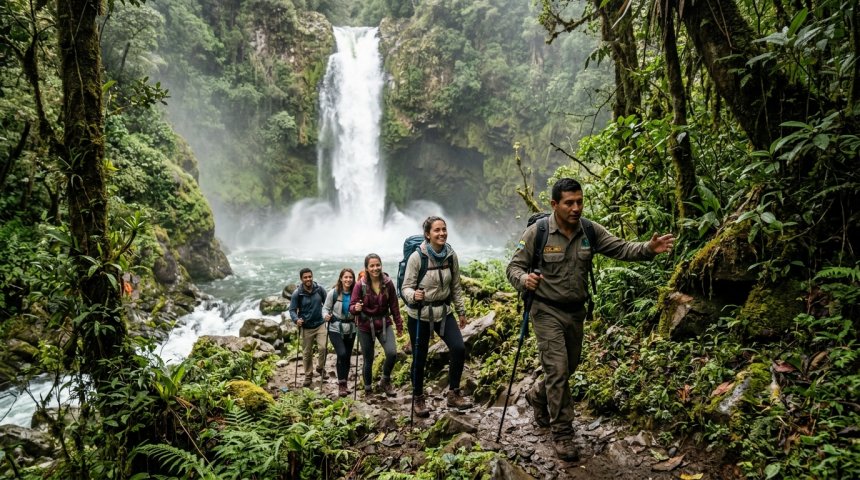
There is a specific kind of gravity that water holds over the human psyche. You can be standing on a trail, exhausted, your calves burning, your lungs pulling in sharp gasps of humid air, entirely focused on the mud slipping under your boots. And then you hear it—a low, rhythmic thrumming that vibrates in your chest before it even registers in your ears. You round a bend in the canopy, the light shifts, and suddenly the forest opens up into a cathedral of stone and spray. A ribbon of white water is plunging sixty feet into an emerald pool, throwing a fine mist into the air that catches the sunlight like scattered diamonds.
For the people standing on that wet rock ledge, shivering slightly in the cool spray, the stress of their inbox, the noise of the city, and the relentless grind of modern life simply evaporate. They aren't thinking about their quarterly revenue targets or their unread emails. They are entirely, completely present, anchored by the raw, indifferent power of the cascade.
Now, imagine you are the person who orchestrated that exact moment. Imagine you are the one who scouted the hidden trail, who knew exactly which rocks were slick with algae and which were safe to stand on, who timed the arrival perfectly for the golden hour light, and who handed out a dry towel and a thermos of hot tea right as the awe hit. You didn't just lead a hike; you curated a profound psychological reset. And for that three-hour window of time, you were paid $95 per person to do it.
This is the essence of the Local Waterfall Walk business.
In the landscape of 2026 entrepreneurship, where digital markets are saturated, software margins are compressing, and the hustle culture has left an entire generation burned out and craving genuine connection, the micro-adventure economy is booming. People don't want more screen-based courses. They don't want another subscription box. They want to feel the earth under their boots. They want to witness spectacle. They want someone else to handle the logistics of their escape so they can just show up and experience the awe.
The waterfall walk is the crown jewel of the nature-based micro-adventure model. It requires almost zero capital to start, it boasts profit margins north of 85%, and it sells an emotional transformation rather than a physical commodity. Waterfalls are universally captivating, but finding the good ones usually requires navigating confusing trail networks, dealing with washed-out bridges, and risking getting lost. You are selling the curation, the safety, and the story.
This guide is the operational manual for turning a love of the outdoors into a highly profitable, scalable, and legally protected enterprise. We are going to cover everything from the topography of route selection to the psychology of premium pricing, from the legal waivers that protect your livelihood to the marketing hooks that sell out your weekends months in advance. Let’s chase the cascade.
The Psychology of the Cascade: Why People Pay for the Spray
To sell this experience effectively, you must first understand the deeply irrational, beautifully human reasons why someone would willingly wake up early on their only day off, drive forty minutes into the mountains, and voluntarily walk up a steep, muddy incline until their legs burn.
They aren't paying you for cardio. If they wanted cardio, they would go to a gym with climate control and a television. They are paying you for a combination of four powerful psychological drivers:
1. The Antidote to Decision Fatigue
Modern professionals spend their days drowning in choices. What to eat, which email to prioritize, how to respond to a Slack message, which algorithm to feed. By the time the weekend arrives, their decision-making muscles are paralyzed. When they book a waterfall walk with you, they are paying for the luxury of surrendering control. "Meet me at the trailhead at 9:00 AM. Wear these shoes. Drink this water. Walk at this pace." The relief of having a competent authority dictate the next three hours of their lives is a massive part of the value proposition. You are selling a vacation from their own executive function.
2. The Exclusivity of the Hidden Gem
The famous waterfalls—the ones on the postcards, the ones with the paved parking lots and the gift shops—belong to the masses. They are crowded, loud, and stripped of their mystery. The hidden cascades belong to a secret society. By guiding your guests off the main artery and onto the unmarked spur trail, you give them access to a VIP section of nature that 95% of the population will never see. They get the empty plunge pools, the undisturbed wildlife, and the pristine silence. This exclusivity is highly Instagrammable, yes, but more importantly, it feeds a deep human desire to be part of the "in-crowd" who are willing to put in the effort to witness the extraordinary.
3. Type 2 Fun and Shared Suffering
In the outdoor community, there is a concept called "Type 2 Fun." Type 1 fun is enjoyable in the moment (like eating a good meal). Type 2 fun is miserable while you are doing it (like climbing a steep, muddy hill in the humidity), but becomes incredibly fun and rewarding in retrospect. Shared Type 2 fun creates instant, unbreakable bonds between strangers. When a group of six people struggle up a final switchback together, breathing heavily, encouraging each other, and then collectively gasp as the waterfall comes into view, they form a micro-community. You are facilitating deep human connection through mild, managed adversity.
4. The Tangible Anchor
We consume digital media at an alarming rate, but it leaves no residue. A waterfall walk leaves physical anchors. The soreness in the calves the next day. The smell of wet stone and ozone on a jacket. the cool dampness of the mist on their skin. These sensory details create durable memories that justify the price tag long after the credit card statement clears. They leave feeling like they actually did something with their weekend, rather than just scrolling past it.
Route Topography: Scouting the Perfect Cascade
Your entire business hinges on the quality of your route. If the trail is too easy, it feels like a walk in the park and doesn't justify the premium price. If it's too hard, you alienate your target demographic (who are usually active but not elite athletes) and create dangerous liability issues on slippery rocks. If the waterfall is a pathetic trickle by August, you will get terrible reviews.
The perfect waterfall walk route is a carefully engineered compromise. Here are the non-negotiable criteria for selecting your flagship trail:
The Distance and Elevation Sweet Spot
You are looking for a trail that is 3 to 5 miles round trip, with an elevation gain of 600 to 1,200 feet. This distance should take a moderately fit group about 60 to 90 minutes to reach the falls at a steady, conversational pace. This allows you to leave the trailhead around 9:00 AM, spend 45 minutes at the falls for photos, swimming (if safe), and snacks, and be back to the cars by 1:00 PM. Total time commitment for the guest is roughly 4 hours—perfect for getting back home to still enjoy the rest of their Saturday evening.
The Hydrology and Seasonality
This is the most critical factor for a waterfall business. You must understand the water source. Is it a snowmelt-fed cascade that roars in May but vanishes by July? Is it a spring-fed creek that runs year-round but gets murky after heavy rains? Your flagship route must have reliable, consistent water flow during your primary operating seasons. If you are in a region with distinct wet and dry seasons, you need two different routes: a "High Flow" route for the spring/wet season, and a "Hidden Gem" route for the summer/dry season that relies on a deeper, more permanent water table. Never promise a roaring cascade in late August if it's going to be a damp rock face. Manage expectations ruthlessly.
The Trailhead Logistics
Do not underestimate the importance of the parking lot. Navigating confusing forest service roads is a nightmare for guests. Your meeting point must be easy to find, clearly marked on GPS, and have reliable cell service for that initial check-in. Furthermore, the trailhead must have adequate parking for your group size plus a few other cars. There is nothing worse than arriving at 9:00 AM and having to circle a full dirt lot for twenty minutes while the group gets anxious. Have a backup trailhead mapped out for busy summer weekends.
The Plunge Pool Safety
The destination must justify the journey, but it must also be safe. A waterfall with a massive, deep, swimmable plunge pool is the holy grail—it elevates the experience from a "view" to an "activity." However, you must assess the hazards. Are there hidden currents? Is the water freezing cold (risk of hypothermia)? Are the rocks leading into the water covered in slick, black algae? If the pool is swimmable, you need a clear, safe entry point. If the pool is dangerous (shallow, rocky, or fast-moving), you must establish a strict "look but don't touch" boundary and enforce it. Your reputation depends on nobody getting hurt.
The Scouting Process
Never, ever run a commercial trip on a trail you haven't personally hiked multiple times across different seasons. You need to know every root, every rock, and every confusing junction. Hike the route at least three times: once during the dry season to understand the geography, once after heavy rain to identify washouts and slippery sections, and once with a stopwatch to time the pacing perfectly. Take meticulous notes on where the best photo spots are, where the wind is coldest, and where the safest place to sit is.
The Operational Mechanics: Choreographing the Cascade
A successful waterfall walk looks effortless to the guest, but behind the scenes, it is a tightly choreographed operation. When you are dealing with tired people, wet rocks, and variable weather, there is zero room for improvisation.
The Pre-Trip Communication Sequence
The experience begins 48 hours before the hike. Your automated booking system should trigger a sequence of emails that manage expectations and reduce anxiety.
- 48 Hours Out: The detailed prep guide. What to wear (moisture-wicking layers, no cotton), what shoes to wear (trail runners with aggressive lugs or hiking boots—explicitly warn against smooth-soled sneakers), what to bring (water, a swimsuit and towel if the pool is swimmable, a dry bag for electronics). Include a precise Google Maps pin for the trailhead and a photo of what the parking lot looks like.
- 24 Hours Out: The weather and water check. If the forecast calls for thunderstorms, flash flood warnings, or heavy rain that will turn the creek into a dangerous torrent, this is when you make the call to cancel or reschedule. Be decisive. Guests will secretly thank you for not making them hike in a lightning storm. If the water is unusually low, tell them honestly so they aren't disappointed.
- 3 Hours Out: The final reminder. "The trail is dry, the falls are flowing. See you at the trailhead."
The Gear List: Your Mobile Basecamp
You are not just a guide; you are the safety net. Your backpack is a mobile basecamp. Here is what you must carry on every single trip, without exception:
- Safety & Medical: A comprehensive wilderness first aid kit. Blister pads (Moleskin), ibuprofen, bandages, antiseptic wipes, and an emergency space blanket. If the pool is swimmable, a compact throw rope and a small first-aid kit specifically for cuts (wet rocks are sharp).
- Navigation: A physical topographic map and a compass, plus a downloaded offline map on your phone and a dedicated GPS device (like a Garmin inReach). Batteries die fast in the cold and wet; always carry spares in a waterproof pouch.
- Hospitality: A high-quality, insulated thermos (64oz or larger) filled with hot herbal tea or cider. A stack of lightweight, reusable cups. High-energy, non-messy snacks (like energy bites or dried fruit) for anyone whose blood sugar drops on the ascent. A few cheap, lightweight microfiber towels for guests who forgot theirs or want to dry off their phones.
- Dry Storage: A couple of spare dry bags (10L and 20L) that you can loan to guests who didn't bring one, so they can safely stash their phones, wallets, and car keys at the base of the falls.
The Pacing Strategy
When the group gathers at the trailhead, they will likely be jittery and slightly awkward. Your job is to immediately establish calm authority. Do a brief welcome, introduce yourself, and lay out the ground rules: we stay together, we communicate if we need a break, we watch our footing on wet rocks.
Start the hike slower than you think is necessary. The "waterfall fever" will make people want to rush, especially as they start to hear the water in the distance. If you let them sprint the first half-mile, half the group will be gassed out before you hit the first creek crossing, and worse, they will slip on the wet stones. Set a deliberate, rhythmic pace. Use the terrain to force breaks—stop at a scenic overlook or a smaller cascade to catch breath, adjust layers, and point out features.
As you approach the main falls, time your arrival perfectly. You want to crest the final ridge and see the water about 10 minutes before you actually reach the plunge pool. This builds anticipation.
The Summit Ritual
This is where you earn your money. Don't just stand there. Direct the experience. Point out the geological features—the basalt columns, the erosion patterns. Pour the tea. Hand out the cups. If the pool is safe, demonstrate the safest entry point and set a strict boundary for how far out they can go. Take photos of them (they will desperately want photos of themselves looking heroic in the spray, and they can't take selfies easily with wet hands). Hold the space for silence. Let the roar of the water wash over them. After about 45 minutes, gently initiate the return journey before the crowds start arriving and the magic fades.
Legal Armor and Risk Management: Protecting the Livelihood
Let’s have a brutally honest conversation about liability. You are taking people into a wilderness environment near moving water and slippery rocks. People slip. People twist ankles. People ignore your warnings and jump off cliffs into shallow water. If someone gets hurt on your watch, they will look for someone to blame, and their lawyer will look for someone to sue.
You cannot eliminate risk entirely—that's the point of the adventure—but you can mitigate it to a level where your business is protected.
The Corporate Structure
Do not operate as a sole proprietorship. Form a Limited Liability Company (LLC) in your state immediately. This creates a legal firewall between your personal assets (your house, your car, your personal savings) and the liabilities of the business. If the business gets sued, they can only go after the assets inside the LLC. It costs a few hundred dollars and takes a week to set up online. There is no excuse not to do this.
Specialized Insurance
General liability insurance is not enough. You need Outdoor Recreation / Guide Insurance. Standard business policies often have exclusions for "athletic activities," "wilderness guiding," and specifically "water-adjacent activities." Companies like World Nomads, Adventure Insurance, or specialized brokers offer policies specifically designed for hiking guides. Expect to pay between $600 and $1,200 per year for a policy that covers up to $1-$2 million in liability. This is the cheapest peace of mind you will ever buy. Do not lead a single paying trip without it.
The Ironclad Waiver
Your Assumption of Risk and Liability Waiver is your shield. Do not download a generic template from the internet. Pay a local attorney who specializes in outdoor recreation law $500 to draft a bulletproof waiver tailored to your specific state laws and your specific activity. The waiver must clearly state:
- Hiking near waterfalls involves inherent risks (slippery rocks, flash floods, hypothermia, falling debris, remote location).
- The guest acknowledges they are physically fit enough to complete the hike and swim (if applicable).
- The guest assumes all risks, including injury or death.
- The guest agrees not to sue the company or its guides.
- The guest grants permission for you to use photos taken during the trip for marketing.
Use a digital waiver platform like Smartwaiver, DocuSign, or the waiver integration built into your booking software (like FareHarbor or Peek Pro). The waiver must be signed digitally before they can complete the booking. No waiver, no hike. If someone shows up at the trailhead and says "I didn't get the email," you politely turn them away. No exceptions. Ever.
Wilderness First Aid Certification
You need to be medically competent. Get certified in Wilderness First Aid (WFA) or, ideally, Wilderness First Responder (WFR). These courses teach you how to handle medical emergencies when you are an hour away from an ambulance. You will learn how to splint a broken leg, manage hypothermia, and triage a head injury. Beyond the practical skills, having this certification looks incredible to insurance underwriters and builds immense trust with your clients.
Pricing for Profit: The Economics of the Cascade
New outdoor entrepreneurs consistently underprice their experiences. They think, "It's only three hours, and I'm just walking up a hill. I'll charge $40 so I can get a lot of people."
This is a fundamental misunderstanding of the value exchange. You are not charging for three hours of walking. You are charging for the years of experience that allow you to navigate safely on wet rocks. You are charging for the convenience of the curated logistics. You are charging for the premium tea at the plunge pool. You are charging for the emotional transformation.
The Pricing Tiers
- The Standard Group Ticket ($85 - $120 per person): This is your bread and butter. You cap the group at 6 to 8 people. At $95 per person, a full group of 6 generates $570 in revenue for a 4-hour commitment. Your hard costs are maybe $15 for tea and snacks, plus $10 in gas. Your profit margin is over 90%.
- The Private Group Buyout ($500 - $750 flat rate): Allow corporate teams, bachelorette parties, or families to book the entire trip privately. They pay a premium for exclusivity and the ability to set their own pace. This is highly lucrative and requires the exact same amount of effort from you as a standard group.
- The Photography Add-On (+$50 per person): Partner with a local outdoor photographer (or do it yourself if you have the skills). Offer a package where, in addition to the guided hike, they receive a gallery of 10-15 professionally edited, high-resolution photos of them at the falls within 48 hours. People will pay a massive premium for high-quality photos of themselves in epic lighting without having to worry about dropping their phone in the water.
The Math of Scale vs. Intimacy
Always resist the urge to increase your group size to 15 or 20 people to make more money per trip. Managing 20 people on a narrow, wet trail is exhausting, loud, and dangerous. Your attention is diluted, the pace slows down to a crawl, and the intimate, magical atmosphere is destroyed. Six people at $95 ($570 total) is vastly superior to fifteen people at $50 ($750 total). With six people, you deliver a premium, five-star experience that results in glowing reviews and repeat customers. With fifteen people, you deliver a chaotic, mediocre experience that results in burnout and refunds. Price for the experience you want to deliver.
Marketing the Magic: Selling Without Being Salesy
You don't need a massive advertising budget to sell out your waterfall walks. You are selling a highly visual, emotionally resonant product. Your marketing needs to reflect that.
The Visual Engine: User-Generated Content (UGC)
Your primary marketing asset is the photos and videos taken during your trips. When you are at the falls, take incredible photos of your guests. Capture the mist catching the light, the silhouettes against the white water, the exhausted but ecstatic smiles on the descent. Within 24 hours of the hike, send a follow-up email with a link to a shared Google Drive or Dropbox folder containing 5-10 high-quality photos from the trip. Tell them explicitly: "Feel free to share these on Instagram and tag us!" When a guest posts a stunning photo of themselves at a hidden waterfall, their friends see it. Their friends think, "Wow, I didn't know that existed here. How did you find that?" The guest replies, "I booked this waterfall guide, it was amazing." That is organic, high-converting word-of-mouth marketing, and it costs you nothing but the time it takes to upload photos.
Search Engine Optimization (SEO) for Local Intent
People don't search for "hydro-micro-adventures." They search for "waterfall hike near [City Name]" or "guided swimming hole tour [Region]." Build a simple, clean website (using Squarespace, Carrd, or WordPress). Create a dedicated landing page for your flagship waterfall walk. Optimize the title tags, meta descriptions, and headers for those exact local search terms. Write a blog post detailing "The Top 5 Hidden Waterfalls Near [City]," and make sure your guided tour is prominently featured as the hassle-free option. Capture the traffic of people actively looking for this exact experience in your geographic area.
Strategic Partnerships
Identify the businesses in your area that cater to your target demographic (active professionals, wellness enthusiasts, tourists) and propose mutually beneficial partnerships.
- Boutique Hotels and Airbnbs: Approach high-end local accommodations. Offer their concierge a 15% commission on any guest they refer who books a waterfall walk. Provide them with beautiful printed brochures to leave in the rooms. Tourists are desperate for curated local experiences, and hotel staff are always looking for reliable recommendations.
- Corporate HR Departments: Pitch the waterfall walk as a unique team-building exercise. Instead of the boring trust-fall seminar in a conference room, offer a "Flow State" package for corporate groups. It gets teams out of the office, forces them to collaborate, and provides a shared, memorable challenge.
- Local Outdoor Retailers: Partner with the local REI or independent gear shop. They sponsor your snacks or lend you demo gear; you mention them in your pre-trip emails and tag them in your social media posts. They get exposure to your affluent demographic; you get a story to tell and potentially a cheaper cost of goods.
The "Waitlist" Psychology
Once you start getting traction, intentionally limit your supply. Only open bookings for the next 4 weeks at a time. When a popular date (like a weekend after a heavy rainstorm when the falls are roaring) sells out, prominently display a "Join the Waitlist" button. Scarcity drives demand. When people see that your trips are booked solid, the perceived value of the experience skyrockets. They aren't just buying a hike anymore; they are securing a rare opportunity.
The Tech Stack: Automating the Back Office
If you are managing bookings, waivers, and payments via text messages and Venmo, you will quickly drown in administrative chaos. You need a tech stack that handles the friction so you can focus on the experience.
Booking and Payment Processing
Use an industry-standard tour booking platform like FareHarbor, Peek Pro, or Checkfront. These platforms are designed specifically for outdoor operators.
- They provide a real-time calendar that syncs with your website.
- They process credit cards securely and handle the payouts to your bank account.
- They allow you to require 100% payment upfront at the time of booking. (Never allow "pay at the trailhead." No-shows will destroy your revenue model).
- They integrate directly with waiver software, ensuring nobody can book without signing the legal release. Yes, they take a cut (usually 3% to 6% per transaction), but the hours they save you in admin work and the liability they protect you from are worth every penny.
Communication Automation
Set up automated email sequences within your booking platform or using a tool like Mailchimp.
- Immediate Confirmation: Receipt of payment and the signed waiver.
- 7 Days Prior: A gentle reminder with the prep guide attached.
- 48 Hours Prior: The detailed logistics email (what to wear, what to bring, exact GPS coordinates).
- 24 Hours Prior: The weather check and final confirmation.
- 24 Hours Post-Trip: The thank you email with the photo gallery link and a direct link to leave a Google Review.
By automating this sequence, you ensure every guest receives the exact same high level of communication, regardless of whether you're busy, tired, or guiding another trip. It makes your one-person operation look like a polished, professional agency.
Review Generation
Google Reviews are the lifeblood of local search visibility. A tour with 40 five-star reviews will rank higher and convert better than a tour with zero reviews, even if the zero-review tour has a better website. Don't just hope people leave reviews. Ask for them strategically. In your post-trip email, include a direct, one-click link to your Google Business Profile. Say something like: "As a small local business, reviews mean the world to us. If you enjoyed the cascade, would you mind taking 30 seconds to share your experience here?" You will be shocked by how many people are happy to do it when you make it frictionless.
Scaling the Summit: From Solo Guide to Outdoor Enterprise
The trap of the waterfall walk business is that it is incredibly fun, highly profitable, and physically exhausting. If you rely solely on your own two legs to generate revenue, you will hit a hard ceiling around $8,000 to $10,000 a month, and your knees will eventually rebel. You cannot guide seven days a week, 52 weeks a year, without burning out or getting injured.
To build a real business, you must eventually remove yourself from the trail.
Phase 1: The Solo Operator (Months 1-6)
You do everything. You scout the trails, you write the copy, you manage the social media, you brew the tea, and you lead the hikes. You cap your availability to 3-4 trips a week (e.g., Wednesday mornings for the corporate crowd, Saturday and Sunday mornings for the general public). You are validating the model, building your review base, and generating $3,000-$6,000 a month in pure profit. This is the apprenticeship phase.
Phase 2: The Contractor Model (Months 6-18)
Your weekend trips are consistently selling out. You are turning away money because you physically cannot guide two groups at the same time. It's time to hire. You don't need full-time employees yet. You hire 2-3 part-time, contract guides. Look for experienced outdoor enthusiasts, trail runners, or wilderness EMTs who already love being outside. You pay them a flat rate per trip (e.g., $150 for a 4-hour hike) or a percentage of the ticket sales (e.g., 25%). You train them extensively on your exact script, your pacing strategy, your safety protocols, and your hospitality standards. They use your gear, your waivers, and your booking system. Now, you can run 6-8 trips a week. Your revenue doubles, but your personal time on the trail remains the same. You transition from being a guide to being an Operations Manager. You spend your time on marketing, partnership development, and quality control (occasionally shadowing your new guides to ensure they meet your standards).
Phase 3: Product Expansion (Months 18-36)
With a roster of reliable guides, you can now expand your catalog. The waterfall walk is your flagship, but you can launch complementary micro-adventures using the same operational infrastructure:
- Sunrise Summit Hikes: Same booking system, same waiver structure, different time of day and different terrain.
- Creek Bed Canyoneering: A more advanced, higher-ticket offering for the thrill-seekers in your existing customer base.
- Forest Bathing Walks: A slower, lower-impact offering for the wellness crowd. You are now running a diversified micro-adventure agency. Your guides can rotate through different offerings based on their skills and the seasonal demand.
Phase 4: The Franchise or Licensing Play (Year 3+)
Your systems are documented. Your SOPs are bulletproof. Your marketing funnel is automated. You have proven that this model works profitably in your specific geographic market. Now, you package the playbook. You create a comprehensive operations manual detailing everything from how to scout a trail to the exact email scripts to use. You license this playbook to other outdoor entrepreneurs in different cities—Asheville, Denver, Austin, Portland. They pay you an initial licensing fee and a small ongoing royalty (e.g., 5% of revenue) to operate under your brand name, using your proven systems. You have transformed a local guiding service into a scalable national brand.
The Seasonal Reality: Managing the Feast and Famine
One of the harsh realities of the outdoor business is that nature dictates your revenue calendar. You must plan for the seasons to avoid cash flow crises.
The Peak Seasons (Spring and Early Summer)
In most temperate climates, spring and early summer are your absolute peak seasons. The snowmelt and spring rains mean the waterfalls are roaring, the weather is mild, and demand is highest. During these months, you run maximum capacity. You save aggressively. You do not blow your peak season profits on lifestyle inflation; you hoard them for the lean months.
The Summer Slump
Summer can be tricky. In many regions, the snowmelt-fed waterfalls dry up to a trickle. The heat makes strenuous hiking unpleasant. Adaptation: Shift your summer focus to your deep-water, spring-fed routes where swimming is the main attraction. Market these as "Cool Down" escapes from the city heat. Alternatively, pivot your marketing to target the tourist influx, who are less sensitive to the heat because they are on vacation mode.
The Winter Freeze
Winter brings freezing temperatures, ice on the trails, and dangerous water conditions. Revenue will naturally dip. Adaptation: Lean into the extreme. Market the winter waterfall hikes as "Frozen Cascade" tours for the hardcore crowd. Equip yourself with microspikes and emphasize the brutal, crystalline beauty of a partially frozen waterfall. Alternatively, use the winter months (when trail guiding is slow) to focus entirely on B2B sales, corporate team-building packages for Q1 planning, and backend business administration (updating the website, renewing insurance, refining SOPs).
Conclusion: The Business of Flow
Building a local waterfall walk business is a masterclass in modern entrepreneurship. It forces you to be a marketer, a logistician, a risk manager, a hospitality expert, and a wilderness guide all at once. It demands that you respect the power of nature while simultaneously mastering the mechanics of commerce.
But beyond the margins, the waivers, and the tech stacks, there is a deeper reason to build this business. We live in an era of profound disconnection. People are starved for silence, for beauty, for physical exertion that serves no purpose other than the joy of movement, and for moments of shared awe that cannot be digitized.
When you stand on that wet rock ledge at 11:00 AM, pouring hot tea into a paper cup for a stranger who is watching the cascade plunge into the emerald pool for the first time, you aren't just running a transaction. You are facilitating a moment of pure, unadulterated humanity. You are reminding people that the world is still massive, still beautiful, and still capable of surprising them, if they are just willing to lace up their boots and chase the sound of the water.
The trail is waiting. The tea is brewing. The cascade is calling. Go build the business that helps people answer it.
FAQs
Do I need formal wilderness guide certifications to start? While requirements vary by state and by the specific land management agency (National Park, State Park, National Forest), having formal certifications is highly recommended for both legal protection and insurance purposes. At a minimum, obtain a Wilderness First Aid (WFA) certification and CPR. If you plan to operate on federal lands, you will likely need a Commercial Use Authorization (CUA) or a Special Use Permit, which will require proof of insurance and sometimes specific guide credentials. Check with your local land managers immediately.
How do I handle bad weather cancellations? Weather is the biggest variable in this business, especially near water. You must have a crystal-clear cancellation policy stated on your website and in your booking terms. A standard policy is: "If the guide determines that weather conditions (heavy rain, lightning, flash flood risk, or dangerously slippery trails) make the trip unsafe, the trip will be canceled 24 hours in advance. Guests will be offered a full refund or the option to reschedule to another available date." Do not wait until the morning of the hike to cancel; give people their sleep back. Conversely, if a guest cancels within 48 hours due to their own change of plans, no refund is given.
What if a guest ignores safety warnings and jumps into a dangerous pool? This is why your waiver, your pre-trip communication, and your on-site orientation are vital. You must establish yourself as the undisputed authority on safety from the moment you meet at the trailhead. During the orientation, explicitly point out the hazards: "The rocks beyond this line are covered in invisible black algae and the current pulls under. Nobody goes past this point." If someone violates this rule during the trip, you stop the activity immediately, gather the group, and enforce the boundary firmly. If they refuse to comply, you have the right to terminate their participation and escort them back to the trailhead. Your duty of care to the rest of the group outweighs one person's desire for a thrill.
Can I run this business part-time while keeping my day job? Absolutely. In fact, it's the recommended way to start. The waterfall walk model is perfectly designed for weekends. You can work your corporate job Monday through Friday, and run two trips on Saturday and two on Sunday. Four trips a week at $570 revenue per trip is $2,280 a week, or nearly $9,000 a month in side income, with minimal overhead. Many operators run this successfully as a part-time venture for years before deciding to go full-time.
How do I protect my routes from being copied by competitors? You can't, and you shouldn't try to. Trails are public resources. If a competitor wants to guide the same waterfall, they can. Your moat is not the trail; your moat is your brand, your hospitality, your reviews, and your operational excellence. Anyone can walk up a hill to a waterfall. Not everyone can make a stranger feel safe, welcomed, and profoundly moved while doing it. Focus on delivering a five-star experience, and the market will reward you, regardless of who else is on the trail.
Share
What's Your Reaction?
 Like
0
Like
0
 Dislike
0
Dislike
0
 Love
0
Love
0
 Funny
0
Funny
0
 Angry
0
Angry
0
 Sad
0
Sad
0
 Wow
0
Wow
0