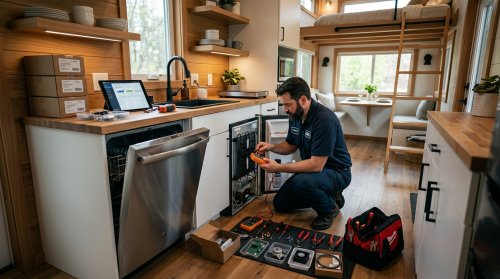
Professional Termite Treatment: 7 Tech-Based Key Features
Technical analysis of 7 key features in effective professional termite treatment programs covering detection tech, chemical barriers, baiting systems, monitoring, data-driven inspection, IPM, and verification.

Termite damage costs property owners billions annually worldwide, yet the gap between amateur intervention and professional treatment effectiveness remains vast—not because professionals possess secret chemicals unavailable to consumers, but because effective termite control operates as an integrated technological system combining detection science, chemical engineering, biological understanding, data analytics, and continuous monitoring into a coherent defense architecture that adapts to species-specific behavior, structural variables, and environmental conditions. Homeowners evaluating termite treatment proposals often focus narrowly on price per linear foot or chemical brand names while missing the systemic features that actually determine long-term protection efficacy. The difference between a treatment that fails within two years and one that provides decades of structural integrity lies in seven technical features that distinguish genuine professional programs from commodity pesticide applications: advanced detection methodology identifying infestation extent before treatment begins, scientifically calibrated chemical barrier creation accounting for soil composition and hydrology, engineered baiting systems leveraging termite trophallaxis biology for colony elimination, continuous monitoring infrastructure providing early warning of reinfestation, data-driven inspection protocols replacing guesswork with evidence-based assessment, integrated pest management frameworks combining multiple control modalities rather than relying on single-point solutions, and post-treatment verification systems confirming treatment efficacy through measurable outcomes rather than assumptions. Understanding these features transforms termite treatment evaluation from price-shopping exercise into informed assessment of technical capability—enabling property owners to distinguish providers who engineer lasting protection from those who merely apply chemicals and hope for the best.
This guide examines each feature through the lens of entomological science, chemical engineering, structural biology, and data analytics that underpin professional termite control. We'll explore why each feature matters technically, how it functions mechanistically, what distinguishes excellent implementation from inadequate execution, and how features interact systemically to create protection greater than the sum of individual components. Whether you're a property owner evaluating treatment proposals, a facilities manager designing pest management programs, a real estate professional advising clients on termite risk, or a student studying structural pest management, this guide delivers the technical depth needed to understand what makes professional termite treatment genuinely effective beyond marketing claims and surface-level descriptions.
Let's begin by establishing why termite control requires systematic technological approach rather than simple pesticide application—and why this distinction determines everything about long-term protection outcomes.
Chapter 1: Advanced Detection Technology — Seeing What's Invisible Before Treatment Begins
Effective treatment cannot begin without accurate diagnosis. Termites operate concealed within wood, soil, and structural voids making visual inspection alone fundamentally insufficient for comprehensive infestation mapping. Professional programs deploy multi-modal detection technologies revealing hidden activity patterns that determine treatment scope, method selection, and success probability.
Moisture Meter Mapping and Hydrological Analysis
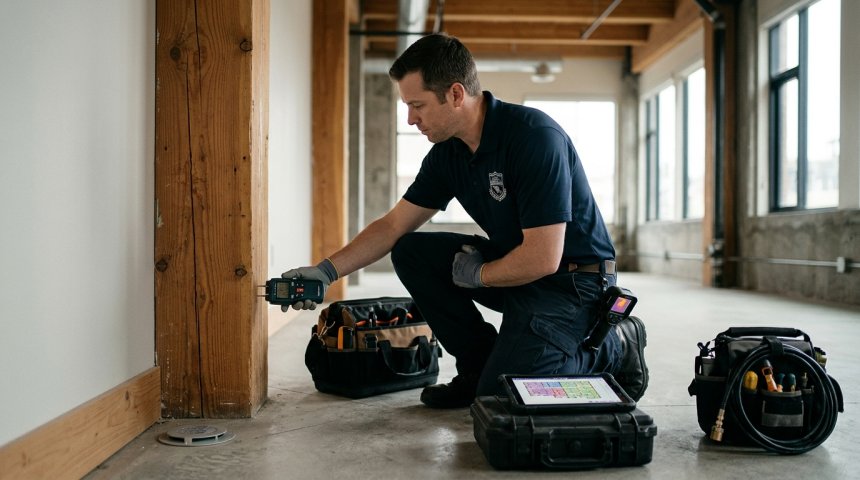
Technical Foundation: Termites require moisture for survival; subterranean termites maintain nest humidity at 90-99% RH and construct mud tubes specifically to preserve moisture during above-ground foraging. Moisture meters (both pin-type penetrating and pinless capacitive/resistive) map moisture gradients within structural wood and masonry revealing conditions conducive to termite activity even when termites themselves remain undetected. Professional-grade meters measure moisture content from 0.2% to 100% with ±0.5% accuracy enabling precise identification of moisture anomalies indicating potential termite pathways or water intrusion creating vulnerability.
Application Protocol: Systematic grid-pattern scanning across foundation walls, floor joists, sill plates, window frames, door jambs, bathroom surrounds, kitchen plumbing chases, and roof penetrations creates moisture heat map identifying zones requiring intensive inspection. Readings >20% MC in structural wood indicate active moisture problem warranting investigation; readings >28% MC suggest active decay fungi potentially co-occurring with termite activity. Moisture mapping conducted before destructive probing preventing unnecessary damage to finished surfaces. Baseline moisture profiles established for future comparison detecting changes indicating new water intrusion or termite activity.
Diagnostic Value: Moisture mapping identifies three critical parameters: (1) Active termite activity locations through associated moisture signatures, (2) Conducive conditions requiring remediation independent of current infestation, (3) Water intrusion sources creating ongoing vulnerability. Treatment targeting only detected termites without addressing moisture sources guarantees recurrence; integrated moisture-termite diagnosis enables comprehensive remediation. Moisture data informs chemical barrier placement prioritizing high-moisture zones where termite pressure concentrates.
Acoustic Emission Detection Systems
Technical Foundation: Termites produce characteristic acoustic emissions through feeding (mandible clicking at 2-10 kHz), movement (footstep vibrations at 100-500 Hz), and communication (head-banging alarm signals at species-specific frequencies). Piezoelectric sensors and accelerometers detect these micro-vibrations through wood and masonry amplifying signals 10,000-100,000x above ambient noise floor. Signal processing algorithms filter background noise (HVAC, traffic, wind) isolating termite-specific frequency signatures enabling detection through up to 6 inches of wood or 12 inches of concrete.
Application Protocol: Sensor placement at suspected activity zones based on moisture mapping and visual indicators. Real-time audio visualization displays signal amplitude and frequency spectrum enabling operator differentiation between termite activity and false positives (settling structures, plumbing flow, insect activity). Multiple sensor triangulation localizes activity source within 6-inch accuracy. Recording duration minimum 5 minutes per location capturing intermittent activity cycles. Sensitivity calibration adjusted for substrate density and ambient noise conditions.
Diagnostic Value: Acoustic detection confirms live termite presence distinguishing active infestation from historical damage—a critical distinction determining treatment necessity. Activity intensity estimation through signal amplitude correlates with colony size informing treatment scale. Spatial localization guides targeted treatment reducing chemical volume and structural disruption. Pre-treatment acoustic baseline enables post-treatment verification confirming activity cessation. Limitation: acoustic detection ineffective for drywood termites in low-density infestations or subterranean termites in deep soil; complementary technologies required for comprehensive detection.
Thermal Imaging and Infrared Thermography
Technical Foundation: Termite metabolism generates heat (0.5-2°C above ambient in active galleries); termite-damaged wood exhibits altered thermal conductivity due to internal voids and moisture accumulation. Infrared cameras (thermal sensitivity <0.05°C NETD) visualize temperature differentials invisible to naked eye revealing subsurface anomalies. Active termite colonies appear as warm spots against cooler surrounding wood; moisture-damaged areas appear cool due to evaporative cooling; void spaces show distinct thermal signatures from solid wood.
Application Protocol: Thermal survey conducted during stable temperature conditions (minimal solar loading, HVAC equilibrated) maximizing signal-to-noise ratio. Systematic scanning of exterior walls, interior partitions, flooring, ceiling cavities, and attic spaces. Thermal anomalies flagged for secondary verification through moisture meter, acoustic detection, or borescope inspection. Thermal images geotagged and timestamped creating permanent record for longitudinal comparison. Operator training critical; thermal interpretation requires experience distinguishing termite signatures from electrical hotspots, insulation gaps, and plumbing leaks.
Diagnostic Value: Thermal imaging surveys large areas rapidly identifying anomaly zones for focused investigation increasing inspection efficiency 3-5x versus probe-only methods. Non-destructive nature preserves finished surfaces enabling inspection of occupied structures without tenant displacement. Thermal patterns reveal infestation extent beyond visible damage guiding treatment boundary definition. Limitation: thermal imaging detects anomalies not termites specifically; all thermal findings require secondary confirmation. Environmental conditions significantly affect detection reliability; surveys scheduled during optimal thermal windows.
Borescope and Endoscopic Inspection
Technical Foundation: Flexible fiber-optic or digital borescopes (diameter 4-8mm) enable direct visual inspection within wall cavities, floor assemblies, ceiling plenums, and structural voids through minimal access holes (¼-½ inch). High-resolution cameras (1080p+) with LED illumination provide real-time video of concealed spaces revealing termite galleries, mud tubes, frass deposits, and damage extent. Articulating tips navigate complex void geometries accessing areas impossible through fixed-direction optics.
Application Protocol: Access points drilled at strategic locations based on moisture, acoustic, and thermal anomaly convergence minimizing structural penetration. Systematic void traversal documenting conditions through recorded video with distance markers. Gallery width, mud tube diameter, and frass accumulation quantified estimating colony maturity and activity duration. Sample collection through borescope working channel enabling species identification without additional structural damage. Access holes sealed post-inspection restoring vapor barrier integrity.
Diagnostic Value: Direct visual confirmation eliminates diagnostic uncertainty from indirect detection methods. Species identification through morphological characteristics (soldier head shape, alate wing venation) determines treatment protocol selection. Damage quantification informs structural repair scope separate from pest control treatment. Evidence documentation supports insurance claims and real estate transactions. Borescope inspection bridges gap between non-destructive screening and destructive demolition enabling precise targeting of confirmatory investigation.
Key Insight: For official technical guidelines on termite inspection standards, treatment protocols, and industry best practices informing professional program design, National Pest Management Association Termite Technical Standards provides authoritative reference material establishing baseline expectations for professional termite service quality.
Chapter 2: Chemical Barrier Engineering — Precision Application Science Beyond Spraying
Liquid termiticide barriers remain foundational to subterranean termite protection but effectiveness depends entirely on application precision accounting for soil physics, hydrology, chemistry, and structural geometry. Generic spraying creates illusion of protection; engineered barriers deliver verified performance.
Soil Characterization and Chemistry Analysis
Technical Foundation: Soil properties dramatically affect termiticide performance: clay soils adsorb pyrethroids reducing bioavailability; sandy soils permit rapid leaching below treatment zone; alkaline pH (>8.0) accelerates organophosphate hydrolysis; organic matter content binds active ingredients reducing mobility; cation exchange capacity determines retention versus leaching balance. Professional programs conduct soil texture analysis (hydrometer method), pH testing, organic matter quantification, and permeability assessment before treatment selecting active ingredient and formulation matched to site-specific soil chemistry.
Application Calibration: Non-repellent termiticides (fipronil, imidacloprid, chlorantraniliprole) require uniform distribution through treatment zone achieving lethal dose throughout soil profile. Application rate calculated as: (trench volume × target concentration) ÷ product concentration adjusting for soil adsorption coefficient (Kd). Clay soils require 1.5-2x label rate compensating for adsorption; sandy soils require reduced rates preventing leaching below root zone. Trench dimensions standardized (6×6 inches minimum) ensuring adequate treatment volume per linear foot. Rodding intervals (12 inches maximum) ensuring vertical penetration through compacted subsoil. Application equipment calibrated daily verifying flow rate accuracy ±5%.
Hydrological Considerations: Water table depth, seasonal fluctuation, drainage patterns, and irrigation schedules affect barrier longevity. High water tables dilute treatments requiring deeper trenching or alternative methods. Poor drainage creates saturated zones where termiticides migrate unpredictably. Irrigation systems installed post-treatment can wash away barriers if emitters placed within treatment zone. Hydrological assessment informs treatment timing (avoiding rainy seasons), formulation selection (water-soluble vs. suspension concentrates), and homeowner education regarding landscape modifications preserving barrier integrity.
Structural Geometry Adaptation
Foundation Type-Specific Protocols: Slab-on-grade foundations require drilling through concrete at 12-inch intervals injecting termiticide beneath slab creating horizontal barrier. Crawl space foundations require trenching along interior and exterior perimeter walls plus pier treatment. Basement foundations require exterior excavation and interior wall treatment. Each foundation type presents unique challenges: slab drilling risks utility strikes requiring ground-penetrating radar pre-scanning; crawl spaces may have limited access requiring specialized equipment; basement exteriors may be obstructed by landscaping or adjacent structures. Treatment protocols adapted to foundation geometry ensuring continuous barrier without gaps.
Penetration and Utility Sealing: Plumbing penetrations, electrical conduits, HVAC lines, and expansion joints create barrier discontinuities serving as termite highways. Professional programs seal all penetrations with elastomeric sealants compatible with termiticide chemistry before liquid application. Expansion joints filled with compressible backer rod then sealed maintaining flexibility while blocking termite passage. Utility chase treatments extend barrier vertically through floor assemblies connecting horizontal barriers. Penetration sealing documented photographically creating verifiable record of continuity assurance.
Vertical Barrier Integration: Horizontal barriers alone insufficient; termites exploit vertical pathways through foundation walls, piers, and utility chases. Vertical barriers created through rodding alongside foundations, treating hollow block cores, and applying surface treatments to exposed masonry. Horizontal-vertical barrier intersection points receive enhanced treatment ensuring seamless integration. Vertical barrier depth extends below frost line preventing freeze-thaw cycling from creating gaps. Integration quality determines barrier completeness; discontinuous barriers fail at junction points regardless of horizontal coverage adequacy.
Active Ingredient Selection Science
Mode of Action Matching: Different termiticide classes function through distinct mechanisms: non-repellents (fipronil, imidacloprid) allow termites to tunnel through treated soil transferring lethal doses through trophallaxis achieving colony-level effects; repellents (bifenthrin, permethrin) create exclusion barriers forcing termites to find untreated gaps; insect growth regulators (hexaflumuron, noviflumuron) disrupt molting causing delayed mortality. Mode of action selected based on infestation severity, soil conditions, proximity to sensitive environments, and integration with baiting systems. Non-repellents preferred for active infestations enabling transfer effect; repellents appropriate for preventive barriers in low-pressure areas.
Environmental Fate Profiling: Termiticide half-life, mobility, toxicity to non-target organisms, and groundwater contamination potential vary enormously. Fipronil half-life 1-3 months in soil but strong adsorption limits leaching; imidaclopril half-life 1-3 years with moderate mobility; chlorantraniliprole half-life weeks to months with very low mammalian toxicity. Environmental fate profiling matches active ingredient to site-specific risk factors: proximity to wells, wetlands, or aquatic habitats; soil permeability; rainfall patterns; and regulatory restrictions. Responsible selection balances efficacy with environmental stewardship; outdated "strongest chemical equals best treatment" thinking ignores ecological consequences and regulatory trajectory.
For leading termite bait system engineering demonstrating colony elimination science and monitoring station technology, Sentricon Always Active Termite Bait System Technical Documentation provides detailed technical resources on bait matrix formulation, active ingredient delivery mechanisms, and station deployment protocols informing integrated treatment program design.
Chapter 3: Engineered Baiting Systems — Biological Exploitation Through Technological Design
Baiting systems represent paradigm shift from barrier exclusion to colony elimination leveraging termite social biology through engineered delivery systems. Effectiveness depends on understanding trophallaxis dynamics, bait matrix palatability, active ingredient pharmacokinetics, and monitoring station placement science.
Trophallaxis and Transfer Effect Optimization
Biological Mechanism: Termites share food through proctodeal (anus-to-mouth) and stomodeal (mouth-to-mouth) trophallaxis distributing nutrients—and toxins—throughout colony. Worker termites consume bait at monitoring stations returning to nest sharing toxicant with soldiers, nymphs, reproductives, and ultimately queen(s). Transfer efficiency depends on toxicant latency period: too rapid kills foragers before transfer completing; too slow permits colony recovery through reproduction exceeding mortality rate. Optimal latency 2-8 weeks allowing multiple transfer cycles achieving colony-wide exposure before significant mortality occurs.
Active Ingredient Pharmacokinetics: Chitin synthesis inhibitors (hexaflumuron, noviflumuron, lufenuron) disrupt molting process killing termites during next ecdysis; latency naturally aligned with molt cycle (2-6 weeks depending on caste and instar). Metabolic inhibitors (sulfluramid) interfere with energy production causing gradual starvation; latency 4-12 weeks. Neonicotinoids (imidacloprid) act faster (days to weeks) potentially limiting transfer; formulated at sublethal concentrations extending latency. Active ingredient selection balances transfer efficiency with environmental safety and regulatory acceptance. Modern baits favor IGRs precisely because delayed action maximizes colony elimination probability.
Bait Matrix Palatability Engineering: Termites reject unpalatable baits regardless of toxicant potency. Bait matrices combine cellulose substrate (alpha-cellulose, compressed paper, wood flour) with feeding stimulants (sugars, amino acids, fungal symbiont mimics) optimizing acceptance. Matrix texture, moisture content, and density calibrated to target species preferences: Reticulitermes prefers moist soft matrices; Coptotermes accepts drier compressed formats; Heterotermes requires specific fungal associations. Palatability tested through laboratory choice assays and field validation before commercial deployment. Matrix degradation rate balanced against replacement frequency; too-rapid degradation requires frequent servicing increasing cost and disturbance; too-slow degradation reduces feeding stimulation over time.
Monitoring Station Placement Science
Foraging Pattern Analysis: Termite foraging follows resource gradients (moisture, wood, fungal associates) not random distribution. Monitoring stations placed at predicted foraging intersections: foundation perimeter, mulch beds, tree stumps, fence posts, deck supports, grade changes, and moisture sources. Spacing determined by species foraging range: Reticulitermes 10-20 feet; Coptotermes 15-30 feet; Macrotermes 30-100 feet. Closer spacing increases interception probability but raises installation and maintenance costs. Professional programs conduct site-specific foraging risk assessment optimizing station density rather than applying uniform spacing regardless of conditions.
Microhabitat Targeting: Within general placement zones, microhabitat selection maximizes encounter probability. Stations positioned at soil-mulch interfaces, beneath debris, adjacent to downspouts, near irrigation heads, and along shadow lines where moisture accumulates. Depth placement species-specific: shallow (2-4 inches) for surface-foraging species; deeper (6-12 inches) for subsoil foragers. Orientation relative to slope and drainage directing water toward stations enhancing attractiveness. Microhabitat targeting increases hit rates 3-5x versus arbitrary placement reducing time-to-interception and accelerating colony engagement.
Station Density Optimization Algorithms: Advanced programs use risk-weighted algorithms calculating optimal station density based on property size, structure complexity, vegetation density, moisture distribution, historical activity, and species pressure. High-risk zones (foundation perimeter, known activity areas) receive dense coverage; low-risk zones (open lawn, paved areas) receive sparse coverage. Dynamic adjustment based on monitoring results: stations with repeated hits trigger supplemental placement; consistently inactive stations relocated or removed. Algorithm-driven optimization balances detection probability with economic efficiency avoiding both under-protection and wasteful over-deployment.
Colony Elimination Verification Protocols
Population Decline Metrics: Colony elimination confirmed through quantitative population decline not mere absence of activity. Monitoring station consumption rates tracked longitudinally; sustained zero consumption across multiple inspection cycles (minimum 3 consecutive quarterly inspections) indicates probable elimination. Consumption rate decline >90% from peak suggests colony collapse in progress. Population modeling estimates remaining colony size based on consumption kinetics; elimination declared when modeled population falls below viable threshold. Quantitative verification prevents premature declaration of success followed by resurgence.
Reproductive Status Assessment: Colony elimination requires reproductive termination; worker mortality alone insufficient if reproductives survive producing replacement cohorts. Bait transfer to reproductives confirmed through dissection of collected specimens examining gonadal development and egg production cessation. Molecular genetic analysis of collected termites assessing relatedness and reproductive structure identifying whether single or multiple reproductives present. Reproductive status assessment particularly important for species with supplementary reproductives capable of replacing primary queen. Elimination verification incomplete without reproductive confirmation.
Post-Elimination Monitoring Continuation: Colony elimination doesn't eliminate reinfestation risk from neighboring colonies. Post-elimination monitoring continues at reduced frequency (semi-annual or annual) maintaining early warning capability. Monitoring station network maintained indefinitely or transitioned to preventive configuration. Reinfestation detection triggers rapid response before establishment. Post-elimination monitoring duration based on regional pressure, property vulnerability, and client risk tolerance. Permanent monitoring represents insurance policy; discontinuation represents calculated risk acceptance requiring informed client consent.
Chapter 4: Continuous Monitoring Infrastructure — Early Warning Through Systematic Surveillance
Treatment without monitoring is gambling; monitoring transforms termite management from reactive crisis response to proactive prevention. Effective monitoring infrastructure provides continuous surveillance enabling intervention before damage occurs.
Electronic Monitoring Systems
In-Ground Sensor Networks: Wireless sensors embedded in monitoring stations transmit real-time data on termite activity, soil moisture, temperature, and station integrity to cloud platforms. Sensors detect termite presence through acoustic emission, vibration, or infrared beam interruption eliminating reliance on periodic manual inspection. Data transmitted via cellular, LoRaWAN, or mesh networks enabling remote monitoring without site visits. Alert thresholds configurable triggering notifications when activity detected or environmental conditions become conducive. Electronic monitoring reduces inspection labor 60-80% while increasing detection speed from quarterly to real-time.
Data Analytics and Predictive Modeling: Accumulated sensor data analyzed through machine learning algorithms identifying patterns preceding infestation events. Predictive models correlate environmental variables (rainfall, temperature, soil moisture) with activity onset enabling preemptive intervention. Historical data trains models improving prediction accuracy over time. Regional data aggregation across monitored properties creates population-level intelligence identifying emerging threats before individual property impact. Predictive analytics transforms monitoring from passive detection to active forecasting enabling truly preventive management.
Remote Dashboard and Reporting: Cloud-based dashboards provide real-time visibility into monitoring network status, activity alerts, environmental conditions, and trend analytics. Automated reporting generates compliance documentation, client updates, and regulatory submissions without manual compilation. Mobile applications enable field technicians accessing real-time data during inspections optimizing routing and prioritization. Client portals provide transparency building trust through visible monitoring investment. Remote capabilities reduce administrative overhead while improving service responsiveness and documentation quality.
Physical Monitoring Station Design
Durability and Longevity Engineering: Monitoring stations must withstand UV exposure, temperature extremes, moisture saturation, soil pressure, and mechanical damage for 5-10+ year service life. Materials selection: UV-stabilized polypropylene or ABS plastic resisting embrittlement; stainless steel fasteners preventing corrosion; compression-resistant geometry maintaining structural integrity under soil load. Station design facilitates easy inspection and bait replacement without extraction minimizing soil disturbance. Durability engineering ensures monitoring infrastructure outlasts treatment warranty periods maintaining protection continuity.
Species-Specific Station Configuration: Different termite species exhibit distinct foraging behaviors requiring station design adaptation. Subterranean termite stations optimized for soil contact and moisture retention; drywood termite stations designed for wood insertion and gallery access; dampwood termite stations accommodating high-moisture environments. Station size, entry aperture dimensions, internal chamber geometry, and bait presentation format calibrated to target species morphology and behavior. Multi-species regions require versatile station designs or species-specific station deployment. Generic stations compromise detection efficiency across diverse termite fauna.
Tamper Resistance and Safety Features: Monitoring stations accessible to children, pets, wildlife, and unauthorized persons require tamper-resistant design. Locking mechanisms prevent casual opening while permitting authorized access. Child-resistant closures meeting regulatory standards. Tamper-evident seals indicating unauthorized access. Station burial depth and surface marking balancing accessibility with concealment. Safety features protect non-target organisms while maintaining monitoring functionality. Tamper resistance particularly critical in residential, school, and healthcare environments where liability exposure elevated.
Chapter 5: Data-Driven Inspection Protocols — Evidence-Based Assessment Replacing Guesswork
Professional termite inspection transcends visual walkthrough through systematic data collection, standardized documentation, and evidence-based decision making. Data-driven protocols ensure consistency, completeness, and defensibility across inspectors, properties, and time.
Standardized Inspection Checklists and Scoring
Comprehensive Parameter Coverage: Inspection checklists enumerate all relevant assessment parameters: exterior conditions (grade slope, drainage, vegetation contact, mulch depth, wood-soil contact), interior conditions (moisture readings, visual damage, acoustic signals, thermal anomalies), structural elements (foundation type, framing members, utility penetrations, expansion joints), conducive conditions (plumbing leaks, ventilation deficiencies, wood debris, cellulose storage), and historical factors (previous treatments, warranty status, repair history). Checklist completeness ensures no parameter overlooked regardless of inspector experience level. Parameters weighted by risk significance generating composite risk score enabling objective property comparison.
Quantitative Measurement Integration: Subjective assessments ("moderate moisture," "extensive damage") replaced with quantitative measurements: moisture content percentages, acoustic signal amplitudes, thermal delta values, damage dimensions, mud tube widths, frass accumulation volumes. Quantitative data enables trend tracking across inspections detecting changes invisible to qualitative assessment. Measurement tools calibrated regularly ensuring accuracy. Data recorded digitally eliminating transcription errors and enabling automated analysis. Quantification transforms inspection from opinion to evidence supporting defensible recommendations.
Digital Documentation and Georeferencing: GPS-tagged photographs, annotated diagrams, moisture maps, and thermal images linked to specific property locations creating spatially referenced inspection record. Digital documentation enables precise return to anomaly locations for follow-up inspection or treatment. Cloud storage ensures record accessibility across personnel changes and organizational transitions. Client-facing reports generated automatically from field data reducing report preparation time while improving consistency. Digital documentation creates audit trail supporting warranty claims, legal disputes, and regulatory compliance.
Risk Assessment Modeling
Multi-Factor Risk Scoring: Property risk calculated through weighted algorithm incorporating: geographic termite pressure (species distribution maps, regional activity indices), structural vulnerability (foundation type, age, construction materials, previous damage), environmental conditions (soil type, drainage, vegetation, moisture sources), maintenance history (treatment recency, repair quality, conducive condition remediation), and occupancy factors (vacancy periods, renovation activity, landscape changes). Risk scores categorized (low/moderate/high/extreme) driving treatment urgency and method selection. Multi-factor modeling outperforms single-variable assessment capturing complex interactions determining actual risk.
Predictive Infestation Probability: Statistical models estimate infestation probability based on risk factor combination validated against historical outcome data. Properties scoring above threshold receive proactive treatment recommendations before infestation confirmation. Predictive modeling enables preventive intervention reducing damage incidence versus reactive treatment after discovery. Model accuracy improves through continuous validation against inspection outcomes creating learning feedback loop. Predictive capability represents evolution from pest control to pest prevention transforming value proposition.
Treatment Recommendation Decision Trees: Evidence-based decision trees guide treatment selection based on inspection findings, risk assessment, species identification, structural characteristics, and client preferences. Decision nodes address: active infestation vs. preventive treatment, subterranean vs. drywood vs. dampwood species, barrier vs. bait vs. combination approach, spot treatment vs. whole-structure treatment, and chemical selection based on site constraints. Decision trees standardize recommendations across inspectors reducing variability and ensuring alignment with best practices. Deviations from decision tree recommendations require documented justification creating accountability.
Chapter 6: Integrated Pest Management Framework — Multi-Modal Synergy Over Single-Point Solutions
Effective termite programs integrate multiple control modalities creating redundant protection layers and addressing limitations inherent in any single approach. IPM philosophy recognizes termite management as ecological system manipulation rather than pesticide application event.
Chemical and Biological Control Integration
Barrier-Bait Combination Strategy: Liquid barriers provide immediate protection preventing new infestation while bait systems eliminate existing colonies through transfer effect. Combined approach addresses both acute and chronic threat vectors simultaneously. Barrier protects during bait latency period (weeks to months) preventing damage while colony elimination proceeds. Bait eliminates satellite colonies beyond barrier reach providing broader area protection. Combination strategy particularly valuable for high-pressure sites where single-modality failure carries unacceptable consequences. Integration requires compatible chemistry; some termiticides repel termites from bait stations undermining bait efficacy. Professional programs select compatible products ensuring synergistic rather than antagonistic interaction.
Cultural and Mechanical Controls: IPM incorporates non-chemical controls reducing termite pressure independently of pesticide application. Cultural controls: grading improvements directing water away from foundation, vegetation management maintaining clearance, mulch depth limitation, wood debris removal, and ventilation enhancement reducing moisture. Mechanical controls: physical barriers (stainless steel mesh, sand barriers, basalt particle barriers), construction modifications (concrete foundations, termite shields, visual inspection zones), and structural repairs eliminating conducive conditions. Cultural and mechanical controls provide permanent risk reduction independent of chemical degradation timelines. Integration with chemical controls extends effective protection duration while reducing chemical dependency.
Biological Control Exploration: Emerging biological controls include entomopathogenic nematodes (Steinernema, Heterorhabditis), fungi (Metarhizium, Beauveria), and bacteria targeting termites with species-specific pathogenicity. Biological controls offer environmental safety advantages and potential for self-sustaining population suppression. Current limitations include narrow environmental tolerances, slow action, and inconsistent field efficacy versus chemical alternatives. Biological controls currently serve as supplementary rather than primary control modality but represent future direction as regulatory pressure on chemicals increases. Professional programs monitor biological control developments integrating validated approaches as they mature.
Adaptive Management Cycles
Treatment Response Evaluation: IPM treats initial treatment as hypothesis requiring validation through monitoring data. Post-treatment inspections assess efficacy against predefined success criteria: activity cessation, population decline, damage arrest, and barrier integrity. Treatment failures trigger diagnostic investigation identifying cause (application error, resistant population, reinvasion, conducive conditions) informing corrective action. Adaptive management rejects "treat and forget" mentality embracing iterative refinement based on empirical feedback. Response evaluation documented creating institutional knowledge improving future treatment decisions.
Threshold-Based Intervention Triggers: IPM establishes action thresholds defining conditions warranting intervention versus continued monitoring. Thresholds based on economic injury levels, structural risk tolerance, and client preferences rather than arbitrary zero-tolerance standards. Low-level activity below threshold may warrant monitoring escalation rather than immediate treatment conserving resources and minimizing chemical exposure. Threshold-based decision making prevents overtreatment while ensuring timely intervention before damage exceeds acceptable limits. Thresholds customized to property-specific risk profiles and client objectives.
Long-Term Ecological Management: IPM views termite management as ongoing ecological relationship rather than eradication campaign. Goal shifts from elimination to sustainable coexistence maintaining termite populations below economically damaging levels through balanced ecosystem management. Long-term perspective favors preventive measures, habitat modification, and monitoring over repeated chemical interventions. Ecological management aligns with sustainability trends and regulatory trajectories favoring reduced pesticide dependency. Professional programs educate clients on ecological management philosophy managing expectations toward realistic long-term outcomes.
Chapter 7: Post-Treatment Verification Systems — Measurable Outcomes Over Assumed Success
Treatment completion doesn't equal treatment success. Verification systems confirm efficacy through objective measurement creating accountability and enabling warranty enforcement.
Quantitative Efficacy Metrics
Activity Cessation Confirmation: Post-treatment monitoring documents activity decline through standardized metrics: monitoring station hit rates, acoustic signal frequency, visual evidence counts, and trap captures. Efficacy defined quantitatively: >95% activity reduction within 90 days for liquid barriers; colony elimination within 6-12 months for bait systems. Quantitative targets established pre-treatment enabling objective success assessment. Activity cessation confirmed through minimum three consecutive negative inspection cycles preventing premature success declaration. Quantitative metrics replace subjective "appears controlled" assessments with defensible evidence.
Barrier Integrity Testing: Liquid barrier effectiveness verified through soil sampling and bioassay at defined intervals post-application. Soil cores extracted from treatment zone at multiple depths and locations analyzing termiticide concentration through laboratory analysis. Concentrations compared to label-specified effective rates confirming adequate distribution. Bioassays expose sentinel termites to treated soil measuring mortality rates validating biological efficacy despite chemical detection. Barrier integrity testing identifies application deficiencies, degradation hotspots, or hydrological displacement enabling corrective action before failure manifests as reinfestation. Testing frequency based on termiticide half-life and site-specific degradation factors.
Structural Damage Arrest Verification: Treatment success ultimately measured by damage cessation not merely termite absence. Structural monitoring through repeat moisture mapping, acoustic emission detection, and dimensional measurements tracks damage progression arrest. Comparison of pre-treatment and post-treatment damage rates confirms treatment halted active deterioration. Structural verification particularly important for extensive infestations where residual damage may continue through mechanical weakening even after termite elimination. Damage arrest documentation supports structural repair planning and insurance claim validation.
Warranty and Performance Guarantee Frameworks
Performance-Based Warranties: Modern warranties guarantee measurable outcomes (termite-free status, damage arrest, barrier integrity) rather than mere re-treatment promises. Performance warranties specify verification protocols, success criteria, and remediation obligations upon failure. Warranty terms aligned with treatment modality expectations: liquid barrier warranties 5-10 years with annual renewal inspections; bait system warranties continuous with ongoing monitoring subscription. Performance warranties create provider accountability aligning economic incentives with client outcomes. Warranty clarity prevents dispute over coverage scope and remediation responsibilities.
Annual Renewal Inspection Standards: Warranty renewal contingent on standardized annual inspection verifying continued protection. Renewal inspections follow same protocols as initial inspection ensuring consistency. Inspection findings documented with pass/fail determination against warranty criteria. Failed inspections trigger corrective treatment at provider expense maintaining warranty validity. Renewal inspection standards published transparently enabling client verification of compliance. Annual renewal creates ongoing relationship enabling adaptive management versus treat-and-abandon models. Renewal revenue sustains monitoring infrastructure funding long-term protection.
Third-Party Verification Options: Independent third-party inspections provide unbiased efficacy verification resolving disputes between provider and client. Third-party inspectors licensed and certified separately from treatment provider ensuring objectivity. Verification protocols standardized enabling consistent assessment across providers. Third-party verification particularly valuable for real estate transactions, insurance claims, and legal disputes where impartial assessment required. Availability of third-party verification signals provider confidence in treatment quality. Professional programs facilitate third-party verification rather than resisting external scrutiny.
Conclusion: Systems Thinking Over Product Shopping
Effective termite treatment isn't product selection; it's system engineering. The seven features examined—detection technology, chemical barrier engineering, baiting system design, monitoring infrastructure, data-driven inspection, IPM integration, and verification systems—function as interconnected components of unified protection architecture. Weakness in any component compromises entire system regardless of strength elsewhere. Evaluating termite treatment proposals through this systemic lens reveals true capability differences obscured by price-focused comparison.
Your structure deserves protection engineered through scientific understanding, technological precision, and systematic discipline. Demand detection before treatment. Insist on calibrated application not generic spraying. Require monitoring infrastructure not assumed protection. Expect data-driven decisions not guesswork. Verify outcomes through measurement not faith. Choose providers demonstrating systemic competence through documentation, technology, and process discipline.
Termite protection is long-term infrastructure investment. Invest wisely based on technical merit not marketing appeal. The seven features distinguish professionals who engineer lasting protection from applicators who sell chemicals. Recognize the difference. Your structure's longevity depends on it.
Frequently Asked Questions (FAQs)
How do I verify a termite company actually uses advanced detection technology versus just claiming it?
Verification requires evidence not assertions. Request: (1) Equipment inventory listing specific detection devices with model numbers—generic "moisture meters" insufficient; request Tramex, Protimeter, or Delmhorst model specifications. (2) Sample inspection reports demonstrating actual technology output including moisture maps, thermal images, acoustic readings, and borescope photos with timestamps and geolocation. (3) Technician certification documentation showing training on specific detection equipment; manufacturer certifications validate competency. (4) Demonstration during initial inspection observing technology deployment firsthand; reputable companies welcome observation. (5) Reference checks asking previous clients specifically about detection technology used and findings discovered. Red flags: vague technology descriptions, refusal to share sample reports, technicians unable to explain equipment operation, or reports lacking quantitative data. Technology investment significant; companies genuinely invested showcase capabilities transparently. Companies claiming advanced detection without demonstrable evidence likely performing glorified visual inspections. Verification takes 30 minutes during consultation; skipping verification risks paying premium prices for basic service.
Are bait systems actually effective for active infestations, or just marketing for recurring revenue?
Bait systems are scientifically validated for colony elimination when properly implemented—but effectiveness depends entirely on correct species identification, proper station placement, appropriate bait selection, and patient monitoring over months not days. Peer-reviewed research demonstrates >90% colony elimination rates for Sentricon, Recruit, and Advance systems when deployed according to label protocols. However, bait systems are NOT instant solutions; colony elimination requires 3-12 months depending on species, colony size, and seasonal activity. This timeline creates perception problem: clients expecting immediate results may perceive ineffectiveness during latency period. Bait systems excel for: active subterranean termite colonies, environmentally sensitive sites, structures where drilling impractical, and long-term monitoring/prevention. Bait systems are inappropriate for: drywood termite infestations (different biology), immediate damage cessation requirements, or clients unwilling to commit to multi-month monitoring. Recurring revenue model reflects legitimate ongoing service value (monitoring, bait replacement, verification) not exploitation. Evaluate bait system recommendation against your specific situation: active subterranean infestation + patience + environmental sensitivity = excellent fit; drywood termites + urgent damage concern + budget constraints = poor fit. Ask provider to explain species-specific rationale and expected timeline; inability to articulate indicates sales pitch not scientific recommendation.
What's the actual difference between repellent and non-repellent termiticides, and which is better?
Fundamental difference: repellent termiticides (bifenthrin, permethrin, cypermethrin) create exclusion barriers termites detect and avoid; non-repellents (fipronil, imidacloprid, chlorantraniliprole) are undetectable allowing termites to tunnel through treated soil acquiring lethal doses transferred to colony through trophallaxis. Repellents provide immediate exclusion but fail if barrier has ANY gap—termites find and exploit discontinuities. Non-repellents tolerate minor application imperfections because transfer effect extends control beyond treated zone achieving colony-level impact. For ACTIVE infestations, non-repellents superior due to colony elimination potential. For PREVENTIVE barriers in low-pressure areas, repellents adequate and sometimes preferred due to lower cost and longer soil persistence. Non-repellents generally more expensive per gallon but require less precise application reducing labor cost. Environmental profiles differ: fipronil highly toxic to bees/aquatic organisms requiring careful application near sensitive habitats; chlorantraniliprole much lower non-target toxicity. "Better" depends on context: active infestation = non-repellent; preventive barrier in sensitive environment = chlorantraniliprole; budget-constrained preventive treatment = repellent. Professional assessment should match chemistry to site-specific conditions not apply universal preference. Ask provider to explain chemistry selection rationale for YOUR situation; generic answers indicate protocol-driven not site-specific treatment planning.
How often should professional termite inspections occur, and what should they include?
Minimum annual inspection for properties with active treatment/warranty; semi-annual for high-risk properties (known history, conducive conditions, high regional pressure); quarterly during active bait system colony elimination phase. Inspection should include ALL seven features discussed: moisture mapping with quantitative readings, acoustic emission testing at suspect zones, thermal imaging of accessible areas, borescope inspection of voids, standardized checklist completion with risk scoring, photographic documentation with geotags, and written report with specific findings and recommendations. Inspection duration minimum 1-2 hours for average residence; 15-minute walkthroughs are NOT professional inspections. Inspector qualifications: state-licensed category VII (or equivalent), NPMA-certified termite specialist, manufacturer-trained on detection equipment, minimum 3 years field experience. Inspection report should include: quantitative measurements (not just "moisture detected"), specific locations (geotagged photos), risk assessment score, treatment recommendations with rationale, and conducive condition remediation list. Red flags: verbal-only reports, no moisture meter use, no documentation provided, pressure to sign treatment contract immediately post-inspection, or inability to explain findings technically. Quality inspection stands alone as valuable service regardless of treatment purchase; companies offering free inspections often subsidize through inflated treatment pricing or high-pressure sales. Pay for quality inspection; evaluate treatment recommendation independently.
What questions should I ask to distinguish genuinely professional termite programs from commodity pesticide applicators?
Ask these ten questions evaluating systemic capability: (1) "What detection technology will you use during inspection, and can I see sample reports?" Tests technology investment and documentation standards. (2) "How do you determine soil type and adjust application rates accordingly?" Tests chemical barrier engineering knowledge. (3) "What species identification methods do you use, and how does species affect treatment selection?" Tests entomological expertise. (4) "Can you explain your bait station placement methodology and spacing rationale?" Tests biological understanding versus arbitrary deployment. (5) "What monitoring infrastructure remains post-treatment, and how frequently is it serviced?" Tests long-term commitment versus treat-and-leave. (6) "What quantitative metrics define treatment success, and how do you verify achievement?" Tests outcome orientation versus assumption-based completion. (7) "What does your warranty specifically guarantee, and what verification is required for renewal?" Tests accountability structure. (8) "How do you handle treatment failures, and what corrective actions are included?" Tests adaptive management capability. (9) "Can you provide three references from clients with similar properties treated 2+ years ago?" Tests long-term outcome track record. (10) "What continuing education and certification do your technicians maintain?" Tests professional development commitment. Commodity applicators struggle with questions 1-6; professionals answer confidently with specifics. Document responses comparing across vendors. Evasive, vague, or scripted answers indicate sales-focused not science-focused operation. Genuine professionals welcome technical scrutiny; defensiveness signals inadequacy.
Share
What's Your Reaction?
 Like
0
 Dislike
0
 Love
0
 Funny
0
 Angry
0
 Sad
0
 Wow
0