AI Creativity Beyond Platform Limits: Open Models, Local AI & Creative Freedom
Explore how open-weight AI models, local inference, community ecosystems, and ethical frameworks are expanding creative freedom beyond platform limitations.


For the first three years of generative AI's mainstream emergence, creativity operated within walled gardens. Commercial platforms dictated acceptable prompts, filtered outputs through opaque safety classifiers, refused requests deemed sensitive regardless of artistic intent, and maintained unilateral authority to redefine boundaries without user consent or transparency. Creators adapted their visions to fit within permissible corridors, learning through trial and error which concepts triggered refusals, which aesthetics passed filters, and which narratives remained accessible. This adaptation produced remarkable work within constraints but also produced invisible censorship: ideas never attempted because creators internalized platform boundaries as natural limits rather than corporate policy choices. The creative ceiling wasn't technological capability; it was institutional permission.
That era is ending. A parallel ecosystem has matured beneath mainstream attention, built on open-weight models, local inference hardware, community-developed fine-tunes, and decentralized distribution platforms that prioritize creator autonomy over centralized content moderation. This ecosystem doesn't eliminate ethical considerations or safety concerns; it relocates decision-making from platform administrators to individual creators and communities. Freedom here isn't absence of responsibility; it's presence of agency. The tools now exist to generate imagery, text, audio, and video limited only by technical skill, hardware capacity, and personal judgment rather than corporate policy. This shift represents the most significant transformation in AI creativity since the technology became publicly accessible, and understanding it requires navigating technical infrastructure, community norms, ethical frameworks, and creative methodologies that differ fundamentally from commercial platform paradigms.
This guide explores this new era comprehensively, examining the technological foundations enabling unrestricted generation, the open-model ecosystem's structure and key players, local inference setup and optimization for creative workflows, community resources and collaboration patterns, ethical navigation in absence of external guardrails, creative techniques uniquely enabled by constraint removal, and the broader implications for art, expression, and AI governance. Whether you're a digital artist frustrated by platform refusals, a researcher exploring model behavior beyond alignment training, a developer building creative tools, a writer seeking narrative freedom, or simply someone curious about what AI creativity looks like when permission structures dissolve, this guide provides the technical knowledge and contextual understanding needed to participate meaningfully in this emerging landscape.
Let's begin by understanding what "freedom" actually means in this context—and why precision matters more than rhetoric.
Chapter 1: Defining Freedom in AI Creativity — Beyond Rhetoric to Technical Reality
"Fewer limitations" carries different meanings across contexts. Precision prevents confusion between genuine capability expansion and marketing hyperbole.
Types of Limitations Being Removed
Content Filtering Removal: Commercial platforms deploy multi-layered safety systems blocking prompts and outputs matching prohibited categories. These systems produce false positives rejecting legitimate creative, educational, medical, and artistic content alongside genuinely harmful material. Open-weight models deployed locally lack these filters entirely; generation boundaries determined solely by model training data and user prompting skill. This removal enables exploration of themes, aesthetics, and narratives systematically inaccessible through commercial APIs.
Usage Policy Elimination: Platform terms of service restrict commercial use, modification, redistribution, and application domains regardless of technical capability. Open-weight licenses (Apache 2.0, CreativeML, custom permissive licenses) grant broad usage rights enabling commercial products, derivative works, research publication, and integration into proprietary systems without licensing negotiation or royalty obligations. Usage freedom enables business models and applications impossible under restrictive commercial terms.
Model Access Transparency: Commercial models operate as black boxes; users cannot inspect weights, understand training data composition, modify architecture, or verify safety claims. Open-weight models provide full access to parameters enabling inspection, modification, fine-tuning, merging, and independent evaluation. Transparency enables trust through verification rather than faith through branding. Researchers can study model behavior directly; creators can customize models to specific aesthetic or functional requirements; auditors can evaluate safety claims independently.
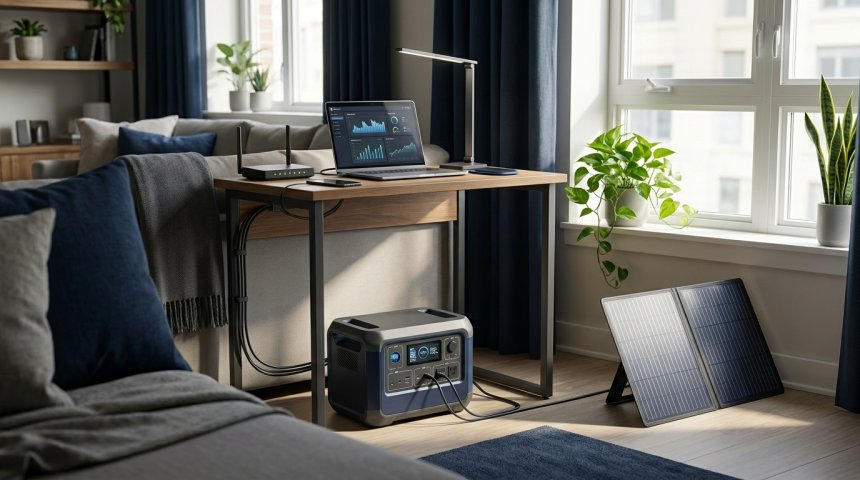
Infrastructure Sovereignty: Cloud-dependent generation subjects users to platform availability, pricing changes, API rate limits, geographic restrictions, and account suspension risk. Local inference eliminates dependency on external services; generation continues regardless of internet connectivity, platform policy changes, or corporate decisions. Infrastructure sovereignty ensures creative practice remains under creator control indefinitely.
What Freedom Doesn't Mean
Absence of Technical Constraints: Open models still possess capabilities bounded by training data, architecture, parameter count, and compute resources. Unrealistic expectations produce disappointment; freedom means removing artificial constraints not transcending physical ones. Understanding actual model capabilities prevents wasted effort pursuing impossible outputs.
Ethical Neutrality: Technical capability doesn't resolve ethical questions; it intensifies them. Absence of platform guardrails increases individual responsibility for harm prevention. Freedom requires mature ethical frameworks not abandonment of ethics. Creators operating without external constraints must develop internal ones or risk causing genuine harm.
Quality Equivalence: Open models vary enormously in capability; many underperform commercial alternatives in specific domains. Freedom includes freedom to encounter inferior outputs. Quality assessment skills become more important not less when curation shifts from platform to user. Not all open models deserve equal attention; discernment required.
Legal Immunity: Generating content locally doesn't exempt creators from copyright, defamation, privacy, or other legal obligations. Legal frameworks apply regardless of generation method. Freedom from platform enforcement isn't freedom from law. Legal literacy remains essential; technical capability doesn't override legal responsibility.
Key Insight: For accessing the foundational infrastructure of unrestricted AI creativity, Hugging Face Open Model Hub (dofollow) serves as the central repository for open-weight models across modalities, providing download access, model cards documenting capabilities and limitations, license information, and community discussion essential for informed model selection.
Chapter 2: The Open-Weight Model Ecosystem — Mapping the Landscape
Understanding available models, their capabilities, licenses, and community support enables informed selection matching creative objectives.
Foundation Models and Base Architectures
Stable Diffusion Family (Image Generation): Stable Diffusion XL, SD3, and FLUX variants represent the dominant open image generation ecosystem. SDXL offers strong general-purpose generation with extensive fine-tune ecosystem. SD3 improves text rendering and prompt adherence but smaller community support currently. FLUX models (dev/schnell variants) achieve near-commercial quality with permissive licenses enabling broad creative and commercial use. Each architecture has distinct strengths; selection depends on specific creative requirements rather than generic superiority. Base models serve as starting points for specialization through fine-tuning.
Large Language Models (Text Generation): Llama 3.x family (8B, 70B, 405B parameters) provides strongest general-purpose open LLM foundation. Qwen2.5 series offers competitive multilingual performance with Apache 2.0 licensing. Mistral/Mixtral models balance capability with efficiency for resource-constrained setups. Gemma 2 provides Google-quality open weights with permissive license. Command-R optimized for retrieval-augmented generation and tool use. Selection depends on parameter budget, language requirements, and intended application. Uncensored variants exist for each major family removing refusal training while retaining base capabilities.
Audio and Music Generation: MusicGen (Meta) enables text-to-music generation with melody conditioning. AudioLDM and Stable Audio Open provide sound effect and ambient audio generation. Bark and XTTS enable voice synthesis and cloning. Whisper provides transcription enabling audio-text workflows. Audio ecosystem less mature than image/text but rapidly evolving. License terms vary significantly; verify commercial rights before professional use.
Video Generation: Open video generation lagging behind commercial alternatives but progressing. CogVideoX, Open-Sora, and HunyuanVideo offer baseline capabilities. AnimateDiff extends image models to video through temporal modules. Video models require substantial VRAM and produce shorter, lower-resolution outputs than commercial platforms. Rapid improvement trajectory suggests gap narrowing within 12-18 months. Current state suitable for experimentation and prototyping; production video still favors commercial tools for most applications.
Specialized Fine-Tunes and Community Models
Aesthetic-Specific Models: Community-developed fine-tunes target specific visual styles: anime/manga, photorealism, oil painting, pixel art, architectural visualization, fashion photography, and countless niche aesthetics. These models often outperform base models within their specialization through focused training data and hyperparameter optimization. Discovery through community platforms and curated lists rather than generic search. Quality varies enormously; community ratings and sample galleries inform selection.
Uncensored and Alignment-Removed Variants: Models specifically trained or modified to remove refusal behaviors and content filters. Created through continued pretraining on unrestricted data, reinforcement learning unlearning, or surgical weight editing. Enable exploration of themes blocked by commercial platforms: mature content, political satire, horror/gore aesthetics, controversial historical topics, and experimental art pushing boundaries. Quality varies; some uncensored models sacrifice general capability for filter removal. Selection requires balancing freedom with output quality for intended application.
Domain-Specific Specializations: Medical imaging models trained on radiology datasets. Scientific illustration models understanding molecular structures and biological forms. Technical diagram generators producing schematics and flowcharts. Cultural heritage models trained on specific artistic traditions. Domain specialization enables professional applications impossible with general-purpose models. Verification of training data provenance particularly important for domain-specific models; unreliable training produces plausible-looking but factually incorrect outputs.
For community-developed specialized models, fine-tunes, and uncensored variants extending beyond official releases, Civitai Community Model Repository (nofollow) provides the largest curated collection with user ratings, sample galleries, generation metadata, and version tracking enabling discovery of niche models matching specific creative requirements.
License and Usage Rights Navigation
Permissive Licenses (Apache 2.0, MIT, BSD): Enable commercial use, modification, redistribution, and sublicensing with minimal restrictions. Attribution typically required. Safest choice for commercial products and derivative works. Llama 3.x, Qwen2.5, FLUX-dev, and many community fine-tunes use permissive licenses.
CreativeML and Custom Research Licenses: Permit research and non-commercial use with varying commercial restrictions. Stable Diffusion base models use CreativeML OpenRAIL-M permitting commercial use with ethical use clauses. Interpretation of ethical clauses varies; conservative approach treats them as non-binding guidelines, cautious approach respects stated intentions. License compliance protects against future legal challenges.
Non-Commercial and Restricted Licenses: Some high-capability models restrict commercial use or require separate licensing agreements. Violating license terms creates legal exposure regardless of technical accessibility. Always verify license before commercial deployment. Non-commercial models valuable for learning and experimentation; transition to permissively-licensed alternatives for production.
License Evolution Awareness: Model licenses sometimes change between versions; SD1.5 (CreativeML) differs from SD3 (stability.ai license) differs from FLUX (Black Forest Labs license). Version-specific license verification prevents accidental violation. Community fine-tunes inherit base model license restrictions plus any additional fine-tuner terms. License stacking requires satisfying all applicable terms simultaneously.
Chapter 3: Local Inference Infrastructure — Hardware and Software Setup
Local generation transforms theoretical freedom into practical capability. Hardware and software choices determine what's possible, how quickly, and at what quality level.
GPU Requirements and Selection
VRAM as Primary Constraint: Video RAM determines maximum model size, batch size, resolution, and context length. Image generation minimums: 8GB VRAM for SDXL at 1024px, 12GB comfortable, 24GB enables high-resolution and batch generation. LLM minimums: 8GB for 7B quantized, 16GB for 13B quantized, 24GB for 30B+ quantized or 70B heavily quantized. Video generation: 24GB minimum, 48GB+ recommended. VRAM insufficiency forces CPU offloading dramatically slowing generation; adequate VRAM investment prevents frustration.
GPU Architecture Considerations: NVIDIA RTX 30/40 series dominates due to CUDA ecosystem maturity and software compatibility. AMD ROCm improving but still fragmented; viable for Linux users willing to troubleshoot. Apple Silicon (M-series) unified memory architecture enables large model loading exceeding discrete GPU VRAM limits but slower generation speed; excellent for LLMs, acceptable for image generation, limited for video. Intel Arc emerging as budget option with improving software support. GPU selection balances VRAM capacity, generation speed, software compatibility, and budget.
Multi-GPU Configurations: Multiple GPUs enable larger models, faster generation through parallelization, or simultaneous multi-task workflows. NVLink/PCIe bandwidth affects multi-GPU efficiency; consumer PCIe lanes limit scaling beyond 2-3 GPUs. Professional setups (A100, H100) offer superior multi-GPU performance but prohibitive cost for individual creators. Consumer multi-GPU viable for enthusiasts with appropriate motherboard and PSU capacity. Cloud GPU rental supplements local hardware for occasional large jobs without permanent investment.
Budget-Conscious Alternatives: Used RTX 3090 (24GB VRAM) offers best price/performance for budget-conscious creators. Cloud GPU services (RunPod, Lambda, Vast.ai) provide pay-per-hour access to high-end hardware without capital expenditure. Google Colab free tier enables experimentation with limited compute. Raspberry Pi and edge devices enable lightweight inference for specific applications. Budget constraints don't eliminate access; they shape optimization strategy.
Software Stack and Runtime Environments
ComfyUI (Node-Based Workflow): Visual node editor enabling complex generation pipelines through modular component connection. Supports all major model architectures, custom nodes, and advanced workflows (controlnet, IP-adapter, animatediff, upscaling chains). Steeper learning curve than simpler interfaces but unmatched flexibility. Extensive community node ecosystem continuously expanding capabilities. Ideal for power users and complex creative workflows. Active development ensures cutting-edge feature support.
WebUI Forge / Automatic1111 (Traditional Interface): Familiar tab-based interface optimized for straightforward image generation. Lower barrier to entry than ComfyUI. Extensive extension ecosystem. Forge fork offers performance optimizations and additional features over original A1111. Suitable for users prioritizing ease of use over workflow complexity. Development pace slower than ComfyUI but stable and well-documented.
LM Studio / Ollama (LLM Inference): User-friendly interfaces for local LLM deployment with chat interfaces, model management, and API servers. Simplify quantized model loading and configuration. Enable integration with other applications through OpenAI-compatible API endpoints. Cross-platform support including Apple Silicon optimization. Ideal for writers, researchers, and developers integrating LLMs into workflows without command-line expertise.
Backend Runtimes (PyTorch, ONNX, TensorRT): Underlying frameworks powering user interfaces. PyTorch standard for development and experimentation. ONNX export enables cross-platform deployment and optimization. TensorRT provides NVIDIA-specific acceleration maximizing throughput. Runtime selection affects performance and compatibility; most users interact through UI layers rather than directly. Advanced users optimize runtime configuration for specific hardware and workload characteristics.
Optimization Techniques for Creative Workflows
Quantization for Resource Efficiency: Model quantization (GGUF, AWQ, GPTQ, EXL2) reduces VRAM requirements 2-4x with minimal quality loss. Enables running larger models on constrained hardware. Quantization level selection balances size reduction against quality preservation; Q4_K_M typically optimal balance for LLMs, FP16/BF16 preferred for image models when VRAM permits. Quantized models widely available through community repositories; custom quantization possible for specialized needs.
Attention Optimization and Flash Attention: Flash Attention and similar optimizations reduce memory usage and accelerate generation for transformer-based models. Enabled by default in modern runtimes; verify activation for custom configurations. xFormers provides alternative optimization compatible with broader hardware range. Attention optimization particularly impactful for high-resolution image generation and long-context LLM inference.
Batch Processing and Parallel Generation: Generating multiple outputs simultaneously improves throughput for exploration and variation workflows. Batch size limited by VRAM; find maximum stable batch size through testing. Parallel generation across multiple GPUs or cloud instances accelerates large-scale projects. Batch processing scripts automate repetitive generation tasks freeing creative time for curation and refinement.
Model Merging and LoRA Stacking: Combining multiple models or LoRA adapters creates hybrid capabilities without full fine-tuning. Merge methods (linear, SLERP, DARE, TIES) produce different blending characteristics. LoRA stacking enables combining multiple specializations dynamically at inference time. Experimentation with merge ratios and combinations discovers unique aesthetic spaces. Community-shared merges provide starting points; custom merging enables personalized model creation.
Chapter 4: Creative Techniques Enabled by Constraint Removal
Freedom isn't just absence of barriers; it's presence of possibilities. Specific creative techniques emerge uniquely in unrestricted environments.
Exploring Taboo and Transgressive Aesthetics
Horror and Body Horror: Commercial platforms systematically refuse gore, body modification, and visceral horror aesthetics regardless of artistic intent. Local generation enables exploration of horror tradition spanning Goya, Bacon, Cronenberg, and contemporary transgressive art. Technical mastery required achieving artistic horror versus gratuitous shock; restraint and intention distinguish art from exploitation. Horror exploration serves legitimate artistic, psychological, and cultural functions when approached with discipline.
Political Satire and Caricature: Satire targeting powerful figures, institutions, and ideologies frequently triggers commercial platform filters designed to avoid controversy. Local generation restores satire's historical function as social commentary and political critique. Responsibility remains to avoid defamation, incitement, or dehumanization; freedom enables critique without eliminating ethical consideration. Satirical work benefits from understanding target audience and distribution context; unrestricted generation doesn't imply unrestricted publication.
Erotic and Intimate Expression: Human sexuality and intimacy represent vast artistic territory systematically excluded from commercial platforms. Local generation enables exploration spanning classical nude tradition, erotic photography aesthetics, queer representation, and intimate storytelling. Consent and respect remain paramount even when generating fictional content; ethical frameworks for intimate content differ from platform prohibition but don't disappear. Community norms around tagged content and warning labels enable consensual engagement without imposing universal restrictions.
Religious and Sacred Imagery: Depictions of religious figures, rituals, and sacred symbols frequently restricted commercially to avoid offense. Local generation enables respectful exploration of religious art traditions, interfaith dialogue, spiritual expression, and critical examination of religious institutions. Cultural sensitivity and scholarly rigor distinguish meaningful exploration from provocation. Religious imagery carries deep significance for communities; freedom to create doesn't eliminate responsibility to engage thoughtfully.
Experimental and Avant-Garde Exploration
Style Hybridization Beyond Training Distribution: Combining disparate aesthetic traditions (Renaissance + cyberpunk, calligraphy + glitch art, botanical illustration + industrial design) pushes beyond model training distribution creating genuinely novel visual languages. Commercial platforms optimize for recognizable, marketable aesthetics; local experimentation embraces failure and strangeness as creative fuel. Most experiments produce unsuccessful results; breakthroughs emerge from volume and persistence. Document failures alongside successes building personal aesthetic vocabulary.
Adversarial and Edge-Case Prompting: Deliberately probing model boundaries reveals latent capabilities and failure modes informing creative technique. Adversarial prompting isn't abuse; it's research methodology uncovering model behavior space. Discoveries include unexpected style transfers, emergent compositional patterns, and novel semantic associations. Systematic exploration builds intuition for model cognition differing from human cognition. Edge-case knowledge distinguishes expert practitioners from casual users.
Custom Training Data Curation: Training or fine-tuning on personally curated datasets creates models reflecting individual aesthetic vision rather than aggregated internet aesthetics. Dataset curation becomes creative act shaping model's visual vocabulary. Personal archives, commissioned photography, licensed artwork, and original creations serve as training sources. Custom models express artistic identity impossible through prompting alone. Training investment substantial but yields unique creative voice.
Multi-Modal Workflow Integration: Combining image, text, audio, and video generation in integrated workflows creates compound creative possibilities. Image-to-text captioning informs iterative refinement. Text-to-image generation illustrates written narratives. Audio-reactive visualization synchronizes sound and image. Video interpolation extends still images into motion. Multi-modal workflows leverage each modality's strengths compensating for individual limitations. ComfyUI and similar tools enable complex multi-modal pipelines inaccessible through single-modality platforms.
Chapter 5: Ethical Navigation Without External Guardrails
Freedom increases ethical responsibility not decreases it. Developing personal ethical frameworks prevents harm while preserving creative autonomy.
Harm Prevention Principles
Consent and Depiction Ethics: Generating depictions of real individuals without consent raises serious ethical concerns regardless of legal status. Public figures occupy gray zone; private individuals clearly warrant protection. Fictional characters avoid consent issues but may perpetuate harmful stereotypes. Establish personal guidelines distinguishing acceptable from unacceptable depiction practices. Community norms provide reference points but individual responsibility remains primary. Consent ethics extend beyond legal requirements to respect for human dignity.
Minor Protection Absolute Boundary: Generation involving minors in sexual, violent, or exploitative contexts represents absolute ethical boundary regardless of legality or fictional framing. No artistic justification overrides child protection. Communities enforcing this boundary through moderation and reporting maintain ecosystem legitimacy. Individual creators must internalize this boundary completely; ambiguity here destroys credibility and invites legitimate external intervention. Child protection isn't censorship; it's foundational ethical commitment.
Misinformation and Deception Prevention: Photorealistic generation enables convincing fake imagery carrying misinformation risk. Clearly labeling AI-generated content prevents deception. Satire and fiction distinguished from documentary representation through context and disclosure. Political content carries heightened responsibility given democratic process vulnerability. Personal guidelines for labeling and contextualization prevent accidental contribution to information ecosystem degradation. Freedom to generate doesn't include freedom to deceive.
Cultural Respect and Appropriation Awareness: Generating content drawing from cultures outside one's own requires research, respect, and ideally community consultation. Appreciation differs from appropriation through depth of understanding, attribution, and benefit-sharing. Stereotypical or exoticizing depictions perpetuate harm regardless of technical quality. Engaging with cultural source communities builds authentic representation. Cultural respect enhances creative work through genuine understanding rather than superficial borrowing.
Community Self-Governance Models
Tagging and Content Warning Systems: Community platforms implement voluntary tagging enabling informed engagement. Tags distinguish content types allowing users to opt-in or opt-out based on preferences. Warning labels signal potentially disturbing content without prohibiting access. Tagging systems balance freedom with consent enabling diverse communities to coexist. Participation in tagging norms demonstrates respect for community members' boundaries.
Moderation Philosophy Diversity: Different communities adopt varying moderation philosophies ranging from minimal intervention to active curation. Choosing communities aligned with personal values enables comfortable participation. Creating new communities with explicit guidelines enables niche spaces. Moderation transparency builds trust; arbitrary enforcement undermines it. Community governance experiments contribute to broader ecosystem health through diversity of approaches.
Attribution and Credit Norms: Acknowledging model creators, fine-tune authors, dataset contributors, and inspiration sources maintains ecosystem reciprocity. Attribution norms vary across communities; observe local conventions. Crediting others' contributions encourages continued sharing and collaboration. Plagiarism and uncredited derivation damage community trust. Attribution practices reflect respect for collective effort underlying individual creative output.
Chapter 6: Practical Workflow Integration — From Experimentation to Production
Translating freedom into sustained creative practice requires workflow discipline complementing technical capability.
Project Organization and Asset Management
Model and LoRA Library Management: Systematic organization of downloaded models, LoRAs, embeddings, and VAEs prevents chaos as collections grow. Folder structures by type, style, and date. Metadata tagging enabling search and filtering. Version tracking for model updates. Regular pruning removing unused assets maintaining library usability. Model management tools (Civitai Helper, Stability Matrix) automate organization tasks. Disorganized libraries waste time and obscure available resources.
Generation Output Curation: High-volume generation produces thousands of images requiring systematic curation. Rating systems identifying keepers versus deletions. Metadata embedding preserving generation parameters for reproducibility. Folder structures by project, date, and theme. Backup protocols preventing catastrophic loss. Curation discipline separates productive creators from hoarders accumulating unusable volumes. Regular review sessions maintain library quality and accessibility.
Prompt and Workflow Documentation: Documenting successful prompts, workflows, and parameter combinations enables reproduction and iteration. Note-taking systems linked to generated outputs. Template libraries for recurring workflows. Version control for complex ComfyUI workflows. Documentation transforms accidental successes into reproducible techniques. Undocumented discoveries lost when memory fades; documentation preserves creative knowledge.
Quality Control and Refinement Processes
Critical Evaluation Skills: Unrestricted generation requires self-critique replacing platform filtering. Developing eye for technical flaws, aesthetic coherence, and conceptual clarity. Reference libraries of quality benchmarks across styles. Feedback loops through community critique and self-review. Critical distance from own work enabling objective assessment. Quality standards personal but rigorous; freedom doesn't mean accepting mediocrity.
Post-Processing and Enhancement: AI generation rarely produces final output without refinement. Upscaling, inpainting, color grading, compositing, and detail enhancement polish raw generations. Traditional digital art skills complement AI generation rather than competing with it. Post-processing transforms promising generations into finished work. Tool proficiency (Photoshop, Krita, Topaz, Magnific) extends creative capability beyond generation alone.
Iterative Refinement Workflows: Complex creative visions require multiple generation-refinement cycles. Img2img passes refining compositions. Inpainting correcting specific regions. ControlNet guiding structural elements. Progressive refinement building toward vision rather than expecting single-generation perfection. Iteration patience distinguishes professional work from amateur snapshots. Workflow templates streamline common refinement patterns.
Distribution and Audience Building
Platform Selection Strategy: Different platforms serve different audiences and tolerance levels. Mainstream platforms (Instagram, ArtStation) reach broad audiences but enforce content policies. Niche platforms (DeviantArt, Newgrounds, specialized forums) accommodate broader content ranges. Personal websites provide complete control with smaller reach. Multi-platform strategy balances reach with freedom. Platform selection aligned with content type and target audience.
Audience Communication and Expectation Setting: Clearly communicating AI-generation methods builds trust with audiences. Disclosure practices varying by platform and community norms. Educating audiences about AI creativity reducing stigma and misunderstanding. Building audience understanding of creative process enhances appreciation. Transparent communication distinguishes ethical practitioners from deceptive ones. Audience education contributes to broader cultural acceptance of AI creativity.
Monetization Within Ethical Boundaries: Commercial opportunities exist within unrestricted AI creativity: prints, commissions, stock licensing, tutorial content, custom model training, and NFT markets. Monetization aligned with ethical guidelines and community norms. Pricing reflecting value created not just generation ease. Commercial success sustainable only with ethical foundation; reputation damage from unethical monetization irreparable. Business models respecting both creative freedom and social responsibility.
Conclusion: Freedom as Practice, Not Destination
The new era of AI creativity with more freedom and fewer limitations isn't utopian arrival; it's ongoing practice requiring technical skill, ethical maturity, creative discipline, and community participation. Freedom without competence produces noise; freedom without ethics produces harm; freedom without community produces isolation. The creators thriving in this era aren't those celebrating constraint removal loudest but those building most thoughtfully within expanded possibility space.
Your creative voice deserves this expanded space. Invest in technical foundations enabling genuine capability. Develop ethical frameworks guiding responsible exploration. Participate in communities sustaining collective health. Push boundaries with intention not provocation. Document and share discoveries contributing to collective knowledge. Respect the freedom you've been granted by exercising it responsibly.
The tools are ready. The ecosystem is alive. The creative frontier expands daily. Step into it prepared, purposeful, and principled. What you create there matters—not despite the freedom but because of how you wield it. Create boldly. Create ethically. Create freely. The era belongs to those who earn it through practice.
Frequently Asked Questions (FAQs)
Is it legal to use uncensored AI models for creative work?
Using uncensored models locally for personal creative work is generally legal in most jurisdictions; legality depends on what you generate and how you use it, not the model itself. Generating illegal content (CSAM, non-consensual intimate imagery, terrorist material) remains illegal regardless of generation method or platform. Copyright considerations apply to outputs substantially reproducing protected works. Defamation, privacy, and publicity rights apply to depictions of real individuals. Commercial use requires verifying model license permits intended application. Local generation doesn't create legal immunity; it shifts enforcement from platform preemptive filtering to post-hoc legal accountability. Consult legal counsel for specific use cases involving sensitive content or commercial deployment. Jurisdiction matters enormously; laws vary significantly across countries and regions. Legal compliance is baseline requirement; ethical considerations extend beyond legal minimums. Freedom enables lawful exploration previously blocked by overbroad platform filters; it doesn't enable unlawful activity.
What hardware do I need to get started with local AI image generation?
Minimum viable setup: NVIDIA RTX 3060 12GB or equivalent ($300-400 used), 32GB system RAM, SSD storage (1TB minimum), and modern CPU. This configuration runs SDXL comfortably at 1024px resolution with reasonable generation times (10-30 seconds/image). Recommended setup: RTX 4070 Ti Super 16GB or RTX 3090 24GB ($600-900), 64GB RAM, 2TB NVMe SSD. This enables high-resolution generation, batch processing, and larger models without compromise. Apple Silicon Macs (M2 Pro/Max/Ultra) with 32GB+ unified memory offer viable alternative with slower generation but excellent LLM capability. Budget entry: Used RTX 3060 12GB + cloud GPU supplementation for demanding tasks. Start with what you have; upgrade based on identified bottlenecks not speculative needs. VRAM is primary constraint; prioritize VRAM capacity over raw speed. Software (ComfyUI/WebUI Forge) is free; hardware investment is sole barrier. Community resources provide optimization guidance for specific hardware configurations maximizing available resources.
How do I find high-quality uncensored or specialized models safely?
Primary sources: Civitai (largest community repository with ratings, samples, and metadata), Hugging Face (official model hosting with documentation), and specialized Discord communities focused on particular aesthetics or applications. Safety practices: Download only from reputable platforms with community moderation; avoid random file shares or suspicious links. Verify checksums when provided ensuring file integrity. Read model cards and comments for capability descriptions, known issues, and license terms. Check creator reputation through posting history and community feedback. Scan downloads with antivirus software as precaution. Start with well-established models before exploring obscure variants. Community ratings and sample galleries provide quality signals; low-rated models usually deserve their ratings. Tag systems enable filtering by content type and style preference. Model merging and LoRA stacking enable customization without downloading questionable base models. Trust earned community reputation over anonymous uploads. Quality assessment skills develop through experience; initial selections favor highly-rated established models building baseline competence before exploring edges.
What ethical guidelines should I follow when using unrestricted AI models?
Core principles: (1) Never generate content depicting minors in sexual, violent, or exploitative contexts—absolute boundary without exception. (2) Obtain consent before generating identifiable depictions of real private individuals; public figures require thoughtful consideration of harm versus legitimate commentary. (3) Clearly label AI-generated content when sharing publicly preventing deception. (4) Respect cultural sources through research, attribution, and avoiding stereotypical or exploitative representation. (5) Consider potential harm beyond legal compliance; freedom includes responsibility to avoid unnecessary injury. (6) Participate in community norms including tagging, warnings, and moderation supporting collective health. (7) Acknowledge model creators, dataset sources, and inspirational influences maintaining ecosystem reciprocity. (8) Develop personal guidelines before encountering edge cases; reactive ethics fail under pressure. (9) Seek feedback from affected communities when working with sensitive subject matter. (10) Continuously refine ethical framework through reflection and dialogue; ethics evolves with understanding. These guidelines aren't external constraints replacing platform rules; they're internal commitments enabling sustainable freedom. Communities enforcing similar principles demonstrate that self-governance works; participation strengthens collective legitimacy defending against external imposition.
Will open-weight AI models eventually match commercial platform quality?
Trajectory suggests convergence within 12-24 months for most creative applications. Current gap narrowing rapidly: FLUX-dev approaches Midjourney/DALL-E quality in many domains, Llama 3 405B competes with GPT-4-class models, and community fine-tunes frequently exceed base commercial models in specialized aesthetics. Remaining gaps concentrate in: video generation (commercial leads significantly), instruction-following precision (commercial RLHF advantage), and consistency across extended generations (commercial infrastructure advantages). Open-source advantages include: faster iteration through community parallel development, specialization through fine-tuning diversity, transparency enabling targeted improvement, and absence of alignment tax preserving raw capability. Commercial advantages include: massive compute budgets, proprietary data access, and professional alignment teams. Predicted outcome: open models achieve parity for most creative use cases while commercial platforms retain advantages in enterprise applications requiring guaranteed safety and reliability. Creative practitioners increasingly able to choose based on workflow preference rather than capability deficit. Monitor progress through community benchmarks and comparison tests; quality assessments update monthly as ecosystem evolves. Current moment represents transition period where open models suffice for many creative applications while commercial platforms remain preferable for others; individual assessment based on specific requirements determines optimal choice.
Share
What's Your Reaction?
 Like
0
 Dislike
0
 Love
0
 Funny
0
 Angry
0
 Sad
0
 Wow
0