
Technology in Transport & Logistics: Complete Operations Guide
Comprehensive guide to technology's role in modern transport and logistics covering IoT, AI optimization, warehouse automation, blockchain, autonomous vehicles, and digital transformation strategies.

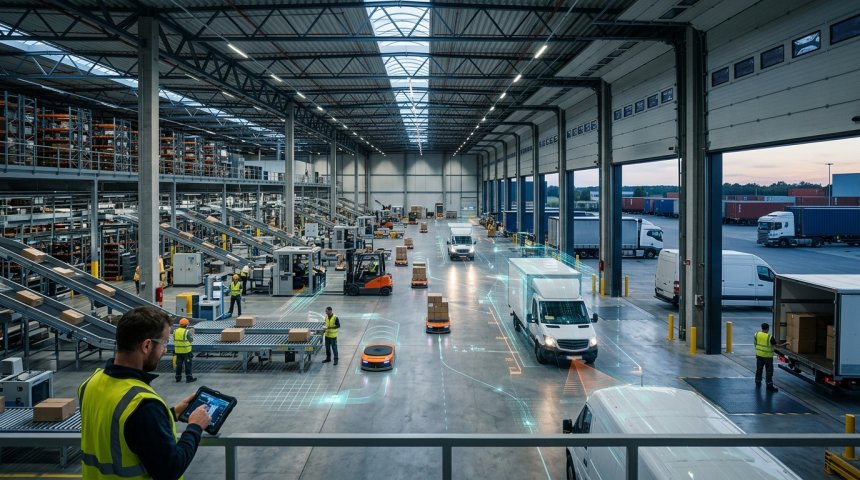
Modern transport and logistics operations exist at the intersection of physical movement and digital intelligence in ways that would have been unrecognizable two decades ago. The industry has evolved from paper-based manifests, phone-call coordination, and reactive problem-solving into a digitally orchestrated ecosystem where sensors generate billions of data points daily, algorithms optimize routes in real-time across thousands of variables, warehouses operate with minimal human intervention, and end-to-end supply chain visibility extends from raw material extraction to last-mile delivery confirmation. This transformation isn't merely technological upgrade; it's fundamental restructuring of how goods move through economies, how value is created and captured in logistics services, and how organizations compete in an era where delivery speed, reliability, transparency, and sustainability have become primary differentiators rather than secondary considerations.
Yet despite massive investment in digital technologies, the logistics industry continues to grapple with persistent challenges: fragmented data ecosystems preventing true end-to-end visibility, legacy system integration complexity slowing digital adoption, workforce skill gaps limiting technology utilization, cybersecurity vulnerabilities expanding with connectivity, and ROI uncertainty making investment justification difficult for margin-sensitive operators. Understanding technology's role requires moving beyond feature lists and vendor marketing to examine how specific technologies solve concrete operational problems, what organizational prerequisites enable successful deployment, where implementation failures commonly occur, and how technology investments translate to measurable business outcomes in an industry where margins are thin and customer expectations relentless.
This guide provides comprehensive technical and operational analysis of technology's role across modern transport and logistics. We'll examine IoT and telematics enabling asset visibility and condition monitoring, artificial intelligence and machine learning optimizing planning and execution decisions, warehouse automation transforming fulfillment operations, blockchain and distributed ledger technologies addressing traceability and trust deficits, autonomous vehicle development reshaping transportation economics, sustainability technologies aligning operations with environmental mandates, digital twin platforms enabling simulation-based decision making, and integration architectures connecting disparate systems into coherent operational platforms. Throughout, we'll maintain focus on practical implementation realities rather than theoretical possibilities, examining what works, what doesn't, and why the gap between technology promise and operational reality persists for many organizations. Whether you're a logistics executive evaluating digital transformation strategy, an operations manager implementing specific technologies, a technology vendor understanding customer needs, or a student studying supply chain evolution, this analysis delivers the depth and nuance needed to understand technology's actual—not aspirational—role in modern logistics.
Let's begin by establishing the foundational shift that makes technology discussion meaningful: the transition from logistics as cost center to logistics as strategic capability enabled by digital infrastructure.
Chapter 1: The Strategic Context — Why Technology Investment Defines Competitive Position
Technology in logistics isn't optional enhancement; it's competitive necessity driven by structural market forces that reward digital maturity and penalize analog operations.
Customer Expectation Acceleration
E-commerce has permanently reset customer expectations across all logistics segments. B2C consumers expect same-day/next-day delivery as standard, real-time tracking granularity down to individual package level, proactive exception notification before they inquire, frictionless returns processing, and transparent sustainability credentials. These expectations cascade into B2B logistics where commercial customers now demand consumer-grade visibility, predictability, and responsiveness from freight providers, warehousing partners, and third-party logistics companies. Organizations unable to meet these expectations lose market share regardless of price competitiveness; service quality defined by digital capability has become primary selection criterion.
Margin Pressure and Efficiency Imperative
Logistics operates on thin margins (3-8% typical for transportation, 5-12% for warehousing) making efficiency gains directly proportional to profitability. Labor costs constitute 40-60% of warehouse operating expenses and 30-50% of transportation costs; technology-enabled productivity improvements directly impact bottom line. Fuel represents 20-30% of transportation costs; route optimization and driving behavior monitoring yield immediate savings. Asset utilization rates determine return on capital-intensive fleets and facilities; visibility and scheduling technologies maximize productive use. In margin-constrained environments, technology investment isn't discretionary spending—it's survival mechanism enabling cost structures competitors cannot match through manual operations alone.
Supply Chain Complexity Explosion
Global supply chains have grown exponentially more complex: multi-tier supplier networks spanning continents, omnichannel fulfillment requiring inventory positioning across numerous nodes, regulatory compliance demands increasing across jurisdictions, product proliferation creating SKU explosion, and volatility from geopolitical disruptions, pandemics, climate events, and trade policy shifts. Human cognitive capacity cannot manage this complexity unaided. Technology extends human decision-making capability through data aggregation, pattern recognition, scenario simulation, and automated execution at scales and speeds impossible manually. Complexity growth outpaces human adaptation; technology bridges the gap.
Regulatory and Sustainability Mandates
Environmental regulations (EU Green Deal, California CARB, IMO maritime emissions standards) impose measurable emission reduction targets requiring monitoring, reporting, and verification infrastructure. Safety regulations (ELD mandates, hours-of-service compliance, dangerous goods handling) require digital documentation and real-time compliance monitoring. Customs and trade compliance demand electronic data interchange and automated classification. Sustainability commitments from shippers cascade to logistics providers requiring carbon accounting and reduction capabilities. Regulatory compliance increasingly requires technological enablement; manual compliance processes cannot scale to meet expanding requirements or provide audit-ready documentation.
Key Insight: For authoritative benchmarking of technology adoption rates, digital maturity assessments, and performance correlations across logistics segments, the McKinsey State of Logistics Report provides annual industry analysis informing strategic technology investment decisions with empirical data.
Chapter 2: IoT and Telematics — The Nervous System of Modern Logistics
Internet of Things devices and telematics systems form the sensory foundation upon which all other logistics technologies depend. Without accurate, timely data from physical assets, optimization algorithms lack inputs, visibility platforms lack content, and automation systems lack feedback.
Fleet Telematics Evolution
GPS Tracking and Route Compliance: Basic GPS tracking has matured into comprehensive fleet management platforms integrating real-time location, route adherence monitoring, geofencing alerts, ETA prediction, and customer-facing tracking portals. Modern systems update position every 5-30 seconds providing near-continuous visibility versus historical 5-15 minute intervals. Geofencing automates arrival/departure detection eliminating manual check calls. ETA algorithms incorporate traffic patterns, weather, historical performance, and driver behavior improving prediction accuracy to within 15-30 minutes for regional deliveries. Customer self-service tracking reduces call center volume 30-50% while improving satisfaction through transparency.
Vehicle Diagnostics and Predictive Maintenance: OBD-II and CAN bus integration enables real-time monitoring of engine parameters, fault codes, fuel consumption, tire pressure, brake wear, and component health. Predictive maintenance algorithms analyze sensor patterns identifying failure precursors weeks before breakdown. Scheduled maintenance optimized based on actual usage rather than calendar intervals reducing unnecessary service while preventing catastrophic failures. Fleet uptime improves 10-20% through predictive maintenance; roadside breakdowns decrease 30-50%. Maintenance cost reduction 10-25% through optimized scheduling and prevented secondary damage from undetected issues.
Driver Behavior Monitoring and Coaching: Accelerometers, gyroscopes, and camera systems monitor harsh braking, rapid acceleration, cornering forces, speeding, idling duration, seatbelt usage, and distraction indicators. Scoring algorithms quantify driving safety and efficiency enabling targeted coaching. Gamification and incentive programs improve driver engagement with safety initiatives. Fuel savings 5-15% through behavior modification; accident reduction 20-40% through proactive coaching. Insurance premium reductions 10-25% for fleets with documented behavior monitoring programs. Privacy concerns require transparent policies and driver involvement in program design; coercive monitoring creates resistance undermining effectiveness.
Temperature and Condition Monitoring: Refrigerated transport requires continuous temperature, humidity, and door-open monitoring ensuring cargo integrity. IoT sensors log conditions throughout transit creating audit trails for regulatory compliance and quality assurance. Real-time alerts enable corrective action before spoilage occurs. Pharmaceutical cold chain compliance requires validated monitoring systems meeting GDP/GMP standards with calibrated sensors and documented procedures. Food safety regulations (FSMA) mandate temperature documentation for perishable shipments. Condition monitoring transforms quality assurance from reactive claim investigation to proactive prevention.
Warehouse IoT Infrastructure
Asset Tracking and Localization: RTLS (Real-Time Location Systems) using UWB, BLE, RFID, or Wi-Fi track equipment, pallets, containers, and personnel within warehouse facilities. Accuracy ranges from centimeter-level (UWB) to meter-level (BLE/Wi-Fi) depending on technology choice and infrastructure investment. Asset tracking eliminates search time (15-30% of warehouse labor typically spent locating items), optimizes equipment utilization, enables zone-based workflow automation, and supports social distancing/compliance monitoring. ROI justification requires accurate baseline measurement of current search/walk time; assumptions often overestimate benefits.
Environmental Monitoring: Warehouses housing sensitive products (pharmaceuticals, food, electronics, chemicals) require continuous environmental monitoring: temperature, humidity, air quality, light exposure, vibration. Automated alerting triggers corrective action before product damage occurs. Regulatory compliance documentation generated automatically reducing audit preparation burden. Energy optimization through environmental data integration with HVAC controls reducing consumption 10-20%. Environmental monitoring protects product value and regulatory standing simultaneously.
Inventory Visibility Technologies: RFID tags enable bulk scanning without line-of-sight dramatically accelerating cycle counts and receiving processes. Computer vision systems using cameras and AI identify and count inventory continuously without human intervention. Weight sensors on shelving detect stock levels through weight changes. Drone-based inventory scanning reaches high-bay locations safely and quickly. Inventory accuracy improvements from 95-97% (manual) to 99%+ (automated) reduce safety stock requirements, improve order fill rates, and decrease shrinkage. Technology selection depends on SKU characteristics, facility layout, throughput volume, and accuracy requirements; no single solution fits all environments.
IoT Implementation Challenges and Success Factors
Connectivity Infrastructure: IoT devices require reliable connectivity: cellular (4G/5G/LTE-M/NB-IoT) for mobile assets, Wi-Fi/BLE/UWB for indoor environments, satellite for remote/off-grid locations. Connectivity gaps create data blind spots undermining system value. Network design must account for signal propagation in metal-rich warehouse environments, coverage along transportation corridors, and roaming agreements for cross-border operations. Connectivity cost scales with device count and data volume; architecture decisions balance coverage, bandwidth, and expense.
Data Volume and Management: Thousands of sensors generating frequent readings produce massive data volumes overwhelming traditional databases and analytics platforms. Time-series databases, edge computing, and data compression techniques manage scale efficiently. Data retention policies balance analytical value against storage costs and privacy obligations. Raw sensor data rarely actionable without aggregation, contextualization, and interpretation; analytics infrastructure determines whether IoT investment generates insights or merely data hoards.
Integration Complexity: IoT data must integrate with TMS, WMS, ERP, CRM, and customer-facing platforms to generate operational value. Point integrations create maintenance burden and data silos; API-first architectures and middleware platforms enable scalable integration. Legacy systems lacking modern APIs require wrapper layers or replacement; integration feasibility assessment precedes IoT deployment. Data standardization across device types and vendors prevents proprietary lock-in and enables multi-vendor ecosystems.
Security and Privacy: Connected devices expand attack surface requiring security-by-design: encrypted communications, secure boot, firmware update mechanisms, authentication protocols, and network segmentation. IoT devices historically vulnerable to exploitation; procurement specifications must mandate security features not assume them. Privacy regulations (GDPR, CCPA) apply to IoT-collected personal data including location and behavioral information. Driver monitoring programs require transparent consent and data minimization principles. Security and privacy aren't afterthoughts; they're foundational requirements enabling sustainable IoT deployment.
For enterprise-grade real-time visibility and IoT data integration demonstrating production-scale implementation, FourKites Real-Time Supply Chain Visibility Platform (nofollow) illustrates how leading logistics organizations aggregate multi-source IoT data into unified visibility platforms enabling predictive exception management and stakeholder collaboration.
Chapter 3: Artificial Intelligence and Machine Learning — Optimization at Scale
AI and ML transform logistics from reactive execution to predictive optimization across planning, execution, and continuous improvement domains.
Demand Forecasting and Inventory Optimization
Multi-Factor Demand Prediction: ML models integrate historical sales, seasonality, promotions, economic indicators, weather patterns, social media signals, and external events producing forecasts significantly more accurate than traditional statistical methods. Forecast accuracy improvements 20-40% reduce both stockouts (lost revenue) and overstock (carrying costs). Granular forecasting at SKU-location-channel level enables precise inventory positioning. Continuous model retraining incorporates new data maintaining accuracy as patterns evolve. Forecast confidence intervals inform safety stock calculations balancing service levels against inventory investment.
Dynamic Inventory Optimization: AI-driven inventory optimization balances conflicting objectives: minimizing working capital while maximizing service levels across thousands of SKU-location combinations. Reinforcement learning algorithms adapt reorder points, order quantities, and allocation rules based on observed demand patterns, lead time variability, and business priorities. Multi-echelon optimization coordinates inventory across distribution networks preventing local optimization creating systemic inefficiency. Inventory reduction 15-30% achievable while maintaining or improving service levels through AI optimization versus rule-based systems.
Promotion and Event Planning: ML models predict promotion uplift, cannibalization effects, and post-promotion demand dips enabling precise inventory pre-positioning. New product forecasting leverages analogous product history and attribute-based similarity matching when direct history unavailable. Event-driven demand spikes (holidays, sporting events, natural disasters) predicted through pattern recognition enabling proactive capacity and inventory preparation. Promotion optimization prevents both lost sales from under-stocking and markdown losses from over-stocking.
Transportation Optimization
Route Planning and Execution: Vehicle routing algorithms solve NP-hard optimization problems considering dozens of constraints: delivery windows, vehicle capacity, driver hours, road restrictions, traffic patterns, weather, fuel costs, toll avoidance, and customer preferences. Modern solvers handle thousands of stops producing near-optimal solutions in minutes versus hours for manual planning. Dynamic re-routing responds to real-time disruptions (traffic, breakdowns, new orders) maintaining efficiency amid volatility. Route optimization typically reduces mileage 10-25%, fuel consumption 8-20%, and driver hours 5-15% versus manual planning. Customer satisfaction improves through more reliable ETAs and consistent service.
Load Planning and Consolidation: AI optimizes trailer/container loading maximizing cube utilization while respecting weight distribution, axle limits, delivery sequence, and hazardous material segregation. 3D bin packing algorithms solve spatial optimization problems humans cannot visualize at scale. Shipment consolidation identifies opportunities to combine LTL shipments into truckload movements reducing cost per unit. Load optimization improves asset utilization 10-20% reducing empty miles and transportation spend. Integration with order management enables upstream order batching influencing consolidation opportunities.
Carrier Selection and Procurement: ML models predict carrier performance (on-time delivery, damage rates, capacity reliability) informing spot and contract carrier selection. Rate benchmarking algorithms analyze market conditions identifying fair pricing for lane-specific procurement. Spot market bidding optimization balances cost against service requirements dynamically. Carrier scorecards updated continuously reflecting actual performance versus contracted commitments. Data-driven procurement reduces transportation spend 5-15% through better carrier matching and rate negotiation informed by market intelligence.
Warehouse Operations Optimization
Labor Management and Task Allocation: AI-powered labor management systems forecast workload by hour/zone/activity enabling precise staffing alignment. Real-time task allocation directs workers to highest-priority activities based on order deadlines, travel optimization, and skill matching. Productivity analytics identify training needs, process bottlenecks, and performance outliers enabling targeted interventions. Labor optimization improves productivity 10-25% while reducing overtime and temporary labor dependency. Worker acceptance requires transparent communication and fair performance evaluation; punitive surveillance undermines engagement.
Slotting and Layout Optimization: ML algorithms optimize product placement based on pick frequency, affinity relationships, size/weight characteristics, and seasonal velocity changes. Dynamic slotting adjusts placements periodically responding to demand pattern shifts without disruptive full-warehouse resets. Layout optimization simulates alternative configurations evaluating throughput, travel distance, and congestion before physical changes. Slotting optimization reduces pick travel 15-30% and improves picking rates 10-20%. Simulation-based layout changes prevent costly trial-and-error physical reconfigurations.
Quality Control and Defect Detection: Computer vision systems inspect incoming goods, outbound orders, and packaging integrity detecting defects, mislabels, quantity discrepancies, and damage faster and more consistently than human inspectors. ML models learn from confirmed defects improving detection accuracy over time. Quality data feeds back to suppliers and internal processes enabling root cause correction. Defect detection at receipt prevents downstream propagation multiplying correction costs. Automated quality control addresses labor shortage challenges while improving consistency.
AI Implementation Realities
Data Quality Foundation: AI performance directly reflects data quality. Garbage inputs produce garbage outputs regardless of algorithm sophistication. Data cleaning, validation, standardization, and enrichment prerequisite to AI deployment. Historical data gaps require supplementation or limit model scope. Master data governance ensures consistent entity definitions across systems. Data quality investment often exceeds AI model development cost; underestimating this requirement causes project failure.
Change Management and Adoption: AI recommendations challenge established practices and human expertise. Planner resistance to algorithmic route suggestions, buyer skepticism of forecast overrides, and operator distrust of task assignments undermine value realization. Change management includes education on AI capabilities and limitations, gradual trust-building through demonstrated accuracy, override mechanisms preserving human judgment, and performance incentives aligned with AI adoption. Technology deployment without change management produces expensive shelfware.
Model Governance and Monitoring: AI models degrade over time as underlying patterns shift (concept drift). Continuous monitoring detects performance degradation triggering retraining. Model versioning enables rollback when updates introduce errors. Explainability tools help stakeholders understand AI reasoning building trust and enabling error diagnosis. Bias detection prevents discriminatory outcomes in hiring, carrier selection, or customer prioritization. Model governance is ongoing operational discipline not one-time deployment activity.
ROI Measurement and Attribution: AI benefits often indirect and distributed making attribution challenging. Establish baselines before deployment measuring current performance on relevant KPIs. Controlled pilots isolate AI impact from concurrent initiatives. Benefit realization tracked over sufficient duration capturing learning curve effects. Total cost includes data preparation, model development, integration, change management, and ongoing operations—not just software licensing. Realistic ROI timelines 12-24 months for full benefit realization; premature evaluation underestimates value.
Chapter 4: Warehouse Automation — Transforming Fulfillment Operations
Warehouse automation spans spectrum from mechanized assistive devices to fully autonomous facilities, each appropriate for different operational contexts.
Automation Technology Spectrum
Goods-to-Person Systems: AS/RS (Automated Storage and Retrieval Systems), shuttle systems, cube storage (AutoStore), and carousel systems bring inventory to stationary pickers eliminating travel time. Throughput improvements 3-5x versus manual picking. High capital investment ($5M-$50M+) justified for high-volume, high-SKU operations with predictable demand. Lead times 12-24 months for design, fabrication, installation, and commissioning. Flexibility limited once installed; demand pattern changes may strand investment. Best for stable, high-density operations with long planning horizons.
Mobile Robotics: AMRs (Autonomous Mobile Robots) and AGVs (Automated Guided Vehicles) transport goods between zones, deliver picks to pack stations, and perform replenishment tasks. Flexible deployment without fixed infrastructure enables phased scaling. ROI achievable at lower volumes than fixed automation. Navigation technologies evolving from magnetic tape to LiDAR/vision SLAM enabling dynamic path planning around obstacles and people. Fleet management software coordinates multiple robots optimizing traffic flow and task assignment. Mobile robotics bridge gap between manual operations and fixed automation suitable for brownfield facilities and variable demand.
Robotic Picking and Packing: Piece-picking robots using computer vision and grippers handle individual items for order fulfillment. Technology maturing rapidly but still limited by item variety, packaging variability, and grasp complexity. Best suited for structured environments with consistent SKUs rather than highly variable e-commerce assortments. Packing automation includes auto-boxing, taping, labeling, and sortation systems reducing manual touch points. Robotic picking complements rather than replaces human pickers in most current deployments; hybrid approaches leverage respective strengths.
Sortation and Conveyance: Automated sortation systems route packages to destination lanes based on scan data at high speeds (thousands per hour). Cross-belt, tilt-tray, sliding shoe, and pop-up wheel technologies serve different throughput and product characteristic requirements. Conveyor networks connect receiving, storage, picking, packing, and shipping zones creating continuous flow. Sortation automation essential for high-volume parcel operations exceeding manual sorting capacity. System design must accommodate peak volumes not just averages; undersized sortation creates bottlenecks during surges.
Automation Decision Framework
Volume and Variability Assessment: Automation economics depend on throughput volume, SKU profile stability, and demand predictability. High-volume stable operations justify fixed automation; moderate-volume variable operations suit mobile robotics; low-volume highly variable operations may remain manual with selective automation assist. Seasonal peaks complicate automation sizing; over-sizing for peaks wastes capital during troughs while under-sizing creates bottlenecks. Flexible automation (mobile robotics, modular conveyance) accommodates variability better than fixed systems.
Labor Market Dynamics: Labor availability, cost, turnover, and skill levels influence automation ROI. Tight labor markets with high wages and turnover accelerate automation payback. Regions with abundant low-cost labor extend manual operation viability. Labor quality affects automation success; poorly trained staff cannot maintain sophisticated systems. Automation should address genuine labor constraints not merely reduce headcount; workforce transformation requires retraining and change management alongside technology deployment.
Facility Constraints and Timeline: Greenfield facilities enable optimized automation design; brownfield retrofits face space, structural, and operational continuity constraints. Fixed automation requires 18-36 month implementation; mobile robotics deploy in 3-6 months. Phased implementation manages risk and cash flow. Facility lease terms must align with automation amortization; short leases discourage fixed automation investment. Building ownership versus leasing fundamentally affects automation economics.
Total Cost of Ownership: Automation TCO includes capital expenditure, installation, integration, maintenance, energy, software licensing, spare parts, and eventual decommissioning. Maintenance costs 3-8% of capital annually for mechanical systems; software subscriptions add ongoing expense. Downtime costs during failures can exceed labor savings if reliability inadequate. Vendor support quality and parts availability affect long-term operability. TCO analysis over 7-10 year horizon reveals true economics versus simplistic payback calculations.
Chapter 5: Blockchain and Distributed Ledger Technologies — Trust and Traceability Infrastructure
Blockchain addresses specific logistics pain points around trust, traceability, and multi-party coordination where traditional databases fall short.
Applicable Use Cases
Provenance and Authenticity Verification: Luxury goods, pharmaceuticals, organic foods, and ethically sourced materials require verifiable chain of custody from origin to consumer. Immutable ledger records each transfer creating tamper-evident provenance trail. Consumer-facing QR codes enable end-user verification building brand trust. Counterfeit prevention protects revenue and brand equity. Regulatory compliance (DSCSA pharmaceutical traceability, conflict minerals reporting) increasingly mandates digital traceability blockchain can satisfy. Value proposition strongest for high-value, high-risk products where authenticity commands premium or regulatory mandate exists.
Smart Contract Automation: Self-executing contracts trigger payments, releases, or notifications when predefined conditions met (delivery confirmation, temperature compliance, customs clearance). Reduces administrative overhead, accelerates payment cycles, and eliminates dispute-prone manual reconciliation. Trade finance applications automate letter of credit execution upon document verification. Smart contracts require precise condition definition and reliable oracle inputs; ambiguous triggers create execution failures. Legal enforceability varies by jurisdiction; smart contracts supplement rather than replace legal agreements currently.
Multi-Party Data Sharing: Supply chains involve numerous parties (shippers, carriers, ports, customs, insurers, banks) each maintaining separate systems creating information asymmetry and reconciliation friction. Shared ledger provides single source of truth accessible to authorized parties without central intermediary. Document sharing (bills of lading, certificates of origin, inspection reports) accelerated through digitization and shared access. Consensus mechanisms ensure data integrity without trusting single party. Value emerges from network participation; bilateral implementations capture limited value versus ecosystem-scale adoption.
Implementation Realities and Limitations
Performance and Scalability: Public blockchains suffer throughput limitations and latency unsuitable for high-volume logistics transactions. Permissioned/private blockchains improve performance but reduce decentralization benefits. Hybrid architectures balance performance with trust properties. Transaction costs vary dramatically by platform; cost-per-transaction must justify use case economics. Scalability remains active development area; current-generation platforms adequate for specific use cases but not universal transaction processing.
Integration Complexity: Blockchain value depends on integration with existing TMS, WMS, ERP, and partner systems. Integration effort often exceeds blockchain development itself. Data standardization across participants prerequisite to shared ledger utility. Oracle reliability (real-world data feeding smart contracts) critical for automated execution. Integration complexity explains slow adoption despite recognized potential; pilot-to-production gap remains significant.
Governance and Standards: Multi-party blockchain requires governance framework addressing membership criteria, data ownership, dispute resolution, upgrade procedures, and cost allocation. Industry consortia (TradeLens successor initiatives, BiTA standards, GS1 blockchain standards) developing interoperability standards enabling cross-platform compatibility. Absence of universal standards creates fragmentation limiting network effects. Governance establishment often more challenging than technology implementation; social coordination harder than technical coordination.
Hype Versus Reality Assessment: Blockchain solves specific problems (trustless multi-party coordination, immutable audit trails, automated contract execution) not general data management. Many proposed use cases better served by traditional databases with appropriate access controls. Evaluate blockchain necessity through "why not database?" test; if centralized database with proper governance suffices, blockchain adds unnecessary complexity. Legitimate use cases exist but narrower than hype suggests. Pragmatic assessment prevents expensive misapplication.
Chapter 6: Autonomous Vehicles and Drones — Emerging Transportation Paradigms
Autonomous technology promises transformative logistics economics but faces regulatory, technical, and social barriers delaying widespread adoption.
Autonomous Trucking Development Stages
Current State (Level 2-3 Automation): Driver assistance systems (adaptive cruise control, lane keeping, automatic emergency braking) widely deployed improving safety and fuel efficiency. Hub-to-hub autonomous highway driving with safety drivers monitoring operations in testing and limited commercial deployment. TuSimple, Aurora, Waymo Via, and others conducting pilot operations on designated corridors. Safety driver presence maintains regulatory compliance while accumulating real-world miles validating autonomy. Commercial viability without safety drivers remains future milestone dependent on regulatory approval and technology maturation.
Technical Challenges Remaining: Edge case handling (construction zones, adverse weather, erratic human drivers, unmapped roads) requires millions of additional testing miles and algorithm advancement. Sensor fusion reliability across diverse conditions not yet proven at scale. Remote assistance infrastructure for exception handling still developing. Cybersecurity for safety-critical systems paramount and unproven at scale. Public acceptance and insurance frameworks evolving alongside technology. Technical readiness progressing but not yet sufficient for unsupervised nationwide operation.
Economic Transformation Potential: Fully autonomous trucking could reduce transportation costs 30-50% through labor elimination, improved fuel efficiency, extended operating hours, and optimized routing. Driver shortage crisis potentially resolved though workforce transition requires managed displacement. Asset utilization increases with 20+ hour daily operation versus current 10-11 hour driver-limited operation. Network redesign possible with autonomous hubs enabling relay models impossible with human drivers. Economic transformation contingent on achieving Level 4 autonomy at scale; timeline estimates range 5-15 years depending on source.
Last-Mile Delivery Automation
Delivery Robots: Sidewalk robots (Starship, Kiwibot, Coco) operating in controlled environments (campuses, planned communities, urban districts) delivering small parcels autonomously. Speed limited to pedestrian pace; payload restricted to 20-50 lbs. Regulatory approval varies by municipality; some jurisdictions prohibit sidewalk robots. Unit economics favorable for dense, short-distance deliveries replacing human couriers. Scalability limited by geography, regulation, and payload constraints; niche application rather than universal last-mile solution.
Drone Delivery: Wing (Alphabet), Zipline, Amazon Prime Air, and others conducting commercial drone delivery in select markets. Payload typically 2-5 lbs; range 5-15 miles. Beyond visual line of sight (BVLOS) regulatory approval expanding gradually enabling longer routes. Medical supply delivery proving compelling use case with clear value proposition. Consumer delivery economics uncertain outside specific density/geography combinations. Weather sensitivity limits reliability versus ground delivery. Airspace integration and noise concerns constrain urban deployment. Drone delivery viable for specific niches; universal last-mile replacement unlikely near-term.
Autonomous Delivery Vehicles: Road-going autonomous pods (Nuro, Gatik) designed specifically for delivery without passenger compartments. Lower regulatory barrier than passenger AVs due to reduced safety risk. Operating in selected markets with regulatory exemptions. Payload and speed intermediate between sidewalk robots and full trucks. Middle-mile and neighborhood last-mile applications emerging. Technology and regulatory pathway clearer than passenger AVs; commercial scaling progressing incrementally.
Adoption Timeline Realism
Autonomous logistics won't arrive as sudden revolution but gradual evolution across segments and geographies. Highway autonomous trucking likely precedes urban last-mile autonomy due to simpler operating environments. Controlled environments (mines, ports, campuses) adopt first; open public roads last. Regulatory approval proceeds jurisdiction-by-jurisdiction creating patchwork adoption. Workforce transition requires proactive management; abrupt displacement creates social and political backlash slowing adoption. Investment continues regardless of timeline uncertainty; organizations building autonomous capabilities now position for eventual transition while benefiting from incremental automation (driver assistance, yard automation, warehouse robotics) in interim.
Chapter 7: Sustainability Technologies — Aligning Operations with Environmental Mandates
Sustainability has evolved from voluntary CSR initiative to operational imperative driven by regulation, customer requirements, investor expectations, and cost economics.
Electrification and Alternative Fuels
Electric Vehicle Fleets: Battery electric trucks entering commercial service for regional and last-mile applications. Total cost of ownership approaching diesel parity for suitable duty cycles as battery costs decline and electricity prices stabilize below diesel. Charging infrastructure investment significant; depot charging sufficient for return-to-base operations while public fast-charging networks developing for longer routes. Range limitations (150-300 miles typical) restrict applicability to specific routes; route analysis essential before electrification commitment. Grid capacity and renewable sourcing affect true emission reductions; EVs on coal-heavy grids offer limited environmental benefit.
Hydrogen Fuel Cell Vehicles: Long-range heavy-duty applications where battery weight and charging time prohibitive. Infrastructure nascent; hydrogen production, distribution, and refueling stations limited geographically. Green hydrogen (renewable electrolysis) required for true zero-emission; current grey hydrogen (natural gas reforming) offers minimal environmental advantage. Cost premium significant versus diesel and BEV; subsidy dependency near-term. Best suited for long-haul, high-utilization corridors with hydrogen infrastructure; niche rather than universal solution currently.
Renewable Diesel and Sustainable Aviation Fuel: Drop-in fuels compatible with existing engines and infrastructure enabling immediate emission reductions without vehicle replacement. HVO/renewable diesel reduces lifecycle emissions 50-90% versus petroleum diesel. SAF reduces aviation emissions 60-80%. Supply constrained; premiums 20-100% above conventional fuels. Feedstock sustainability concerns (palm oil deforestation, food-vs-fuel competition) require certification verification. Bridge solution enabling progress while zero-emission technologies mature; not permanent destination.
Energy and Facility Sustainability
Solar and On-Site Generation: Warehouse rooftops offer extensive solar installation opportunity offsetting grid consumption and reducing operating costs. Battery storage enables peak shaving and backup power. Net metering and feed-in tariffs improve economics varying by jurisdiction. Solar canopies over parking lots provide dual-use shading and generation. On-site generation reduces Scope 2 emissions supporting sustainability reporting. Payback periods 5-10 years depending on incentives and electricity rates; long-term asset value enhancement beyond operational savings.
Energy Management Systems: IoT-enabled building management optimizes HVAC, lighting, and equipment scheduling reducing consumption 15-30%. Occupancy sensors, daylight harvesting, and demand response programs optimize energy use dynamically. Cold storage facilities particularly energy-intensive; optimization yields significant savings. Energy data integrates with sustainability reporting platforms automating emission calculations. Utility incentive programs reduce implementation costs; available rebates should factor into ROI analysis.
Circular Economy and Waste Reduction: Reusable packaging systems replace single-use materials reducing waste and cost over multiple cycles. Reverse logistics optimization enables efficient return, refurbishment, and recycling flows. Waste diversion programs maximize recycling and composting minimizing landfill disposal. Packaging right-sizing algorithms reduce material consumption and transportation volume. Circular economy initiatives align environmental and economic objectives; waste reduction saves money while reducing environmental impact.
Carbon Accounting and Reporting
Scope 1, 2, and 3 Emission Measurement: Comprehensive carbon accounting requires measurement across direct emissions (Scope 1: fleet fuel, facility combustion), purchased energy (Scope 2: electricity, steam), and value chain emissions (Scope 3: upstream suppliers, downstream logistics, product use). Scope 3 typically 70-90% of logistics carbon footprint but hardest to measure accurately. Primary data from carriers and suppliers preferred over emission factor estimates; data collection infrastructure essential for credible accounting. Software platforms automate calculation, reporting, and verification streamlining compliance and disclosure.
Science-Based Targets and Reduction Pathways: SBTi-aligned targets establish emission reduction trajectories consistent with Paris Agreement goals. Pathway modeling identifies reduction levers (electrification, modal shift, efficiency, renewable energy) and sequencing. Interim milestones enable progress tracking and course correction. Target setting requires executive commitment and resource allocation; aspirational targets without implementation plans constitute greenwashing. Stakeholder scrutiny increasing; credible targets backed by demonstrable action build trust while hollow commitments damage reputation.
Chapter 8: Digital Twins and Simulation — Decision Support Through Virtual Modeling
Digital twins create virtual replicas of physical logistics systems enabling experimentation, optimization, and risk assessment without operational disruption.
Digital Twin Applications
Network Design and Optimization: Simulate alternative network configurations (facility locations, capacity allocations, transportation flows) evaluating cost, service, and resilience trade-offs before capital commitment. Scenario analysis tests robustness against demand variability, disruption events, and strategic changes. Network optimization identifies configurations minimizing total landed cost while meeting service requirements. Digital twin enables evaluation of dozens of scenarios in days versus months for physical pilot testing.
Facility Layout and Process Design: Model warehouse layouts, material flows, equipment configurations, and staffing levels simulating throughput, congestion, and utilization before construction or renovation. Discrete event simulation identifies bottlenecks and validates design adequacy. What-if analysis evaluates alternative automation technologies, slotting strategies, and process changes. Virtual commissioning tests control logic and system integration before physical installation reducing startup risk. Facility digital twins reduce costly post-construction modifications through upfront validation.
Operational Planning and Exception Management: Real-time digital twins mirror live operations enabling proactive exception identification and response simulation. Disruption scenarios (port closure, carrier failure, demand spike) simulated to evaluate mitigation strategies before execution. Resource allocation optimized dynamically based on predicted workload. Training simulations prepare staff for rare events without operational risk. Operational digital twins transform reactive firefighting into proactive orchestration.
Implementation Requirements and Challenges
Data Integration Foundation: Digital twins require comprehensive, accurate, timely data from operational systems. Data quality and integration effort often exceeds modeling effort. Real-time twins require streaming data infrastructure; offline planning twins tolerate batch updates. Master data accuracy (facility dimensions, equipment specifications, process times) critical for valid simulation results. Data foundation investment prerequisite to digital twin value; attempting modeling on poor data produces misleading conclusions.
Modeling Expertise and Tools: Effective digital twin development requires domain expertise combined with simulation proficiency. Specialized tools (AnyLogic, FlexSim, Simio, LLamasoft) offer logistics-specific libraries accelerating model development. Model validation against historical performance essential establishing credibility. Calibration iterative process refining assumptions until simulated behavior matches observed reality. Modeling expertise scarce; build internal capability or engage specialized consultants with proven logistics experience.
Organizational Integration: Digital twins generate insights but don't implement decisions. Integration with decision-making processes ensures simulation findings influence actual operations. Stakeholder engagement during model development builds trust and adoption. Visualization and storytelling skills essential communicating complex simulation results to non-technical decision makers. Digital twins embedded in regular planning cycles deliver sustained value; ad-hoc analyses produce episodic impact. Cultural shift toward evidence-based decision making prerequisite to digital twin ROI.
Conclusion: Technology as Enabler, Not Solution
Technology transforms logistics not through magic but through disciplined application to concrete operational problems. Successful digital transformation requires clarity about problems being solved, realistic assessment of technology capabilities and limitations, organizational readiness to absorb change, and patience for value realization over appropriate timeframes. Technology amplifies organizational capability; it doesn't substitute for strategic clarity, operational discipline, or leadership commitment.
The logistics organizations thriving in coming decades will be those treating technology as integral to operational excellence rather than separate IT initiative. They'll invest in data foundations before advanced analytics. They'll manage change as rigorously as they manage technology deployment. They'll measure outcomes relentlessly adjusting course based on evidence rather than faith. They'll develop talent capable of bridging operational and technical domains. They'll collaborate across organizational boundaries recognizing that logistics value chains extend beyond any single company's walls.
Technology's role in modern transport and logistics is profound, pervasive, and permanent. But its value derives entirely from human judgment directing technological capability toward meaningful objectives. Build the foundation. Choose wisely. Implement deliberately. Measure honestly. Adapt continuously. The technology is ready; the question is whether your organization is prepared to harness it effectively.
Move forward thoughtfully. The journey rewards discipline.
Frequently Asked Questions (FAQs)
What technology should logistics companies prioritize first in their digital transformation?
Prioritize based on operational pain points and data foundation readiness rather than technology trends. Most organizations benefit from starting with visibility and data infrastructure: implementing TMS/WMS with modern APIs, deploying telematics/IoT for asset visibility, establishing data integration layer connecting systems, and building basic analytics capabilities. These foundations enable subsequent advanced technologies (AI, automation, digital twins) to deliver value. Attempting AI without clean data or automation without system integration produces expensive failures. Assess current state honestly; foundational gaps must be addressed before advanced capabilities yield returns. Quick wins in visibility and basic optimization build momentum and funding for longer-term transformation initiatives. Prioritization should reflect specific business context; there is no universal sequence applicable to all organizations.
How do smaller logistics companies afford technology investments with limited budgets?
Cloud-based SaaS platforms have dramatically reduced entry barriers eliminating large upfront capital expenditures. Monthly subscription models convert CapEx to OpEx aligning costs with revenue. Start with high-impact, low-cost solutions: cloud TMS for route optimization, basic telematics for fleet visibility, marketplace platforms for load matching. Phase implementations starting with highest-ROI modules expanding as benefits fund subsequent phases. Leverage free trials and pilot programs validating value before commitment. Partner with technology providers offering SMB-focused packages and implementation support. Industry associations and government programs sometimes offer technology adoption grants or subsidized consulting. Focus on solving specific painful problems rather than comprehensive transformation; targeted solutions deliver ROI faster than ambitious platforms. Collaborate with peers through industry groups sharing best practices and potentially negotiating group purchasing discounts. Technology accessibility has improved enormously; constraint is often knowledge and confidence rather than absolute cost.
What are the biggest reasons logistics technology implementations fail?
Primary failure causes: (1) Insufficient data quality and integration—technology deployed on poor foundations produces poor results; (2) Inadequate change management—staff resistance undermines adoption regardless of technical quality; (3) Unclear business objectives—technology seeking problems rather than solving defined ones; (4) Underestimated implementation complexity—timelines and budgets exceeded causing abandonment; (5) Vendor misalignment—selected solution doesn't fit operational reality or scale appropriately; (6) Lack of executive sponsorship—initiatives stall without sustained leadership commitment; (7) Insufficient training and support—users revert to old processes when new ones feel difficult; (8) Poorly defined success metrics—inability to demonstrate value leads to funding withdrawal. Prevention requires honest assessment before deployment, phased implementation managing risk, dedicated change management resources, realistic budgeting including hidden costs, and continuous value measurement. Post-mortem analysis of failed projects captures learnings preventing repetition; organizations that don't learn from failures are doomed to repeat them.
How does technology adoption affect logistics workforce and employment?
Technology transforms roles rather than simply eliminating them. Routine manual tasks (data entry, paper processing, manual counting) decrease while analytical, technical, and exception-handling roles increase. Warehouse automation reduces manual picking positions but creates robot maintenance, system administration, and supervisory roles. Transportation telematics reduces dispatcher headcount but creates analyst and driver coaching positions. AI optimization reduces manual planning but creates model management and exception handling roles. Net employment impact varies by segment and timeframe; displacement and creation occur simultaneously. Workforce transition requires proactive retraining programs, career pathway development, and change management supporting affected employees. Organizations managing transition responsibly maintain morale and retain institutional knowledge; those treating workforce as disposable face resistance, turnover, and reputational damage. Technology-enabled productivity gains can fund higher wages and better working conditions for remaining workforce if distributed intentionally. Future logistics professionals need hybrid skills combining operational knowledge with digital literacy; education and training systems must adapt accordingly.
How do companies measure ROI on logistics technology investments accurately?
Establish baselines before implementation measuring current performance on relevant KPIs (cost per shipment, order accuracy, on-time delivery, inventory turns, labor productivity, asset utilization). Define expected improvements with realistic timelines acknowledging learning curves and ramp-up periods. Track both direct benefits (labor reduction, fuel savings, error reduction) and indirect benefits (customer retention, employee satisfaction, compliance risk reduction). Include total cost of ownership: licensing, implementation, integration, training, maintenance, and organizational change costs. Calculate payback period, NPV, and IRR using appropriate discount rates. Conduct controlled pilots isolating technology impact from concurrent initiatives. Review ROI at multiple checkpoints (3, 6, 12, 24 months) capturing delayed benefits. Adjust projections based on actual performance refining future investment decisions. Qualitative benefits (risk reduction, strategic optionality, competitive positioning) documented alongside quantitative metrics providing complete value picture. Honest ROI assessment includes shortcomings and lessons learned; inflated claims undermine credibility for future investments. Benchmark against industry studies and peer experiences validating assumptions.
Share
What's Your Reaction?
 Like
0
 Dislike
0
 Love
0
 Funny
0
 Angry
0
 Sad
0
 Wow
0