
Apartment Backup Power: Safe Portable Power Solutions for Renters
Discover renter-safe apartment backup power solutions, including portable power stations, battery chemistry, solar charging, load calculations, and essential safety practices.

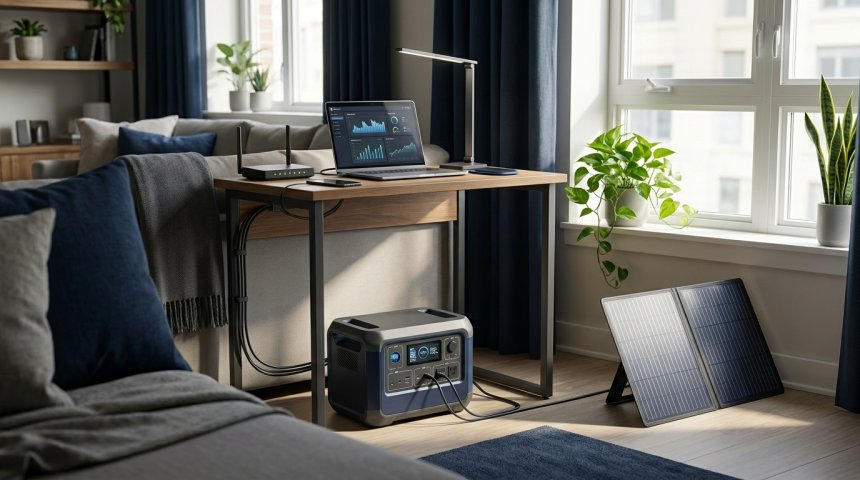
Apartment renters face a unique energy resilience paradox: they're often more vulnerable to power outages than homeowners due to shared infrastructure dependencies, limited climate control alternatives, and inability to install permanent backup systems—yet they possess fewer legal and physical options for addressing this vulnerability. Landlord restrictions prohibit generators on balconies and gas appliances indoors. Building codes restrict hardwired backup systems in rental units. Lease agreements forbid structural modifications enabling solar panel mounting or transfer switch installation. HOA rules ban exterior equipment visible from common areas. The result is millions of renters navigating extended outages with inadequate preparation, relying on extension cords snaked through windows to idling cars, unsafe indoor propane use, or simply enduring discomfort and food spoilage while waiting for grid restoration that may take days during severe weather events increasingly common across North America.
This guide cuts through the noise of generator marketing and homeowner-focused advice to provide renters with technically accurate, legally compliant, and practically deployable backup power solutions specifically designed for apartment constraints. We'll examine portable power station technologies distinguishing genuine capability from marketing inflation, decode battery chemistry trade-offs affecting safety and longevity in confined living spaces, calculate realistic load requirements based on actual apartment appliance consumption rather than theoretical maximums, evaluate solar charging feasibility for balcony and window applications, establish safety protocols preventing fire and carbon monoxide risks unique to multi-unit dwellings, navigate lease and building code restrictions identifying what's genuinely prohibited versus merely discouraged, and provide tiered solution recommendations matching budget, space, and resilience objectives. Whether you're preparing for hurricane season in Florida, winter storm vulnerability in Texas, wildfire-related PSPS events in California, or general grid instability affecting your region, this guide delivers the technical depth needed to make informed backup power decisions that actually work within rental constraints.
Let's begin by understanding why apartment backup power requires fundamentally different thinking than homeowner solutions—and why copying homeowner approaches creates safety hazards, lease violations, or expensive mistakes.
Chapter 1: Why Apartment Backup Power Is Fundamentally Different
Renter constraints aren't minor inconveniences; they redefine the entire solution space requiring purpose-built approaches.
Physical and Legal Constraints Unique to Rentals
No Permanent Installation Authority: Renters cannot install transfer switches, subpanels, hardwired inverters, or fixed solar arrays without landlord written consent—which is rarely granted due to liability concerns, building code compliance responsibility, and property modification reversibility requirements at lease end. This eliminates whole-home backup solutions standard for homeowners including standby generators, battery wall systems, and grid-tied solar with battery backup. All renter solutions must be plug-and-play, fully portable, and removable without trace upon move-out.
Shared Infrastructure Vulnerabilities: Apartments depend on centralized systems renters cannot independently backup: elevator service, hallway lighting, water pressure pumps, HVAC central plants, security systems, and internet infrastructure. Even perfect unit-level backup cannot restore building services; outage impact extends beyond personal appliance operation to include access, safety, sanitation, and communication. Backup planning must account for building-level failures not just unit-level power loss. Stairwell navigation during elevator outage, water storage when pumps fail, and alternative communication when building WiFi dies require preparation beyond electrical backup.
Ventilation and Exhaust Restrictions: Gas-powered generators produce carbon monoxide requiring outdoor operation with adequate ventilation—impossible on enclosed balconies, prohibited near windows opening into neighboring units, and banned outright by most leases and municipal codes. Indoor propane or butane appliances create CO risk and oxygen depletion in sealed apartments lacking adequate air exchange. Ventilation constraints eliminate combustion-based backup entirely for most apartment configurations leaving only zero-emission electric storage solutions as viable options.
Space and Storage Limitations: Apartments lack garages, basements, or utility rooms for bulky equipment storage. Backup solutions must fit within living space closets, under beds, or in existing cabinetry without consuming essential living area. Weight considerations matter for upper-floor units without elevator access during outages. Equipment must serve dual purposes or collapse/stow efficiently when not in active use. Space constraints favor integrated multi-function devices over separate component systems.
Noise Sensitivity and Neighbor Relations: Multi-unit density means noise travels; even "quiet" generators at 50-60 dB disturb neighbors through shared walls, floors, and ventilation systems. Noise complaints trigger management intervention and potential lease enforcement. Silent operation isn't preference but necessity for apartment backup. Battery-based solutions operate silently eliminating neighbor conflict risk entirely.
Risk Profile Differences
Fire Safety Amplification: Apartment fires spread faster through shared walls, ventilation systems, and vertical shafts endangering entire buildings not just individual units. Lithium battery thermal events, overloaded circuits, improper charging, and makeshift wiring carry amplified consequences in multi-unit structures. Fire safety isn't personal risk management but community responsibility requiring stricter standards than single-family homes. Equipment must meet recognized safety certifications (UL 2743, UL 9540A) verifying thermal stability, short-circuit protection, and containment under fault conditions.
Evacuation Complexity: Power outages in apartments may coincide with evacuation orders (wildfire, flood, structural damage). Backup equipment must be rapidly deployable and portable supporting evacuation scenarios not just shelter-in-place. Heavy stationary systems become liabilities during emergency egress. Equipment weight, grab-and-go readiness, and vehicle transport compatibility factor into apartment-specific selection criteria.
Key Insight: For official safety certification standards ensuring portable power stations meet fire safety, electrical protection, and battery integrity requirements for indoor residential use, UL 2743 Portable Power Station Safety Standard provides the definitive safety benchmark distinguishing certified safe products from uncertified hazards inappropriate for apartment environments.
Chapter 2: Portable Power Station Technology — Understanding Actual Capability
Portable power stations represent the primary viable backup solution for apartment renters. Understanding their actual capabilities versus marketing claims prevents costly mismatches between expectations and reality.
Capacity Measurement and Realistic Runtime
Watt-Hours Versus Marketing Claims: Battery capacity measured in watt-hours (Wh) determines total energy storage. A 1000Wh station theoretically delivers 1000 watts for one hour or 100 watts for ten hours. However, inverter efficiency losses (typically 10-20%), battery management system overhead, and temperature effects reduce usable capacity to 80-90% of rated value. Marketing materials sometimes cite cell-level capacity before BMS overhead; verify usable capacity in specifications. Realistic runtime = (rated Wh × 0.85) ÷ actual load watts. Always calculate based on your specific loads not manufacturer example scenarios using optimized test conditions.
Continuous Output Versus Surge Rating: Continuous output rating determines sustained load capability; surge rating handles momentary startup spikes from motors and compressors. A 1000W continuous / 2000W surge station runs 800W refrigerator continuously but cannot sustain 1500W space heater despite surge rating suggesting capability. Match continuous output to your highest simultaneous load requirement; surge rating relevant only for startup transients lasting seconds. Undersized continuous output causes overload shutdown regardless of surge headroom.
Depth of Discharge and Usable Capacity: Lithium batteries shouldn't discharge to 0% regularly; recommended depth of discharge (DoD) varies by chemistry. LiFePO4 safely discharges to 80-90% DoD routinely; NMC/NCA typically limited to 70-80% for longevity. Usable capacity = rated Wh × DoD percentage. A 1000Wh NMC station at 80% DoD provides 800Wh usable; same capacity LiFePO4 at 90% DoD provides 900Wh usable. DoD directly affects effective capacity and cycle life; factor into purchasing decisions and runtime calculations.
Battery Chemistry Comparison for Apartment Use
Lithium Iron Phosphate (LiFePO4/LFP): Superior thermal stability making safest chemistry for confined apartment spaces. Thermal runaway threshold ~270°C versus ~150°C for NMC. Cycle life 3000-6000 cycles at 80% DoD providing 8-15 years of daily use. Heavier and bulkier per Wh than NMC reducing portability. Lower energy density acceptable trade-off for safety and longevity in stationary apartment backup. Operating temperature range -20°C to 60°C suitable for most apartment environments. Recommended chemistry for apartment primary backup due to safety profile.
Lithium Nickel Manganese Cobalt (NMC/NCA): Higher energy density enabling lighter, more compact designs for equivalent capacity. Better cold-weather performance than LFP. Lower thermal stability requiring robust BMS and thermal management. Cycle life 500-1500 cycles at 80% DoD providing 2-5 years of daily use. More prevalent in market offering wider selection and competitive pricing. Acceptable for apartment use when UL 2743 certified and properly managed; higher risk profile than LFP warrants additional precautions. Preferred for portable/emergency evacuation scenarios where weight matters.
Lead-Acid (AGM/Gel): Obsolete for portable backup despite lower upfront cost. Heavy (3-4x lithium weight per Wh), low cycle life (300-500 cycles), slow charging, poor depth of discharge (50% recommended), and hydrogen off-gassing during charging creating ventilation concerns. No legitimate advantage for apartment backup; avoid despite attractive price points. Total cost of ownership exceeds lithium when replacement frequency and inefficiency accounted.
Charging Methods and Recharge Time
AC Wall Charging: Primary charging method during grid-available periods. Charge rate specified in watts; 500W charger replenishes 1000Wh station in ~2.5 hours accounting for efficiency losses. Fast-charging models accept 1000W+ AC input reducing recharge to 1-1.5 hours. Verify apartment circuit capacity; 1000W charger draws ~8.3A on 120V circuit compatible with standard 15A outlets. Higher-wattage chargers may require dedicated circuits unavailable in older apartments. Charge during off-peak hours if on time-of-use rates reducing cost.
Solar Charging: Enables off-grid recharging during extended outages. Solar input rating determines maximum panel compatibility; 200W input accepts two 100W panels or one 200W panel. Actual solar harvest typically 60-80% of rated input due to angle, shading, cloud cover, and temperature. Realistic daily harvest in good conditions: 4-6 peak sun hours × panel wattage × 0.7 efficiency = daily Wh generation. 200W panel generates ~840-1260Wh daily in optimal conditions; less in suboptimal apartment balcony/window placement. Solar charging extends indefinite runtime during prolonged outages but insufficient as sole recharge method for high-consumption scenarios.
Car/12V Charging: Emergency charging from vehicle cigarette lighter or battery clips. Limited to 100-200W typically; slow but available when grid and solar unavailable. Useful for topping charge during evacuation or when stranded. Not practical as primary recharge method due to slow speed and vehicle fuel consumption. Vehicle charging cable included with most stations; verify compatibility with your vehicle's 12V outlet amperage rating.
USB-C PD Charging: Supplementary charging via USB-C Power Delivery for smaller stations or partial recharging. 100W USB-C PD common; 240W emerging. Slower than dedicated AC charging but enables charging from laptop adapters, power banks, or portable solar panels with USB-C output. Flexibility advantage for travel and emergency scenarios. Not primary recharge method for large stations but valuable backup option.
For detailed product specifications, capacity tiers, output options, and real-world runtime benchmarks across apartment-relevant sizes, Jackery Explorer Portable Power Station Product Line (nofollow) demonstrates representative product range illustrating specification interpretation and practical application sizing.
Chapter 3: Load Calculation for Apartment Appliances — Realistic Power Budgeting
Accurate load calculation prevents undersizing (inadequate backup) and oversizing (unnecessary expense and space consumption). Apartment loads differ significantly from homeowner assumptions.
Essential Apartment Loads During Outages
Refrigeration: Modern apartment refrigerators consume 100-200W running with 400-800W startup surge. Daily consumption 1-2 kWh depending on age, size, and ambient temperature. Mini-fridges consume 50-100W running. Refrigeration typically highest-priority load preventing food spoilage. Dedicated circuit recommended avoiding simultaneous startup with other compressor loads. Runtime on 1000Wh station: 5-10 hours continuous or 24+ hours with intermittent cycling (refrigerators cycle 30-50% duty cycle). Chest freezers more efficient than upright models; consider for extended outage preparedness.
Lighting: LED bulbs consume 5-15W each versus 60W incandescent. Apartment lighting load typically 30-100W total for essential illumination. Lighting lowest-priority load for capacity planning but critical for safety and psychological comfort. Battery-powered LED lanterns supplement station-powered lighting extending station runtime for higher-priority loads. Smart bulbs on battery backup enable selective zone lighting reducing consumption.
Communication and Information: Phone charging 10-20W, laptop 30-90W, router/modem 10-30W, radio 5-10W. Communication loads modest but high-priority for safety information, work continuity, and family contact. Combined communication load typically 50-150W. Phone and laptop charging can occur simultaneously with other loads; router/modem requires continuous power for internet availability. Mobile hotspot as backup when building internet fails consumes phone battery; dedicated hotspot device preserves phone battery.
Medical Equipment: CPAP machines 30-60W continuous, nebulizers 100-150W intermittent, oxygen concentrators 300-500W continuous, insulin refrigeration requiring temperature maintenance. Medical loads non-negotiable priority; size station to handle medical loads plus margin. CPAP users should maintain dedicated station sized for 8+ hours runtime independent of other loads. Medical equipment manufacturers specify backup power requirements; consult documentation for exact specifications. Notify utility of medical necessity status for priority restoration consideration.
Climate Control Limitations: Electric space heaters consume 750-1500W; portable AC units 800-1400W. Climate control loads exceed typical portable station capacity for sustained operation. Strategic approach: use station for short-term comfort during critical periods while employing passive strategies (insulation, clothing layers, thermal mass) for extended outages. Window units more efficient than portable AC; if permitted, prioritize efficient models. Heating alternatives: sleeping bags rated for temperature, thermal curtains, room consolidation reducing heated volume. Cooling alternatives: battery fans, evaporative cooling (low humidity climates), cross-ventilation when outdoor conditions permit.
Cooking Alternatives: Electric hot plates 750-1500W; microwaves 800-1500W. Cooking loads substantial but intermittent. Plan meals requiring minimal cooking during outages. Camp stoves (butane/propane) usable on balconies with ventilation never indoors. Thermal cooking (insulated containers retaining heat) reduces active cooking energy. Meal prep before anticipated outages reduces cooking demand. Electric kettle 1000-1500W for hot water more efficient than stove heating.
Load Calculation Methodology
Inventory and Measurement: List all devices intended for backup operation with nameplate wattage or measured consumption using Kill-A-Watt meter. Nameplate ratings often exceed actual consumption; measurement preferred when possible. Note startup surge for motor/compressor loads. Categorize loads by priority: critical (medical, refrigeration), important (communication, lighting), discretionary (entertainment, cooking). Calculate simultaneous maximum load for critical + important categories determining minimum continuous output requirement.
Runtime Estimation: Estimate daily consumption for each load category: (watts × hours of daily use). Sum daily consumption across categories. Divide station usable capacity by daily consumption estimating days of runtime. Example: 1000Wh usable capacity ÷ 1500Wh daily consumption = 0.67 days or ~16 hours. Adjust estimates for seasonal variation, behavioral adaptation, and load shedding during extended outages. Conservative estimates prevent disappointment; optimistic estimates create dangerous false confidence.
Sizing Recommendations by Scenario: Basic Emergency (24-48 hours): 500-1000Wh station covering phone/laptop charging, LED lighting, and mini-fridge or cooler. Suitable for brief outages with minimal comfort requirements. Budget: $400-$800.
Extended Comfort (3-7 days): 1000-2000Wh station covering full-size refrigerator, communication devices, lighting, and intermittent small appliance use. Add 200W solar panel for extended recharge capability. Suitable for multi-day outages maintaining essential comfort. Budget: $1000-$2500.
Comprehensive Resilience (7+ days): 2000-3000Wh station or multiple stations covering all essential loads plus limited climate control or cooking. Add 400W+ solar array for sustainable off-grid operation. Suitable for disaster-prone regions with frequent extended outages. Budget: $2500-$5000+.
Chapter 4: Solar Charging Feasibility for Apartments — Balcony and Window Reality
Solar charging extends backup duration indefinitely but apartment constraints limit harvest potential. Realistic assessment prevents overestimation.
Balcony Solar Deployment
Orientation and Shading Analysis: South-facing balconies (Northern Hemisphere) receive optimal sunlight; east/west receive partial; north receives minimal direct sun. Adjacent buildings, trees, and balcony overhangs create shading reducing harvest dramatically. Use sun tracking apps (Sun Surveyor, Photovoltaic Geographical Information System) modeling hourly shading throughout year. Shaded balconies may generate <30% of unshaded potential making solar investment questionable. Measure actual irradiance with light meter before investing; don't assume based on orientation alone.
Panel Type Selection: Flexible panels conform to balcony railings and irregular surfaces; rigid panels more efficient but require flat mounting surface. Semi-flexible panels balance efficiency and adaptability. Marine-grade panels resist moisture and UV degradation for exposed balcony mounting. Panel efficiency 20-24% for premium monocrystalline; 15-18% for budget polycrystalline. Higher efficiency compensates for limited balcony space. Bifacial panels capture reflected light from balcony floor increasing harvest 5-15% on reflective surfaces.
Mounting Without Modification: Railing mounts, tension rods, freestanding frames, and adhesive hooks enable panel installation without drilling or permanent attachment. Verify mount weight capacity and wind resistance; unsecured panels become projectiles in storms. Removable mounting satisfies lease requirements while enabling seasonal deployment. Test mount stability before leaving unattended. Document installation method for landlord approval discussions.
Expected Harvest Realities: Balcony solar typically generates 40-70% of rated panel output due to suboptimal angle, partial shading, glass reflection losses, and soiling. 200W balcony panel realistically generates 600-1000Wh daily in summer, 200-500Wh daily in winter at mid-latitudes. Harvest varies enormously by geography, season, and specific site conditions. Track actual harvest with station solar input display calibrating expectations against reality. Balcony solar supplements but rarely replaces grid charging; plan accordingly.
Window-Mounted Solar
Glass Transmission Losses: Window glass blocks 10-30% of solar spectrum depending on coating, tint, and glazing type. Low-E coatings designed to reduce heat gain also reduce solar charging efficiency. Double/triple glazing compounds losses. Interior window-mounted panels generate 50-70% of outdoor equivalent. Exterior window mounting improves transmission but may violate lease or HOA restrictions. Measure actual window transmission before investing; some modern windows block >50% of usable solar spectrum.
Space and Angle Constraints: Window area limits panel size; typical apartment window accommodates 50-100W panel maximum. Vertical window orientation suboptimal versus horizontal or tilted mounting reducing harvest 20-40%. Suction cup mounts enable temporary positioning; verify adhesion reliability to prevent falls. Window solar best suited for small station trickle charging rather than primary recharge source. Manage expectations; window solar maintains charge during outages but doesn't rapidly replenish depleted stations.
Solar Investment Decision Framework
Cost-Benefit Analysis: Calculate cost per Wh of annual solar harvest: (panel + mount + cable cost) ÷ (daily Wh × 365 × expected lifespan years). Compare against grid electricity cost per Wh determining payback period. Apartment solar rarely achieves financial payback versus grid charging; value lies in outage resilience not economic return. Justify investment based on outage frequency, duration, and consequence severity not ROI. Regions with frequent multi-day outages justify solar investment; regions with rare brief outages may not.
Portability and Future Use: Select panels compatible with future housing situations; balcony-specific mounting may not transfer. Freestanding and flexible panels offer maximum portability. Panel investment amortized across multiple residences increases value proposition. Consider panel as long-term resilience asset not single-apartment expenditure. Quality panels last 20+ years; cheap panels degrade rapidly wasting investment.
Chapter 5: Safety Protocols for Rental Units — Non-Negotiable Standards
Apartment backup power safety protects not just you but neighbors and building integrity. Compromise here risks lives and legal liability.
Electrical Safety
Circuit Loading Awareness: Apartment circuits typically 15A (1800W max) or 20A (2400W max). Charging station while running other appliances may trip breaker. Distribute loads across multiple circuits when possible. Never daisy-chain power strips or extension cords creating fire hazard. Use heavy-gauge cords (14 AWG minimum for 15A) for any extension necessary. Inspect cords regularly for damage; replace immediately if compromised. Circuit overloading causes fires; respect limits absolutely.
Charging Environment Safety: Charge stations on hard non-combustible surfaces away from flammable materials. Maintain clearance around station for ventilation during charging. Never charge under bedding, in enclosed cabinets, or near curtains. Monitor temperature during initial charges establishing baseline; abnormal heating indicates malfunction requiring immediate discontinuation. Charge during waking hours when monitoring possible; unattended overnight charging increases undetected failure risk. Smoke detector functional and tested in charging area.
Battery Handling and Storage: Store stations at room temperature away from direct sunlight and heat sources. Avoid storing fully charged or fully depleted for extended periods; 50-70% state of charge optimal for storage longevity. Inspect regularly for swelling, leakage, odor, or physical damage; discontinue use immediately if abnormalities detected. Dispose of damaged batteries through approved recycling channels never in trash. Transport in protective case preventing terminal short-circuit. Battery mishandling causes fires; treat with appropriate respect.
Fire Prevention Specific to Multi-Unit Dwellings
Certification Verification: Only use stations certified to UL 2743 or equivalent recognized standard. Certification verifies thermal runaway containment, short-circuit protection, overcharge prevention, and construction safety. Uncertified stations lack verified safety margins; savings don't justify risk. Verify certification mark on product and documentation; counterfeit certifications exist. Check manufacturer recall notices periodically. Certification is minimum safety threshold not optional feature.
Smoke and CO Detection: Functional smoke detectors in every room including station charging/storage area. CO detectors if any combustion appliances present in unit or adjacent units. Detectors tested monthly; batteries replaced annually. Interconnected detectors alert throughout unit; standalone detectors may not be heard from distant rooms. Fire extinguisher (ABC class) accessible and user-trained. Evacuation plan established and practiced. Detection and response capability is last line of defense; maintain rigorously.
Landlord Communication: Notify landlord of backup power equipment usage demonstrating responsible preparation. Provide equipment specifications and safety certifications addressing liability concerns. Request written acknowledgment preventing future disputes. Some landlords appreciate proactive preparedness; others restrict equipment preemptively. Early communication builds trust; surprise discovery during inspection creates conflict. Documentation protects both parties clarifying expectations and responsibilities.
Carbon Monoxide Awareness
Zero-Tolerance Indoor Combustion: Never operate gas generators, propane heaters, camp stoves, or charcoal grills indoors or on enclosed balconies regardless of ventilation attempts. CO is odorless, colorless, and lethal at concentrations achievable within minutes in enclosed spaces. Opening windows insufficient for safe indoor combustion. CO poisoning kills apartment residents annually during outages; this risk is entirely preventable through absolute prohibition. If heating is impossible without combustion, evacuate to shelter rather than risk CO exposure.
Neighbor Awareness: Your CO safety affects adjacent units sharing ventilation and air infiltration paths. Report suspected neighbor CO use to building management immediately; their risk becomes your risk through shared air. Building-wide CO detection systems ideal but uncommon in older buildings. Community education through tenant associations promotes collective safety. CO safety is communal responsibility in multi-unit dwellings.
Chapter 6: Navigating Lease and Building Code Restrictions
Understanding actual restrictions versus perceived restrictions expands available options legally.
Common Lease Provisions and Interpretations
Generator Bans: Most leases explicitly prohibit generators citing noise, exhaust, and fire risk. These bans universally apply to combustion generators; battery stations typically not covered as they produce no emissions or noise. Clarify with landlord that battery stations aren't generators; terminology confusion causes unnecessary restrictions. Provide UL certification documentation distinguishing battery storage from combustion generation. Written clarification prevents future dispute.
Modification Restrictions: Leases prohibit alterations including drilling, mounting, and electrical modifications. Solar panel mounting requiring screws or adhesives may violate modification clauses. Freestanding and non-adhesive mounting methods comply with no-modification requirements. Document non-destructive installation method demonstrating compliance. Temporary installations removed without damage at lease end satisfy restoration obligations. Photograph pre-installation condition establishing baseline.
Appliance Restrictions: Some leases restrict "additional appliances" beyond provided units. Portable power stations aren't appliances in traditional sense but landlords may interpret broadly. Preemptive clarification prevents violation accusations. Frame station as emergency preparedness equipment not additional appliance. Reference safety certifications and insurance coverage addressing liability concerns. Most landlords accept reasonable preparedness measures when presented professionally.
Building Code Considerations
Electrical Code Compliance: Portable power stations don't trigger electrical code requirements as they don't modify building wiring. Extension cords used temporarily during outages aren't permanent installations exempt from code. However, unsafe cord practices violate fire codes regardless of permanence. Follow NEC guidelines for temporary cord use even when not strictly required; best practice exceeds minimum compliance. Permanent backup system installation would require permits and inspections; portable systems avoid this complexity entirely.
Fire Code Compliance: Fire codes regulate combustible material storage, egress obstruction, and fire hazard creation. Properly stored and used power stations comply with fire codes. Improper storage blocking exits, near combustibles, or in hazardous conditions violates codes regardless of equipment legality. Fire marshal authority supersedes lease terms; code-compliant use cannot be prohibited by lease but code-violating use can be restricted even if lease silent. Understand local fire code provisions relevant to battery storage and charging.
Insurance Implications: Renter's insurance may exclude damage caused by prohibited equipment or code violations. Verify policy coverage for backup power equipment and related damage. Disclose equipment to insurer ensuring coverage confirmation. Some insurers offer premium discounts for documented preparedness measures. Insurance lapse due to undisclosed equipment creates catastrophic exposure; transparency protects coverage. Document equipment value for personal property coverage adequacy.
Conclusion: Preparedness as Responsible Tenancy
Apartment backup power isn't luxury or paranoia; it's responsible preparation acknowledging grid vulnerability and shared community risk. The solutions available to renters—portable power stations, balcony solar, and passive resilience strategies—provide meaningful protection within legitimate constraints when selected and deployed thoughtfully.
Your preparation protects not just yourself but neighbors who share walls, ventilation, and evacuation routes. Invest in certified safe equipment. Calculate loads honestly avoiding false confidence. Respect lease terms while advocating for reasonable preparedness rights. Maintain safety protocols rigorously. Communicate transparently with landlords and neighbors. Your diligence contributes to community resilience exceeding individual benefit.
The grid will fail again. Your readiness determines whether that failure becomes manageable inconvenience or catastrophic crisis. Choose preparedness. Execute safely. Live resiliently. Your apartment deserves protection commensurate with the life you've built within it.
Frequently Asked Questions (FAQs)
What size portable power station do I actually need for my apartment?
Size depends on your specific essential loads and desired runtime. Calculate using this method: (1) List essential devices with wattage and daily usage hours. (2) Multiply watts × hours for each device summing total daily Wh consumption. (3) Add 20% margin for inefficiency and unexpected loads. (4) Select station with usable capacity meeting or exceeding daily consumption × desired days of autonomy. Typical apartment essentials (refrigerator, phone/laptop charging, LED lighting, communication) consume 1000-2000Wh daily. For 24-hour backup: 1000-1500Wh station. For 48-72 hours: 2000Wh station. For week-long resilience: 2000-3000Wh plus solar supplementation. Avoid oversizing for loads you won't actually use during outages; space and budget better allocated to solar or supplies. Measure actual appliance consumption with Kill-A-Watt meter rather than trusting nameplate ratings which often overstate by 30-50%. Start with conservative sizing expandable later; oversized initial purchase wastes money and space if actual needs prove smaller.
Are portable power stations safe to use and charge inside apartments?
Yes, when using UL 2743 certified stations and following safety protocols. Key safety requirements: (1) Only use stations with verified UL 2743 or equivalent certification confirming thermal runaway containment and electrical protection. (2) Charge on hard non-combustible surfaces with adequate ventilation clearance. (3) Never charge unattended overnight or under combustible materials. (4) Monitor temperature during initial charges establishing normal baseline. (5) Inspect regularly for swelling, damage, or odor discontinuing use immediately if abnormalities appear. (6) Maintain functional smoke detectors in charging area. (7) Store at room temperature away from heat sources. LiFePO4 chemistry offers superior thermal safety versus NMC for apartment use. Certified stations have extensive safety testing validating indoor use; uncertified stations lack verification and pose unacceptable risk in multi-unit dwellings. Safety isn't optional; it's prerequisite protecting you and neighbors. Thousands of apartment residents use certified stations safely daily; risk comes from uncertified products and unsafe practices not from the technology itself.
Can I use solar panels on my apartment balcony to recharge my power station?
Yes, in most cases, but with realistic expectations. Balcony solar is generally permitted as temporary non-permanent equipment not constituting lease-prohibited modification. Verify specific lease terms and HOA rules before installation. Use non-destructive mounting (railing clamps, freestanding frames, tension rods) avoiding drilling or adhesives. Realistic harvest: 200W balcony panel generates 600-1000Wh daily in summer, 200-500Wh daily in winter at mid-latitudes assuming south-facing unshaded orientation. Shaded or north-facing balconies generate significantly less; measure actual irradiance before investing. Flexible or semi-flexible panels adapt to balcony geometry better than rigid panels. Marine-grade construction resists weather exposure. Solar extends backup duration during extended outages but rarely provides complete self-sufficiency for apartment loads; plan as supplement to grid charging not replacement. Cost-benefit analysis should consider outage resilience value not just financial payback which is rarely achieved for apartment solar. Portability matters; select panels transferable to future residences maximizing long-term value.
How do I talk to my landlord about using backup power equipment without getting denied?
Approach proactively and professionally before needing equipment urgently. Prepare documentation package including: equipment specifications, UL safety certification, photo of intended setup location, written safety protocol you'll follow, and renter's insurance confirmation covering equipment. Frame conversation around responsible preparedness benefiting building safety not just personal convenience. Offer to provide copy of safety documentation for their records. Address liability concerns directly explaining certification and insurance coverage. Propose written acknowledgment clarifying permission and conditions preventing future disputes. Timing matters; raise topic during lease renewal or routine communication not during crisis or conflict. If initially denied, ask specifically what concerns drive denial addressing each with evidence and compromise. Some landlords prohibit out of unfamiliarity; education resolves many objections. If prohibition stands despite reasonable accommodation requests, document denial and explore portable options requiring no permission (stations stored in closet, used only during emergencies). Most landlords accept certified battery stations when presented responsibly; resistance typically targets combustion generators not battery storage.
What should I do during an extended apartment outage beyond just having a power station?
Power station is one component of comprehensive apartment outage preparedness. Complete preparation includes: (1) Water storage: 1 gallon per person per day minimum; fill bathtub for sanitation water if advance warning received. (2) Food supplies: 7+ days shelf-stable food requiring minimal preparation and no refrigeration. (3) Temperature management: sleeping bags rated for expected temperatures, thermal curtains, room consolidation reducing heated/cooled volume, battery fans for cooling. (4) Communication: battery radio for emergency broadcasts, car charger for phone, printed emergency contacts, building management contact information. (5) Lighting: multiple LED lanterns and flashlights with spare batteries reducing station drain for lighting. (6) Medical supplies: prescription medications, first aid kit, medical device backup power sized independently. (7) Sanitation: bucket toilet with bags and sanitizer if building water fails, hand sanitizer, hygiene supplies. (8) Documents: important papers in waterproof container, digital copies on encrypted USB drive. (9) Evacuation bag: go-bag ready if building becomes uninhabitable including essentials for 72 hours. (10) Community coordination: know neighbors especially elderly/disabled requiring assistance, participate in building emergency planning if available. Power station addresses electrical needs; comprehensive preparedness addresses survival needs. Test your plan annually through simulated outage weekend identifying gaps before real emergency reveals them.
Share
What's Your Reaction?
 Like
0
 Dislike
0
 Love
0
 Funny
0
 Angry
0
 Sad
0
 Wow
0