
Unstoppable 2026 Guide: Car Conversion Kits for Weekend Travelers
The ultimate guide to car conversion kits for weekend travelers in 2026. Explore market trends, product types, and growth strategies for brands and sellers.

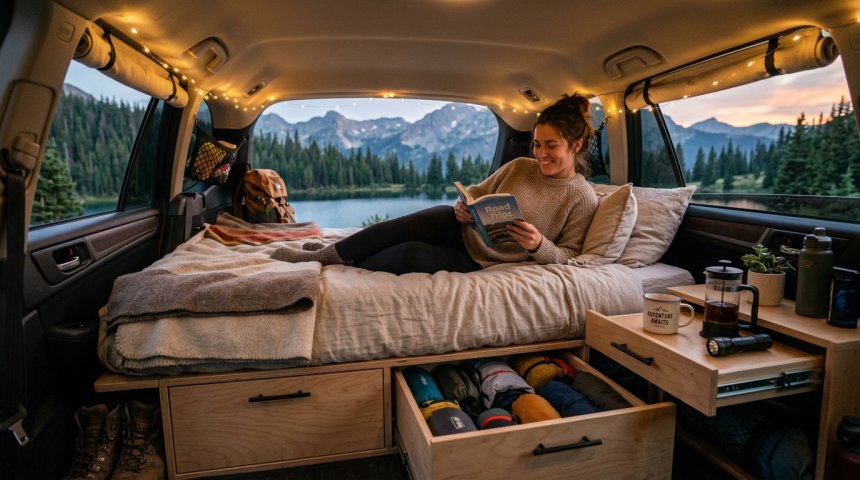
In 2026, travel trends indicate that millions of urban professionals will swap hotel booking apps for fold-flat bed platforms, turning the vehicles already parked in their driveways into capable weekend campers. This shift, often described as the democratization of adventure travel, has created one of the fastest-growing niches in the outdoor economy: car conversion kits. For entrepreneurs, manufacturers, dealers, and investors, the question is no longer whether this market is real, but how quickly they can position themselves inside it.
Viewed from a business point of view, the car conversion kit industry sits at the intersection of three powerful forces: the rising cost of traditional travel, the normalization of car camping through social media, and a mature supply chain that can deliver modular, tool-free products at accessible price points. Whether you are a retailer considering a new product line or a founder building a brand from scratch, the essence of this market is defined by its repeatability—weekend after weekend, customers return for gear that makes their two free days feel like a genuine escape.
The Weekend Traveler: Profile of a New Customer Base
The weekend traveler is a distinct consumer, and understanding them is the first step in building a profitable offer. Typically urban or suburban, often between 28 and 55, this customer has limited vacation time but a strong desire for frequent, short escapes. They own a vehicle—usually an SUV, a crossover, or a van—and they are reluctant to take on the cost of a dedicated camper. In 2026, with living costs still high in most major markets, the conversion kit represents a financially rational choice: instead of a second vehicle or a series of expensive hotel stays, a one-time investment transforms the car they already own.
From a business perspective, this customer base is attractive for several reasons. First, it is large and growing, expanding every time hotel prices rise or a viral camping video circulates. Second, it is aspirational but practical, willing to pay for quality that saves time and space. Third, and most importantly for revenue planning, it is a repeat buyer: a customer who starts with a bed platform will return for a kitchen module, then a power system, then storage upgrades. The kit is not a single transaction; it is the beginning of a relationship.
What Exactly Is a Car Conversion Kit?
A car conversion kit is a modular system designed to transform an everyday vehicle into a functional camper, typically without permanent modification. The entry point is usually a sleeping platform—a fold-flat bed engineered to fit a specific vehicle model. Above that sit storage drawers, window insulation and privacy screens, slide-out kitchen modules with stoves and water tanks, and electrical systems built around portable batteries, solar input, and inverters. At the premium end, kits include pop-up roof tents, heating, and app-controlled power management.
The defining feature of the modern kit, and the reason the category has exploded, is reversibility. Unlike a full van conversion, which is a permanent build, a 2026-era kit installs and removes in minutes, often without tools. This allows the vehicle to serve as a commuter from Monday to Friday and a camper from Friday night to Sunday. For businesses, this "double life" proposition is the core marketing message: the kit does not replace the customer's car; it multiplies its value.
Why 2026 Is the Inflection Point
Several converging trends make the current moment particularly favorable for businesses in this space. The most visible is the evolution of the vanlife movement. The highly produced #vanlife content of the early 2020s has matured into a broader, more accessible car-camping culture, where the hero vehicle is not an $80,000 custom Sprinter but a well-organized family SUV. This shift dramatically widens the addressable market.
Second, the electrification of the vehicle fleet is creating entirely new product categories. Electric vehicles with vehicle-to-load (V2L) capability can power a camp kitchen, lights, and even climate control directly from the traction battery, removing the need for heavy auxiliary power systems. Kit manufacturers that design EV-native products—lighter frames, smart power integration, aerodynamic roof solutions—are capturing early-mover attention in a segment that will only grow as EV adoption rises.
Third, the economics of travel have shifted. With accommodation costs in popular destinations at record highs, the "campground plus conversion kit" model is not just a lifestyle choice but a budget strategy for many households. Every increase in hotel prices functions as quiet marketing for the conversion industry.
The Business Case: Margins, Upsells, and Recurring Revenue
Viewed through a financial lens, the conversion kit business offers several attractive characteristics. Average order values are strong, ranging from a few hundred dollars for entry-level bed systems to five figures for complete modular setups. Margins on engineered wood and aluminum products, when produced at scale, are healthy, and the direct-to-consumer channel allows brands to capture full retail value.
But the deeper opportunity lies in the revenue architecture. The kit is a platform, and platforms generate ecosystems. Accessories—organizers, awnings, lighting, cookware, seasonal upgrades—create a long tail of recurring purchases. Software and community features, such as trip-planning apps or member campsite guides, open subscription possibilities. Service and installation networks add a local revenue layer and create partnerships with detailers and outfitters. In short, the smartest companies in this space are not selling boxes; they are operating a system with multiple revenue streams attached to a single customer relationship.
Product Strategy: Designing for the Weekend Use Case
The winners in this market share a common discipline: they design specifically for the weekend use case. That means installation measured in minutes, not days; weight low enough to protect fuel economy and payload; and vehicle-specific engineering for the best-selling platforms, from compact crossovers to full-size vans. A kit that fits a RAV4 or a Transit perfectly, with no rattles and no wasted centimeters, will out-sell a generic universal product every time, because the weekend traveler's scarcest resource is not money—it is time.
Modularity is the second pillar of product strategy. Customers rarely buy the complete system on day one. Designing the bed platform, kitchen, and power system as independent modules that integrate seamlessly allows the business to match the customer's budget at entry and grow with them over successive seasons. This "good, better, best" ladder is not only a pricing tool; it is a retention tool.
Marketing to Weekend Travelers
Marketing in this category is overwhelmingly visual and community-driven. The product sells itself in a thirty-second clip: tailgate opens, bed unfolds, kitchen slides out, coffee is poured at sunrise. Brands that invest in short-form video, creator partnerships, and real-customer builds generate trust that paid advertising cannot buy. In 2026, the most effective funnels often begin with a rental or a demo event—letting the customer experience one weekend with the kit dramatically increases conversion to purchase, which is why many manufacturers now operate "try before you buy" programs or partner with rental platforms.
Search and content also play a disproportionate role. Weekend travelers research obsessively: "can I camp in my SUV," "bed kit vs. roof tent," "best conversion for a family of four." Brands that answer these questions with honest, detailed guides own the consideration phase of the journey. The business insight is simple: in a market built on aspiration, education is the highest-converting form of marketing.
Revenue Models That Work in 2026
Different entrants are choosing different paths into the market. Direct-to-consumer brands control margin and customer data but carry fulfillment and support costs. Dealer and distribution partnerships sacrifice margin for volume and credibility, and are particularly effective for reaching customers who want to see and touch the product. Rental fleets serve a dual purpose: they generate yield on assets during low seasons and function as a distributed demo program, with rent-to-own options converting renters into buyers.
A quieter but increasingly important model is B2B: fleet conversions for hospitality brands, tour operators, and corporate wellness programs, as well as white-label manufacturing for automotive accessory retailers. For a manufacturer, a handful of fleet contracts can smooth the seasonality that otherwise defines the consumer camping calendar.
Challenges: Regulation, Seasonality, and Competition
No honest business assessment is complete without the risks. Regulation is the first. Conversion components that carry load in a moving vehicle—bed frames that double as cargo barriers, roof-mounted equipment—must meet safety expectations, and insurance treatment of modified vehicles varies by market. Businesses that invest in crash testing, clear installation documentation, and certified installer networks turn this burden into a moat: compliance becomes a trust signal that cheaper competitors cannot match.
Seasonality is the second challenge. Revenue in the northern hemisphere concentrates from spring through autumn. The countermeasures are well understood: southern-hemisphere distribution, rental programs, accessory drops timed to the winter planning season, and content that celebrates cold-weather camping. Finally, competition is intensifying, including from original equipment manufacturers shipping factory camper variants. The independent kit business defends itself with speed, vehicle coverage breadth, and community—advantages that large OEMs historically struggle to replicate.
The EV Revolution and the Next Product Wave
Looking ahead, the most significant product evolution is electrical. As V2L-equipped EVs proliferate, the conversion kit of the late 2020s will increasingly be a lightweight, smart shell: structural and comfort systems that borrow power from the vehicle itself, managed through integrated apps that monitor consumption and protect driving range. Solar remains relevant for extended off-grid stays, but the center of gravity is shifting toward seamless vehicle integration. For businesses, this transition is an opportunity to reset the competitive landscape, because legacy designs built around heavy auxiliary batteries become obsolete precisely as the customer base electrifies.
Sustainability as a Selling Point
The weekend traveler of 2026 is, on average, environmentally conscious, and sustainability has moved from a nice-to-have to a purchase criterion. Durable, repairable products with available spare parts outperform disposable alternatives in both reviews and resale value. Forward-looking brands operate take-back and refurbishment programs, keeping materials in circulation and capturing second-life margin. Localized manufacturing shortens lead times and reduces freight emissions, a message that resonates strongly in European markets. In this category, sustainability is not a cost center; it is positioning.
A Balanced View: Risks and Realities for New Entrants
Entering the conversion kit market is not without its hurdles. Engineering quality matters more than it appears; a rattling bed frame generates public failures that no advertising can undo. Customer support is intensive, because buyers are passionate and detail-oriented. Capital requirements scale quickly once inventory spans multiple vehicle platforms. However, for operators who respect the craft, the rewards are real: a growing market, strong brand loyalty, and a customer base that genuinely loves the product category. Few niches in the outdoor economy combine those three characteristics so cleanly.
Conclusion
Car conversion kits for weekend travelers represent a rare convergence of lifestyle trend and structural market growth. In 2026, the category stands as a testament to the idea that a big business can be built on small escapes: two free days, one vehicle, and a well-designed system that turns both into adventure. By carefully balancing product quality with community marketing, and modular design with recurring revenue strategy, businesses in this space continue to attract both customers and investors.
The beauty of the market, the depth of the demand, and the strength of the community create an opportunity that is both grounding and inspiring. Whether you are engineering a bed platform, launching a rental fleet, or building a content brand around the weekend escape, you are participating in a story that has been unfolding for a decade—and one that continues to evolve with every passing season.
FAQs
What is included in a car conversion kit? A typical kit includes a vehicle-specific sleeping platform, storage drawers, and window privacy or insulation screens. Higher tiers add slide-out kitchen modules with stoves and water tanks, electrical systems with batteries and solar input, and roof-top tent options. The defining feature of modern kits is tool-free installation, allowing the vehicle to switch between commuter and camper in minutes.
How much do conversion kits cost? Entry-level bed and storage systems typically range from a few hundred to around fifteen hundred dollars. Kitchen and power modules add to that, and complete modular systems for vans can reach five figures. From a business standpoint, this spread is healthy: it creates a clear price ladder that lets customers enter cheaply and upgrade over time.
Are kits compatible with any vehicle? Most reputable manufacturers engineer kits for specific best-selling platforms—popular SUVs, crossovers, and vans—because precise fitment is the core of product quality. Universal kits exist but generally compromise on space efficiency. For businesses, vehicle coverage strategy is a key decision: each new platform adds inventory complexity but opens a new customer pool.
Is selling conversion kits a profitable business? The category offers strong average order values, healthy manufacturing margins at scale, and a natural upsell path into accessories and upgrades. Profitability depends on managing seasonality, controlling support costs, and building community-driven acquisition that reduces reliance on paid advertising. Operators with rental or B2B channels typically show the most resilient margins.
What regulations should businesses be aware of? Requirements vary by market, but the core issues are cargo security, load ratings for structural components, and the insurance treatment of modified vehicles. Investing in testing, clear documentation, and certified installation partners protects the brand and increasingly functions as a competitive advantage, as customers learn to distinguish engineered products from improvised ones.
Which customer segment is the most profitable? The most valuable segment is the repeat weekend traveler: households that camp multiple times per season and upgrade their system year over year. They buy accessories consistently, refer friends, and generate user-created content that markets the brand for free. Renters converted to owners through try-before-you-buy programs are a close second, because they arrive pre-sold.
Beyond the Kit: Building an Ecosystem
While the hardware generates the first transaction, the brands that endure are building ecosystems around it. Trip-planning apps with curated campsite data, member communities that share build photos and route guides, and accessory collaborations with cookware and lighting brands all deepen the relationship beyond the initial purchase. This ecosystem approach also insulates the business from pure price competition: a customer embedded in a community, with a vehicle-specific system and a library of compatible accessories, is a customer retained.
Further along the value chain, partnerships are multiplying. Campground operators offer kit-equipped rentals to extend their season. Automotive detailers add installation services. Insurance providers experiment with tailored products for modified vehicles. Each partnership expands the category's legitimacy and gives new entrants a distribution path that does not require building a brand from zero.
The Global Market: Where Demand Is Strongest
Demand is genuinely global, though its flavor varies by region. North America leads in volume, driven by a deep car culture and abundant public land. Europe shows the highest sophistication, with strong environmental standards, dense campsite networks, and a preference for compact, engineered solutions. Australia and New Zealand punch above their weight per capita, supported by a touring culture that treats vehicle-based travel as a national habit. For manufacturers, the strategic insight is that regional differences are product differences: the European market rewards compact modularity, while the American market rewards size and comfort. A single global SKU rarely wins everywhere.
Sustainable Business Practices in 2026: A Final Word
As you build or invest in this category, consider the impact of the business itself. The weekend traveler's love of nature is the demand engine of the entire market; protecting the places they camp is therefore not charity but core strategy. Brands that support trail and campsite stewardship, design for repairability, and operate take-back programs earn loyalty that outlasts any advertising cycle.
In 2026, the "conversion economy" is defined by a renewed appreciation for the short, frequent escape. It is found in the customer who discovers that Friday's traffic leads to Saturday's sunrise, the rental fleet operator who turns a slow winter into steady yield, and the founder who realizes that this industry is not about aluminum and plywood, but about giving people back their weekends. The market invites you not just to sell, but to serve—to become a lasting part of a story that, while only a decade old, remains as vibrant and relevant as the next long weekend on the calendar. Enjoy the build, respect the community, and take the time to notice the details; in this business, the true magic is often found in the quietest corners of the campground.
Share
What's Your Reaction?
 Like
0
Like
0
 Dislike
0
Dislike
0
 Love
0
Love
0
 Funny
0
Funny
0
 Angry
0
Angry
0
 Sad
0
Sad
0
 Wow
0
Wow
0