Captivating 2026 Guide: Santa Fe, New Mexico Travel
Explore Santa Fe, New Mexico in 2026: adobe streets, green chile, Canyon Road art, desert spas, Taos day trips, and honest local travel tips.

The first thing that hits you about Santa Fe isn't a sight. It's a smell. If you arrive in late August or September, the whole town smells like roasting green chile — big steel drum burners in parking lots and grocery store corners, chiles blistering and popping, that smoky-sweet heat hanging in the air like weather. I drove up from Albuquerque one evening during roast season, rolled the window down at a stoplight, and genuinely considered asking a stranger in a grocery lot if I could just stand near their burner for a while. That's the entrance fee Santa Fe charges: your sense of smell, and after that, your sense of pace.
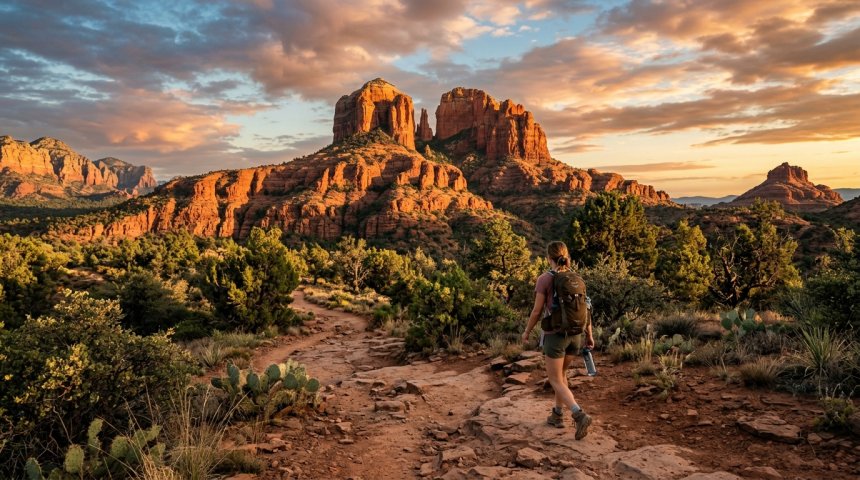
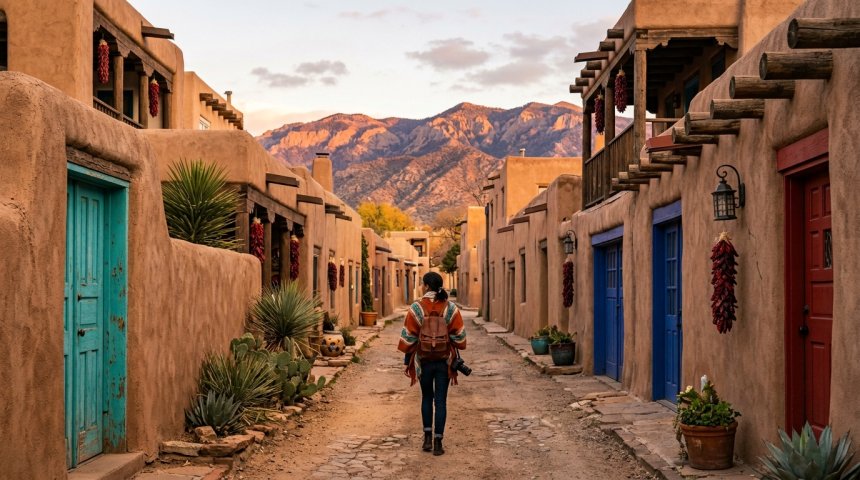
The second thing is the light. You've heard about it, and you'll roll your eyes, and then on your first evening you'll watch the sun come down low and turn every adobe wall in town the color of a peach, and you'll stop talking mid-sentence. Artists have been migrating here for over a century, and after one sunset you understand it's not a myth. The light is doing something. The town is just lucky enough to be standing in it.
I've been back enough times now to have routines — a chocolate elixir stop, a gallery I always peek into, a hill I climb when my brain gets loud — and this guide is those routines, written down honestly. Not a brochure. A friend's notes, with the mistakes included so you can skip them.
Why Santa Fe Feels Like Nowhere Else
Santa Fe calls itself "The City Different," which is a nickname most towns would invent and this one simply earned. It's one of the oldest continuously inhabited capital cities in the country, with a history that stacks Spanish, Pueblo, Mexican, and Anglo layers on top of each other like sediment. You can taste that layering in the food, hear it in the place names, and see it in the architecture — the city actually has building traditions that keep the downtown looking like the adobe town it has been for centuries, all rounded walls and quiet courtyards.
What that produces is a pace. Santa Fe does not hustle. Shops open when they open. Lunch is long. People stand on the Plaza at six p.m. doing absolutely nothing, and nobody finds this strange. It took me two visits to stop fighting it and one more to realize the slowness was the vacation. You come here with a list of ten things, and by day two the list has quietly shrunk to four, and the four matter more.
And under all of it: altitude. Santa Fe sits above 7,000 feet. That's not a trivia fact; it's an itinerary fact. More on that in a minute, because it's the single most common first-day mistake I watch visitors make.
Getting There (and the Scenic Way In)
Most people fly into Albuquerque's Sunport and drive north about an hour on I-25. It's an easy, boring highway, which is fine, but if you have an extra ninety minutes I'll make you a deal: take the Turquoise Trail instead. State Route 14 winds up from the south through old mining country — Cerrillos, which looks like a film set that nobody struck, and Madrid (say it MAD-rid, everyone will gently correct you and then not), a former coal town that reinvented itself as a roadside artist colony with galleries, a mine-shaft tavern, and a string of eccentric little shops. It's kitschy in the best way and sets the tone for the whole region.
Santa Fe also has its own small regional airport with limited routes, and if the fare works, it's a lovely ten-minute-from-downtown luxury. Either way, rent a car if you're planning day trips — you'll want it for Taos, Abiquiu, and Bandelier. For the downtown core alone, you honestly don't need one.
Field note: fill the tank in Albuquerque or on I-25. Gas in Santa Fe runs a few cents pricier, and the scenic byways eat more fuel than you'd guess.
When to Go: An Honest Season-by-Season Read
Fall (September to early November) is my pick and I'll defend it. The roasting season peaks in early September, the aspens in the Sangre de Cristos go gold in late September and early October, the light is at its most ridiculous, and after Indian Market the summer crowd thins. Days are warm, nights are crisp, and the town exhales.
Spring (April to May) is the runner-up: mild, quiet, a little windy, with the mountains still wearing snow like a hat. It's the best-kept secret window for gallery browsing and hiking without sweat.
Summer (June to August) is event season — the opera, the International Folk Art Market in July, and the huge Santa Fe Indian Market in August. It's also monsoon season: mornings blaze, then the sky growls and dumps a glorious twenty-minute storm, and everything smells like wet piñon. Plan hikes early and carry a shell.
Winter (December to March) is the insider's bargain: quiet streets, cheap rooms, skiing sixteen minutes from the Plaza, and December's farolito nights, which I'll get to. Some galleries keep shorter hours and a few patios close, but a snowy adobe town at 6,000-foot dusk is a photograph you get to live inside.
How Long to Stay (and the Altitude Talk)
Three nights minimum, four or five if you want a Taos or Abiquiu day without rushing. And here's the honest altitude briefing: at 7,000+ feet, your first day will feel like walking through slightly thick air. Headaches and short breath are normal. So the rule is — day one is a soft day. Walk the Plaza, sit in courtyards, drink more water than feels reasonable, skip the hard hike, and go easy on alcohol until your body votes yes. I learned this the dumb way, by scheduling Atalaya Mountain for my first afternoon and paying for it with a headache that attended dinner uninvited.
Getting Around
The historic core is genuinely walkable — Plaza, Canyon Road, the Capitol, Guadalupe Street all stitch together on foot. Parking exists in paid lots and garages near the Plaza; on weekends during events, arrive early or park a few blocks out and stroll. Rideshares work fine in town. For anything beyond town — pueblos, gorges, hot springs, ghost ranches — you want your own wheels, and you want them fueled, because the day trips are the secret second half of Santa Fe.
The Historic Core, on Foot
Start at the Plaza, because everything radiates from it like a compass. It's a small green square with a bandstand, and it has been the town's living room for four centuries. Under the long portal of the Palace of the Governors — the oldest continuously occupied public building in the U.S. — Native American artists sit daily selling jewelry they made, directly, to you. This is not a souvenir stand; it's a living economy and a centuries-old tradition. Buy here if you buy turquoise anywhere: you're paying the artist, hearing the stone's story, and getting provenance no shop can fake. Etiquette is simple — ask before touching, don't haggle hard (a polite "is this your best price" is fine; demanding discounts is not), and ask before photographing people. Most vendors are glad to talk; some are quiet; both are okay.
From the Plaza, the holy trinity of old churches is a five-minute walk: the Cathedral Basilica of St. Francis of Assisi, all Romanesque stone and surprising light; the Loretto Chapel, famous for its "miraculous" spiral staircase that supposedly has no central support and no explanation (the physics is debated, the craft is not — go for the staircase, stay for the quiet); and San Miguel Chapel, which claims to be the oldest church structure in the country, small and dim and wonderfully unimpressed by its own résumé.
Then do the silly thing. I mean this sincerely. There's a five-and-dime on the Plaza that serves Frito pie — a bag of corn chips opened and loaded with chile, cheese, and onions, eaten out of the bag with a plastic fork, standing up. It costs a few dollars, it's ridiculous, and it's one of my favorite eating experiences in New Mexico. High art in the morning, Frito pie at noon. That's the Santa Fe ratio, and it's perfect.
Canyon Road and the Art Habit
Canyon Road is a half-mile of adobe houses that became one of the densest gallery strips in the country — something like a hundred galleries, from blue-chip to brand-new. First-timers often feel intimidated, like you need a membership to walk in. You don't. Galleries here expect browsers; the gallerists are mostly people who love art more than money and will happily tell you the story of a painting if you ask one question.
My routine: go late afternoon, walk the whole thing once without stopping, then double back to the two or three rooms that pulled at you. If a Friday art opening lands on your dates, go — wine in hand, artists present, the whole street buzzing. It's the town's best free show. And if you fall in love with a piece that's out of your budget, say so out loud; prints and smaller works exist precisely for people like us, and nobody will blink.
Field note: bought art ships. Don't talk yourself out of a piece because of luggage; the gallery has done this a thousand times.
Museum Hill: The Quiet Heavyweight
South of downtown, Museum Hill is a half-day that routinely becomes a full one. The Museum of International Folk Art holds the world's largest folk art collection and is genuinely joyful — whole rooms of toys, masks, and tiny miracles from everywhere. The Museum of Indian Arts & Culture is the one that should be required reading: Pueblo and Southwestern history told with depth and, importantly, with Native voices leading. The Wheelwright and the Museum of Spanish Colonial Art round out the hill, and the botanical garden nearby does beautiful work with high-desert natives. If you only do one museum in Santa Fe, make it Indian Arts & Culture. If you do two, add the folk art and leave happier than you arrived.
The O'Keeffe Layer
Downtown's Georgia O'Keeffe Museum is a tight, well-hung dose of the woman who made this landscape famous — and the right order is to see the museum first, then drive the land that made the paintings. Abiquiu, about an hour north, is O'Keeffe country: Ghost Ranch's painted cliffs, the black volcanic place, the white house with the black door. House tours book out far ahead; if you get one, go, and if you don't, the drive alone is the point. You'll round a bend and see a hill and think, wait, I know you. That recognition is worth the gas.
Meow Wolf: Yes, It's Worth It, With One Condition
The House of Eternal Return is an immersive art labyrinth — a mysterious Victorian-ish house full of portals, hidden rooms, and a story you piece together by opening refrigerators and crawling through fireplaces. Here's my honest condition: go curious, not skeptical, and go with people you like, then split up and compare notes after. It's part escape room, part art museum, part fever dream, and adults enjoy it more than they admit in public. Book ahead, allow two to three hours, and put your phone away for at least the first hour — the place rewards attention. If you truly hate being confused, skip it; but if you can be confused for two hours, it's the most fun you'll have on the trip.
The Chile Question (and the Rest of the Food)
Let's settle it early: green chile and red chile are not heat levels, they're sauces. Green is the fresh roasted chile, bright and smoky; red is the dried, ripened chile, deep and sweet-earthy. When a server asks "red or green?" the correct first-timer answer is "Christmas" — both. It's not a cute answer; it's the law of the land, and it's delicious.
The ritual meal order I'd hand you: breakfast at the French Pastry Shop & Bakery (tiny, legendary, go early, cash-your-vibe) or Cafe Pasqual's for blue corn and bright flavors in a room that feels like a friend's maximalist kitchen. A green chile cheeseburger from the famous roadside shack out in Tesuque — hours are a rumor, call ahead, eat it in the parking lot like the sacrament it is. Lunch or dinner at The Shed for the classic red chile enchiladas in a room that has been doing this forever; Tomasita's for big portions, strong margaritas, and green chile everything; La Plazuela at La Fonda for the historic-hotel dining room experience. One fancy night at Geronimo if the budget allows a splurge — it earns its reputation. El Farol on Canyon Road if you want dinner with flamenco in the oldest restaurant on the street. Harry's Roadhouse for breakfast pie and a room full of locals, which is always the best sign.
And then the ending, every meal: sopapillas — puffy fried bread brought out with honey at the end of the meal like a dessert the whole state agreed on. You will drizzle honey into one, burn your thumb, and be happy. Also: Tia Sophia's claims the breakfast burrito was invented here, and I'm not going to argue with New Mexico about anything chile-related. Kakawa Chocolate House serves historic chocolate elixirs based on pre-Columbian and colonial recipes — no sugar bomb, just spice and cacao, strange and wonderful. And a cup of piñon coffee from a local roaster is the official smell of Santa Fe mornings.
Field note: "mild" in New Mexico is a compliment to the chile, not a promise to you. Order like a guest, sweat like a tourist, love it anyway.
Ten Thousand Waves: The Ritual
Up in the pines above town sits a Japanese-style spa that Santa Fe has adopted as its own pressure valve: Ten Thousand Waves. The ritual is specific and perfect — soak in an outdoor hot tub under ponderosa pines, take the cold plunge for three terrible, glorious seconds, repeat, then a massage if the budget says yes and a nap in a tatami room if it doesn't. Go after a hiking day; the muscles vote yes unanimously. Book ahead, especially for treatments, and if you can swing a night soak, the stars do the second half of the therapy. It's pricey, and it's the single most-recommended "do it" in my entire set of notes.
Hikes, Hills, and Snow
The Atalaya Trail, starting at St. John's College, is the local's lung-opener: a steady, honest climb of a few miles to a broad summit view over the whole basin. It's a real workout at altitude — respect it, carry water, start early. For gentler gold, the Aspen Vista Trail near the ski area turns blazing yellow in early October and is the fall photograph you came for. Hyde Memorial State Park is the picnic-and-wander backyard. And here's the winter flex: Ski Santa Fe is about twenty minutes from the Plaza, so the same trip that includes gallery strolls can include a powder morning at 12,000 feet, which is a sentence that only makes sense in this town.
Day Trips That Earn the Gas
Taos (about 2.5 hours): the artist colony at the end of the valley, the dizzying Rio Grande Gorge Bridge (walk a few planks, look down once, respect the river), and Taos Pueblo — a living community over a thousand years old, not a museum. It is a sovereign nation with rules: pay the fee, follow the signs, and where photography is prohibited, treat it like a church, because the comparison is too small. The High Road to Taos is the scenic alternative: Chimayó's Santuario, the "American Lourdes," where pilgrims take earth from a holy pit, plus the weaving village of Truchas and roadside stands selling Chimayó blankets and roasted chile in season. Drive the High Road one way and the river road back; that's the full poem.
Abiquiu & Ghost Ranch: the O'Keeffe layer, red-and-gold cliffs, and the kind of quiet that makes city people whisper.
Bandelier National Monument (about an hour): cliff dwellings you reach by ladder, a canyon floor walk under swallows, and history that predates everything downtown. Go early, bring water, and read one plaque about the Ancestral Pueblo people before you climb — the ladders are fun; the context is the point.
Los Alamos, on the same road, is the strange counterweight: the Bradbury Science Museum tells the Manhattan Project story with a straight face, and the juxtaposition of ancient pueblo and atomic age in one afternoon is the most New Mexico mental whiplash there is.
Events Worth Planning a Year Around
Santa Fe Indian Market in mid-August is the largest juried Native art market on earth — the Plaza becomes a sea of booths and the best art you'll ever see, with lodging booked a year out and etiquette that matters (ask, don't grab; pay the artist; this is livelihood and lineage, not a flea market). The International Folk Art Market in July is its joyful global cousin. The Santa Fe Opera runs all summer in an open-air house where the sunset is part of the show, and the tailgate — elaborate picnics, some people in full formal wear, trunks open with tablecloths and candelabras — is half the entertainment and completely unironic. And in December, the city does farolitos: paper bags weighted with sand and lit by candles lining walls and rooftops on Christmas Eve. (Locals will tell you "luminaria" technically means the bonfire and the bag is a "farolito," and then they'll use both words anyway. Let them have this; it's December.) Walk the Canyon Road farolito line slowly and quietly. It's the closest the town gets to church for people who don't go.
Where to Stay, by Mood and Budget
Historic and central: La Fonda on the Plaza is the old inn of the town — history in the walls, art on every corridor, and you step out into the Plaza. Maximalist dream: the Inn of the Five Graces is the most over-the-top interior in the Southwest, all carved doors and lantern light; even one night is a story. Adobe charm: the historic district's B&Bs — places like El Farolito — give you kiva fireplaces, courtyard coffee, and hosts with opinions about where you should eat (take every single one). Budget: motels along Cerrillos Road are the practical play, and the national forest campgrounds up the mountain are the cheap-and-beautiful one if you're equipped for altitude nights. Book Indian Market week and holidays about a year out; otherwise shoulder-season rates are genuinely kind, and midweek is when the adobe courtyards go quiet and perfect.
Respect: How to Be a Good Guest Here
This is a living landscape of living cultures. Pueblos are sovereign nations — follow their photography and access rules without negotiation, and never treat a ceremony as your photo op. Buy Native art from Native sellers when you can, and when a piece moves you, ask its story; you'll get it, and it becomes part of the object forever. Water is precious in the high desert; trails and acequias are not props. And the town's slowness is not inefficiency, it's a value — be the traveler who adjusts to it instead of demanding it adjust to you.
Beating Crowds and Stretching a Budget
Shoulder seasons and weekdays turn Santa Fe gentle. The free pleasures are the best ones anyway: the Plaza at dawn, Cathedral light at noon, a Canyon Road stroll at golden hour, and the Cross of the Martyrs overlook at sunset for the whole basin going pink. Cheap eats carry this town beautifully — Frito pie, the French Pastry Shop, roadhouse breakfast, taco trucks on the south side. Museums have modest fees against enormous value, and several free days pop up for residents and occasionally everyone; ask. The splurges — one great dinner, one spa soak, one real piece of art — are where the money should go. Spend there, save everywhere else.
A Realistic Three-Day Plan
Day one (soft, altitude-friendly): arrive, hydrate, walk the Plaza and the Palace portal, Cathedral and Loretto, Frito pie standing up, slow dinner at The Shed or Tomasita's, early night. Day two: morning Atalaya or Aspen Vista (your fitness, your call), lunch at Pasqual's, Canyon Road galleries late afternoon, sunset at Cross of the Martyrs, then El Farol or Geronimo. Day three: choose your flavor — Meow Wolf morning plus Museum Hill afternoon, or a full Taos/High Road day, or Bandelier plus a Los Alamos history hit. End with a Ten Thousand Waves soak if the body asks, sopapillas wherever you land, and one last farolito-lit stroll if the season gives it to you.
"Is Santa Fe Worth It?" — An Honest Answer
If you want nightlife that goes past ten and a schedule that fills every hour, you'll bounce off this town and call it sleepy. If you want to eat food with a four-century lineage, stand in galleries that change how you see color, walk streets that smell like piñon and roasting chile, and come home with one object that has a story attached forever — there is nowhere else like it. Santa Fe doesn't perform for you. It just lives, at its own pace, and lets you sit nearby. That's the whole trick, and it's why I keep going back.
FAQs
What's the best month to visit Santa Fe? Late September to early October, for aspen gold, perfect light, and thinning crowds — with early September's chile roast season a close, smoky second. April and May are the quiet, mild sleeper pick.
Do I need a car? Not for the historic core — it's walkable and parking is manageable. Yes for Taos, Abiquiu, Bandelier, and the hot springs. Rent one for the day-trip days if the budget objects.
Is Santa Fe good for kids? Surprisingly yes: Meow Wolf is a kids' dream that adults steal, the Plaza and Frito pie are easy wins, gentle hikes and the folk art museum land well, and winter means sledding country up the mountain. Save the long opera nights and gallery marathons for the grown-up trip.
How hot is the chile, really? Milder than its reputation but present — it's flavor first, heat second. "Christmas" (both) is the right first-timer move, and sopapillas with honey are the official peace treaty.
Will the altitude get me? It might try. Above 7,000 feet, plan a soft first day, double your water, ease into alcohol, and sleep a little earlier. Most people feel fine by day two; hikers should still treat every climb with respect.
How many days do I need? Three nights for the core, four or five if you want one or two day trips. Santa Fe rewards the unhurried; the town's best moments happen in the gaps you leave open.
What to Pack
Layers, always — high desert swings twenty degrees between noon and night. Sun protection year-round (the sun at altitude is rude), a daypack and more water than feels necessary, shoes with grip for Atalaya, one nice-ish outfit for a splurge dinner or the opera, and an empty corner of luggage for art, turquoise, or at minimum an irresponsible amount of chile to roast at home and fail to recreate. It won't taste the same. That's the point.
A Final Word
On my last morning of every Santa Fe trip, I do the same small circuit: piñon coffee to go, a slow loop past the Palace portal before the vendors set up, one last look at the mountains holding their snow-light, and if the season is right, the smell of roasting chile following me to the rental car like a dog that doesn't want me to leave.
That's what this town is, in the end. Not a checklist — a rhythm. Red or green? Christmas. Fast or slow? Slow. One more gallery, one more courtyard, one more sopapilla you didn't need and absolutely needed. Santa Fe has been itself for four hundred years, patient as adobe, and it will let you be part of it for a few days if you match its pace. Go. Eat the chile. Ask the artist about the stone. Stand on the Plaza at six and do nothing at all. And when the light turns the walls peach-colored on your last night, don't take the photo right away. Watch it first. The phone can have the second one; you get the first.
Share
What's Your Reaction?
 Like
0
Like
0
 Dislike
0
Dislike
0
 Love
0
Love
0
 Funny
0
Funny
0
 Angry
0
Angry
0
 Sad
0
Sad
0
 Wow
0
Wow
0