Proven 2026 Guide: U.S. Travel Membership & Deal Club Business
Discover the U.S. travel membership & deal club business in 2026. Learn how hybrid ecommerce, subscriptions, bookings, and perks drive recurring revenue.

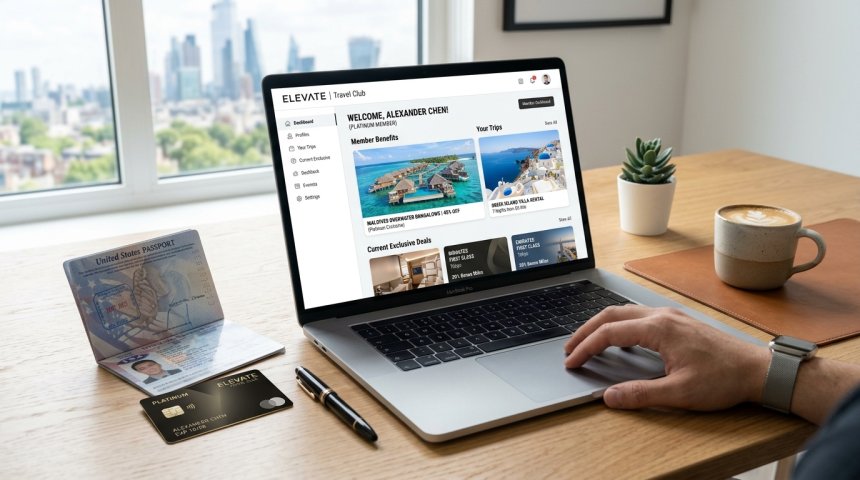
In 2026, as dynamic pricing and deal fatigue reshape how Americans book their trips, a quietly powerful business model is having its moment: the travel membership and deal club. Part subscription service, part marketplace, and part curated deal desk, these clubs charge members a recurring fee in exchange for something the open web no longer reliably offers—genuine, member-only value on flights, stays, and experiences. Viewed from a business point of view, the model is a hybrid ecommerce machine: recurring revenue stabilizes the P&L, transactional take rates scale with engagement, and a partner-funded perks layer turns suppliers into co-marketers.
The strategic appeal is easy to state and hard to execute: while online travel agencies earn when travelers simply book, a deal club earns when travelers save. That alignment of incentives—membership fee in, verified savings out—is the entire business in one sentence. Everything that follows is the machinery that makes it true.
What Is a Travel Membership & Deal Club?
A travel membership and deal club is a closed community in which members pay a monthly or annual fee for access to member-only pricing: negotiated hotel rates, flash deals, mistake fares, price-drop protection, room upgrades, and concierge-level curation. The "closed" part is the engine. Because discounts live behind a login wall, suppliers can offer deeper value without publicly undercutting their own rate parity—a mechanism that makes member pricing possible where public discounting is not.
The "hybrid ecommerce" part describes the revenue architecture. Layer one is the subscription itself—predictable, recurring, and independent of booking cycles. Layer two is transactional: a take rate on hotels, experiences, and packages booked through the club. Layer three is retail and partner commerce: travel insurance, gear, eSIMs, seat and baggage add-ons, sponsored placements, and co-branded card economics. A traditional agency sells trips; a hybrid club operates a membership economy with a marketplace inside it.
Why 2026 Is the Moment
Several structural shifts converge this year. Travel costs remain high, and consumers have been trained by years of dynamic pricing to distrust the price they see—creating demand for a trusted intermediary whose job is to find the real deal. Subscription acceptance is at an all-time high; Americans already pay for curation in food, fitness, and media, so paying for curation in travel feels natural.
Meanwhile, the advertising world has gone cookieless, which dramatically raises the value of first-party, logged-in relationships—exactly what a membership model owns. Add AI, which has collapsed the cost of fare monitoring and deal curation, and the result is a moment where the economics of running a deal club are better than they have ever been, precisely when consumers want one.
The Hybrid Ecommerce Engine: Three Revenue Layers
The subscription layer funds the promise. Priced typically between eight and fifteen dollars a month, or seventy-nine to one hundred ninety-nine dollars annually, it covers curation, technology, and support, and it creates the psychological frame in which every deal feels like a dividend on membership. Annual plans are especially valuable: they reduce churn, improve cash flow, and create a twelve-month runway to prove value.
The transactional layer funds the growth. Clubs typically earn an eight to fifteen percent take rate on member bookings in lodging and experiences, plus commissions and ancillaries on flights. The retail and partner layer funds the margin: insurance attach, gear storefronts, upgrade offers, and partner-funded promotions that suppliers subsidize because the club delivers them a high-intent, pre-qualified traveler. The elegance of the model is that each layer hedges the others—subscription revenue survives slow booking seasons, transactional revenue scales with engagement, and partner revenue compounds with audience size.
The Economics of "Member-Only" Pricing
The supply-side secret of the industry is that hotels, tour operators, and even airlines would rather discount privately than publicly. A last-minute allotment of rooms sold openly at forty percent off damages a property's public rate and its relationships with OTAs; the same rooms sold behind a membership wall protect rate parity while filling beds. This is why closed-user-group pricing has become a standard yield-management tool for suppliers—and why deal clubs can access inventory and depth of discount that no public coupon can match.
For the club, the discipline is opacity and honesty in balance: prices are member-only, but the savings must be real and verifiable. The clubs that win publish the comparison, show the math, and let the member's own statement do the marketing.
Unit Economics: The Numbers That Make or Break the Model
The model lives or dies on a small set of numbers: customer acquisition cost, payback period, monthly churn, and the savings-to-fee ratio. The operational heartbeat is the "savings event"—the moment a member books a deal and sees, in dollars, that the club has paid for itself. Best-in-class clubs engineer the first savings event inside the first ninety days, targeting members who save three to five times their annual fee in year one, because a member who has saved is a member who renews.
Churn is the quiet killer. Monthly plans can bleed three to five percent a month if value is not continuously demonstrated; annual plans and savings statements cut that dramatically. The benchmark that matters is LTV to CAC above three, with failed-payment dunning treated as a retention program, not a billing chore—because a surprising share of "churn" is simply a declined card that nobody retried.
Acquisition: Building the Door
Deal clubs grow through a free-to-paid funnel: public deal alerts, SEO-driven deal pages, and email or push notifications that demonstrate value before asking for the fee. Creators and travel newsletters accelerate the top of the funnel, while partnerships—with credit unions, employers, alumni associations, and card issuers—deliver members in batches with built-in trust and lower acquisition cost.
The strategic insight of 2026 is niche-first positioning. A club for everyone competes with everyone; a club for weekend travelers, sleep-tourism seekers, national-park families, or festival circuits owns a community and a content voice that broad players cannot copy. The niche defines the deals, the deals define the value, and the value defines the word of mouth.
Retention: Where the Model Is Won
Acquisition buys a member; retention builds a business. The winning clubs operate retention as a product: monthly savings statements that quantify value, price-drop protection that refunds the difference, anniversary bonuses, tiered perks that reward longevity, and member events that convert a utility into an identity. The psychology is simple and powerful—people do not cancel something that has visibly paid for them.
Support quality is the second retention engine. Travel is emotional and occasionally chaotic; a club that resolves a disrupted trip with a human voice earns loyalty that no discount can buy. In this model, customer service is not a cost center. It is the marketing department for year two.
The Technology Stack Behind the Curtain
Under the hood, a 2026 deal club runs on fare and rate data pipelines, AI-assisted curation that ranks deals by member relevance rather than commission, a loyalty and perks ledger, billing with sophisticated dunning, and a CRM that knows each member's home airport, travel style, and savings history. Much of this is now buyable rather than built: white-label bed banks, booking APIs, and AI concierge tooling let a lean team launch with an enterprise-grade surface.
The build-versus-buy decision should follow the moat: buy the commodity (payments, booking rails), and own the differentiators (curation logic, savings verification, member data). The stack is expensive to get wrong and invisible when right—which is exactly why the best clubs treat technology as supply chain, not decoration.
Compliance, Trust, and the Fine Print
Membership businesses live under a bright regulatory lamp, and in 2026 that lamp is brighter. The FTC's click-to-cancel era means cancellation must be as easy as enrollment—clubs that treat this as a design principle, not a legal burden, convert compliance into brand trust. State auto-renewal statutes add disclosure and consent requirements that vary by jurisdiction, and "save up to 60 percent" claims must be substantiable or they become advertising violations.
Travel-specific rules matter too: seller-of-travel registration in states such as California, Florida, Hawaii, and Washington, plus data-privacy obligations under regimes like the CCPA. The strategic view is simple: in a category historically associated with fine-print traps, transparency is a competitive weapon. The club with the clearest terms wins the trust that drives referrals.
Challenges: Churn, Fatigue, and Disintermediation
No honest assessment skips the risks. Members who do not book quietly drift toward cancellation, so dormant-member reactivation is a permanent discipline. Deal fatigue is real—if every deal feels interchangeable, the club becomes a commodity newsletter. Suppliers may disintermediate when they want direct relationships, and economic downturns compress travel budgets precisely when savings claims are most scrutinized.
The defense against all four is the same: depth over breadth. A club with a sharp niche, verified savings, community, and service is not a list of deals; it is a relationship. Relationships survive cycles that deal lists do not.
A 12-Month Launch Roadmap
Months one and two are for positioning: choose the niche, define the savings promise, and map the competitive landscape. Months three and four secure the supply side—bed-bank and experience partnerships, legal review, and registration where required—while months five through seven build the MVP: billing, deal feed, alerts, and a beta cohort of a few hundred members whose feedback shapes the product.
Months eight and nine launch publicly with the content and partnership engine running; months ten through twelve iterate on the numbers that matter—first-ninety-day savings events, churn cohorts, and take-rate mix—before adding tiers or raising prices. A year, done in this order, produces not just a launch but a learning system.
A Balanced View: Risks and Realities for New Entrants
This is not passive income, and it is not a quick flip. It demands operational discipline, honest marketing, and patience with the compounding mathematics of membership. But for operators who respect the craft, the rewards are durable: recurring revenue, first-party data, supplier relationships, and a community that defends the brand. Few models in travel combine those four assets so cleanly.
Conclusion
The U.S. travel membership and deal club represents a rare convergence of consumer need and structural market change. In 2026, the model stands as a testament to the idea that trust can be a revenue line: travelers pay for a guide who saves them money, suppliers pay for a channel that fills inventory without breaking rates, and the club earns in three layers while keeping both sides honest. By balancing curation with compliance, and growth with retention, the operators of this space continue to attract members, partners, and capital.
FAQs
What exactly is a travel membership & deal club? It is a closed community where members pay a recurring fee for member-only travel pricing—negotiated rates, flash deals, mistake fares, upgrades, and curation. The closed wall lets suppliers discount deeply without damaging public rates, which is what makes the value real.
How is hybrid ecommerce different from a normal travel agency? An agency earns only when bookings happen; a hybrid club earns in three layers—subscriptions, transactional take rates, and retail/partner commerce. That mix makes revenue more predictable and aligns the business with member savings rather than sheer booking volume.
How much should a membership cost? Most U.S. clubs price between eight and fifteen dollars monthly or seventy-nine to one hundred ninety-nine annually, with premium tiers for concierge-level service. The right price is the one a member's first verified savings statement makes feel obvious.
How can clubs afford deep discounts? Through closed-user-group pricing: suppliers offer private discounts to protect rate parity, distressed or last-minute inventory is monetized instead of wasted, and partner-funded promotions shift part of the discount onto suppliers who gain high-intent customers.
Is this model profitable? It can be highly profitable because subscription revenue is recurring and margins improve with scale and partner density. Profitability depends on proving savings early, controlling churn, and keeping acquisition cost below a healthy LTV:CAC ratio—typically above three.
Which regulations matter most? Click-to-cancel and auto-renewal laws, substantiation of savings claims, seller-of-travel registration in states like California, Florida, Hawaii, and Washington, and data-privacy rules such as the CCPA. Treating these as design principles builds the trust that drives referrals.
Beyond Discounts: The Community Layer
The clubs that endure add a fourth layer that is not on the P&L: community. Member meetups, shared itineraries, local chapters, and member-generated reviews turn a utility into a tribe. A deal can be copied; a community cannot. This layer also generates the content and word of mouth that lower acquisition cost quarter after quarter.
The Data Advantage in a Cookieless World
A logged-in membership is a first-party data asset in an industry that has lost its third-party cookies. Knowing each member's home airport, travel rhythm, and savings history powers personalization that open marketplaces cannot match—and, handled responsibly and privately, aggregated insight becomes a valuable service to suppliers as well. In 2026, the membership graph is the moat.
The Role of AI in 2026
AI has become the club's quiet workforce: monitoring fares across millions of routes, ranking deals by member fit, drafting personalized alerts, and answering routine concierge questions at 3 a.m. The human edge remains where it should—taste, trust, and the judgment to reject a high-commission deal that does not serve the member. Technology curates; the brand vouches.
Responsible Growth: A Final Word
As you build or invest in this model, remember that its foundation is a promise: members pay you to be on their side. Honor that with verified savings, honest terms, effortless cancellation, and privacy respected as a default. The clubs that treat members as the product will churn their way to irrelevance; the clubs that treat members as the point will compound for a decade.
In 2026, the "membership economy" in travel is defined by a renewed appreciation for trust. It is found in the savings statement a member screenshots and shares, the supplier who renews an allotment because the club delivered respectful guests, and the moment a family books a trip they thought they could not afford. This business invites you not just to sell, but to serve—to become a lasting part of a story where everyone wins when the member rests well, travels far, and pays fairly. Build the trust, protect the community, and take the time to notice the details; in this business, the true magic is often found in the quietest line of the member's statement: "You saved."
Share
What's Your Reaction?
 Like
0
Like
0
 Dislike
0
Dislike
0
 Love
0
Love
0
 Funny
0
Funny
0
 Angry
0
Angry
0
 Sad
0
Sad
0
 Wow
0
Wow
0