IHOP: How a Breakfast Giant Built Its Billion-Dollar Empire
Discover how IHOP built a billion-dollar breakfast empire. Deep dive into franchise strategy, menu innovation, branding, operations, and the business lessons behind 65+ years of growth.

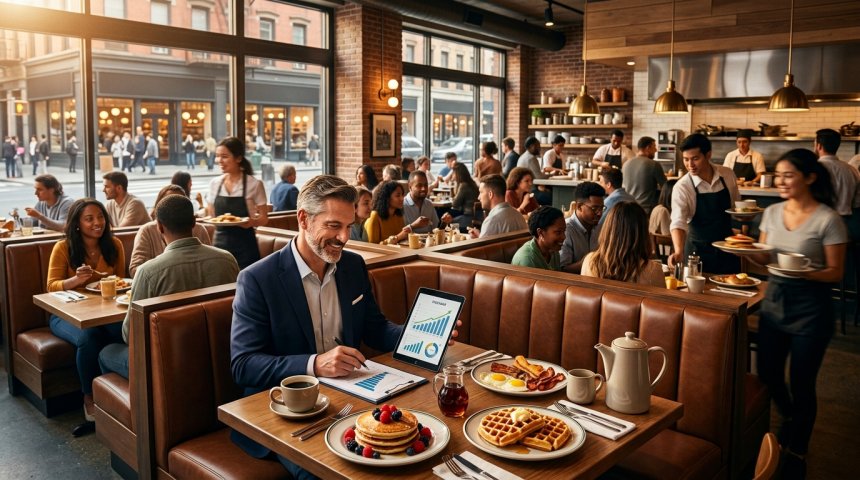
In the pantheon of American restaurant success stories, few brands occupy as distinctive a niche as IHOP. For over six decades, the International House of Pancakes has done something that seems almost deceptively simple yet proves extraordinarily difficult to replicate: it made breakfast a destination. Not a grab-and-go convenience. Not a hotel buffet afterthought. Not a diner side offering. A destination—a place where families gather on Saturday mornings, where night-shift workers find comfort at 2 AM, where birthday celebrations happen over stacks of buttermilk pancakes topped with whipped butter and warm syrup.
Today, IHOP operates nearly 1,700 restaurants across all 50 U.S. states and 15+ countries, generates over $3 billion in annual system-wide sales, and serves hundreds of millions of meals every year. It's a publicly traded company (NYSE: DINE, which also owns Applebee's), a franchise powerhouse with 99% of its locations independently owned and operated, and a cultural institution whose name has become synonymous with pancakes the way Kleenex is synonymous with tissues.
But the IHOP story isn't just about pancakes. It's a masterclass in franchise scaling, brand positioning, menu engineering, operational consistency, and adaptive resilience. It's a case study in how a single-location pancake house in suburban Los Angeles grew into a global breakfast empire through disciplined execution, strategic pivots, and an unwavering commitment to its core promise: affordable, consistent, family-friendly breakfast served any time of day.
This guide dissects the IHOP empire from every angle—the founding vision, the franchise model that fueled exponential growth, the menu innovations that kept the brand relevant across generations, the branding and marketing strategies that embedded IHOP in American culture, the operational systems that ensure consistency across 1,700 locations, the financial mechanics that make the unit economics work, the challenges and controversies the brand has navigated, and the strategic lessons that entrepreneurs, franchise investors, and restaurant operators can apply to their own ventures.
Whether you're a founder studying franchise scaling, a restaurateur analyzing menu engineering, an investor evaluating franchise opportunities, or simply a curious observer of American business history, this deep dive will give you the framework to understand how IHOP built its billion-dollar empire—and what it takes to sustain one.
Let's start at the beginning.
Chapter 1: The Founding — Two Brothers, One Griddle, and a Suburban Dream (1958)
Every empire has an origin story, and IHOP's begins in Toluca Lake, California, in 1958. Jerry Lapin and Al Lapin Jr.—two brothers with no formal restaurant experience but a sharp eye for opportunity—opened the first International House of Pancakes at 5907 Lankershim Boulevard. The location was deliberate: a growing suburban neighborhood in the San Fernando Valley, where post-war families were settling into new homes, buying new cars, and establishing new routines. Weekend breakfast was becoming a ritual, and the Lapins saw an opening.
The Insight That Started It All
The Lapins' insight wasn't complicated, but it was prescient. In 1958, breakfast options were limited. Diners served breakfast, but they were gritty, adult-oriented spaces—not ideal for families with young children. Hotels served breakfast, but only to guests. Fast food was in its infancy (McDonald's had only been franchising for three years), and breakfast wasn't on the menu. Home cooking was the default, but suburban families were increasingly eager for affordable, convenient dining experiences that felt like a treat without breaking the budget.
The Lapins positioned IHOP at the intersection of these trends: a family-friendly restaurant dedicated exclusively to breakfast, priced affordably, located in suburban neighborhoods, and designed to feel welcoming to parents with young children. The menu centered on pancakes—universal, inexpensive to produce, highly customizable, and deeply comforting. But it also included eggs, bacon, sausage, waffles, French toast, and omelets—enough variety to satisfy everyone at the table while keeping the kitchen operation simple and efficient.
The Name: "International House of Pancakes"
The name was a stroke of branding genius. "International" suggested sophistication and worldly appeal—an aspirational quality that elevated pancakes from humble diner fare to something special. "House" conveyed warmth, hospitality, and belonging—a place where you're welcome, not just a customer. "Of Pancakes" anchored the brand to its core product with unmistakable clarity. There was no ambiguity about what you'd get at IHOP. The name was the promise.
The name also had practical advantages. It was distinctive enough to trademark, memorable enough to spread through word-of-mouth, and descriptive enough to require minimal advertising explanation. In an era before digital marketing, when growth depended on roadside signage, newspaper ads, and neighbors telling neighbors, a self-explanatory name was a competitive weapon.
The First Restaurant: Design and Operations
The original IHOP was designed with intentionality that would define the brand for decades:
- Family-friendly atmosphere: Bright lighting, cheerful decor, booth seating for groups, high chairs for toddlers, and a welcoming vibe that signaled "kids are welcome here." This was radical in 1958, when many restaurants implicitly discouraged children.
- Open kitchen visibility: Customers could see the griddles, watch pancakes being flipped, and smell the batter cooking. This transparency built trust and appetite simultaneously.
- Efficient layout: The kitchen was designed for high-volume breakfast production—multiple griddles, organized prep stations, and a flow that minimized steps between cooking and serving. Speed mattered because breakfast customers expect quick service, and table turnover drives revenue.
- Affordable pricing: Pancakes were priced to be accessible to working-class and middle-class families. The goal wasn't maximum margin per item—it was maximum volume through affordability and repeat visits.
The first IHOP was an immediate success. Within months, the Lapins knew they had something scalable. The question wasn't whether the concept worked—it was how fast they could replicate it.
Early Growth: From One to Many (1958–1970s)
The Lapins opened additional locations in Southern California throughout the early 1960s, refining the concept with each new restaurant. They learned what worked (consistent menu, family atmosphere, suburban locations, affordable pricing) and what didn't (overly complex menus, urban locations with high rent, fine-dining pretensions that alienated the core family demographic).
In 1964, the Lapins made the decision that would define IHOP's future: they began franchising. Instead of funding every new location themselves (slow, capital-intensive, geographically limited), they licensed the IHOP concept to independent operators who provided the capital, local market knowledge, and day-to-day management. In exchange, franchisees paid an initial franchise fee and ongoing royalties based on a percentage of gross sales.
This was the inflection point. Franchising transformed IHOP from a regional chain into a national expansion engine. By the end of the 1960s, IHOP had dozens of locations across California and was beginning to expand into neighboring states. By the mid-1970s, IHOP restaurants dotted the country from coast to coast.
Business Lesson: The Lapins' genius wasn't inventing pancakes—it was recognizing that a simple, replicable concept executed consistently across suburban markets could scale through franchising. They didn't need to be the best chefs in America; they needed to build a system that produced consistent results regardless of who was flipping the griddles. That systems-first mindset is the foundation of every successful franchise empire.
Chapter 2: The Franchise Engine — How IHOP Scaled to 1,700 Locations
Franchising is the engine that powered IHOP's growth from a single location to a global empire. Understanding the franchise model—how it works, why it works, and how IHOP optimized it—is essential to understanding the business.
The Franchise Model Explained
At its core, franchising is a licensing arrangement:
- Franchisor (IHOP/Dine Brands): Owns the brand, the systems, the menu, the training programs, the marketing infrastructure, and the supply chain relationships. Licenses these assets to franchisees in exchange for fees.
- Franchisee: An independent business owner who invests their own capital to open and operate an IHOP restaurant under the franchisor's brand and systems. Pays the franchisor for the right to use the brand and access the support infrastructure.
Revenue streams for the franchisor:
- Initial franchise fee: One-time payment when a new franchise agreement is signed. Typically $20,000–$50,000 for IHOP.
- Royalty fee: Ongoing percentage of gross sales, typically 4–6% for IHOP. Paid weekly or monthly.
- Advertising fund contribution: Franchisees contribute a percentage of gross sales (typically 3–5%) to a national/regional advertising fund managed by the franchisor.
- Supply chain margins: The franchisor may earn margins on approved suppliers, proprietary products, or distribution services.
- Training and support fees: Additional fees for initial training, ongoing consulting, or specialized services.
What the franchisee gets:
- Brand recognition: Immediate customer awareness and trust. IHOP's 65+ year reputation drives traffic from day one.
- Proven systems: Operating manuals, kitchen layouts, POS systems, inventory management, staffing models, and service protocols refined over decades.
- Training: Initial training for owners and managers (typically 4–8 weeks at IHOP's training center), plus ongoing training programs.
- Marketing support: National advertising campaigns, local store marketing templates, promotional calendars, and brand guidelines.
- Supply chain access: Approved vendors, negotiated pricing, proprietary ingredients (like IHOP's signature pancake batter mix), and distribution networks.
- Ongoing support: Field consultants, operational audits, menu development, technology updates, and crisis management.
Why Franchising Works for IHOP
Franchising aligns incentives in a way that corporate-owned expansion cannot:
- Franchisees have skin in the game. They've invested $500,000–$2 million of their own money into each location. They're motivated to maximize sales, control costs, and deliver quality because their personal wealth depends on it. Corporate managers, no matter how well-compensated, rarely match the intensity of an owner-operator.
- Franchisees bring local knowledge. A franchisee in Des Moines understands the Des Moines market better than a corporate executive in Glendale, California. They know the best locations, the local competition, the community events, and the hiring pool.
- Franchising accelerates growth without corporate capital. IHOP doesn't need to fund $1M+ build-outs for each new location. Franchisees provide the capital. IHOP provides the brand and systems. Growth scales with franchisee investment, not corporate balance sheet capacity.
- Risk is distributed. If a location underperforms, the franchisee absorbs the loss, not the franchisor. The franchisor's downside is limited to lost royalties and potential brand damage—not direct operating losses.
IHOP's Franchise Optimization Strategies
Over six decades, IHOP has refined its franchise model to maximize growth, consistency, and profitability:
1. Multi-Unit Franchise Agreements Rather than awarding single-unit franchises, IHOP increasingly favors multi-unit agreements where a single franchisee commits to opening multiple locations over a defined period. Multi-unit franchisees achieve economies of scale (shared management, bulk purchasing, cross-training staff) and are more likely to have the capital and operational expertise to execute consistently. Today, the majority of IHOP franchisees operate multiple locations—some operate 20, 50, or even 100+ restaurants.
2. Area Development Agreements IHOP awards exclusive development rights for specific geographic territories. A franchisee might secure the rights to develop 10 locations in central Florida over 5 years. This gives the franchisee territorial protection (no competing IHOPs in their zone) and gives IHOP a committed partner with incentive to saturate the market efficiently.
3. Rigorous Franchisee Selection IHOP doesn't sell franchises to anyone with a checkbook. The selection process evaluates:
- Financial qualifications: Minimum net worth ($1.5M+) and liquid capital ($500K+) requirements ensure franchisees can fund the build-out and sustain operations during ramp-up.
- Operational experience: Preference for candidates with restaurant management, multi-unit operations, or franchise experience. First-time restaurateurs face steeper scrutiny.
- Cultural fit: Alignment with IHOP's family-friendly values, customer service philosophy, and operational standards. The brand protects its culture aggressively.
- Market knowledge: Understanding of the proposed territory's demographics, competition, and real estate landscape.
4. Comprehensive Training Programs IHOP's training program is among the most rigorous in the franchise industry:
- Initial training: 4–6 weeks at IHOP's training center in Glendale, California, covering kitchen operations, front-of-house service, management systems, financial controls, and brand standards.
- On-site training: Field trainers work alongside the franchisee's team during the first weeks of operation to ensure smooth launch execution.
- Ongoing training: Regular workshops, webinars, and certification programs for managers and crew on new menu items, service protocols, safety standards, and technology updates.
- Franchisee advisory councils: Elected franchisee representatives collaborate with corporate leadership on menu development, marketing strategies, operational improvements, and policy changes. This two-way feedback loop ensures franchisee voices shape the brand's direction.
5. Operational Audits and Quality Standards IHOP conducts regular operational audits (announced and unannounced) to verify compliance with brand standards:
- Food quality: Pancake consistency, ingredient freshness, portion sizes, cooking temperatures, and presentation standards.
- Service standards: Greeting protocols, order accuracy, speed of service, cleanliness, and customer interaction quality.
- Facility standards: Building maintenance, signage condition, parking lot cleanliness, restroom conditions, and overall ambiance.
- Financial compliance: Royalty reporting accuracy, advertising fund contributions, and approved supplier usage.
Franchisees who consistently fail audits face corrective action plans, additional training requirements, or ultimately franchise agreement termination. This enforcement mechanism protects the brand's consistency across 1,700 locations—a customer in Boise should have essentially the same IHOP experience as a customer in Miami.
6. Supply Chain Management IHOP maintains tight control over its supply chain to ensure consistency and protect proprietary recipes:
- Approved suppliers: Franchisees must purchase key ingredients (pancake batter mix, syrups, branded packaging) from IHOP-approved suppliers. This ensures product consistency and generates supply chain revenue for the franchisor.
- Proprietary products: IHOP's signature pancake batter mix is a proprietary formula supplied exclusively through approved channels. This is a key differentiator—franchisees can't replicate the exact product independently.
- Distribution networks: Regional distribution centers deliver approved products to franchisees on scheduled routes, ensuring freshness and reducing individual franchisee logistics burden.
- Negotiated pricing: IHOP leverages its collective purchasing power (1,700 locations) to negotiate favorable pricing from suppliers, passing some savings to franchisees while capturing margin for the franchisor.
Business Lesson: IHOP's franchise success isn't accidental—it's engineered. Every element of the franchise model (selection, training, support, auditing, supply chain) is designed to produce consistent results across thousands of independently owned locations. The brand's value proposition to customers ("you know what you'll get at IHOP") depends entirely on this consistency. Franchise systems that sacrifice consistency for growth speed inevitably erode the brand equity that drives traffic in the first place.
Chapter 3: Menu Engineering — The Science Behind the Stack
IHOP's menu is a masterclass in menu engineering—the strategic design of a restaurant's offerings to maximize profitability, customer satisfaction, and operational efficiency. Every item on the menu exists for a reason, and the reasons reveal sophisticated business thinking.
The Core Philosophy: Pancakes as the Anchor
Pancakes are IHOP's raison d'être, and they serve multiple strategic functions:
- Low food cost: Pancake ingredients (flour, eggs, milk, sugar, baking powder) are among the cheapest in the restaurant industry. Food cost for a stack of pancakes is typically 15–20% of the menu price, compared to 30–35% for entrees like steak or seafood. High-margin items subsidize lower-margin items and drive overall profitability.
- High customization: Pancakes are a blank canvas. Add blueberries, chocolate chips, strawberries, pecans, whipped cream, flavored syrups, or powdered sugar—each modification increases the ticket price with minimal incremental cost. Customization drives upsell and perceived value.
- Universal appeal: Pancakes transcend age, culture, and dietary preference (with modifications). Kids love them. Adults love them. They're comfort food with broad demographic reach.
- Operational simplicity: Pancakes cook quickly on a flat-top griddle, require minimal prep, and can be produced in high volume with consistent results. Kitchen efficiency drives table turnover, which drives revenue per square foot.
- Brand identity: Pancakes are IHOP's signature. The brand name promises them, the marketing reinforces them, and the customer expectation is built around them. This clarity simplifies marketing and strengthens brand recall.
Menu Architecture: The Four Pillars
IHOP's menu is structured around four pillars that balance variety with operational efficiency:
Pillar 1: Pancakes and Waffles (The Core)
- Buttermilk pancakes (the flagship)
- Flavored pancakes (blueberry, chocolate chip, strawberry, pecan, red velvet, etc.)
- Specialty pancakes (Rooty Tooty Fresh 'N Fruity, Harvest Grain 'N Nut, etc.)
- Waffles (Belgian, classic, topped variations)
- French toast and crepes
This pillar delivers the brand promise and drives the highest margins.
Pillar 2: Eggs and Breakfast Classics (The Foundation)
- Egg combos (eggs with bacon, sausage, ham, or steak)
- Omelets (country, veggie, meat lover's, custom)
- Breakfast samplers and skillets
- Biscuits and gravy
- Hash browns and sides
This pillar satisfies customers who want savory breakfast and increases ticket averages through combo meals.
Pillar 3: Lunch and Dinner (The Daypart Expansion)
- Burgers and sandwiches
- Salads
- Chicken dishes
- Pasta (limited)
- Appetizers and desserts
This pillar enables IHOP to capture lunch and dinner traffic, transforming the brand from a breakfast-only destination into an all-day restaurant. Critical for maximizing revenue per square foot and spreading fixed costs across more hours of operation.
Pillar 4: Limited-Time Offers (LTOs) and Seasonal Items (The Innovation Engine)
- Seasonal pancakes (pumpkin spice in fall, peppermint in winter, berry medley in summer)
- Holiday-themed items
- Collaborative promotions (movie tie-ins, sports partnerships)
- Test items that may become permanent based on performance
This pillar drives urgency, media attention, social media buzz, and repeat visits from customers eager to try new items before they disappear.
Menu Pricing Strategy
IHOP's pricing strategy balances affordability with profitability:
- Value perception: IHOP positions itself as affordable family dining. The average check per person is $10–$15, significantly below casual dining competitors ($15–$25) and far below fine dining ($40+). This affordability drives volume and frequency—families can afford IHOP weekly, not just monthly.
- Tiered pricing: The menu offers entry-level items (plain pancakes, basic egg combos) at the lowest price points, mid-tier items (flavored pancakes, specialty combos) at moderate prices, and premium items (steak and eggs, loaded skillets) at higher prices. This tiering captures customers across income levels and encourages trading up.
- Combo meals: Bundled meals (pancakes + eggs + meat + beverage) offer perceived value while increasing ticket averages. Combos simplify ordering, speed up service, and increase profitability through bundled pricing psychology.
- Add-ons and upsells: Whipped cream, extra toppings, premium syrups, beverages, and appetizers are positioned as add-ons that increase ticket averages with minimal incremental cost. Servers are trained to suggest add-ons as part of the ordering conversation.
- Kids menu: Priced aggressively low ($5–$8) to attract families. Kids meals are often near-breakeven or slightly loss-leading, but they drive adult spending (parents order full-price meals) and build lifelong brand loyalty (kids who grow up eating IHOP become adult customers).
Menu Innovation and Adaptation
IHOP's menu has evolved significantly over six decades, reflecting changing consumer preferences, dietary trends, and competitive dynamics:
1960s–1970s: The Foundation Era
- Core menu established: buttermilk pancakes, eggs, bacon, sausage, waffles, French toast
- Simple, affordable, family-focused
- Limited variety but high consistency
1980s–1990s: Expansion Era
- Lunch and dinner items added to capture all-day traffic
- Specialty pancakes introduced (Rooty Tooty Fresh 'N Fruity became iconic)
- Salad and lighter options added for health-conscious customers
- Kids menu formalized
2000s: Health and Variety Era
- Whole grain pancakes, egg white omelets, and fruit cups added for health-conscious diners
- Turkey bacon and turkey sausage alternatives introduced
- Portion size options (short stacks vs. full stacks) for calorie-conscious customers
- Coffee and beverage program upgraded
2010s: Indulgence and Innovation Era
- Loaded pancakes (topped with candy, cookies, cereal) for social media virality
- Seasonal LTOs accelerated (pumpkin spice, peppermint, s'mores)
- Plant-based options introduced (vegan pancakes, Impossible Burger)
- Alcohol service added in select locations (mimosas, Bloody Marys) for brunch traffic
2020s: Digital and Dietary Era
- App-based ordering, delivery integration, and loyalty programs
- Expanded plant-based and allergen-friendly options
- Ghost kitchen and delivery-only formats tested
- Value menu and combo deals emphasized during economic uncertainty
The Rooty Tooty Fresh 'N Fruity: A Case Study in Menu Icon Creation
No discussion of IHOP's menu is complete without the Rooty Tooty Fresh 'N Fruity—a dish that transcended the menu to become a cultural artifact. Introduced in the 1970s, the RTFNF combines pancakes, eggs, bacon, sausage, and fresh fruit (strawberries, blueberries, bananas) on a single plate. It's visually impressive, photogenic, indulgent, and reasonably priced.
The RTFNF succeeded because it hit every menu engineering principle:
- Visual impact: The colorful fruit and stacked components look impressive on the plate and in photos.
- Perceived value: Multiple components on one plate signal abundance and value.
- Broad appeal: Sweet (pancakes, fruit) and savory (eggs, meat) elements satisfy everyone at the table.
- Operational efficiency: Components are standard menu items assembled together—no special prep required.
- Memorable name: "Rooty Tooty Fresh 'N Fruity" is playful, distinctive, and impossible to confuse with any competitor's offering.
The RTFNF has been on the menu for 50+ years, generating billions in cumulative sales. It's proof that menu icons aren't accidents—they're engineered through the intersection of customer appeal, operational feasibility, and brand distinctiveness.
Business Lesson: Great menus aren't collections of dishes—they're strategic systems. Every item serves a purpose: driving margin, attracting a demographic, enabling operational efficiency, creating brand differentiation, or generating buzz. IHOP's menu has evolved for six decades, but the underlying principles (pancakes as the high-margin anchor, tiered pricing for broad appeal, LTOs for urgency, combos for ticket averaging) have remained constant. Menu engineering is a discipline, not an art—and IHOP has practiced it at an elite level for longer than most restaurant chains have existed.
Chapter 4: Branding and Marketing — Embedding IHOP in American Culture
IHOP's brand is one of the most recognizable in American dining. The blue roof, the logo, the name, the pancake imagery—these elements are embedded in the cultural consciousness of hundreds of millions of Americans. This didn't happen by accident. It's the result of six decades of consistent, strategic brand building.
Brand Identity: The Visual and Verbal System
The Name: "International House of Pancakes" remains one of the most effective restaurant names ever created. It's descriptive, aspirational, memorable, and ownable. The abbreviation "IHOP" is equally powerful—four letters, easy to pronounce, instantly recognizable, and versatile across media (signage, apps, hashtags, merchandise).
The Logo: The IHOP logo has evolved over six decades but maintained core elements: the distinctive lettering, the pancake imagery, and the blue color palette. The current logo features a clean, modern typeface with a subtle pancake stack integrated into the design. The blue color conveys trust, reliability, and calm—appropriate for a family-friendly brand. The logo works at every scale, from highway billboards to mobile app icons.
The Blue Roof: IHOP's signature blue roof is one of the most recognizable architectural elements in American roadside dining. The bright blue color stands out against the typical beige, brown, and gray of commercial strip malls and highway corridors. It's visible from a distance, instantly identifiable, and functions as a beacon for hungry drivers. The blue roof is a physical manifestation of the brand—a landmark that says "breakfast is here" without a single word.
The Tagline and Messaging: IHOP's messaging has consistently reinforced its core promise: affordable, family-friendly breakfast served any time of day. Taglines have varied over the decades ("Come Hungry. Leave Happy." / "America's Pancake Kitchen" / "Pancakes. Any Time."), but the underlying message has remained constant: IHOP is where you go for pancakes, breakfast, and family meals, any time you want them.
Marketing Strategy: From Billboards to TikTok
IHOP's marketing has evolved with media consumption habits while maintaining consistent brand messaging:
1960s–1980s: The Roadside Era
- Highway billboards and roadside signs drove awareness among car-traveling families
- Local newspaper and radio ads promoted openings and specials
- Word-of-mouth and community presence built local loyalty
- TV commercials began in the 1970s, featuring families enjoying breakfast together
1990s–2000s: The Mass Media Era
- National TV campaigns on broadcast and cable networks
- Print advertising in family magazines and Sunday newspaper inserts
- Sponsorships of family-oriented TV shows and events
- Coupon programs and value meal promotions drove trial and frequency
2010s: The Digital Transition Era
- Social media presence (Facebook, Instagram, Twitter) enabled direct customer engagement
- Viral marketing campaigns (the 2018 "IHOb" rebrand—more on this below) generated massive earned media
- Mobile app launch enabled ordering, loyalty rewards, and personalized offers
- Influencer partnerships and user-generated content campaigns amplified reach
2020s: The Omnichannel Era
- TikTok, Instagram Reels, and YouTube Shorts for short-form video content
- Delivery platform integration (DoorDash, Uber Eats, Grubhub) expanded access
- Loyalty program (MyIHOP) drives repeat visits through points, rewards, and personalized offers
- Programmatic digital advertising targets customers based on location, behavior, and demographics
- Email and SMS marketing deliver personalized promotions based on purchase history
The IHOb Stunt: A Masterclass in Viral Marketing
In June 2018, IHOP executed one of the most audacious marketing stunts in restaurant history: it temporarily rebranded as "IHOb"—International House of Burgers. The announcement, posted on social media with a cryptic message about "flipping" the brand, went viral instantly. News outlets covered it. Social media exploded with memes, jokes, and speculation. Competitors responded with their own puns. The internet debated whether it was real, a prank, or a desperate pivot.
After a week of sustained buzz, IHOP revealed the truth: it was a marketing stunt to promote its burger menu and generate attention. The brand reverted to IHOP, but the campaign had achieved its objectives:
- Earned media value: Estimated at $50M–$100M+ in free media coverage—far exceeding the cost of any paid campaign.
- Social engagement: Millions of mentions, shares, and comments across platforms. IHOP's social following surged.
- Menu awareness: Customers who didn't know IHOP served burgers were suddenly aware. Burger sales increased significantly during and after the campaign.
- Brand relevance: The stunt demonstrated that a 60-year-old brand could still surprise, delight, and engage modern audiences. It refreshed IHOP's image without changing its core identity.
The IHOb stunt is studied in marketing classrooms as an example of high-risk, high-reward viral marketing. It worked because:
- It was unexpected: No one saw it coming. Surprise drives attention.
- It was shareable: The concept was simple, visual, and inherently meme-worthy.
- It had a payoff: The reveal gave people a reason to talk about it twice—once for the announcement, once for the reveal.
- It served a business purpose: Beyond buzz, it promoted an underperforming menu category (burgers) and drove measurable sales lift.
- It didn't damage the core brand: The temporary nature of the change reassured loyalists that IHOP wasn't abandoning pancakes.
Business Lesson: Great marketing doesn't always require great budgets—it requires great ideas. The IHOb stunt cost a fraction of a traditional national ad campaign but generated exponentially more attention. The key ingredients were creativity, timing, execution, and a clear business objective behind the spectacle. Buzz without purpose is noise; buzz with purpose is growth.
Community Engagement and Local Marketing
While national campaigns build brand awareness, local marketing drives foot traffic. IHOP franchisees execute local marketing strategies tailored to their communities:
- School partnerships: Sponsorships of school events, fundraising nights (percentage of sales donated to schools), and kids-eat-free promotions attract families.
- Sports sponsorships: Little League teams, high school athletics, and local sports leagues receive sponsorships in exchange for brand visibility and family attendance.
- Community events: Participation in local festivals, parades, charity runs, and holiday events builds community goodwill and brand presence.
- First responder and military discounts: Discounts for police, fire, military, and healthcare workers build loyalty among influential community members.
- Grand opening events: New location openings feature ribbon-cutting ceremonies, free samples, face painting, and promotional giveaways to generate trial and word-of-mouth.
Loyalty Program: MyIHOP
Launched in 2019, the MyIHOP loyalty program is a critical tool for driving repeat visits and customer lifetime value:
- Points-based rewards: Customers earn points for every dollar spent, redeemable for free menu items.
- Personalized offers: Based on purchase history, the app delivers targeted promotions (e.g., "You love our blueberry pancakes—here's a discount on your next stack").
- Birthday rewards: Free meal or dessert on the customer's birthday drives celebratory visits.
- Exclusive access: Loyalty members get early access to LTOs, secret menu items, and special events.
- Data collection: The program captures purchase data, visit frequency, and preferences—enabling precision marketing and menu optimization.
As of 2026, MyIHOP has tens of millions of members, representing a significant portion of IHOP's customer base. Loyalty members visit more frequently, spend more per visit, and are less price-sensitive than non-members—making them the most profitable customer segment.
Business Lesson: Brand building is a marathon, not a sprint. IHOP's brand equity wasn't built in a single campaign—it was built through six decades of consistent messaging, visual identity, customer experience, and community presence. The IHOb stunt worked because it had 60 years of brand equity to leverage. Viral moments amplify existing brands; they don't create them from scratch. Invest in consistent brand building over time, and you create the foundation for breakthrough moments when opportunities arise.
Chapter 5: Operations — The Machinery Behind the Magic
Behind every IHOP meal is a sophisticated operational system designed to deliver consistent quality, speed, and value across 1,700 locations. Operations are the unglamorous backbone of the restaurant business—the part customers never see but immediately notice when it fails.
Kitchen Operations: The Griddle Economy
IHOP's kitchen is designed around the flat-top griddle—the central piece of equipment that cooks pancakes, eggs, bacon, sausage, and hash browns simultaneously. This design choice has profound operational implications:
- Equipment efficiency: A single griddle can produce multiple menu items simultaneously, maximizing throughput per square foot of kitchen space.
- Labor efficiency: One cook can manage multiple items on the griddle, reducing labor cost per meal. Cross-training enables flexibility—any cook can handle any station during rush periods.
- Speed: Griddle cooking is fast. Pancakes cook in 2–3 minutes per side. Eggs cook in 1–2 minutes. Bacon and sausage cook in 3–5 minutes. Fast cooking enables fast table turnover, which drives revenue per seat.
- Consistency: Standardized cooking times, temperatures, and techniques ensure that a pancake cooked in Seattle tastes the same as a pancake cooked in Orlando. Consistency is the brand promise delivered operationally.
Front-of-House Operations: The Service Sequence
IHOP's front-of-house service follows a standardized sequence designed to balance speed, friendliness, and upsell:
- Greeting: Host greets customers within 30 seconds of entry, confirms party size, and seats them promptly. Wait time target: under 5 minutes during peak hours.
- Welcome and beverage service: Server greets the table within 1 minute of seating, introduces themselves, and takes beverage orders immediately. Beverages are delivered within 3 minutes.
- Order taking: Server presents the menu, highlights daily specials and LTOs, answers questions, and takes the order within 5 minutes of beverage delivery. Upsell suggestions (add whipped cream, upgrade to combo, add appetizer) are woven into the conversation naturally.
- Order delivery: Food is delivered within 10–12 minutes of order placement. Hot food is served hot; cold items are served cold. Presentation standards are verified before leaving the kitchen.
- Check-back: Server returns within 2 minutes of food delivery to confirm satisfaction, refill beverages, and address any issues. This touchpoint catches problems before they escalate and demonstrates attentiveness.
- Dessert/add-on offer: After the main course, server offers dessert, coffee refills, or to-go items. This final upsell opportunity increases ticket averages.
- Payment and farewell: Check is presented promptly upon request. Payment is processed efficiently. Server thanks the customer by name (if known from loyalty program or credit card) and invites them to return.
This sequence is trained, measured, and audited across all locations. Speed of service, order accuracy, and customer satisfaction scores are tracked through POS data, customer surveys, and mystery shopper programs.
Technology Infrastructure
IHOP's technology stack supports operations, customer experience, and data-driven decision-making:
- Point-of-Sale (POS) System: Integrated POS terminals manage orders, payments, inventory tracking, and sales reporting. Orders are routed directly to kitchen display systems, reducing errors and speeding up service.
- Kitchen Display Systems (KDS): Digital screens in the kitchen replace paper tickets, displaying orders in real-time with timers, modifiers, and priority flags. KDS improves order accuracy, reduces waste, and enables real-time throughput monitoring.
- Inventory Management: Automated inventory tracking monitors ingredient usage, triggers reorder alerts, and identifies waste patterns. This reduces food cost, minimizes stockouts, and optimizes ordering.
- Labor Management: Scheduling software forecasts demand based on historical sales data, local events, and weather patterns, optimizing staff scheduling to match anticipated traffic. This reduces labor cost during slow periods and prevents understaffing during rushes.
- Customer Relationship Management (CRM): The MyIHOP loyalty program integrates with the POS to capture customer data, track visit frequency, and deliver personalized offers. CRM data informs menu development, marketing strategies, and operational decisions.
- Delivery Integration: APIs connect IHOP's POS to third-party delivery platforms (DoorDash, Uber Eats, Grubhub), enabling seamless order flow from delivery apps to kitchen to delivery driver.
- Back-Office Reporting: Dashboards provide franchisees and corporate leadership with real-time visibility into sales, labor cost, food cost, customer satisfaction, and operational metrics across all locations.
Quality Control and Consistency Systems
Maintaining consistency across 1,700 independently owned locations is IHOP's greatest operational challenge. The systems that enforce consistency include:
- Standardized Recipes: Every menu item has a detailed recipe card specifying exact ingredients, quantities, cooking times, temperatures, and presentation standards. Recipes are tested and approved by corporate culinary teams before rollout.
- Portion Control: Measured scoops, scales, and portion guides ensure consistent serving sizes across locations. This controls food cost and ensures customers receive the same quantity regardless of location.
- Cooking Standards: Timers, thermometers, and visual guides standardize cooking results. Pancakes are cooked to a specific golden-brown color. Eggs are cooked to specific doneness levels. Bacon is cooked to a specific crispness. These standards are non-negotiable.
- Mystery Shopper Programs: Independent evaluators visit locations unannounced, ordering meals and evaluating food quality, service speed, cleanliness, and adherence to brand standards. Results are reported to franchisees and corporate leadership, triggering corrective action when standards slip.
- Customer Feedback Systems: Post-visit surveys (via receipt codes, app prompts, or email) capture customer satisfaction data. Negative feedback triggers immediate follow-up from management. Aggregate feedback data informs menu, service, and operational improvements.
- Field Consultant Network: IHOP employs field consultants who visit franchise locations regularly, providing coaching, conducting audits, and supporting operational improvements. Consultants are the bridge between corporate standards and franchisee execution.
Business Lesson: Operations are the delivery mechanism for the brand promise. IHOP's brand promises consistent, affordable, family-friendly breakfast. If the pancakes are burnt, the service is slow, or the restaurant is dirty, the brand promise is broken—regardless of how brilliant the marketing is. Operational excellence isn't optional; it's the foundation that everything else rests on. Invest in systems, training, and quality control relentlessly, because operational failures compound faster than operational successes.
Chapter 6: Financial Mechanics — The Unit Economics of an IHOP Franchise
Understanding the financial mechanics of an IHOP franchise reveals why the model attracts investors and how the unit economics generate returns. Let's break down the numbers.
Initial Investment
Opening an IHOP franchise requires a significant upfront investment:
- Franchise fee: $20,000–$50,000 (one-time, paid to IHOP/Dine Brands)
- Real estate and build-out: $1.5M–$3.5M depending on location, size, and whether it's a new build or conversion. Includes land acquisition or leasehold improvements, construction, kitchen equipment, furniture, fixtures, signage, and parking lot.
- Equipment: $300,000–$600,000 for kitchen equipment (griddles, ovens, refrigeration, dishwashers), POS systems, furniture, and fixtures.
- Initial inventory: $30,000–$50,000 for food, beverages, packaging, and supplies.
- Working capital: $100,000–$250,000 to cover operating expenses during the ramp-up period before the restaurant reaches breakeven.
- Training and travel: $10,000–$20,000 for initial training at IHOP's training center, including travel and lodging.
- Insurance, licenses, and permits: $20,000–$50,000 for liability insurance, workers' compensation, health permits, business licenses, and signage permits.
Total initial investment: $2M–$4.5M per location. This is a significant barrier to entry, which is intentional—IHOP wants franchisees with sufficient capital to execute properly and sustain operations during ramp-up.
Ongoing Fees
Franchisees pay ongoing fees to IHOP/Dine Brands:
- Royalty fee: 4–5% of gross sales, paid weekly or monthly. On a restaurant generating $2.5M in annual sales, this equals $100,000–$125,000/year.
- Advertising fund contribution: 3–4% of gross sales, paid into a national/regional advertising fund managed by IHOP. On $2.5M in sales, this equals $75,000–$100,000/year.
- Technology fees: $500–$1,500/month for POS, KDS, loyalty program, and back-office software access.
- Training and support fees: Occasional fees for additional training, consulting, or specialized services.
Total ongoing fees: Approximately 8–10% of gross sales, plus fixed technology fees.
Revenue and Profitability
A typical IHOP restaurant generates:
- Annual gross sales: $2M–$3.5M depending on location, market, and operational quality. Top-performing locations exceed $4M.
- Average check per person: $10–$15
- Daily customer count: 300–600 customers depending on location and day of week
- Table turnover: 3–5 turns per day during peak hours
Expense breakdown (as percentage of gross sales):
- Food and beverage cost: 25–30% (industry average for casual dining)
- Labor cost: 30–35% (kitchen staff, servers, hosts, managers)
- Occupancy cost (rent/mortgage, utilities, maintenance): 8–12%
- Royalties and advertising fees: 8–10%
- Insurance, supplies, repairs, and miscellaneous: 5–8%
- Owner's profit (EBITDA): 10–18% for well-operated locations
Annual profit (EBITDA): On a $2.5M gross sales restaurant with 15% EBITDA margin, the franchisee earns $375,000/year before debt service, taxes, and owner compensation. After debt service on the initial investment (assuming $3M financed at 7% over 10 years = ~$420,000/year debt service), the net cash flow may be negative in early years until debt is paid down or sales grow. Mature, debt-free locations generate strong cash flow.
Return on Investment (ROI):
- Payback period: 5–8 years to recoup the initial investment through cumulative cash flow, assuming solid operations and sales growth.
- Internal Rate of Return (IRR): 12–20% for well-operated locations over a 10–20 year horizon. Top performers exceed 25%.
- Resale value: Established IHOP franchises sell for 3–5x EBITDA, meaning a $375,000 EBITDA restaurant could sell for $1.1M–$1.9M after debt payoff.
System-Wide Financial Performance
At the system level (all 1,700 locations combined):
- System-wide sales: $3B+ annually
- Average Unit Volume (AUV): $2M–$2.5M per location
- Franchisor revenue (royalties + advertising fees + supply chain): $250M–$350M annually
- Franchisor operating profit: $100M–$150M annually (after corporate overhead, marketing, R&D, and support costs)
Dine Brands Global (IHOP's parent company, which also owns Applebee's) reports these figures in its SEC filings, providing transparency into the financial health of the franchise system.
Business Lesson: The franchise model generates attractive returns for both franchisor and franchisee when the unit economics are sound. IHOP's model works because the initial investment, while substantial, is proportional to the revenue potential; the ongoing fees are reasonable relative to the support provided; and the operating margins are sufficient to reward franchisee effort and capital. Franchise models that extract too much from franchisees (excessive royalties, mandatory purchases at inflated prices, inadequate support) eventually face franchisee rebellion, litigation, and system decline. Sustainable franchise systems balance franchisor profitability with franchisee viability.
Chapter 7: Challenges and Controversies — Navigating Headwinds
No six-decade empire avoids challenges. IHOP has faced its share of headwinds, controversies, and existential threats—and how it navigated them reveals the resilience and adaptability required to sustain a billion-dollar brand.
Challenge 1: The Breakfast-Only Perception
For decades, IHOP struggled with a perception problem: customers viewed it as a breakfast-only restaurant, limiting its ability to capture lunch and dinner traffic. Despite adding lunch and dinner items to the menu in the 1980s, the "breakfast-only" perception persisted. Customers defaulted to other restaurants for lunch and dinner, leaving IHOP's dining rooms empty during peak lunch and dinner hours.
Response: IHOP attacked the perception through multiple strategies:
- Menu expansion: Continuously adding and promoting lunch/dinner items (burgers, salads, chicken, pasta) to signal "we're not just breakfast."
- All-day breakfast positioning: Reframing the narrative from "breakfast-only" to "breakfast any time"—you can get pancakes at 2 PM or 8 PM, which is a differentiator, not a limitation.
- Marketing campaigns: Ads featuring lunch and dinner items, emphasizing "come for breakfast, stay for lunch, return for dinner."
- Alcohol service: Adding mimosas, Bloody Marys, and beer in select locations to attract brunch and lunch crowds.
- Interior refresh: Updating restaurant interiors to feel less "breakfast diner" and more "casual dining," signaling broader appeal.
The perception shift has been gradual but measurable. Lunch and dinner now represent a meaningful portion of IHOP's sales, though breakfast remains the dominant daypart.
Challenge 2: The IHOb Stunt Backlash
While the IHOb burger rebrand generated massive buzz, it also triggered backlash from loyal customers who felt the brand was abandoning its pancake heritage. Social media comments included accusations of betrayal, concerns about brand confusion, and skepticism about the burger menu's quality. Some franchisees worried the stunt would alienate core customers without delivering lasting burger sales.
Response: IHOP managed the backlash through:
- Clear communication: Quickly clarifying that the rebrand was temporary and pancakes remained the core offering.
- Reassurance to franchisees: Providing talking points, FAQ documents, and corporate support to help franchisees address customer concerns.
- Measured expectations: Acknowledging that the stunt was a marketing tactic, not a strategic pivot, and that burger sales would be evaluated on their own merits post-campaign.
- Return to core: Reverting to IHOP branding promptly and reinforcing pancake-centric marketing to reassure loyalists.
The backlash was manageable because the stunt was time-limited and the core brand remained intact. A permanent rebrand would have triggered far more severe consequences.
Challenge 3: Health and Wellness Trends
The rise of health consciousness, calorie counting, and dietary restrictions (gluten-free, vegan, keto, paleo) posed a challenge to IHOP's indulgent, carb-heavy menu. Pancakes, bacon, and syrup are not aligned with modern wellness trends, and health-conscious consumers increasingly avoided IHOP in favor of salad chains, smoothie bars, and fast-casual concepts with healthier positioning.
Response: IHOP adapted without abandoning its core:
- Healthier menu options: Added whole grain pancakes, egg white omelets, fruit cups, turkey bacon/sausage, and salads.
- Portion flexibility: Offered short stacks (fewer pancakes) and lighter combos for calorie-conscious customers.
- Nutritional transparency: Published nutritional information online and in-store, enabling informed choices.
- Plant-based options: Introduced vegan pancakes, Impossible Burger, and dairy-free alternatives.
- Balanced messaging: Continued promoting indulgent items (pancakes are a treat, not an everyday meal) while offering healthier alternatives for routine visits.
The strategy acknowledges that IHOP's core appeal is indulgence and comfort, but provides options for customers who want moderation or have dietary restrictions. The brand doesn't try to be a health food restaurant—it tries to be a restaurant that accommodates health-conscious customers without alienating its core indulgence-seeking audience.
Challenge 4: Labor Shortages and Wage Pressure
The restaurant industry has faced persistent labor shortages since 2020, driven by pandemic-related workforce exits, wage competition from retail and logistics, and shifting worker expectations around flexibility and compensation. IHOP, like all restaurant chains, struggled to hire and retain kitchen staff, servers, and managers.
Response:
- Wage increases: Raised hourly wages above market rates in competitive labor markets to attract and retain staff.
- Flexible scheduling: Offered more flexible shifts, part-time options, and predictable schedules to accommodate worker preferences.
- Benefits expansion: Extended benefits (health insurance, paid time off, education assistance) to part-time employees where feasible.
- Technology investment: Implemented self-ordering kiosks, mobile ordering, and QR code menus to reduce front-of-house labor requirements.
- Simplified menus: Reduced menu complexity during peak labor shortage periods to ease kitchen workload and training requirements.
- Franchisee support: Provided recruiting resources, retention best practices, and labor cost management tools to franchisees.
Labor cost remains a structural challenge for the restaurant industry. IHOP's response combines wage competitiveness, operational efficiency, and technology adoption to manage the pressure without sacrificing service quality.
Challenge 5: Delivery and Off-Premise Disruption
The rise of third-party delivery platforms (DoorDash, Uber Eats, Grubhub) disrupted the restaurant industry's traditional dine-in model. While delivery expanded access and convenience, it also introduced challenges:
- Commission fees: Delivery platforms charge 20–30% commissions, eroding already-thin restaurant margins.
- Quality degradation: Pancakes, eggs, and bacon don't travel well. Soggy pancakes and cold eggs damage the brand experience.
- Cannibalization: Delivery orders may cannibalize higher-margin dine-in traffic.
- Brand dilution: Delivery packaging and third-party driver interactions reduce control over the customer experience.
Response:
- Delivery-optimized menu: Developed a curated delivery menu featuring items that travel well (pancake kits, breakfast bowls, sandwiches) while excluding items that degrade in transit.
- Packaging innovation: Invested in insulated packaging, compartmentalized containers, and syrup-on-the-side solutions to preserve quality during delivery.
- First-party delivery: Launched IHOP's own delivery service in select markets to avoid third-party commissions and maintain quality control.
- Ghost kitchens: Tested delivery-only kitchen formats in high-demand delivery markets to expand delivery capacity without dine-in overhead.
- Loyalty integration: Integrated delivery orders into the MyIHOP loyalty program to capture customer data and drive repeat delivery orders through the first-party channel.
Delivery is now a permanent, meaningful portion of IHOP's revenue mix. The challenge is managing the margin erosion and quality risks while capturing the convenience-driven demand that delivery represents.
Challenge 6: Economic Cycles and Consumer Discretionary Spending
IHOP is a discretionary spending category. When the economy contracts, inflation rises, or consumer confidence falls, families cut back on restaurant dining before cutting essentials like housing, groceries, and utilities. Economic downturns (2008 financial crisis, 2020 pandemic, 2022–2023 inflation surge) have historically pressured IHOP's same-store sales and traffic.
Response:
- Value menu emphasis: During economic stress, IHOP promotes value meals, combo deals, and kids-eat-free promotions to maintain affordability perception.
- Loyalty program activation: Increases targeted offers to loyalty members during downturns to drive frequency from the most profitable customer segment.
- Cost management: Works with franchisees to optimize labor scheduling, reduce food waste, and renegotiate supplier contracts during downturns.
- Menu engineering: Shifts promotional focus to high-margin items during downturns to protect profitability despite traffic declines.
- Franchisee financial support: Occasionally offers temporary royalty relief, deferred payments, or co-op advertising funds to struggling franchisees during severe downturns.
Economic cycles are unavoidable, but IHOP's affordable positioning provides some recession resilience—when families cut back from $25 casual dining to $12 IHOP, IHOP actually gains share. The brand's value positioning is a defensive advantage during downturns.
Business Lesson: Every long-lived brand faces challenges that threaten its existence. The difference between brands that survive and brands that disappear isn't the absence of challenges—it's the quality of the response. IHOP has navigated perception problems, marketing backlash, health trends, labor shortages, delivery disruption, and economic cycles by adapting tactically while staying true to its strategic core (affordable, family-friendly breakfast). Adaptability within a consistent framework is the hallmark of enduring brands.
Chapter 8: The Modern Era — IHOP in the 2020s and Beyond
As IHOP enters its seventh decade, the brand faces a rapidly evolving restaurant landscape shaped by technology, changing consumer behavior, and new competitive dynamics. Here's how IHOP is positioning itself for the next chapter.
Digital Transformation
IHOP has accelerated its digital transformation across every customer touchpoint:
- Mobile app: The MyIHOP app enables ordering, payment, loyalty rewards, personalized offers, and location finding. App users represent a growing portion of transactions and deliver higher lifetime value than non-app users.
- Online ordering: Web and app-based ordering for pickup and delivery streamlines the off-premise experience and captures customer data.
- Kiosks and tableside tablets: In-store self-ordering kiosks and tableside tablets reduce labor requirements, increase order accuracy, and enable upsell through visual prompts.
- AI-powered personalization: Machine learning algorithms analyze purchase history, visit frequency, and preferences to deliver hyper-personalized offers, menu recommendations, and timing optimizations.
- Integrated delivery: Seamless integration with third-party delivery platforms and first-party delivery channels ensures consistent ordering experiences across all channels.
Menu Evolution for Changing Tastes
IHOP continues to evolve its menu to reflect changing consumer preferences:
- Plant-based expansion: Vegan pancakes, plant-based proteins, and dairy-free alternatives are moving from niche to mainstream menu positions.
- Global flavors: International flavor profiles (Mexican, Asian, Mediterranean) influence LTOs and seasonal items, reflecting America's increasingly diverse palate.
- Functional ingredients: Menu items incorporating functional ingredients (protein-boosted pancakes, probiotic beverages, antioxidant-rich toppings) appeal to health-conscious consumers seeking indulgence with benefits.
- Sustainable sourcing: Commitments to cage-free eggs, sustainable seafood, and responsibly sourced ingredients respond to consumer demand for ethical sourcing.
- Customization technology: App-based customization enables customers to build their own pancake combinations, omelets, and combos with granular ingredient selection—increasing perceived value and ticket averages.
Real Estate and Format Innovation
IHOP is experimenting with new real estate formats to optimize unit economics and expand into new markets:
- Smaller footprint prototypes: Reduced-square-footage designs (2,500–3,500 sq ft vs. traditional 4,000–5,000 sq ft) lower build-out costs, reduce occupancy expense, and enable entry into higher-rent urban and suburban markets.
- Drive-thru formats: Select locations feature drive-thru lanes for pickup and breakfast-on-the-go traffic, capturing commuters and convenience-seeking customers.
- Ghost kitchens: Delivery-only kitchens in high-demand delivery markets expand off-premise capacity without dine-in overhead.
- Non-traditional locations: Airports, hospitals, universities, and military bases offer captive audiences with limited dining options, enabling IHOP to capture traffic in enclosed environments.
- Remodel and refresh programs: Existing locations undergo interior and exterior refreshes to modernize the brand image, improve operational efficiency, and enhance the customer experience.
Sustainability and Corporate Responsibility
IHOP and Dine Brands have increased their focus on sustainability and corporate responsibility:
- Waste reduction: Initiatives to reduce food waste through better inventory management, portion optimization, and donation programs for surplus food.
- Energy efficiency: LED lighting, high-efficiency kitchen equipment, and smart HVAC systems reduce energy consumption and utility costs.
- Sustainable packaging: Transition to recyclable, compostable, or reusable packaging for to-go and delivery orders.
- Responsible sourcing: Commitments to cage-free eggs, sustainable palm oil, and responsibly sourced coffee and tea.
- Community giving: Partnerships with Feeding America, Make-A-Wish, and local charities to support food security, children's welfare, and community development.
Sustainability is increasingly a consumer expectation, not a nice-to-have. IHOP's investments in sustainability protect the brand's reputation, appeal to environmentally conscious consumers, and often generate operational cost savings (energy efficiency, waste reduction).
Competitive Landscape
IHOP competes in a crowded breakfast and casual dining landscape:
- Direct breakfast competitors: Denny's, Waffle House, Cracker Barrel, Perkins, and regional chains compete for the same breakfast occasion.
- Fast food breakfast: McDonald's, Burger King, Wendy's, Taco Bell, and Chick-fil-A capture the quick-service breakfast segment with speed and convenience.
- Fast-casual breakfast: Panera Bread, Starbucks, Dunkin', and emerging fast-casual concepts compete for the quality-conscious, speed-seeking breakfast customer.
- Casual dining competitors: Applebee's (sister brand), Chili's, TGI Fridays, and Olive Garden compete for the lunch and dinner occasions IHOP seeks to capture.
- Grocery and meal kits: Grocery store prepared foods, meal kit services, and home cooking compete for the breakfast occasion, especially during economic downturns.
IHOP's competitive advantages are its brand recognition, pancake specialization, family-friendly positioning, affordable pricing, and all-day breakfast availability. Its vulnerabilities are labor intensity, food travel limitations for delivery, and the perennial challenge of expanding beyond the breakfast occasion.
Business Lesson: Longevity requires evolution. IHOP at 65 looks very different from IHOP at 10, 25, or 40. The brand has continuously adapted its menu, operations, marketing, technology, and real estate to reflect changing consumer preferences, competitive dynamics, and technological capabilities. But adaptation has always occurred within the guardrails of the core brand promise (affordable, family-friendly breakfast). The brands that last are the ones that evolve tactically while remaining true strategically. Change what needs to change; protect what makes you irreplaceable.
Chapter 9: Strategic Lessons — What Entrepreneurs Can Learn from IHOP
IHOP's six-decade journey from a single pancake house to a billion-dollar global empire contains actionable lessons for entrepreneurs, franchise investors, restaurant operators, and business builders in any industry.
Lesson 1: Start With a Simple, Replicable Concept
IHOP's concept was simple: affordable pancakes and breakfast in a family-friendly suburban setting. Simplicity enabled replication. Complexity kills scalability. If your concept can't be explained in one sentence and replicated by a trained operator in a new market, it won't scale. Simplify until the essence remains, then scale the essence.
Lesson 2: Franchising Is a System, Not a Sales Channel
IHOP didn't just sell franchises—it built a system that produces consistent results across thousands of independently owned locations. The system includes selection, training, support, auditing, supply chain, and continuous improvement. Franchisors who treat franchising as a revenue channel (sell as many franchises as possible, collect royalties, provide minimal support) inevitably produce inconsistent results, franchisee dissatisfaction, and brand erosion. Franchising is a long-term partnership model, not a quick monetization strategy.
Lesson 3: Menu Engineering Is a Discipline
IHOP's menu isn't a collection of dishes—it's a strategic system. Every item serves a purpose: driving margin, attracting a demographic, enabling operational efficiency, creating brand differentiation, or generating buzz. Study your menu through the lens of contribution margin, popularity, operational complexity, and brand alignment. Optimize relentlessly. Your menu is your most powerful profit lever.
Lesson 4: Brand Consistency Compounds
IHOP's brand equity wasn't built in a single campaign—it was built through six decades of consistent messaging, visual identity, customer experience, and community presence. Every touchpoint (signage, menu, service, food quality, marketing, interior design) reinforces the same promise. Consistency compounds over time into trust, and trust drives repeat business. Resist the temptation to chase trends that compromise consistency. The boring work of showing up the same way every day is the foundation of enduring brands.
Lesson 5: Adapt Tactically, Stay True Strategically
IHOP has adapted its menu, operations, marketing, technology, and real estate continuously for six decades. But the core strategic promise (affordable, family-friendly breakfast) has never changed. The brands that last evolve tactically (how they deliver the promise) while remaining true strategically (what the promise is). Know the difference between your strategy (permanent) and your tactics (evolving). Change tactics freely; change strategy rarely and deliberately.
Lesson 6: Operations Deliver the Brand Promise
Marketing creates expectations; operations delivers them. If the pancakes are burnt, the service is slow, or the restaurant is dirty, no amount of brilliant marketing can save the brand. Operational excellence isn't optional—it's the foundation. Invest in systems, training, quality control, and continuous improvement relentlessly. Your operations are your brand in action.
Lesson 7: Unit Economics Must Work at the Unit Level
IHOP's franchise model works because the unit economics are sound at the individual restaurant level. The initial investment is proportional to revenue potential, ongoing fees are reasonable relative to support provided, and operating margins reward franchisee effort and capital. If the unit economics don't work for the franchisee, the system collapses regardless of how attractive the franchisor's economics look. Build models where all parties win, or the model won't endure.
Lesson 8: Challenges Are Inevitable; Responses Are Choices
Every long-lived brand faces existential challenges. IHOP has navigated perception problems, marketing backlash, health trends, labor shortages, delivery disruption, and economic cycles. The difference between survival and disappearance isn't the absence of challenges—it's the quality of the response. Build organizational resilience, maintain strategic clarity, and develop the adaptability to respond to challenges without losing your identity. Challenges don't kill brands; poor responses to challenges kill brands.
Lesson 9: Loyalty Programs Are Profit Engines
IHOP's MyIHOP loyalty program captures customer data, drives repeat visits, enables personalized marketing, and increases customer lifetime value. Loyalty members visit more frequently, spend more per visit, and are less price-sensitive than non-members. If you're not building a loyalty program, you're leaving your most profitable customers on the table. Loyalty isn't a marketing tactic—it's a profit strategy.
Lesson 10: The Best Time to Build a Brand Was 60 Years Ago. The Second Best Time Is Today.
IHOP started in 1958 with a simple concept, a suburban location, and a commitment to consistency. Six decades later, it's a billion-dollar empire. The lesson isn't that you need 60 years to succeed—it's that compounding consistency over time produces extraordinary results. Start today. Show up consistently. Deliver on your promise. Adapt when necessary. Stay true to your core. The compounding effect of daily excellence over years and decades is the most powerful force in business. IHOP proved it. You can too.
Conclusion: The Enduring Power of a Simple Promise
IHOP's billion-dollar empire was built on a promise so simple it almost seems insufficient: affordable, consistent, family-friendly breakfast, served any time of day, in a welcoming environment where kids are welcome and pancakes are the star.
That promise hasn't changed in 65 years. The delivery mechanisms have evolved—franchise systems, menu engineering, digital ordering, delivery integration, loyalty programs, sustainable sourcing—but the promise remains. And that consistency, compounded over six decades across 1,700 locations and hundreds of millions of meals, is what transformed a single pancake house in Toluca Lake into a global breakfast institution.
For entrepreneurs, the lesson is clear: you don't need a revolutionary idea to build an empire. You need a simple promise, a replicable system, a commitment to consistency, and the discipline to deliver on that promise every day, in every location, for every customer, over decades. IHOP didn't invent pancakes. It invented a system for delivering pancakes consistently, affordably, and memorably at scale. That system—not the pancakes themselves—is the billion-dollar asset.
The next IHOP is out there right now. Maybe it's a coffee shop, a taco stand, a fitness studio, or a software tool. The specific product doesn't matter. What matters is the system, the consistency, the adaptability, and the relentless commitment to a simple promise delivered at scale.
IHOP built the blueprint. The rest is up to you.
Frequently Asked Questions (FAQs)
How much does it cost to open an IHOP franchise?
The total initial investment to open an IHOP franchise ranges from $2 million to $4.5 million, depending on location, real estate costs, and whether it's a new build or conversion. This includes the franchise fee ($20,000–$50,000), real estate and build-out ($1.5M–$3.5M), kitchen equipment ($300,000–$600,000), initial inventory ($30,000–$50,000), working capital ($100,000–$250,000), training and travel ($10,000–$20,000), and insurance/licenses/permits ($20,000–$50,000). IHOP requires franchisees to have a minimum net worth of $1.5 million and liquid capital of $500,000 to ensure they can fund the build-out and sustain operations during the ramp-up period. The significant barrier to entry is intentional—IHOP wants franchisees with sufficient capital to execute properly and maintain brand standards.
How much does an IHOP franchise owner make?
A typical IHOP restaurant generates $2 million to $3.5 million in annual gross sales. After food cost (25–30%), labor (30–35%), occupancy (8–12%), royalties and advertising fees (8–10%), and miscellaneous expenses (5–8%), a well-operated location generates 10–18% EBITDA margin, or $200,000–$630,000 annually before debt service and taxes. After debt service on the initial investment (assuming $3 million financed at 7% over 10 years ≈ $420,000/year), net cash flow may be modest in early years but grows significantly as debt is paid down and sales increase. Mature, debt-free locations generate strong cash flow. Top-performing multi-unit franchisees operating 10–50+ locations can earn $1M–$5M+ annually. Returns vary widely based on location quality, operational excellence, and market conditions.
What is the IHOP franchise fee and royalty structure?
The initial franchise fee is $20,000–$50,000, paid once when the franchise agreement is signed. Ongoing royalties are 4–5% of gross sales, paid weekly or monthly. Franchisees also contribute 3–4% of gross sales to a national/regional advertising fund managed by IHOP. Technology fees run $500–$1,500/month for POS, kitchen display systems, loyalty program, and back-office software access. Total ongoing fees equal approximately 8–10% of gross sales plus fixed technology fees. On a $2.5 million annual sales restaurant, this equals $200,000–$250,000/year in fees to the franchisor.
How many IHOP locations are there worldwide?
As of 2026, IHOP operates approximately 1,700 restaurants across all 50 U.S. states and 15+ countries, including Canada, Mexico, the Middle East, Latin America, and Asia. Over 99% of locations are independently owned and operated by franchisees, with a small number of corporate-owned locations used for testing new concepts, training, and market development. The U.S. accounts for roughly 90% of total locations, with international expansion accelerating in recent years, particularly in the Middle East and Latin America.
What is the IHOb story? Did IHOP really change its name?
In June 2018, IHOP temporarily rebranded as "IHOb" (International House of Burgers) as a marketing stunt to promote its burger menu and generate buzz. The announcement went viral, generating an estimated $50M–$100M+ in earned media coverage, millions of social media mentions, and significant increases in burger sales. After approximately one week, IHOP revealed the rebrand was temporary and reverted to its original name. The stunt is considered one of the most successful viral marketing campaigns in restaurant history, demonstrating that a 60-year-old brand could still surprise and engage modern audiences. The campaign didn't damage the core brand because the change was clearly temporary and the pancake-centric identity remained intact.
Does IHOP serve lunch and dinner, or just breakfast?
IHOP serves breakfast, lunch, and dinner—all day. While breakfast (especially pancakes) remains the core offering and dominant daypart, the menu includes burgers, sandwiches, salads, chicken dishes, and other lunch/dinner items. IHOP also serves alcohol (mimosas, Bloody Marys, beer) in select locations to attract brunch and lunch crowds. The "breakfast-only" perception persists among some consumers despite decades of menu expansion, but lunch and dinner now represent a meaningful portion of system-wide sales. IHOP's all-day breakfast availability is a differentiator—you can order pancakes at 2 PM or 8 PM, which competitors typically don't offer.
What makes IHOP pancakes different from homemade or competitor pancakes?
IHOP's signature pancake batter is a proprietary formula supplied exclusively through approved suppliers to franchisees. The recipe has been refined over six decades to produce a consistent texture, flavor, and appearance that's difficult to replicate at home. Key differentiators include the specific flour blend, leavening agents, cooking technique (flat-top griddle at precise temperature), and portion consistency. While the basic ingredients (flour, eggs, milk, sugar) are similar to homemade pancakes, the proprietary formula, standardized cooking process, and scale-produced consistency create a distinctive product that customers recognize and crave. The "IHOP pancake" is a branded experience, not just a food item.
Can I buy an existing IHOP franchise instead of opening a new one?
Yes. Existing IHOP franchises are regularly bought and sold through the franchise resale market. Purchasing an existing location offers advantages: established customer base, trained staff, proven sales history, existing lease, and immediate cash flow. Disadvantages include potentially higher purchase price (existing franchises sell for 3–5x EBITDA), inherited operational issues, and older facilities that may require remodeling. IHOP must approve all franchise transfers, and buyers must meet the same financial and operational qualifications as new franchisees. The resale market is active, with multi-unit franchisees frequently acquiring additional locations from retiring or exiting operators.
How does IHOP compare to Denny's and Waffle House?
IHOP, Denny's, and Waffle House are the three major national breakfast chains, but they occupy distinct positions. IHOP specializes in pancakes and family-friendly breakfast with a suburban focus, moderate pricing ($10–$15 per person), and a welcoming atmosphere for kids. Denny's offers a broader menu (breakfast, lunch, dinner, late-night) with a diner aesthetic, slightly lower pricing, and a 24-hour format in many locations. Waffle House is a quick-service, counter-service concept focused on speed, affordability ($5–$10 per person), and 24/7 availability, with a cult following and minimal menu. IHOP competes most directly with Denny's for the family breakfast occasion, while Waffle House occupies a different price/service tier. Each brand has loyal customers and distinct competitive advantages.
What is IHOP's loyalty program, and how does it work?
MyIHOP is IHOP's free loyalty program, available via mobile app or website. Members earn points for every dollar spent, redeemable for free menu items (pancakes, entrees, appetizers, desserts). The program offers personalized promotions based on purchase history, birthday rewards (free meal or dessert), exclusive access to limited-time offers and secret menu items, and early access to new products. As of 2026, MyIHOP has tens of millions of members and represents a significant portion of IHOP's customer base. Loyalty members visit more frequently, spend more per visit, and are less price-sensitive than non-members, making them the most profitable customer segment. The program also captures valuable customer data that informs menu development, marketing strategies, and operational decisions.
Is IHOP a good franchise investment in 2026?
IHOP can be a solid franchise investment for qualified operators, but success depends on location quality, operational excellence, and market conditions. Strengths include strong brand recognition (65+ years), proven systems, comprehensive training and support, established supply chain, and a loyal customer base. Challenges include high initial investment ($2M–$4.5M), labor intensity and wage pressure, food cost volatility, delivery margin erosion, and competition from fast food breakfast and fast-casual concepts. Well-operated locations in strong markets generate 10–18% EBITDA margins and 12–20% IRR over 10–20 years. Prospective franchisees should conduct thorough due diligence, review Item 19 of the Franchise Disclosure Document (FDD) for financial performance representations, speak with existing franchisees, and consult with franchise attorneys and accountants before investing. IHOP is best suited for experienced multi-unit operators with sufficient capital and operational expertise, not first-time franchisees.
How has IHOP adapted to delivery and off-premise dining?
IHOP has embraced delivery as a permanent revenue channel while managing its challenges. Strategies include: developing a delivery-optimized menu featuring items that travel well (pancake kits, breakfast bowls, sandwiches) while excluding items that degrade in transit; investing in insulated packaging and compartmentalized containers to preserve quality; launching first-party delivery in select markets to avoid third-party commissions (20–30%); testing ghost kitchen formats in high-demand delivery markets; and integrating delivery orders into the MyIHOP loyalty program to capture customer data and drive repeat orders. Delivery now represents a meaningful portion of system-wide sales, though dine-in remains the dominant and highest-margin channel. The ongoing challenge is balancing delivery convenience with quality preservation and margin protection.
What are IHOP's biggest challenges going forward?
IHOP faces several structural challenges: (1) Labor shortages and wage pressure continue to compress margins and strain operations across the restaurant industry. (2) Delivery commission fees (20–30%) erode already-thin margins on off-premise orders. (3) Health and wellness trends conflict with IHOP's indulgent, carb-heavy core menu, requiring continuous menu adaptation. (4) Economic cycles and inflation pressure discretionary spending, though IHOP's affordable positioning provides some recession resilience. (5) Breaking the "breakfast-only" perception to capture lunch and dinner traffic remains an ongoing effort. (6) International expansion requires navigating diverse regulatory, cultural, and competitive landscapes. (7) Aging real estate portfolio requires ongoing remodel investment to maintain brand relevance. IHOP's ability to navigate these challenges while maintaining its core brand promise will determine its trajectory in the next decade.
Share
What's Your Reaction?
 Like
0
Like
0
 Dislike
0
Dislike
0
 Love
0
Love
0
 Funny
0
Funny
0
 Angry
0
Angry
0
 Sad
0
Sad
0
 Wow
0
Wow
0