
Voice Cloning Consistency for Episodic Content: Production & Quality Guide
Learn how to maintain consistent AI narrator voices across episodes with voice cloning technology, production protocols, quality assurance, legal safeguards, and scalable workflows.

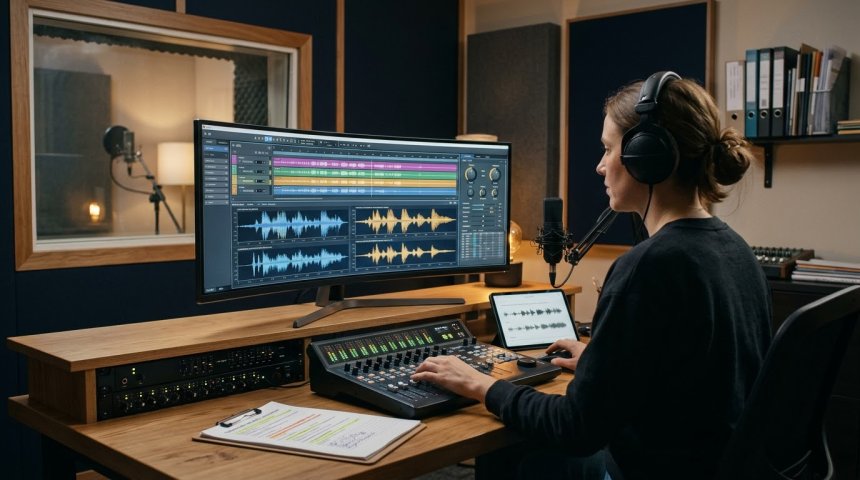
The promise of AI voice cloning for episodic content is seductive: record once, generate forever. A single recording session yields a digital voice replica capable of narrating hundreds of episodes, audiobooks, training modules, or podcast installments without scheduling conflicts, rate negotiations, vocal fatigue, or availability constraints. The economics appear transformative—eliminating per-episode talent costs that consume 30-60% of audio production budgets while enabling publishing cadences impossible with human-only workflows. But organizations deploying voice cloning at scale quickly discover that consistency isn't automatic; it's an engineered outcome requiring deliberate technical choices, rigorous quality protocols, legal safeguards, and operational discipline that most introductory tutorials gloss over in favor of impressive demo reels. The gap between "sounds similar" and "indistinguishable from episode to episode" spans acoustic variables, emotional calibration, pronunciation stability, prosodic patterns, and listener perception thresholds that determine whether audiences accept synthetic narration as authentic or reject it as uncanny distraction undermining content value.
This guide treats voice cloning consistency as a business-critical production capability rather than experimental novelty. We'll examine the technical foundations determining clone fidelity including model architecture selection, training data requirements, and parameter tuning that separate production-grade clones from demonstration-quality outputs. We'll establish consistency maintenance protocols addressing the drift, degradation, and variation that accumulate across episodes without active management. We'll navigate the legal and ethical landscape governing voice likeness rights, consent documentation, disclosure obligations, and platform policies that create liability exposure when mishandled. We'll design production workflows integrating cloned voices into episodic pipelines with quality gates preventing inconsistent output from reaching audiences. We'll address scaling challenges emerging when managing multiple voice identities across dozens or hundreds of episodes. And we'll evaluate the business case honestly—including scenarios where human narration remains superior and hybrid approaches optimize both cost and quality. Whether you're a podcast network standardizing narrator voices across shows, an e-learning company producing course libraries, an audiobook publisher expanding backlist narration, a corporate communications team creating internal content series, or a media startup building voice-first products, this guide delivers the operational depth needed to deploy voice cloning as reliable production infrastructure rather than unpredictable creative experiment.
Let's begin by understanding what voice cloning actually produces—and why "same voice" is a spectrum, not a binary state.
Chapter 1: Voice Cloning Fundamentals — What Consistency Actually Means
Before optimizing consistency, we must define it precisely. Vague aspirations produce vague results; measurable specifications enable engineering.
Dimensions of Voice Consistency
Timbral Stability: The acoustic fingerprint—the spectral characteristics defining vocal tone, resonance, and texture. Timbral inconsistency manifests as brightness/darkness shifts, nasality variation, or breathiness fluctuation between episodes. Most noticeable dimension; listeners detect timbral changes before other inconsistencies. Timbral stability depends on training data quality, model architecture, and generation parameter consistency. Measurable through spectral analysis comparing formant distributions across samples.
Prosodic Consistency: Rhythm, stress, intonation, and pacing patterns defining speech melody. Prosodic inconsistency manifests as unnatural emphasis, erratic pacing, monotone delivery, or emotional flatness varying episode-to-episode. More subtle than timbral issues but equally damaging to perceived authenticity. Prosody heavily influenced by text preprocessing, punctuation interpretation, and SSML markup quality. Hardest dimension to stabilize because prosody responds dynamically to content semantics; identical settings produce different prosody for different text.
Pronunciation Reliability: Consistent articulation of proper nouns, technical terms, acronyms, and ambiguous words across episodes. Pronunciation inconsistency breaks immersion immediately; hearing "NVIDIA" pronounced three different ways across three episodes signals synthetic origin regardless of timbral quality. Pronunciation reliability depends on phoneme dictionary coverage, custom lexicon configuration, and context-aware disambiguation. Testable through standardized pronunciation benchmark sets.
Emotional Calibration: Appropriate affective tone matching content context—serious for somber passages, energetic for exciting segments, warm for conversational moments. Emotional miscalibration creates cognitive dissonance; cheerful delivery of tragic content or flat delivery of celebratory content undermines message regardless of acoustic quality. Emotional calibration depends on model capability, prompt engineering, and manual review. Least automatable dimension; requires human judgment for validation.
Technical Fidelity: Absence of artifacts—clicks, pops, glitches, truncation, background noise, compression distortion. Technical inconsistencies vary by generation platform, export settings, and post-processing pipeline. Most objectively measurable dimension; artifact detection algorithms flag issues automatically. Technical fidelity is baseline expectation; meeting it doesn't guarantee perceived consistency but failing it guarantees rejection.
Listener Perception Thresholds
Research suggests listeners tolerate approximately 5-8% acoustic variation before consciously detecting inconsistency in familiar voices. Below threshold, variation registers as natural human variability; above threshold, it triggers synthetic detection and trust erosion. This threshold varies by listener sophistication (audio professionals detect smaller deviations), content type (fiction tolerates more variation than news), and exposure frequency (regular listeners develop sharper sensitivity). Production targets should aim well below perceptual threshold providing safety margin against cumulative drift. Objective metrics correlated with subjective perception enable quantitative quality control supplementing human review.
Key Insight: For technical implementation guidance on voice cloning workflows, quality parameters, and API integration for production use, ElevenLabs Voice Cloning Documentation provides comprehensive documentation covering instant versus professional cloning methodologies, training data requirements, and generation settings affecting consistency outcomes.
Chapter 2: Training Data Quality — The Foundation Everything Rests On
Clone quality ceiling determined entirely by training data. No amount of parameter tuning compensates for inadequate source material. Investment here yields exponential returns downstream.
Recording Specifications for Clone Training
Audio Quality Standards: Minimum 44.1kHz/24-bit WAV recording in treated acoustic environment with noise floor below -60dB. Consumer microphones and untreated rooms introduce coloration and noise baked permanently into clone. Professional recording investment ($500-$2,000 one-time) prevents perpetual quality ceiling. Record in mono unless stereo spatialization planned; stereo training data complicates generation without benefit for narration. Consistent mic distance (6-12 inches), gain staging, and pop filter positioning across all training sessions preventing acoustic variation entering model.
Content Diversity Requirements: Training corpus must span emotional range, speaking rates, pitch variations, and phonetic coverage expected in production content. Reading identical passage repeatedly produces narrow clone incapable of varied delivery. Minimum 30 minutes diverse content for instant cloning; 2-3 hours for professional/high-fidelity cloning. Include declarative statements, questions, exclamations, pauses, emphasis patterns, and emotional transitions. Content should mirror intended production domain; technical training data produces technically proficient but emotionally limited clones.
Speaker State Consistency: Record training data in stable vocal condition representative of intended production baseline. Avoid recording when fatigued, ill, dehydrated, or emotionally distressed unless those states intentionally part of clone character. Time-of-day consistency matters; morning voice differs from evening voice. Hydration, warm-up routines, and environmental conditions standardized across sessions. Vocal state variability in training data teaches model inconsistent baselines manifesting as unpredictable generation.
Cleanliness and Editing Standards: Remove breaths, mouth clicks, background noise, and errors from training data before submission. Artifacts in training become permanent clone characteristics amplified during generation. Professional editing ($100-$300/hour) or careful self-editing with tools like iZotope RX ensures clean source material. Silence trimming between phrases prevents learned pause patterns inappropriate for production. Training data cleanliness directly determines generation cleanliness; garbage in equals garbage out multiplied.
Legal Rights and Consent Documentation
Explicit Written Consent: Voice cloning requires documented informed consent from voice owner specifying scope (which content types), duration (perpetual vs. term-limited), territory (geographic limitations), exclusivity (whether voice can be cloned by others), compensation structure (flat fee, royalty, revenue share), and revocation conditions. Verbal consent legally insufficient and operationally unverifiable. Consent documentation should survive personnel changes, company acquisitions, and platform migrations. Template agreements reviewed by intellectual property attorney prevent enforceability gaps. Consent isn't formality; it's foundational legal infrastructure protecting against liability.
For enterprise-grade consent verification, security protocols, and misuse prevention frameworks, Resemble AI Enterprise Voice Security Framework documents commercial-grade safeguards including identity verification, audio watermarking, and access controls essential for defensible voice cloning deployments.
Rights Chain Verification: Confirm voice owner possesses rights to grant cloning permission. Employment contracts may assign voice rights to employers; union agreements may restrict synthetic reproduction; exclusive talent agreements may prohibit third-party cloning. Rights chain gaps create latent liability surfacing during disputes, acquisitions, or audits. Document complete rights provenance alongside consent. Third-party voices (celebrities, public figures) require additional clearance beyond individual consent; right of publicity laws vary by jurisdiction and persist posthumously in many regions.
Platform Policy Compliance: Distribution platforms (Spotify, Apple Podcasts, YouTube, Audible) maintain evolving policies regarding synthetic voice disclosure and consent verification. Non-compliance risks content removal, account suspension, or demonetization. Platform policies sometimes exceed legal minimums; compliance requires monitoring policy updates continuously. Disclosure requirements vary; some platforms mandate audible disclosure, others metadata tags, others visual labels. Build disclosure compliance into production workflow rather than retrofitting after publication.
Chapter 3: Model Selection and Configuration — Technical Choices Determining Consistency Ceiling
Not all cloning platforms equal. Architecture, training methodology, and configuration options create meaningful consistency differences.
Platform Evaluation Criteria
Fidelity vs. Flexibility Trade-off: High-fidelity models produce closer voice matches but less adaptable to varied content; flexible models handle diverse text better with slightly lower baseline fidelity. Match platform strength to content type: fiction narration benefits from fidelity-focused models; dynamic educational content benefits from flexibility-focused models. Test both categories with your specific training data and content samples before committing. Platform benchmarks published by vendors reflect average performance; your specific voice/content combination may perform differently.
Consistency Controls Availability: Production-grade platforms expose parameters controlling stability, similarity, style exaggeration, and speaker boost. Granular control enables fine-tuning consistency across episodes. Consumer platforms hide these parameters behind simplified interfaces limiting optimization capability. API access enables programmatic parameter consistency across batch generation; UI-only platforms risk manual setting drift. Evaluate control granularity against consistency requirements; limited control platforms acceptable for low-stakes content, insufficient for brand-critical narration.
Custom Lexicon and Pronunciation Support: Ability to define custom pronunciations for proper nouns, technical terms, and brand names essential for episodic consistency. Platforms lacking lexicon support require phonetic spelling workarounds in source text creating maintenance burden and error risk. Lexicon portability across projects enables reuse; project-specific lexicons duplicate effort. Evaluate lexicon capabilities early; pronunciation inconsistency most common listener complaint in synthetic narration.
Version Stability and Update Management: Platform model updates can alter clone behavior unexpectedly breaking consistency across episodes generated before and after update. Production deployments require version pinning or controlled update testing protocols. Platforms offering model version selection enable consistency preservation; auto-update-only platforms introduce uncontrolled variability. Document model version used for each episode enabling reproduction and troubleshooting. Version management is operational discipline preventing silent consistency degradation.
Parameter Tuning for Consistency
Stability/Similarity Balance: Most platforms expose stability (consistency across generations) and similarity (closeness to source voice) parameters often inversely related. Higher stability reduces variation but may flatten expressiveness; higher similarity captures voice character but increases generation-to-generation variance. Optimal balance content-dependent and empirically determined through A/B testing with target audience samples. Document optimal settings per voice identity; re-optimize when content type changes significantly. Settings that work for narrative fiction may fail for technical documentation.
Style Exaggeration and Speaker Boost: Style exaggeration amplifies expressive qualities useful for dramatic content but detrimental to neutral narration. Speaker boost strengthens source voice characteristics improving similarity at cost of naturalness. Both parameters require careful calibration; excessive values produce caricature rather than clone. Default values rarely optimal for production; systematic testing identifies sweet spot. Parameter interactions complex; change one variable at a time documenting effects.
Generation Seed Management: Some platforms allow seed specification controlling random initialization. Fixed seeds improve reproducibility for identical inputs but may reduce natural variation desired in long-form content. Seed strategy depends on consistency priorities: fixed seeds for maximum reproducibility, randomized seeds with constrained ranges for natural variation within bounds. Document seed strategy per project; inconsistent seed handling creates unexplained variation.
Chapter 4: Production Workflow Design — Embedding Consistency Into Operations
Consistency emerges from systematic processes not ad-hoc generation. Workflow design prevents drift accumulation across episodes.
Standardized Generation Pipeline
Template-Based Generation: Create generation templates encoding optimal parameters, preprocessing rules, and post-processing chains per voice identity. Templates eliminate manual configuration drift across episodes and operators. Version-controlled templates track changes enabling rollback when updates degrade quality. Template library organized by voice identity and content type enabling rapid deployment. New episode production begins with template application not parameter recreation.
Text Preprocessing Standards: Raw manuscript text requires normalization before generation: number expansion ("2024" → "twenty twenty-four"), abbreviation expansion ("Dr." → "Doctor"), symbol conversion ("%"" → "percent"), and pronunciation markup for ambiguous terms. Inconsistent preprocessing produces inconsistent output even with identical generation settings. Preprocessing scripts automated and validated against test suites. Human review catches edge cases automation misses. Preprocessing standards documented and enforced across all content entering pipeline.
Batch Generation Protocols: Generate episodes in controlled batches using identical settings, model versions, and environmental conditions. Batch generation reduces inter-episode variability versus dispersed generation across days/weeks with potential setting drift. Batch size balanced against review capacity; oversized batches delay error detection. Batch logs document generation parameters, timestamps, and model versions for each episode enabling traceability. Anomalous episodes flagged through automated quality checks before human review.
Post-Processing Consistency: Apply identical mastering chain to all episodes: normalization levels, EQ curves, compression settings, noise reduction parameters, and loudness targets. Post-processing variation creates perceived voice inconsistency even when generation identical. Mastering presets saved and applied programmatically preventing manual adjustment drift. Loudness compliance with platform standards (typically -16 LUFS for podcasts, -18 to -23 LUFS for audiobooks) ensured consistently. Post-processing QC validates output against specifications before release.
Quality Assurance Gates
Automated Consistency Checks: Deploy automated analysis comparing new episodes against reference baseline: spectral similarity scoring, prosodic pattern matching, pronunciation verification against lexicon, artifact detection, and loudness validation. Automated checks catch objective inconsistencies humans miss or fatigue from detecting. Thresholds calibrated to perceptual relevance avoiding false positives wasting review time. Failed checks trigger review queue; passed checks proceed to human validation. Automation augments not replaces human judgment.
Human Review Protocol: Trained reviewers listen to every episode (or statistically valid sample for high-volume production) evaluating dimensions automation cannot assess: emotional appropriateness, naturalness, listener fatigue, and brand alignment. Review checklist standardized ensuring consistent evaluation criteria. Reviewer calibration sessions maintain inter-rater reliability. Review feedback categorized distinguishing generation issues (requiring parameter adjustment) from text issues (requiring preprocessing correction) from post-processing issues (requiring mastering adjustment). Categorized feedback drives targeted improvements.
Listener Testing Integration: Periodic blind listening tests with target audience samples validate that internal quality standards align with external perception. Tests compare cloned episodes against each other and against human-narrated benchmarks measuring detectability, preference, and comprehension. Listener testing catches quality gaps internal teams normalize through repeated exposure. Testing cadence quarterly for established voices, monthly for new voices during stabilization period. Listener feedback incorporated into quality threshold adjustments.
Version Control and Reproducibility: Every episode's generation parameters, model version, preprocessing script version, and post-processing preset version documented and archived. Enables exact reproduction of any episode for corrections, format conversions, or consistency auditing. Version control prevents "it sounded fine last week" debugging nightmares. Archive includes source text, generated audio, and final mastered output. Storage costs minimal compared to reproducibility value. Reproducibility is non-negotiable for production systems; treat voice generation like software builds.
Chapter 5: Managing Drift and Degradation Over Time
Consistency isn't set-and-forget; it requires active maintenance as platforms update, content evolves, and audience expectations shift.
Drift Detection Mechanisms
Baseline Reference Library: Maintain curated reference samples representing gold-standard consistency for each voice identity. References span emotional range, content types, and technical conditions encountered in production. New generations compared against references through automated analysis and periodic human review. Reference library updated when intentional improvements made; versioned to preserve historical baselines. References serve as consistency anchor preventing gradual drift acceptance through normalization.
Trend Monitoring Dashboards: Track consistency metrics over time identifying gradual degradation before it breaches perceptual thresholds. Metrics include spectral similarity trends, prosodic variance trends, pronunciation error rates, and listener test scores. Trend visualization enables proactive intervention before quality complaints emerge. Alert thresholds trigger investigation when metrics deviate beyond acceptable ranges. Dashboards reviewed weekly by production leads; monthly by stakeholders. Trend monitoring transforms consistency from reactive firefighting to proactive management.
Platform Update Impact Assessment: Test every platform model update against reference library before production deployment. Updates frequently alter generation characteristics subtly; untested updates introduce silent consistency breaks. Impact assessment includes A/B comparison with previous model version across representative content samples. Significant deviations trigger parameter re-optimization or version pinning decision. Update testing documented with go/no-go decision rationale. Never deploy untested updates to production; convenience doesn't justify consistency risk.
Correction and Remediation Protocols
Targeted Regeneration: When inconsistency detected in released episode, regenerate affected segments using original parameters and model version if possible. Segment regeneration preserves surrounding consistent content minimizing disruption. If original model version unavailable, match current parameters to historical settings through testing. Regenerated segments crossfaded seamlessly preventing audible edit points. Regeneration logged with reason and resolution for pattern analysis.
Parameter Recalibration: Systematic drift indicates parameter settings no longer optimal due to platform evolution or content shift. Scheduled recalibration sessions (quarterly recommended) re-optimize parameters against current reference library. Recalibration documented with before/after comparisons validating improvement. Parameter changes version-controlled enabling rollback if recalibration introduces new issues. Recalibration is preventive maintenance not emergency response.
Training Data Augmentation: Persistent consistency issues may indicate insufficient training data diversity. Supplemental recording sessions targeting weak areas (specific emotions, technical vocabulary, pacing patterns) improve clone robustness. Augmentation data processed identically to original training maintaining consistency. Re-cloning with augmented dataset requires full regression testing ensuring improvements don't degrade previously stable dimensions. Augmentation investment justified when consistency issues traceable to training gaps rather than platform limitations.
Chapter 6: Scaling Across Multiple Voices and High Episode Volumes
Consistency challenges multiply with voice count and volume. Systems designed for single voices break at scale.
Multi-Voice Management Infrastructure
Voice Identity Registry: Centralized database tracking each voice identity's training data location, model version, optimal parameters, lexicon entries, consent documentation, usage rights, and quality baseline. Registry prevents knowledge silos and personnel dependency. Registry accessible to all production team members with appropriate permissions. Registry updated with every change maintaining single source of truth. Voice registry is foundational infrastructure for multi-voice operations; spreadsheet chaos inevitable without it.
Shared Resource Libraries: Common preprocessing scripts, post-processing presets, pronunciation lexicons, and quality check configurations shared across voice identities reducing duplication and ensuring consistency of process even when voice characteristics differ. Shared resources version-controlled and change-managed preventing divergence. Voice-specific overrides documented explicitly distinguishing universal standards from identity-specific customizations. Shared resources accelerate onboarding of new voices and ensure process consistency across operators.
Operator Training and Certification: Multiple operators generating content increases consistency risk through technique variation. Standardized training program ensures all operators understand consistency protocols, quality standards, and troubleshooting procedures. Certification validates competency before independent production access. Refresher training scheduled periodically preventing skill drift. Operator performance tracked through quality metrics identifying training needs. Human consistency enables technical consistency; invest in people as much as systems.
Volume Scaling Considerations
Automation Investment Thresholds: Manual processes sustainable at low volume become bottlenecks at scale. Identify automation ROI inflection points: preprocessing automation justified at ~10 episodes/month, batch generation at ~20/month, automated QC at ~50/month, full pipeline orchestration at ~100/month. Premature automation wastes development resources; delayed automation constrains growth. Scaling plan tied to volume projections with trigger-based automation investments.
Quality Sampling Strategies: 100% human review unsustainable at high volume. Statistical sampling methodologies maintain quality confidence while reducing review burden. Sample size calculated based on acceptable defect rate and confidence level. Stratified sampling ensures representation across voice identities, content types, and operators. Adaptive sampling increases frequency when defect rates rise, decreases when stable. Sampling methodology documented and audited ensuring statistical validity.
Cost Modeling at Scale: Voice cloning economics shift with volume. Fixed costs (training, setup, system development) amortize across episodes reducing per-unit cost. Variable costs (generation compute, storage, review labor) scale linearly or sub-linearly depending on automation level. Breakeven analysis identifies minimum viable volume for cloning versus human narration. Cost modeling includes hidden costs: quality remediation, platform fees, consent renewals, and system maintenance. Honest cost modeling prevents scaling into unprofitability.
Chapter 7: Business Case Evaluation — When Cloning Serves and When It Doesn't
Technology capability doesn't equal business appropriateness. Honest assessment prevents misapplication.
Strong Cloning Candidates
High-Volume Series Content: Daily/weekly podcasts, serialized audiobooks, ongoing training libraries, and regular corporate communications benefit most from cloning's economies of scale. Volume justifies upfront investment; consistency requirements align with cloning strengths. Human narrator scheduling becomes bottleneck at high frequency; cloning eliminates constraint.
Backlist and Legacy Content: Previously published content lacking audio versions or featuring unavailable narrators represents pure incremental value from cloning. No cannibalization of existing human narration; cloning unlocks otherwise inaccessible revenue. Backlist cloning particularly valuable for publishers with extensive catalogs and limited narrator budgets.
Localization and Accessibility: Cloned voices adapted across languages (with appropriate native-speaker training data) enable multilingual content without coordinating multiple narrators. Accessibility applications (reading assistance, screen reader enhancement) benefit from consistent familiar voices. Localization cloning requires native-speaker training and cultural adaptation; direct translation of English-trained clones produces poor results.
Rapid Response and Time-Sensitive Content: News updates, market commentary, emergency communications, and time-sensitive training benefit from cloning's immediate availability. Human narrator scheduling incompatible with urgent deadlines; cloning enables publication within hours of content finalization. Rapid response value exceeds quality trade-offs for time-critical applications.
Human Narration Remains Superior
Premium Literary Fiction: Audiences expect nuanced emotional performance, interpretive artistry, and authentic human connection in literary fiction. Current cloning cannot replicate skilled narrator's interpretive choices, emotional depth, and artistic intentionality. Premium fiction audiences detect and reject synthetic narration diminishing brand value. Reserve cloning for genre fiction, non-fiction, and functional content where performance artistry secondary to information delivery.
Celebrity and Personality-Driven Content: Content valued specifically for narrator's personal brand, authentic perspective, or parasocial relationship cannot be authentically cloned. Audience seeks human connection not acoustic replication. Cloning celebrity voices without their active participation raises ethical and legal concerns beyond technical capability. Personality-driven content requires genuine personality; simulation undermines value proposition.
High-Stakes Trust Contexts: Medical instructions, legal disclosures, financial advice, and safety-critical communications demand unquestioned trust. Synthetic voice in trust-critical contexts introduces doubt undermining message effectiveness regardless of acoustic quality. Trust contexts warrant human narration premium as risk mitigation. Regulatory scrutiny increasing for synthetic voices in regulated industries; compliance risk may exceed cost savings.
Creative Collaboration and Iteration: Projects requiring narrator-director collaboration, interpretive discussion, and iterative performance refinement benefit from human responsiveness. Cloning executes instructions but doesn't collaborate creatively. Projects where narration is creative partnership rather than execution task suit human narrators. Creative collaboration value difficult to quantify but real in artistic outcomes.
Hybrid Approaches Optimizing Both
Primary Human + Cloned Supplements: Human narrator for main content; cloned voice for supplementary materials (glossaries, appendices, bonus content, promotional clips). Maintains premium experience for core content while extending value through cloning efficiency. Audience accepts cloned supplements when primary content authentically human.
Cloned Draft + Human Polish: Cloning generates first-pass narration for human review and selective re-recording. Reduces human recording time 60-80% while preserving human quality for critical passages. Hybrid workflow balances efficiency and quality for mid-tier content where pure cloning insufficient but pure human narration uneconomical.
Voice-Matched Human Replacement: When original human narrator becomes unavailable, clone trained on their recordings enables seamless continuation. Audience continuity preserved; narrator compensated for ongoing voice use through licensing agreement. Ethical replacement requires transparent arrangement and fair compensation; unauthorized replacement creates legal and reputational risk.
Conclusion: Consistency as Craft, Not Commodity
Voice cloning consistency isn't achieved through technology alone; it's cultivated through disciplined craft combining technical mastery, operational rigor, ethical responsibility, and audience respect. The organizations succeeding with cloned narration aren't those with the most advanced models; they're those treating consistency as ongoing practice requiring continuous attention, measurement, and refinement.
Your audience's trust is earned through reliable experience episode after episode. Invest in the foundations: quality training data, legal clarity, systematic workflows, and honest quality assessment. Resist the temptation to prioritize speed over consistency; shortcuts compound into credibility debt exceeding any schedule savings. Build systems that make consistency the default path not the exceptional achievement.
The voice you clone carries responsibility beyond acoustic replication. It represents your commitment to audience experience, your respect for voice owners' rights, and your dedication to content quality. Honor that responsibility through excellence. Create consistently. Publish confidently. Scale sustainably.
Your listeners deserve nothing less than reliable, respectful, thoughtfully crafted audio experiences. Deliver that standard through disciplined voice cloning practice. The technology enables; your craftsmanship fulfills.
Frequently Asked Questions (FAQs)
How much training audio do I need for a consistent cloned voice, and what makes good training data?
Minimum viable training: 30 minutes clean, diverse audio for instant/basic cloning; 2-3 hours for professional/high-fidelity cloning suitable for episodic production. Quality matters more than quantity; 1 hour of professional studio recording outperforms 10 hours of noisy consumer recordings. Good training data characteristics: recorded in treated acoustic space with professional microphone at consistent distance/gain, spans emotional range and speaking styles matching intended production content, free of background noise/artifacts/breaths/errors, represents stable vocal condition (not fatigued/ill/stressed), and covers phonetic diversity including proper nouns and technical terms relevant to your content domain. Bad training data permanently limits clone quality; no amount of parameter tuning compensates for poor source material. Invest in professional recording session ($300-$800) for training data capture; this one-time cost determines consistency ceiling for all future episodes. Record more than minimum if budget allows; excess quality data provides headroom for future content expansion. Always obtain documented consent before recording for cloning purposes.
Is voice cloning legal for commercial use, and what consent/documentation do I need?
Voice cloning legality depends on jurisdiction, consent status, and use case. With proper documented consent from voice owner, commercial cloning generally legal in most jurisdictions. Essential documentation: written consent agreement specifying scope (content types, platforms, territories), duration (perpetual vs. term-limited), compensation structure, exclusivity terms, revocation conditions, and rights warranties confirming voice owner has authority to grant permission. Verbal consent legally insufficient and operationally unverifiable. Additional considerations: employment contracts may assign voice rights to employers requiring employer consent; union agreements may restrict synthetic reproduction; celebrity/public figure voices require right of publicity clearance varying by jurisdiction; deceased persons' voices subject to estate rights and varying posthumous publicity laws. Platform policies may impose additional disclosure or consent verification requirements beyond legal minimums. Consult intellectual property attorney specializing in voice/AI rights before commercial deployment; legal costs ($1,000-$5,000) minor compared to litigation exposure from inadequate consent. Document complete rights chain and retain records indefinitely; consent documentation is liability protection not administrative formality.
Why does my cloned voice sound inconsistent across episodes even with the same settings?
Inconsistency despite identical settings typically stems from: (1) Text preprocessing variation—different number/abbreviation/symbol handling across episodes produces different phonetic input yielding different output; standardize preprocessing scripts and validate consistency. (2) Platform model updates silently altering generation characteristics; implement version pinning and update testing protocols. (3) Content-dependent prosodic variation—different text semantics trigger different emotional/pacing responses even with fixed parameters; this is inherent limitation requiring content-aware parameter adjustment or post-production smoothing. (4) Training data insufficiency—clone lacks exposure to certain phonemes, emotions, or pacing patterns present in new content; supplement training data targeting weak areas. (5) Generation randomness—some platforms introduce stochastic variation; use seed control if available or accept bounded variation within tolerance. Diagnosis requires systematic isolation: generate identical text across multiple runs testing reproducibility, then test varied content with fixed preprocessing identifying content-dependent variation sources. Document findings and implement targeted fixes; generic "adjust stability slider" advice rarely resolves root causes. Consistency debugging is iterative; patience and methodical testing yield solutions.
How do I disclose AI-narrated content ethically and comply with platform policies?
Disclosure best practices: (1) Check each distribution platform's current synthetic voice policy; requirements vary and evolve frequently. (2) Provide clear, conspicuous disclosure in episode description/show notes stating "This episode features AI-generated narration" or equivalent platform-specified language. (3) Consider audible disclosure at episode beginning for accessibility and transparency; some platforms require this. (4) Maintain disclosure even when clone indistinguishable from human; transparency builds trust regardless of detectability. (5) Document consent and disclosure compliance for audit readiness. Ethical considerations beyond compliance: avoid cloning voices without enthusiastic informed consent even if legally permissible; respect voice owners' ongoing concerns and revocation rights; don't use cloned voices to deceive audiences about human involvement in trust-critical contexts; attribute cloned narration appropriately in credits. Disclosure isn't admission of inferiority; it's respect for audience autonomy and informed choice. Platforms increasingly penalize undisclosed synthetic content; proactive compliance prevents retroactive enforcement. Industry norms evolving toward normalized transparency; early adoption positions ahead of mandatory requirements.
When should I choose human narration over voice cloning despite higher cost?
Choose human narration when: (1) Content is premium literary fiction where interpretive artistry constitutes core value proposition; cloning cannot replicate skilled narrator's creative choices. (2) Audience expects authentic human connection (memoir, personal essay, personality-driven content); synthetic voice undermines intimacy central to content value. (3) Trust-critical context (medical, legal, financial, safety instructions) where synthetic voice introduces doubt compromising message effectiveness. (4) Project requires creative collaboration between narrator and director; cloning executes but doesn't collaborate. (5) Target audience demonstrably rejects synthetic narration through testing; audience preference trumps cost efficiency. (6) Legal/regulatory environment creates unacceptable risk for synthetic voice in your industry/jurisdiction. (7) Volume insufficient to justify cloning setup investment; breakeven analysis favors human narration below threshold. Cost comparison should include total cost of ownership: cloning setup, ongoing quality management, consent/licensing, platform compliance, and potential brand risk—not just per-episode generation cost versus narrator rate. Sometimes human narration is cheaper when hidden cloning costs included. Decision framework: cloning optimizes cost-efficient consistency for functional content at scale; human narration optimizes artistic quality and authentic connection for premium/experiential content. Neither universally superior; match approach to content purpose and audience expectations.
Share
What's Your Reaction?
 Like
0
 Dislike
0
 Love
0
 Funny
0
 Angry
0
 Sad
0
 Wow
0