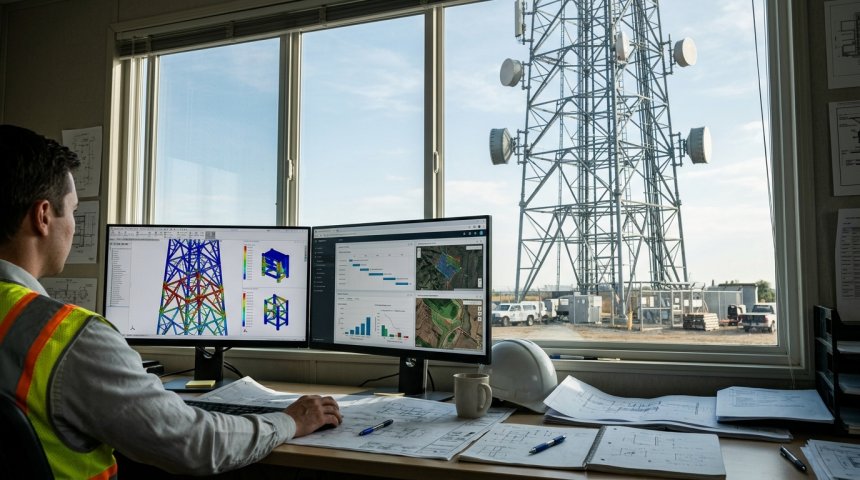
Robotics Innovation in 2026: How Tech Drives Smarter Operations
Explore how AI, digital twins, IoT, and advanced manufacturing are accelerating robotics innovation and improving operational efficiency in 2026.


The robotics machinery industry stands at an inflection point where technological convergence is simultaneously accelerating innovation velocity and compressing operational waste in ways that would have seemed speculative just five years ago. This isn't incremental improvement; it's structural transformation. Artificial intelligence, digital twin simulation, industrial IoT connectivity, advanced manufacturing processes, and collaborative human-machine interfaces are merging into integrated systems that redefine what robotic machinery can do, how quickly it can be developed, and how efficiently it can be deployed and maintained across its lifecycle.
For manufacturers, integrators, end-users, and investors in this space, understanding these convergences isn't academic—it's existential. Companies treating these technologies as isolated tools rather than interconnected capabilities risk falling behind competitors who've architected their operations around integrated technological ecosystems. The gap between leaders and laggards widens monthly as compounding advantages accumulate: faster development cycles enable more iterations, more iterations generate more operational data, more data improves AI models, better models accelerate next-generation development. This flywheel effect creates winner-take-most dynamics in segments where technological sophistication determines competitive positioning.
This guide examines how specific technologies are strengthening both innovation and operational efficiency in the robotics machinery industry, dissecting mechanisms rather than marketing claims, providing implementation frameworks rather than aspirational visions, and addressing the organizational transformations required to capture technological value. We'll explore AI and machine learning applications across design, production, and field operations; digital twin ecosystems enabling virtual validation and continuous optimization; IoT infrastructure creating real-time operational visibility; advanced manufacturing techniques reducing prototyping and production friction; collaborative robotics expanding application domains; supply chain digitization improving resilience; and workforce transformation enabling human-technology synergy. Whether you're a robotics OEM reengineering development processes, a system integrator optimizing deployment methodologies, an end-user evaluating automation investments, or a technologist building next-generation platforms, this analysis provides the technical depth and strategic context needed to navigate this transformation effectively.
Let's begin by establishing the dual imperative driving technological adoption: innovation acceleration and operational efficiency aren't separate objectives but mutually reinforcing outcomes of the same underlying technological capabilities.
Chapter 1: The Dual Imperative — Why Innovation and Efficiency Are Inseparable
Historically, robotics companies treated innovation (R&D, new product development, capability expansion) and operational efficiency (cost reduction, throughput improvement, quality enhancement) as separate domains managed by different teams with different metrics and different technology stacks. This separation created friction: innovations arrived late because development processes were slow; operational improvements plateaued because they lacked access to cutting-edge capabilities; data silos prevented learnings from flowing between domains.
Modern technology dissolves this separation. The same AI models that accelerate design exploration also optimize production scheduling. The same digital twins that validate new concepts also monitor field performance. The same IoT sensors that enable predictive maintenance also feed training data for next-generation algorithms. Technology creates unified infrastructure serving both innovation and operational objectives simultaneously.
Compounding Advantage Dynamics
Companies recognizing this unity capture compounding advantages:
Faster Learning Cycles: Integrated technology enables rapid hypothesis testing in simulation, accelerated physical prototyping through advanced manufacturing, real-time field feedback through IoT, and continuous model improvement through ML. Each cycle generates knowledge informing subsequent cycles. Companies completing ten learning cycles annually outpace competitors completing three, regardless of individual cycle quality.
Data Network Effects: Operational data from deployed robots improves AI models enhancing future robot performance. Better performance generates more customer deployments producing more operational data. This network effect creates defensible moats as accumulated data becomes increasingly valuable and difficult for newcomers to replicate. Early movers with large installed bases compound advantages over time.
Cost-Innovation Tradeoff Elimination: Traditional manufacturing forced choices between customization and cost efficiency. Advanced manufacturing (additive, flexible automation, modular design) enables mass customization at scale economics. Innovation no longer requires premium pricing; differentiated products can compete on cost while maintaining margins through operational efficiency gains.
Risk Reduction Through Simulation: Digital twins enable exhaustive virtual testing before physical commitment. Design flaws discovered in simulation cost orders of magnitude less than post-production fixes. Operational scenarios validated virtually reduce field failure rates. Risk reduction accelerates innovation by lowering the cost of experimentation while improving operational reliability.
Talent Attraction and Retention: Technologically sophisticated organizations attract engineers and operators seeking cutting-edge work. Talent density further accelerates innovation and efficiency creating virtuous cycles. Organizations lagging technologically face talent drain exacerbating competitive disadvantage.
Understanding these dynamics reframes technology investment from cost center to strategic multiplier. ROI calculations should account for compounding effects rather than linear returns.
Key Insight: For comprehensive quantitative data on global robotics adoption rates, operational benchmarks, and market segmentation informing technology investment prioritization, the International Federation of Robotics World Robotics Report (dofollow) provides authoritative annual analysis used by industry leaders for strategic planning and competitive benchmarking.
Chapter 2: AI and Machine Learning — Accelerating Intelligence Across the Lifecycle
AI and ML have moved beyond hype into production-grade applications spanning the entire robotics machinery lifecycle. Understanding specific applications prevents generic AI discussions disconnected from operational reality.
Design and Development Acceleration
Generative Design Optimization: AI-driven generative design explores thousands of geometric configurations optimizing for weight, strength, manufacturability, and performance simultaneously. Engineers define constraints and objectives; algorithms generate solutions humans wouldn't conceive. Applications include structural component lightweighting, thermal management optimization, cable routing, and mechanism synthesis. Time-to-optimal-design compresses from months to days. Human role shifts from geometry creation to objective definition and solution evaluation.
Simulation-Based Reinforcement Learning: Training robot policies in simulation using reinforcement learning eliminates costly and slow physical trial-and-error. Sim-to-real transfer techniques bridge the reality gap enabling policies trained virtually to function physically. Applications include manipulation skill acquisition, locomotion adaptation, navigation in unstructured environments, and multi-agent coordination. Training time reduces from months of physical experimentation to days of parallelized simulation. Safety improves by exploring failure modes virtually without hardware damage.
Natural Language Requirement Translation: LLMs translate natural language specifications into formal requirements, test cases, and code skeletons accelerating early development phases. Engineers describe desired behavior conversationally; AI generates structured artifacts requiring refinement rather than creation from scratch. Applications include requirement documentation, acceptance criteria definition, test script generation, and API specification drafting. Productivity gains significant for documentation-heavy regulated industries. Quality depends on human review; AI accelerates but doesn't replace engineering judgment.
Predictive Performance Modeling: ML models predict system performance characteristics (cycle time, energy consumption, accuracy, reliability) from design parameters before physical prototyping. Designers receive immediate feedback on tradeoffs enabling informed decisions. Applications include motor sizing, battery capacity planning, structural stiffness estimation, and thermal performance prediction. Model accuracy improves with historical project data creating organizational learning assets. Reduces prototype iterations saving time and cost.
Manufacturing and Production Optimization
Computer Vision Quality Inspection: Deep learning vision systems detect defects, verify assemblies, and validate tolerances with superhuman consistency. Models trained on labeled defect datasets identify anomalies invisible to traditional rule-based vision. Applications include weld inspection, surface finish verification, component presence confirmation, and dimensional measurement. Inspection speed exceeds human capability enabling 100% inspection rather than sampling. False positive/negative rates continuously improve through active learning incorporating inspector feedback.
Adaptive Process Control: ML models adjust manufacturing parameters in real-time responding to material variability, tool wear, environmental changes, and sensor feedback. Closed-loop control maintains quality despite disturbances that would cause defects under fixed-parameter operation. Applications include welding parameter adaptation, machining feed/speed optimization, coating thickness control, and assembly force adjustment. Yield improvement directly impacts profitability. Model transparency essential for operator trust and regulatory compliance.
Production Scheduling Optimization: Reinforcement learning and combinatorial optimization algorithms schedule complex multi-product, multi-line manufacturing considering constraints, priorities, changeover costs, and uncertainty. Schedules adapt dynamically to disruptions (machine failures, material delays, rush orders) maintaining throughput. Applications include job shop scheduling, mixed-model assembly sequencing, and maintenance window optimization. Utilization improvements of 5-15% common translating directly to capacity expansion without capital investment. Human planners shift from schedule creation to exception management and strategic oversight.
Supply Demand Forecasting: Time series forecasting models predict component demand, spare parts consumption, and finished goods requirements incorporating seasonality, trends, promotions, and external signals. Improved forecast accuracy reduces inventory carrying costs while minimizing stockouts. Applications include procurement planning, safety stock optimization, and production capacity reservation. Model ensembles combining statistical and ML approaches outperform single-method forecasts. Continuous retraining incorporates new data maintaining accuracy as conditions evolve.
Field Operations and Aftermarket Excellence
Predictive Maintenance: Anomaly detection and remaining useful life prediction models analyze sensor data identifying degradation patterns before functional failure. Maintenance scheduled proactively based on actual condition rather than calendar intervals. Applications include bearing failure prediction, motor winding degradation detection, hydraulic leak identification, and battery health monitoring. Downtime reduction and maintenance cost savings substantial. Model interpretability crucial for technician trust and root cause analysis. False alarm management prevents alert fatigue undermining system credibility.
Autonomous Diagnostics and Repair Guidance: AI systems diagnose faults from symptom patterns, sensor data, and historical case libraries recommending repair actions with confidence scores. Augmented reality overlays guide technicians through procedures adapting to observed conditions. Applications include fault isolation, parts identification, procedure sequencing, and verification testing. Mean time to repair reduction improves equipment availability. Knowledge capture from expert technicians preserves institutional knowledge against retirement attrition. System effectiveness depends on comprehensive knowledge base maintenance.
Performance Optimization in Deployment: Online learning algorithms adapt robot behavior to specific installation environments, usage patterns, and customer preferences after deployment. Personalization improves productivity and user satisfaction beyond factory-calibrated baselines. Applications include path optimization for specific facility layouts, grip force adaptation to handled materials, cycle time tuning to actual workflow rhythms, and interface customization to operator preferences. Continuous improvement creates ongoing value delivery strengthening customer retention. Privacy and data governance essential when learning from customer environments.
Fleet Analytics and Benchmarking: Aggregated anonymized data across deployed fleet identifies performance benchmarks, common failure modes, utilization patterns, and improvement opportunities. Manufacturers gain insights impossible from individual installations. Customers benefit from comparative benchmarking identifying optimization potential. Applications include OEE benchmarking, energy consumption normalization, reliability trending, and best practice identification. Data aggregation creates network effects benefiting all participants. Governance frameworks ensure competitive sensitivity and privacy protection.
For technical implementation guidance on AI-powered robotics including simulation environments, training pipelines, and deployment infrastructure, NVIDIA Isaac Robotics Platform Documentation (nofollow) provides comprehensive developer resources covering perception, planning, control, and sim-to-real transfer essential for production-grade AI robotics development.
Chapter 3: Digital Twin Ecosystems — Virtual Validation and Continuous Optimization
Digital twins have evolved from static 3D models to dynamic, data-connected virtual replicas enabling unprecedented capabilities across the robotics lifecycle.
Design Validation and Virtual Commissioning
Multi-Domain Simulation Integration: Modern digital twins integrate mechanical, electrical, hydraulic, pneumatic, control, and software domains in unified simulation environments. Cross-domain interactions validated virtually before physical integration. Applications include electromechanical coupling analysis, control logic verification against plant models, hydraulic circuit validation, and safety system testing. Integration eliminates interface surprises during physical commissioning reducing debug time by 40-70%. Model fidelity calibrated against test data ensuring predictive accuracy.
Virtual Commissioning: PLC code, robot programs, and HMI logic tested against digital twin before physical equipment availability. Software development proceeds in parallel with hardware fabrication compressing project timelines. Applications include sequence validation, interlock verification, safety logic testing, and operator training. Virtual commissioning identifies 60-80% of software bugs before physical startup. Risk reduction enables aggressive scheduling with confidence. Reusable virtual commissioning assets accelerate subsequent projects.
Design Space Exploration: Parametric digital twins enable rapid evaluation of design alternatives through automated simulation sweeps. Trade studies completed in hours rather than weeks. Applications include mechanism optimization, workspace analysis, cycle time estimation, and energy consumption comparison. Exploration breadth improves design quality by considering more alternatives. Sensitivity analysis identifies critical parameters focusing engineering attention. Optimization algorithms automate search for Pareto-optimal solutions balancing competing objectives.
Collaborative Design Review: Cloud-based digital twins enable distributed teams to review designs simultaneously in immersive VR/AR or browser-based viewers. Spatial understanding improves over 2D drawings. Annotations and markups linked to model elements persist across sessions. Applications include design reviews, assembly sequence validation, maintenance access verification, and customer presentations. Collaboration efficiency reduces meeting frequency and duration. Decision documentation tied to model state improves traceability.
Operational Monitoring and Optimization
Real-Time State Estimation: Digital twins connected to live sensor data estimate unmeasured states through physics-based models and Kalman filtering. Virtual sensors provide insights impossible from physical instrumentation alone. Applications include load estimation, wear tracking, thermal state inference, and performance degradation quantification. State estimation enables advanced control and diagnostics beyond raw sensor capabilities. Model accuracy validated continuously against measured outputs detecting model drift.
What-If Scenario Analysis: Operators test operational changes in digital twin before implementing on physical equipment. Risk-free experimentation enables optimization without production disruption. Applications include recipe optimization, changeover procedure validation, maintenance impact assessment, and capacity expansion evaluation. Scenario analysis builds operator intuition about system behavior. Historical scenario library captures organizational learning. Computational efficiency enables interactive exploration rather than batch processing.
Performance Gap Analysis: Digital twin predicts expected performance under current conditions; deviation from actual indicates anomalies or optimization opportunities. Automated gap analysis triggers alerts or recommendations. Applications include energy efficiency monitoring, cycle time drift detection, quality deviation diagnosis, and maintenance need identification. Gap analysis transforms passive monitoring into active optimization. Trend analysis distinguishes transient variations from systematic degradation. Root cause investigation supported by counterfactual simulation.
Lifecycle Management and Evolution: Digital twins persist across equipment lifecycle accumulating operational history, modification records, and performance data. As-built configuration documented accurately reflecting field changes. Applications include retrofit planning, obsolescence management, decommissioning preparation, and knowledge transfer. Lifecycle twin becomes authoritative information source superseding outdated documentation. Version control tracks evolution enabling historical analysis. Integration with PLM/ERP systems ensures data consistency across enterprise.
Implementation Considerations
Model Fidelity Calibration: Digital twin value depends on predictive accuracy. Systematic calibration against test data and operational measurements essential. Fidelity requirements vary by application; commissioning validation demands higher fidelity than trend monitoring. Over-modeling wastes resources; under-modeling undermines trust. Calibration process documented and repeatable. Model uncertainty quantified communicating confidence bounds to users.
Data Infrastructure Requirements: Real-time digital twins require robust data pipelines, time-series databases, streaming analytics, and low-latency connectivity. Infrastructure scaled to handle sensor volume and update frequency. Data quality assurance preventing garbage-in-garbage-out. Historical data archival enabling long-term trend analysis. Cybersecurity protecting operational data integrity and confidentiality. Infrastructure investment significant but foundational to value realization.
Organizational Capability Development: Digital twin effectiveness depends on human capability to build, validate, interpret, and act on insights. Skills span modeling, simulation, data science, domain expertise, and software engineering. Cross-functional teams essential bridging disciplinary silos. Training programs develop internal capability; partnerships supplement during capability building. Change management addresses cultural resistance to model-informed decision making. Capability development roadmap aligned with technology deployment timeline.
ROI Justification and Value Tracking: Digital twin investment requires clear value articulation and measurement. Benefits categorized as risk reduction, time compression, cost avoidance, and performance improvement. Baseline metrics established before implementation. Value tracked quantitatively post-deployment validating investment thesis. Intangible benefits (knowledge capture, collaboration improvement) documented qualitatively. ROI case updated periodically reflecting accumulated value and evolving capabilities. Value communication sustains organizational commitment through long-term payoff horizons.
Chapter 4: Industrial IoT and Connectivity Infrastructure
IoT transforms isolated machines into connected intelligent systems enabling previously impossible capabilities.
Sensor and Edge Computing Architecture
Multi-Modal Sensing: Modern robotics platforms integrate diverse sensors (vision, lidar, force/torque, vibration, temperature, current, acoustic) providing complementary information streams. Sensor fusion algorithms combine modalities improving robustness over single-sensor approaches. Applications include object recognition under varying lighting, collision avoidance with redundant detection, process monitoring through correlated signals, and condition assessment through multi-parameter analysis. Sensor selection driven by application requirements rather than technology novelty. Redundancy designed for safety-critical functions.
Edge Intelligence: On-device processing enables real-time response independent of cloud connectivity. Edge AI models perform inference locally reducing latency and bandwidth requirements. Applications include safety-critical obstacle detection, real-time process control, offline operation capability, and privacy-preserving analytics. Edge-cloud partitioning balances responsiveness with analytical depth. Model compression and hardware acceleration enable capable inference within resource constraints. Edge software update mechanisms ensure continuous improvement without downtime.
Connectivity Standards and Interoperability: OPC UA, MQTT, ROS 2, and emerging standards enable cross-vendor interoperability reducing integration friction. Standardized interfaces accelerate system composition and modification. Applications include multi-vendor cell integration, fleet management across heterogeneous equipment, enterprise system connectivity, and third-party application development. Standards compliance verified through certification testing. Proprietary extensions balanced against portability requirements. Interoperability testing prevents deployment surprises.
Data Pipeline Architecture: Structured data flows from sensors through edge processing, local storage, cloud analytics, and enterprise systems. Pipeline design considers latency, bandwidth, reliability, security, and scalability requirements. Applications include real-time monitoring, historical analysis, model training, and business intelligence. Stream processing enables immediate action on time-sensitive data. Batch processing supports deep analytics on accumulated datasets. Data lineage tracking ensures traceability and auditability. Pipeline monitoring detects failures before data loss.
Operational Visibility and Analytics
Real-Time Performance Monitoring: Dashboards display key performance indicators (OEE, availability, quality, cycle time) updated continuously from connected equipment. Visualization tailored to role-specific needs (operator, supervisor, manager, executive). Applications include shift performance tracking, bottleneck identification, trend monitoring, and alert management. Monitoring transforms reactive management into proactive optimization. Alert thresholds calibrated avoiding alarm fatigue. Mobile access enables remote oversight.
Energy Consumption Analytics: Granular energy monitoring identifies consumption patterns, inefficiencies, and optimization opportunities. Energy attribution to specific operations, products, or time periods enables targeted improvement. Applications include peak demand management, efficiency benchmarking, carbon footprint calculation, and utility rate optimization. Energy analytics often reveals quick-win savings funding further IoT investment. Integration with production data correlates energy with output enabling unit consumption metrics. Regulatory reporting automated reducing compliance burden.
Asset Utilization Tracking: Connected equipment reports operational state enabling accurate utilization measurement beyond manual logging. Utilization analysis identifies underused assets, scheduling inefficiencies, and capacity constraints. Applications include capital justification, rental vs. buy analysis, maintenance scheduling optimization, and production planning. Utilization data informs right-sizing decisions preventing over-investment. Trend analysis distinguishes cyclical variation from structural underutilization. Benchmarking across similar assets identifies best practices.
Quality Traceability and Root Cause Analysis: Process parameters, inspection results, and environmental conditions linked to individual units enabling complete traceability. Correlation analysis identifies quality drivers and root causes. Applications include defect investigation, supplier quality management, process capability improvement, and recall scope determination. Traceability satisfies regulatory requirements in regulated industries. Statistical process control integrated with traceability enabling proactive quality management. Data retention policies aligned with liability and warranty periods.
Security and Reliability Considerations
Cybersecurity Architecture: Connected robotics expands attack surface requiring defense-in-depth. Network segmentation isolates operational technology from enterprise IT. Authentication and encryption protect communications. Patch management maintains security updates without disrupting operations. Security monitoring detects anomalies indicating compromise. Incident response plans prepared and tested. Security requirements integrated into procurement specifications. Regular penetration testing validates defenses. Compliance with industry standards (IEC 62443, NIST) demonstrated through assessment.
Reliability and Fault Tolerance: IoT systems must operate reliably in industrial environments with electromagnetic interference, temperature extremes, vibration, and dust. Hardware selected for industrial ratings. Communication protocols include error detection and recovery. Redundant paths prevent single points of failure. Graceful degradation maintains partial functionality during component failures. Reliability testing validates performance under worst-case conditions. Mean time between failures tracked and improved iteratively. Spare parts strategy ensures rapid recovery.
Data Governance and Privacy: Operational data may contain proprietary process information, customer data, or employee activity requiring governance. Data classification defines handling requirements. Access controls limit data exposure to authorized purposes. Anonymization protects privacy when aggregating data. Retention policies balance analytical value with storage cost and liability. Cross-border data transfer compliance addressed for global operations. Data governance framework documented and enforced. Regular audits verify compliance.
Chapter 5: Advanced Manufacturing Technologies
Manufacturing process innovation directly impacts robotics industry competitiveness through cost reduction, capability expansion, and time compression.
Additive Manufacturing Integration
Complex Geometry Fabrication: Metal and polymer additive manufacturing produces geometries impossible through subtractive or forming processes. Topology-optimized structures, conformal cooling channels, lattice infills, and integrated assemblies reduce weight, improve performance, and consolidate parts. Applications include custom end-effectors, lightweight structural components, heat exchangers, and prototype tooling. Design freedom enables performance optimization unconstrained by manufacturability limitations. Post-processing requirements understood and planned. Material properties characterized for load-bearing applications.
Rapid Prototyping and Tooling: Additive manufacturing accelerates prototyping cycles from weeks to days enabling faster iteration. Soft tooling for low-volume production bridges prototype and full-scale manufacturing. Applications include concept validation, fit-check fixtures, assembly jigs, injection mold inserts, and casting patterns. Iteration velocity improves design quality through broader exploration. Tooling lead time reduction compresses overall project schedules. Cost per iteration low enough to encourage experimentation. Material selection matched to functional requirements.
Spare Parts On-Demand: Digital inventory replaces physical spare parts stocking for low-demand items. Parts manufactured on-demand reducing inventory carrying costs and obsolescence risk. Applications include legacy equipment support, customized replacements, emergency repairs, and geographically distributed service. Lead time reduction improves equipment availability. Supply chain resilience enhanced through distributed manufacturing capability. Part qualification ensures functional equivalence. Intellectual property protection addressed through secure file management.
Mass Customization Enablement: Additive manufacturing economics favor variety over volume enabling profitable customization. Customer-specific configurations produced without tooling investment. Applications include personalized ergonomics, application-specific adaptations, branded aesthetics, and accessibility modifications. Customization creates differentiation in commoditized markets. Premium pricing justified through tailored value. Configuration management ensures quality consistency across variants. Scalability limitations understood and managed.
Flexible Automation Systems
Reconfigurable Manufacturing Cells: Modular automation components rearranged for different products without major retooling. Quick-change mechanisms, mobile platforms, and standardized interfaces enable rapid reconfiguration. Applications include mixed-model assembly, seasonal product changeovers, new product introduction, and contract manufacturing. Flexibility reduces changeover time increasing effective capacity. Investment amortized across multiple products improving utilization. Reconfiguration procedures standardized and documented. Simulation validates configurations before physical implementation.
Mobile Manipulation Platforms: Autonomous mobile robots with integrated manipulation combine mobility and dexterity extending automation beyond fixed stations. Navigation in dynamic environments enables flexible material handling, inspection, and assembly. Applications include kitting, machine tending, inventory management, and sample collection. Mobile manipulation addresses tasks previously requiring human intervention. Fleet coordination optimizes multi-robot operations. Safety systems enable human-shared environment operation. Battery management ensures continuous operation through opportunity charging or swap systems.
Human-Robot Collaboration Workcells: Collaborative robots work alongside humans without safety fencing leveraging force limiting, speed monitoring, and area sensing. Hybrid automation combines human flexibility with robot precision and endurance. Applications include assembly assistance, part presentation, quality inspection, and ergonomic load handling. Collaboration expands automation applicability to tasks unsuitable for full automation. Cell design optimizes human-robot task allocation. Safety validation ensures compliance with ISO/TS 15066. Operator training builds trust and proficiency.
Adaptive Grasping and Manipulation: Advanced grippers and manipulation algorithms handle variable objects without dedicated tooling. Tactile sensing, vision guidance, and learning-based grasping enable dexterous manipulation. Applications include bin picking, deformable object handling, assembly insertion, and packaging. Adaptive manipulation reduces changeover complexity and tooling cost. Grasp planning algorithms optimize for reliability and cycle time. Failure recovery strategies maintain throughput despite grasp failures. Performance benchmarked against application requirements.
Materials and Process Innovation
Advanced Material Adoption: New materials (composites, high-performance polymers, metal alloys, ceramics) enable performance improvements unachievable with conventional materials. Material selection driven by application requirements rather than familiarity. Applications include weight reduction, corrosion resistance, temperature tolerance, wear resistance, and electrical properties. Material qualification ensures predictable performance. Supply chain development secures reliable sourcing. Joining and finishing processes adapted to material characteristics. Lifecycle considerations inform sustainability assessments.
Precision Manufacturing Processes: Advanced machining, grinding, EDM, and laser processes achieve tolerances and surface finishes enabling higher performance. Process capability matched to design requirements avoiding over-specification. Applications include gear manufacturing, bearing surfaces, sealing interfaces, and optical components. Precision improvement enables smaller, lighter, more efficient designs. Process stability monitored through statistical process control. Tool management ensures consistent quality. Measurement systems validate achieved precision.
Surface Treatment and Coating Technologies: Advanced coatings improve wear resistance, corrosion protection, friction characteristics, and aesthetic appearance. Coating selection based on functional requirements and environmental conditions. Applications include sliding surfaces, exposed components, electrical contacts, and consumer-facing parts. Coating adhesion and durability validated through testing. Application processes controlled for consistency. Environmental and safety compliance ensured. Supplier qualification ensures reliable quality.
Chapter 6: Collaborative Robotics and Human-Machine Integration
Collaborative robotics represents philosophical shift from replacing humans to augmenting human capabilities expanding automation applicability and acceptance.
Safety and Trust Frameworks
Risk Assessment Methodologies: Systematic risk assessment following ISO 12100 and ISO/TS 15066 identifies hazards and implements protective measures. Assessment considers intended use, foreseeable misuse, and lifecycle phases. Risk reduction through inherently safe design, safeguarding, and administrative controls. Validation testing confirms risk reduction effectiveness. Documentation supports regulatory compliance and liability defense. Reassessment triggered by modifications or incident learnings. Risk assessment living document updated throughout lifecycle.
Force and Speed Limiting Technologies: Power and force limiting cobots comply with collaborative operation requirements through intrinsic design. Force torque sensors, current monitoring, and speed supervision enable safe contact. Biomechanical limits from ISO/TS 15066 inform threshold settings. Validation testing confirms compliance across operating envelope. Settings documented and change-controlled. Periodic verification ensures continued compliance. Technology selection matched to application risk profile. Higher-risk applications may require additional safeguarding beyond PFL.
Area Monitoring and Dynamic Safety: Vision systems, lidar, and safety mats monitor shared workspace adjusting robot behavior based on human proximity. Speed reduction, path modification, or stop commands triggered by intrusion. Zone definitions configurable to application layout. Response times validated ensuring safety margin. Monitoring system reliability assured through redundancy and self-test. False trigger management balances safety with productivity. Dynamic safety enables closer collaboration than static safeguards while maintaining protection.
Operator Training and Competency Development: Safe collaboration requires trained operators understanding capabilities, limitations, and emergency procedures. Training combines classroom instruction, hands-on practice, and competency assessment. Refresher training scheduled periodically. Training content updated reflecting system modifications and incident learnings. Training records maintained for compliance. Operator feedback incorporated into training improvement. Competency verification ensures readiness before independent operation. Training effectiveness measured through incident rates and near-miss reporting.
Application Expansion Through Collaboration
Assembly Assistance: Cobots present parts, hold components, apply fasteners, or perform sub-assemblies while humans handle complex manipulation, inspection, and decision-making. Hybrid approach leverages complementary strengths. Task allocation optimized through ergonomic and productivity analysis. Cycle time balanced between human and robot preventing bottlenecks. Quality checkpoints integrated ensuring defect detection before value addition. Flexibility accommodates product variants without reprogramming. Ergonomic improvement reduces injury risk and fatigue.
Machine Tending and Loading: Cobots load/unload CNC machines, presses, ovens, and test equipment freeing humans for setup, inspection, and exception handling. Collaboration enables smaller batch sizes and faster changeovers than fully automated cells. Gripper design accommodates part family variation. Machine interface standardized reducing integration complexity. Safety systems protect during machine operation. Production monitoring integrates robot and machine data. Downtime coordination minimizes idle time. Scalability allows incremental automation matching demand.
Inspection and Testing: Cobots position sensors, cameras, or probes while humans interpret results and make pass/fail decisions. Consistent positioning improves measurement repeatability. Human judgment handles ambiguous cases beyond algorithm capability. Inspection routines programmable for product variants. Data capture automated for traceability and analysis. Feedback loops enable process correction before defect propagation. Calibration procedures ensure measurement accuracy. Inspection rate matched to production throughput.
Packaging and Palletizing: Cobots handle repetitive lifting and placing while humans manage exceptions, quality checks, and label verification. Ergonomic benefit significant reducing back injuries and fatigue. Payload and reach matched to application requirements. Pattern generation software simplifies programming for varied configurations. End-of-arm tooling adaptable to package variation. Speed optimized for human collaboration pace. Safety monitoring protects during close interaction. Integration with warehouse management systems enables order fulfillment.
Organizational and Cultural Adaptation
Change Management for Collaboration: Workforce concerns about job displacement, safety, and skill requirements addressed proactively through transparent communication and involvement. Pilot programs demonstrate value before broad rollout. Success stories shared building confidence. Leadership visible support signals commitment. Feedback mechanisms capture concerns and suggestions. Adjustment period acknowledged and supported. Celebration of milestones reinforces positive narrative. Change management budget adequate for sustained engagement.
Job Role Evolution and Reskilling: Collaborative robotics transforms rather than eliminates jobs. Operators become supervisors, programmers, and exception handlers. Reskilling programs develop new competencies. Career pathways articulated showing advancement opportunities. Mentorship pairs experienced workers with technology adopters. Certification validates competency achievement. Compensation aligned with new skill requirements. External hiring supplements internal development when necessary. Workforce planning anticipates transition timelines.
Continuous Improvement Culture: Collaborative robotics succeeds when operators empowered to suggest improvements and adjustments. Bottom-up innovation captures frontline insights. Improvement processes accessible and responsive. Recognition celebrates contributions. Experimentation encouraged within safety boundaries. Cross-functional teams address systemic issues. Best practices shared across shifts and sites. Improvement velocity becomes competitive advantage. Culture development intentional and sustained.
Chapter 7: Supply Chain Digitization and Resilience
Robotics industry supply chains face unique challenges including specialized components, long lead times, geopolitical risks, and demand volatility. Digitization addresses these challenges systematically.
Visibility and Transparency
End-to-End Tracking: IoT-enabled shipment tracking provides real-time location, condition, and ETA visibility across global supply chains. Exception alerts enable proactive response to delays. Applications include component inbound logistics, finished goods distribution, and aftermarket parts fulfillment. Visibility reduces expediting costs and inventory buffers. Carrier performance measured objectively enabling negotiation. Customer communication improved through accurate ETAs. Data analytics identify chronic disruption sources for structural improvement.
Supplier Portal Integration: Digital platforms connect suppliers for order management, forecast sharing, quality data exchange, and payment processing. Integration reduces manual effort and errors. Applications include purchase order automation, ASN processing, certificate of conformity management, and invoice reconciliation. Supplier onboarding streamlined through self-service portals. Performance scorecards drive continuous improvement. Collaboration tools enable joint problem solving. Portal adoption incentivized through preferential treatment.
Inventory Optimization: AI-driven inventory management balances service levels against carrying costs considering demand variability, lead time uncertainty, and supply risk. Multi-echelon optimization coordinates inventory across distribution network. Applications include safety stock calculation, reorder point optimization, allocation prioritization, and obsolescence prevention. Working capital reduction funds growth investment. Service level improvement strengthens customer relationships. Scenario analysis prepares for disruption. Inventory health metrics monitored continuously.
Risk Management and Resilience
Supply Risk Assessment: Systematic evaluation of supplier financial health, geographic concentration, single-source dependencies, and geopolitical exposure. Risk scoring prioritizes mitigation efforts. Applications include supplier qualification, dual-sourcing justification, inventory buffering, and contingency planning. Assessment updated periodically reflecting changing conditions. Early warning indicators monitored for emerging risks. Risk register maintained and reviewed cross-functionally. Mitigation actions tracked to completion.
Digital Thread Traceability: Complete traceability from raw material through manufacturing to field deployment enables rapid root cause analysis and targeted recalls. Blockchain or centralized databases maintain immutable records. Applications include quality investigation, regulatory compliance, warranty administration, and counterfeit prevention. Traceability granularity matched to risk and regulatory requirements. Data capture automated minimizing manual entry. Query capabilities enable rapid investigation. Retention policies aligned with liability periods.
Scenario Planning and Stress Testing: Simulation models evaluate supply chain performance under disruption scenarios (supplier failure, port closure, demand spike, material shortage). Stress testing identifies vulnerabilities before crises occur. Applications include resilience investment justification, contingency plan validation, and strategic sourcing decisions. Scenario library expanded based on actual disruptions and emerging risks. Response playbooks developed and rehearsed. Recovery time objectives defined and measured. Continuous improvement incorporates lessons learned.
Sustainability and Circular Economy
Carbon Footprint Tracking: Lifecycle assessment integrated with supply chain data quantifies embodied carbon in components and logistics. Carbon accounting informs sourcing and design decisions. Applications include supplier selection, transportation mode optimization, design-for-environment, and customer reporting. Verification ensures credibility against greenwashing accusations. Reduction targets set and tracked. Offset strategies employed for residual emissions. Reporting aligned with emerging disclosure standards.
Circular Supply Chain Design: Design for disassembly, remanufacturing, and recycling enables material recovery at end-of-life. Reverse logistics infrastructure supports product return and refurbishment. Applications include take-back programs, certified refurbished offerings, component harvesting, and material recycling. Circular models create new revenue streams while reducing environmental impact. Customer value proposition includes sustainability alignment. Economic viability validated through pilot programs. Partnerships with recyclers and refurbishers established.
Ethical Sourcing Assurance: Supply chain due diligence verifies labor practices, environmental compliance, and conflict mineral avoidance. Third-party audits and certifications provide assurance. Applications include supplier qualification, risk mitigation, customer requirements satisfaction, and regulatory compliance. Transparency builds brand trust. Remediation processes address identified issues. Whistleblower mechanisms enable reporting. Continuous monitoring prevents regression. Stakeholder communication demonstrates commitment.
Chapter 8: Workforce Transformation and Talent Strategy
Technology adoption succeeds only with capable workforce. Talent strategy integral to technology strategy.
Skills Gap Analysis and Workforce Planning
Current State Assessment: Comprehensive skills inventory maps existing workforce capabilities against technology requirements. Gap analysis identifies shortages and surpluses. Assessment includes technical skills, digital literacy, problem-solving, and adaptability. Methods combine self-assessment, supervisor evaluation, skills testing, and performance data. Results inform hiring, training, and restructuring decisions. Assessment repeated periodically tracking progress and emerging gaps.
Future Skills Forecasting: Technology roadmap translated into workforce requirements projecting skills needed over 3-5 year horizon. Scenario planning addresses uncertainty in adoption pace and direction. Forecasting considers internal development capacity versus external hiring feasibility. Labor market analysis assesses talent availability and compensation trends. Workforce plan aligns people strategy with technology strategy. Plan updated as technology and business strategies evolve.
Succession Planning for Critical Roles: Key positions supporting technology infrastructure identified with succession candidates developed proactively. Knowledge transfer processes prevent single-point-of-failure risk. Applications include automation engineers, data scientists, cybersecurity specialists, and maintenance technicians. Development plans include stretch assignments, mentoring, and formal training. Readiness assessed regularly. Emergency succession plans prepared for unexpected departures. Succession planning integrated with career development conversations.
Learning and Development Infrastructure
Blended Learning Programs: Combination of classroom instruction, e-learning, hands-on labs, simulations, and on-job training addresses diverse learning styles and content types. Learning paths personalized to role and skill level. Microlearning modules enable just-in-time knowledge access. Certification validates competency achievement. Learning management system tracks progress and compliance. Content updated continuously reflecting technology evolution. Learner feedback drives improvement.
Vendor and Partner Training Leverage: Technology vendors and integration partners provide specialized training reducing internal development burden. Training included in procurement negotiations. Vendor certification programs recognized internally. Train-the-trainer programs build internal capability for ongoing delivery. Knowledge transfer ensures vendor independence over time. Training effectiveness evaluated through performance metrics. Vendor relationship managed for continuous learning access.
Communities of Practice: Cross-functional communities share knowledge, solve problems, and develop best practices around technology domains. Communities self-organizing with facilitation support. Regular meetings, forums, and events sustain engagement. Knowledge repositories capture and disseminate learnings. Expert recognition motivates contribution. Communities bridge organizational silos accelerating diffusion. Leadership sponsorship ensures resources and visibility. Community health metrics monitored.
Organizational Design and Culture
Agile Team Structures: Cross-functional teams organized around value streams rather than functional silos. Teams empowered to make decisions and iterate rapidly. Roles include product owners, engineers, data scientists, and domain experts. Agile ceremonies (standups, retrospectives, demos) maintain alignment and improvement. Scaling frameworks coordinate multiple teams. Agile maturity assessed and developed progressively. Cultural shift supported through coaching and leadership modeling.
Innovation Culture Cultivation: Psychological safety enables experimentation and learning from failure. Idea generation mechanisms capture frontline insights. Rapid prototyping resources available for concept validation. Recognition celebrates learning alongside success. Tolerance for intelligent failure distinguished from negligence. Innovation time allocated protecting exploration from operational pressure. External inspiration through conferences, visits, and partnerships. Innovation metrics track pipeline health and conversion.
Change Leadership Development: Leaders at all levels equipped to guide teams through technology-driven change. Training covers communication, resistance management, coaching, and vision articulation. Leaders model desired behaviors and mindsets. Change agent networks extend influence beyond formal hierarchy. Leadership alignment ensured before initiatives launch. Leader effectiveness measured through team engagement and adoption metrics. Continuous leadership development maintains capability as change accelerates.
Conclusion: Technology as Strategic Multiplier, Not Silver Bullet
Technology strengthens innovation and operational efficiency in the robotics machinery industry not through magic but through disciplined application aligned with strategic objectives. The technologies discussed—AI/ML, digital twins, IoT, advanced manufacturing, collaborative robotics, supply chain digitization, and workforce transformation—are powerful enablers but not substitutes for sound business fundamentals, domain expertise, customer understanding, and organizational discipline.
Companies capturing maximum value treat technology as strategic multiplier amplifying existing strengths rather than solution searching for problems. They invest in foundational capabilities (data infrastructure, talent, processes) before advanced applications. They measure outcomes rigorously distinguishing correlation from causation. They adapt organizationally recognizing that technology adoption is change management challenge as much as technical implementation. They maintain long-term perspective understanding that compounding advantages accrue to persistent practitioners rather than opportunistic adopters.
The robotics machinery industry's future belongs to organizations mastering this integration of technological capability and organizational excellence. The transformation underway isn't optional; it's the new baseline for competitiveness. The question isn't whether to adopt these technologies but how thoughtfully, systematically, and strategically to do so.
Build accordingly. The future rewards those who prepare for it.
Frequently Asked Questions (FAQs)
What's the typical ROI timeline for AI and digital twin investments in robotics manufacturing?
ROI timelines vary significantly based on application scope, organizational readiness, and implementation quality. Quick wins (predictive maintenance, quality inspection, scheduling optimization) typically show measurable returns within 6-12 months through direct cost savings or throughput improvements. Foundational investments (digital twin infrastructure, IoT platforms, data architecture) require 12-24 months before delivering value but enable accelerated returns on subsequent applications. Transformative initiatives (generative design, autonomous operations, full lifecycle digital thread) may require 24-36 months for full value realization but create sustainable competitive advantages. Phased implementation with early value demonstration maintains organizational commitment through longer payoff horizons. ROI measurement should include both direct financial returns and strategic capabilities enabling future value. Companies achieving fastest ROI typically invest heavily in change management, data quality, and skills development alongside technology deployment.
How do mid-sized robotics companies compete technologically against large corporations with bigger R&D budgets?
Mid-sized companies compete through focus, agility, partnerships, and platform leverage rather than budget matching. Strategic focus on specific niches enables deeper expertise than diversified large competitors. Agile development processes enable faster iteration and customer responsiveness. Technology partnerships with platform providers (NVIDIA, Microsoft, AWS) access capabilities without building from scratch. Open-source ecosystems (ROS 2, Gazebo, TensorFlow) reduce development costs. Consortium participation shares pre-competitive R&D expenses. Cloud-based services convert capital expenditure to operational expenditure improving cash flow. Specialized talent attraction through mission appeal and autonomy. Customer intimacy enabling tailored solutions large companies cannot justify. Mid-sized advantage lies in speed, specialization, and relationships rather than scale. Technology democratization through platforms and open source has narrowed capability gaps significantly.
What cybersecurity measures are essential for connected robotics systems?
Essential cybersecurity follows defense-in-depth principles: network segmentation isolating OT from IT networks with controlled gateways; strong authentication and authorization for all system access; encryption for data in transit and at rest; regular security patching with change management; continuous monitoring for anomalies and intrusions; incident response plans tested regularly; supply chain security vetting for components and software; secure development practices for custom software; physical security for critical infrastructure; employee security awareness training; compliance with relevant standards (IEC 62443, NIST CSF); third-party security assessments; backup and recovery procedures tested regularly. Cybersecurity isn't one-time project but continuous program requiring dedicated resources and executive sponsorship. Risk assessment should drive investment prioritization focusing on highest-impact vulnerabilities first. Insurance provides financial protection but doesn't prevent incidents. Security culture emphasizing shared responsibility more effective than purely technical controls.
How should companies approach the build vs. buy decision for robotics AI capabilities?
Build vs. buy decisions depend on strategic importance, differentiation potential, internal capability, time-to-market requirements, and total cost of ownership. Build when AI capability is core competitive differentiator, proprietary data creates unique value, customization requirements exceed vendor flexibility, or long-term cost favors ownership. Buy when capability is commoditized, time-to-market critical, internal expertise lacking, or vendor solution meets requirements adequately. Hybrid approaches combining vendor platforms with custom extensions often optimal balancing speed and differentiation. Evaluation should consider integration complexity, vendor lock-in risk, support quality, roadmap alignment, and exit options. Pilot projects validate assumptions before major commitments. Total cost analysis includes licensing, integration, customization, maintenance, training, and opportunity costs. Decision revisited periodically as capabilities and business needs evolve. Avoid building commoditized capabilities; avoid buying differentiating capabilities. Strategic clarity drives sound decisions.
What workforce skills are most critical for robotics industry digital transformation?
Critical skills span technical, analytical, and human dimensions. Technical skills include robotics programming (ROS 2, PLC, Python), AI/ML fundamentals, data engineering, cloud platforms, cybersecurity, and domain-specific engineering (mechanical, electrical, controls). Analytical skills include data literacy, statistical thinking, problem decomposition, and systems thinking. Human skills include adaptability, continuous learning, collaboration, communication, and change resilience. Cross-functional T-shaped profiles combining depth in one domain with breadth across others particularly valuable. Leadership skills include technology strategy, change management, agile methodologies, and stakeholder communication. Skills requirements evolve with technology; continuous learning mindset more important than static skill set. Internal development supplemented by strategic hiring and partnerships. Skills gap analysis informs prioritization. Certification programs validate competency. Career pathways motivate skill development. Workforce planning aligned with technology roadmap ensures readiness. Soft skills often undervalued but critical for technology adoption success.
Share
What's Your Reaction?
 Like
0
Like
0
 Dislike
0
Dislike
0
 Love
0
Love
0
 Funny
0
Funny
0
 Angry
0
Angry
0
 Sad
0
Sad
0
 Wow
0
Wow
0