7 Powerful Ways AI Receptionists Power HVAC Services
Discover 7 powerful ways AI receptionists stop missed calls, improve customer response, and boost HVAC revenue 24/7 for contractors.

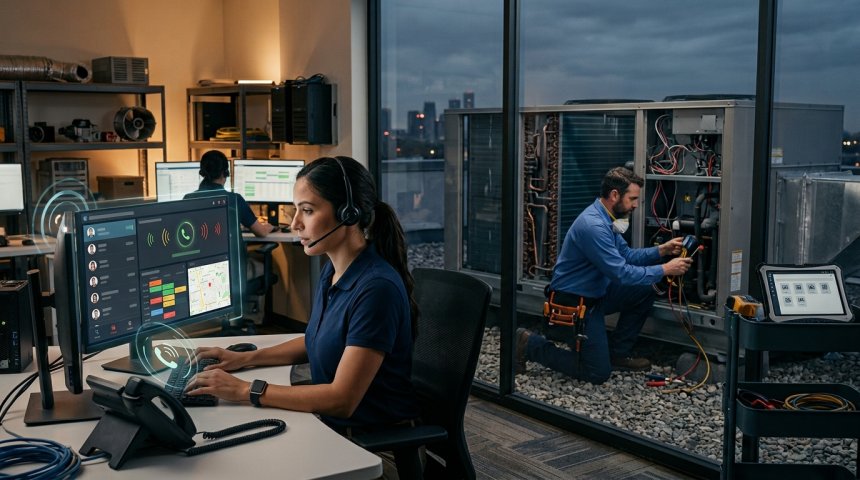
Introduction to the Modern HVAC Communication Challenge
Picture this: It is the absolute peak of a blistering July heatwave. Residential and commercial air conditioning units are running nonstop, straining against triple-digit outdoor temperatures. Suddenly, dozens of systems fail simultaneously across the city. Phones start ringing off the hook at local HVAC companies. For a busy contractor, every single incoming call represents a lucrative repair job, a new maintenance contract, or an emergency service dispatch. However, when a customer hears a busy signal or gets trapped in an endless loop of voicemail during a mid-summer emergency, they do not wait around. They simply hang up and dial the next competitor on the search engine results page.
In the fast-paced world of residential and commercial climate control, communication is the ultimate lifeblood of business operations. Unfortunately, managing inbound telephone traffic is one of the most persistent operational hurdles for small-to-midsize heating, ventilation, and air conditioning contractors. During seasonal peaks—whether it is the first freezing cold snap of winter or the most humid stretch of summer—call volume routinely overwhelms human staff. Front desk employees are left scrambling to juggle dispatch boards, greet walk-in clients, process invoices, and answer a relentless barrage of phone calls.
When a contractor misses a call, they lose revenue. Data from industry tracking reveals that local service businesses regularly miss a percentage of their inbound phone calls outside of standard 9-to-5 operating hours or during peak operational rushes. Because consumers expect immediate responses, a missed call translates directly into a lost customer. Contractors find themselves facing a difficult financial dilemma. Hiring a full-time, 24/7 in-house receptionist team is cost-prohibitive for independent operators, and traditional third-party call centers often lack the technical HVAC vocabulary needed to properly triage a complex heating or cooling problem.
This communication gap creates immense stress for business owners who want to scale their operations without watching their overhead costs spiral out of control. To solve this dilemma, the industry has turned its attention toward advanced automation. As explored in operational assessments like those detailed by Turnkey Dispatch, keeping up with customer demand requires a reliable way to capture every single inquiry without burning out office staff. Modern HVAC companies need a bridge between the digital customer journey and the physical dispatch board, paving the way for a major shift in how contractor offices handle telephone traffic.
The Evolution of Call Management in the HVAC Industry
To fully appreciate how artificial intelligence is transforming the heating and cooling sector, it helps to look back at how mechanical contractors have historically managed their customer communications. Decades ago, the traditional HVAC shop relied on simple tools: a landline telephone, a physical paper desk calendar, and a notepad. When a homeowner called to report a broken furnace, the business owner or a lone office assistant would write down the customer's name, address, and complaint on a pink message slip. If the owner was out in the field running service calls themselves, those messages had to wait until they returned to the shop or checked in via two-way radio.
As the industry grew and customer expectations evolved, local contractors began adopting basic answering machines and early analog voicemail systems. While voicemail ensured that calls did not technically ring endlessly into the void, it introduced a massive friction point. Consumers hate talking to machines, especially when their home is freezing or flooding from a backed-up condensation line. Voicemail messages often lacked crucial details, forcing office staff to play an inefficient game of phone tag just to find out what kind of equipment the customer had or whether the situation was a true emergency.
Eventually, growing HVAC businesses transitioned to traditional human answering services. These external operators answered phones overnight and on weekends, taking basic messages and screening urgent calls. While this was a step forward, it came with distinct limitations. Human operators at general call centers rarely understood the technical nuances of HVAC systems. They could not tell a heat pump from a gas furnace, nor could they differentiate between a routine filter replacement and a dangerous carbon-monoxide hazard. Traditional answering services charged per-minute or per-call fees, and their accuracy depended on the specific agent handling the line at any given moment.
By the early 2000s, computer-aided dispatch (CAD) and cloud-based field service management software began to modernize the back office. Contractors could finally store customer histories, equipment lists, and service agreements in a centralized digital database. Yet, despite these software advancements, the initial point of contact—the telephone call—remained a stubborn bottleneck. Software could organize a schedule, but it still required a human being to answer the phone, listen to the customer, and manually type data into the system.
Recognizing these persistent pain points, modern software developers began exploring how intelligent automation could reshape the landscape. Today, advanced platforms are reshaping the service sector, allowing companies to automate routine interactions effectively, as highlighted in analyses by Gorev Systems. This technological evolution has set the stage for the current wave of voice-enabled artificial intelligence, transforming phones from a reactive communication channel into an active, 24/7 business development tool.
Understanding AI Receptionists: How Voice Agents Work for Contractors
What exactly is an AI receptionist, and how does it function within a demanding trade environment like an HVAC business? Unlike the rigid, frustrating automated phone trees of the past—which forced callers to press "1 for service" or "2 for billing"—modern AI receptionists utilize conversational speech recognition and natural language processing. When a customer calls an HVAC company equipped with these systems, they are greeted by a fluid, responsive virtual voice agent that sounds remarkably human. The caller can speak naturally in complete sentences, explaining their problem just as they would to a veteran office manager.
These voice agents are powered by machine learning models trained specifically on home service terminology. When a homeowner calls to say, "My AC is blowing warm air and there is water pooling around the indoor unit," the AI agent recognizes key phrases like AC blowing warm air and water pooling. Instead of recording a message, the system is engineered to perform structured intake during the conversation. It gathers operational data, including the caller's full name, phone number, physical service address, a description of the equipment or problem, the perceived urgency, and the customer's preferred appointment window, as outlined by solutions providers like ExtenVox.
A capability of these systems is real-time calendar and dispatch integration. Rather than taking a message for later review, an advanced AI receptionist connects directly to field service management platforms to check live technician availability. If a routine maintenance slot is open on Tuesday morning, the system secures that time slot and creates a confirmed service appointment on the spot. For business owners looking to scale, this synchronization eliminates manual data entry errors and prevents double bookings.
At the same time, safety and operational boundaries remain paramount. Industry safety guidelines and technical literature emphasize that automated systems must operate within strict guardrails. For example, AI voice agents should never attempt to remotely diagnose complex HVAC failures, declare a property safe, or definitively promise that a technician has been dispatched without system confirmation. Critical safety scenarios—such as suspected gas leaks or severe electrical burning smells—require immediate human or emergency escalation workflows. As noted in safety frameworks discussed by VaultZero, ensuring that life-safety concerns are handed off properly protects both the consumer and the contractor.
By handling after-hours, overflow, weekend, and holiday calls rather than sending callers directly to voicemail, these systems provide true 24/7 call coverage. They ensure that every single ring is answered promptly, turning missed calls into booked opportunities and keeping field technicians focused on what they do best: servicing equipment in the field.
Providing 24/7 Call Coverage for After-Hours, Weekends, and Holidays
The Cost of the Unanswered Late-Night Call
Picture this scenario: It is 2:00 AM on a freezing winter night. A local homeowner wakes up because the house is dropping in temperature. They stumble to the thermostat, only to realize the furnace has completely stopped running. Panic sets in. The homeowner grabs their smartphone, searches for a local heating contractor, and dials the first number they see.
In the past, that late-night call would hit an answering machine or a generic voicemail box. The homeowner, shivering and stressed, hears a robotic beep. They leave a rushed, garbled message about their broken heater, hang up in frustration, and immediately dial the next competitor on Google. If that second competitor answers—even if it is just an answering service taking a message—they capture the lead. By morning, the first contractor has lost a high-value emergency repair job simply because nobody picked up the phone.
Modern Solutions for Round-the-Clock Availability
Today, HVAC contractors are turning to continuous solutions like 24/7 call coverage to ensure no prospect slips through the cracks. According to platform capabilities outlined by [ThermoI](https://www.thermoi.com/), current AI-receptionist products are designed to handle after-hours, overflow, weekend, and holiday calls rather than sending callers directly to voicemail.
When an after-hours call comes in, the voice agent wakes up instantly. It greets the customer warmly, identifies the nature of the emergency, and provides immediate comfort by letting them know their request is being handled. This continuous availability changes the competitive dynamic for small and mid-sized contractors who previously could not afford to staff an overnight front desk.
Intelligent Routing for True Emergencies
Round-the-clock availability does not mean the business owner wants to be woken up at 3:00 AM for a dirty air filter. Modern systems solve this dilemma through sophisticated, configurable workflows. These workflows can separate urgent calls from routine requests and route priority calls directly to an on-call technician or dispatcher, as detailed by services like [Turnkey Dispatch](https://www.turnkeydispatch.com/hvac/).
If a caller reports a minor rattle in their outdoor unit, the AI can calmly explain that a technician can review the request first thing in the morning and schedule a visit. However, if the caller describes a total heat loss during a sub-zero freeze, the system can instantly flag the interaction as high-priority, initiate an emergency escalation protocol, and alert the on-call crew. This ensures that homeowners get immediate peace of mind while protecting exhausted field technicians from getting unnecessary interruptions over minor issues.
Handling Peak-Season Call Overflows Without Missing Leads
Surviving the Extreme Weather Rush
Every HVAC contractor knows the dread of the first severe heatwave of summer or the first deep freeze of winter. Within a matter of hours, the phone lines light up relentlessly. Existing office staff—even the most competent and experienced dispatchers—quickly become overwhelmed by the sheer volume of incoming calls.
During these peak-season surges, human staff can only talk to one person at a time. The second, third, and fourth simultaneous callers are forced onto hold music or sent to a busy signal. Many of these frustrated prospects will simply hang up and call another company. This loss of potential revenue during peak seasons hurts overall annual profitability.
Absorbing High Call Volumes with AI
Voice-enabled artificial intelligence acts as an elastic buffer for a company's phone system. Because software can handle hundreds of simultaneous conversations without putting anyone on hold, overflow capacity becomes nearly limitless. As noted in industry technical resources, AI agents can handle simultaneous peak-season calls, drastically reducing busy signals and abandoned inquiries.
When a sudden temperature spike brings a wave of emergency repair requests, the AI steps in to manage the influx. It treats every single caller as if they are the only person on the line, collecting information and booking appointments concurrently. This ensures that marketing dollars spent on digital ads or local service campaigns are never wasted on unanswered phones.
Keeping the Office Staff Sane
Beyond capturing extra leads, absorbing call overflows protects the internal team from extreme burnout. Dispatchers and customer service representatives often face immense stress during peak weather events, juggling ringing phones, frustrated customers, and frantic technicians in the field. By letting the AI handle the initial wave of routine inquiries, status checks, and basic intake, office staff can focus on managing active jobs and supporting technicians. This keeps workplace morale higher and reduces costly turnover in the front office.
Structured Data Intake: Capturing Customer Details and Equipment Issues
Eliminating the Vague Voicemail Game
One of the greatest inefficiencies in traditional trade operations is the incomplete message. When a customer leaves a hurried voicemail, they frequently forget to state their address, fail to mention their phone number clearly, or describe their equipment problem in vague terms like "the box outside is making a weird noise."
Office staff then have to spend precious minutes calling the customer back just to gather basic administrative data before a technician can even be assigned. This back-and-forth slows down dispatch times and frustrates customers who just want a fast solution.
Systematic Information Gathering
Modern voice agents eliminate this friction through structured data intake. During the natural flow of conversation, the system is programmed to systematically extract and verify essential details. According to deployment guides from [ExtenVox](https://www.extenvox.com/solutions/hvac), these systems can reliably collect: - The caller's full name and contact phone number - The exact physical service address - A detailed description of the equipment and the specific problem - The perceived urgency of the service request - The customer's preferred appointment window
By guiding the caller through these conversational checkpoints, the AI ensures that no critical piece of information is left out.
Integration and Operational Records
Once the conversation concludes, the captured data does not sit in an isolated text file. The system generates operational records, including transcripts, summaries, audio recordings, and automated SMS or email notifications for office staff.
When the dispatcher opens their dashboard, they see a clean, organized ticket containing everything they need to know. They can see whether the unit is a gas furnace or a heat pump, what specific error code or symptom was described, and when the homeowner expects someone to arrive. This structured clarity streamlines dispatching, allows for better inventory prep on service trucks, and ensures that the technician walks onto the job site fully prepared.
Direct Calendar Integration and Automated Appointment Booking
Bridging the Gap Between Voice and Scheduling
Capturing a lead on the phone is only the first step of the battle. Historically, once a customer requested service, a human dispatcher had to open up field service management software, look at available time slots, calculate travel zones, and try to match the customer's preferred window with an open technician. If the customer called after hours, this matching process was delayed until the next business day, giving competitors an opening to steal the booking.
Modern virtual assistants solve this delay by connecting directly to company scheduling tools. As outlined by specialized home service platforms like GoRev Systems, advanced systems can check real-time calendar availability and create confirmed service appointments while the customer is still on the line.
Eliminating Double Bookings and Manual Entry
Direct calendar integration acts as a digital safeguard for the business. When an AI agent accesses a live schedule, it respects pre-set rules regarding geographic routing, technician skill sets, and job durations. It will not book a complex commercial boiler repair during a residential tune-up slot, nor will it double-book a technician who is already assigned across town.
This synchronization prevents human error and eliminates the tedious data-entry tasks that usually bog down office mornings. The conversation ends with a confirmed time slot, and the appointment immediately appears on the dispatch board. Customers appreciate this instant gratification because they do not have to wait for a callback to know when help is arriving.
Emergency Call Routing and On-Call Technician Dispatch Workflows
Sorting Urgent Crises from Routine Maintenance
Not every phone call requires waking up a technician at midnight, but true emergencies demand an immediate response. Deciding what constitutes an emergency can be tricky for basic answering services, which often lack technical context and escalate every single call to protect themselves from liability.
Configurable workflows solve this problem by applying smart logic to every inbound interaction. These systems separate urgent calls from routine requests and route priority calls directly to an on-call technician or dispatcher, according to technical guides from providers like Turnkey Dispatch.
Protecting Field Teams While Safeguarding Customers
When a homeowner calls in the middle of the night reporting a complete loss of heat during freezing weather, the software initiates an emergency escalation protocol. It can call the designated on-call technician's mobile phone directly, deliver a synthesized summary of the issue, and connect the homeowner or dispatch the details via high-priority SMS.
Conversely, if a caller asks about scheduling a routine duct cleaning or complains about a slightly noisy fan, the system handles the request gracefully without ringing anyone's phone off the hook. This intelligent filtering protects exhausted field technicians from unnecessary sleep deprivation while ensuring that genuine household safety crises receive immediate attention.
Streamlining Operations and Reducing Administrative Workloads for Dispatchers
Relieving Front-Office Pressure
The administrative burden on modern trade contractors is staggering. Between managing customer inquiries, processing warranty claims, ordering parts, and routing technicians, front-office staff are constantly stretched thin. When the phone rings endlessly, administrative tasks get pushed aside, leading to mistakes, missed follow-ups, and mounting workplace stress.
By handling the heavy lifting of initial customer engagement, automated voice agents significantly reduce dispatcher workloads. Routine questions about operating hours, service areas, and basic pricing can be answered instantly by the software without human intervention. Similarly, appointment rescheduling requests and basic message-taking are absorbed seamlessly by the digital receptionist.
Fostering a More Focused and Efficient Team
When artificial intelligence takes over the repetitive phone traffic, office staff find themselves with newfound breathing room. Instead of spending hours playing phone tag or typing up messy handwritten notes from voicemails, dispatchers can focus on high-value tasks. They can spend more time optimizing technician routes, ordering specialized replacement parts ahead of time, and ensuring that customers experiencing complex issues receive thorough personal follow-ups.
As noted in strategic industry analyses, direct calendar integration and workflow automation can prevent double bookings and reduce manual data entry, though actual business outcomes and revenue gains depend heavily on proper setup and ongoing tuning Operator Arc. By keeping the front office calm and organized, automated receptionists help create a more resilient, efficient, and profitable HVAC operation from the inside out.
Critical Safety Limitations: Managing Carbon Monoxide and Emergency Risks
Understanding the Boundaries of Automation
While modern virtual voice agents are remarkably capable at managing standard scheduling tasks and capturing intake notes, they have strict technical and safety boundaries. An automated system must never attempt to remotely diagnose complex mechanical failures, declare a residential property safe from hazardous conditions, or promise that a technician has been dispatched when an emergency protocol fails to connect [Vault Zero](https://www.vaultzero.dev/blog/hvac-ai-receptionist-after-hours-safety). Heating and cooling contractors carry immense liability, and treating software like an uncertified licensed technician introduces dangerous risks.
When a homeowner calls in distress, the stakes are exceptionally high. For example, the Centers for Disease Control and Prevention describes carbon monoxide as an odorless, colorless gas that can cause sudden illness, neurological damage, and death. Because exposure to this toxic byproduct of combustion is life-threatening, any phone call hinting at combustion appliance failure, fuel odors, or physical symptoms like dizziness must bypass standard conversational queues immediately. Safety-related situations require strict human intervention, instant emergency escalation, or direct instructions to evacuate the premises and dial emergency services.
Safe Escalation Protocols for High-Risk Scenarios
To prevent catastrophic misunderstandings, developers and contractors must program safety trips into every conversational workflow. If a caller mentions symptoms like headaches, nausea, or a glowing red heat exchanger, the AI agent must drop its standard booking script. Instead, the software should trigger an immediate, high-priority transfer to emergency dispatch or deliver a pre-recorded safety warning.
Clear boundary-setting protects the contractor's business and safeguards the public. Software can gather details about the symptoms, but it should never offer a preliminary verdict on what is causing a gas leak or electrical fire hazard. Recognizing these operational limits ensures that technology acts as a helpful frontline assistant rather than an unsafe substitute for human judgment.
Generating Operational Records, Transcripts, and Office Notifications
Transforming Raw Audio into Actionable Intelligence
A missed phone call is rarely just a lost booking; it is a missed opportunity to build customer trust. Modern artificial intelligence platforms solve this by converting every inbound conversation into structured, highly organized digital records. Rather than forcing office managers to listen through long, scratchy voicemail files, these systems generate clean verbatim transcripts, concise call summaries, and audio recordings.
When an administrator logs into their workspace dashboard the next morning, they find a neatly organized repository of every interaction that occurred overnight. As detailed in technical deployment resources by providers like ExtenVox, these tools automatically capture the caller's name, phone number, physical service address, and equipment symptoms. The software organizes this information into a digital ticket format before routing it directly to the dispatcher's screen.
Keeping the Team Connected Through Instant Alerts
Transparency between the software and the human crew is necessary for maintaining a fast response time. Beyond dashboard summaries, automated tools use instant messaging protocols to keep staff informed in real time. Depending on how the business configures its notification engine, office workers receive SMS text messages or email alerts for every completed intake.
If a high-value client calls or an urgent repair request comes in during a weekend storm, designated staff members are pinged instantly. This instant transmission of data bridges the gap between digital automation and human execution, ensuring that no customer request slips through the cracks of a busy weekly schedule.
Best Practices for Implementing and Training an HVAC AI Receptionist
Mapping Out Custom Call Flows and Scripts
Deploying an automated voice assistant successfully requires careful planning and a deep understanding of your company's daily operations. Before flipping the switch on a new digital receptionist, business owners must map out precise call trees that reflect how their human staff handles inquiries. This means defining how the system should greet callers, how it categorizes routine maintenance versus emergency repairs, and what specific questions it needs to ask for different types of jobs.
Testing these workflows through rigorous trial runs prevents awkward conversational loops and ensures the voice agent sounds professional. A well-configured assistant should speak naturally, pause appropriately, and avoid industry jargon that might confuse residential homeowners during a stressful breakdown.
Monitoring, Tuning, and Staff Buy-In
Implementation does not end on launch day. To achieve optimal performance, managers must regularly review call transcripts and listen to recorded interactions to identify points where callers got confused or hung up. Fine-tuning the prompt instructions and updating service pricing guidelines ensures the system stays current with seasonal changes and business promotions.
Equally important is securing buy-in from your existing office staff and field technicians. Employees sometimes worry that automation is designed to replace them. Business leaders must communicate clearly that the software is meant to absorb repetitive, exhausting phone traffic so human workers can focus on high-value customer service, complex diagnostics, and strategic business growth.
Frequently Asked Questions About HVAC AI Receptionists
Will an AI voice agent completely replace my human office staff?
No, an artificial intelligence receptionist is designed to act as a supportive frontline tool rather than a total human replacement. While these systems excel at handling high-volume, repetitive tasks—such as capturing basic contact information, answering common questions about business hours, and logging initial service requests—they cannot replicate the nuance, empathy, and creative problem-solving that experienced human dispatchers provide. According to operational guides by providers like [GoRev Systems](https://gorevsystems.com/home-services/hvac/), automation absorbs the tedious administrative burden of after-hours calls and peak-season overflow. This empowers your human staff to focus on high-value duties like managing complex customer relationships, coordinating field technicians, and handling escalated service disputes. Think of the software as an ultra-reliable digital assistant that frees up your team, rather than a substitute for your valued employees.
How does the system handle emergency calls in the middle of the night?
Safety and rapid response are critical considerations for any heating and cooling business. Modern virtual assistants are configured with strict routing workflows designed to separate routine inquiries from genuine emergencies. If a homeowner calls at two in the morning reporting a gas smell, a total system failure during a freezing winter storm, or symptoms linked to carbon monoxide exposure, the software immediately drops its standard scheduling script. As highlighted in emergency routing workflows by [Turnkey Dispatch](https://www.turnkeydispatch.com/hvac/), these platforms can trigger an instant phone transfer to your on-call technician or local emergency services. This ensures that priority situations bypass traditional holding queues and reach a human expert right away, protecting both the customer and the contractor's liability.
Can the software integrate directly with my current field service management software?
Integration capability is one of the most important factors to evaluate when choosing a conversational booking platform. Most advanced voice agents are built with open application programming interfaces that connect smoothly with popular industry platforms like ServiceTitan, Housecall Pro, and Jobber. When a customer calls and requests a tune-up, the software can check your live calendar availability in real time and lock in a confirmed appointment slot directly inside your database. This eliminates the need for manual data entry, prevents accidental double-booking, and keeps your entire team synchronized. However, the exact depth of these integrations varies by vendor, so contractors should always verify compatibility with their specific software stack before committing to a deployment plan.
What happens if the AI does not understand a caller's request?
Even the most sophisticated speech recognition models occasionally encounter heavy background noise, mumbled speech, or unusual technical problems that they cannot immediately parse. When this happens, well-designed systems are programmed with graceful fallback mechanisms rather than freezing up or frustrating the user. Instead of guessing wildly, the virtual assistant will politely ask the caller to clarify or rephrase their statement. If the system experiences repeated misunderstandings or if the caller explicitly demands to speak with a human, the workflow is designed to seamlessly transfer the call to an on-call staff member or route the inquiry directly to a monitored voicemail box with an automated text back alert.
How long does it take to train and launch an HVAC voice agent?
The timeline for getting an automated receptionist up and running depends heavily on the complexity of your custom call flows and the integration requirements of your business. Basic implementations that simply take messages and send email summaries can often be configured and tested within a few days. On the other hand, deep integrations that sync with complex field dispatching software, custom pricing models, and specialized emergency escalation trees may take a few weeks of rigorous testing. Training involves mapping out your standard operating procedures, recording sample dialogues, and running trial phone calls to catch conversational flaws. Investing time upfront in thorough testing ensures a smooth launch that delights customers from day one.
Are these automated systems expensive for small local contractors?
Pricing models for virtual communication tools vary widely, but most providers use flexible subscription tiers based on monthly call volume, feature sets, and integration depth. For many small and medium-sized heating and cooling shops, the cost of missing just one or two high-value installation or emergency repair jobs per month far exceeds the monthly software fee. By capturing leads that would otherwise be lost to voicemail or a competitor's busy signal, these tools often deliver a strong return on investment. Contractors should review their average monthly call volume and estimate the financial impact of missed after-hours opportunities to determine which pricing plan aligns best with their budget and growth goals.
Conclusion: The Future of Automated Customer Service in HVAC Businesses
The heating and cooling industry operates in a high-stakes environment where responsiveness dictates business survival. When a residential furnace breaks down during a bitter winter freeze or an air conditioner fails on the hottest day of summer, homeowners expect immediate answers. Historically, meeting this demand required maintaining expensive 24-hour call centers or relying on exhausted office staff to monitor phones around the clock. Today, the rapid evolution of conversational artificial intelligence is fundamentally transforming how contractors manage inbound customer traffic.
Throughout this exploration, we have examined how modern voice agents do far more than simply answer the phone after hours. They provide reliable, round-the-clock call coverage, capture structured customer data with remarkable precision, check live calendar availability, and seamlessly integrate with existing field service software. By absorbing the crushing weight of peak-season overflow, these systems protect businesses from the revenue loss associated with missed calls and unanswered voicemails.
Responsible implementation requires a clear understanding of technology boundaries. Automated tools must not attempt to diagnose complex mechanical failures or replace human judgment in life-threatening situations involving carbon monoxide or gas leaks. Establishing safety escalation protocols ensures that emergency calls reach qualified human technicians. Success relies on script design, continuous monitoring, and buy-in from office workers and field crews who view the software as an assistant rather than a threat to their livelihoods.
As artificial intelligence continues to mature, its integration into home service operations will only deepen. Contractors who embrace these advanced communication tools position themselves to deliver superior customer experiences, slash response times, and optimize their dispatch workflows. By striking the right balance between cutting-edge digital automation and human expertise, HVAC businesses can build a resilient, highly efficient operation ready to thrive in an increasingly competitive marketplace.
Share
What's Your Reaction?
 Like
0
Like
0
 Dislike
0
Dislike
0
 Love
0
Love
0
 Funny
0
Funny
0
 Angry
0
Angry
0
 Sad
0
Sad
0
 Wow
0
Wow
0