
7 Powerful Enterprise Cloud Security Solutions You Need
Discover 7 powerful enterprise cloud security solutions to protect networks, workloads, and data. Explore practical strategies in our expert guide.

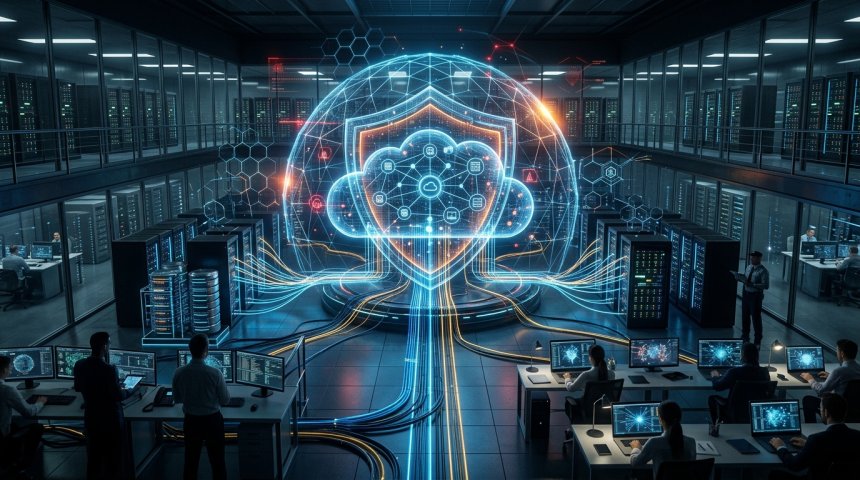
Securing corporate networks requires moving beyond perimeter defenses, hardware firewalls, and local server rooms. As enterprises migrate critical workloads, databases, and customer-facing applications to distributed computing environments, security teams face visibility gaps. The scale of this transition demands a structured approach to asset tracking, identity governance, continuous monitoring, and workload protection. Organizations managing complex digital infrastructures consult architectural references such as the CISA Cloud Security Technical Reference Architecture to build defensive perimeters across multiple infrastructure providers.
Adopting appropriate defensive systems helps companies address complex threat vectors, accidental misconfigurations, insider threats, and automated credential stuffing attacks. Implementing structured frameworks ensures that security personnel maintain clear visibility over every virtual machine, serverless function, and software container deployed in production. Evaluating enterprise cloud security systems requires examining seven major categories of tools and methodologies that organizations frequently deploy to protect their digital assets.
Cloud Security Posture Management and Misconfiguration Tracking
Human error remains one of the primary catalysts for security breaches in distributed infrastructure. A single unchecked public storage bucket, an overly permissive access control list, or an unpatched virtual appliance can expose terabytes of sensitive corporate data to the public internet within seconds. Cloud Security Posture Management platforms address this specific vulnerability by continuously auditing infrastructure configurations against established security benchmarks and regulatory frameworks.
Posture management tools operate by connecting directly to administrative APIs provided by infrastructure-as-a-service and platform-as-a-service providers. They read the state of deployed assets, compare those states against compliance baselines like CIS benchmarks or NIST standards, and generate actionable alerts when deviations occur. Beyond simple reporting, modern posture management software often features automated remediation scripts that can immediately revert unauthorized configuration changes, revoke dangerous permissions, or shut down non-compliant services before malicious actors can exploit them.
Continuous discovery of shadow IT assets forms another core benefit of these platforms. Employees frequently spin up cloud resources outside of formal procurement channels to test new software or accelerate projects. Posture management tools scan organizational billing data and network traffic patterns to identify these rogue resources, bringing them into the centralized security inventory. By maintaining an accurate, real-time inventory of all cloud assets, security teams can eliminate blind spots and enforce uniform security policies across every department and business unit.
Identity and Access Management and Phishing Resistant Authentication
Perimeter security is defined by corporate firewalls when employees, contractors, and automated microservices connect from every corner of the globe. Identity is the new perimeter, making rigorous Identity and Access Management frameworks necessary for corporate survival. Traditional password policies combined with basic SMS text-message multi-factor authentication do not stop modern credential harvesting campaigns and targeted adversary-in-the-middle attacks.
Organizations must implement enterprise identity systems that enforce strict least-privilege access principles across all cloud environments. According to the CISA Ransomware Guide, deploying phishing-resistant multi-factor authentication for email accounts, remote access tools, and critical system administrators provides defense against initial compromise. Phishing-resistant authentication relies on cryptographic hardware keys, platform authenticators, or secure passkeys that cannot be intercepted or spoofed by third parties visiting fraudulent login pages.
Centralized identity governance involves continuous user lifecycle management. When employees change roles or depart the enterprise, automated provisioning and de-provisioning workflows ensure that their cloud access permissions are updated or revoked. Context-aware access policies evaluate factors such as user location, device health, time of day, and behavior patterns before granting access to sensitive data repositories, blocking suspicious login attempts even if valid credentials were provided.
Cloud Workload Protection and Container Security
Modern applications are rarely built as monolithic blocks of code running on a single physical server. Instead, they are composed of hundreds of microservices, serverless functions, and software containers orchestrated across complex clusters. While this architecture increases developer velocity and scalability, it dramatically expands the attack surface, requiring specialized Cloud Workload Protection platforms to secure runtime environments.
Workload protection systems monitor operating systems, processes, and network connections within virtual machines and containers to detect malicious behavior in real time. They scan container images for known vulnerabilities and hardcoded secrets before deployment, ensuring that flawed or malicious code never reaches production environments. During runtime, these tools use behavioral analysis to spot anomalies, such as an unexpected shell spawned inside a container or an unauthorized outbound network connection attempting to exfiltrate data.
Securing the container pipeline also involves runtime integrity checks and strict namespace isolation. If an attacker manages to exploit a vulnerability in a web application container, workload protection software can isolate the compromised container instantly, preventing lateral movement to other nodes in the cluster. This proactive containment limits the blast radius of security incidents and gives incident response teams valuable time to analyze the root cause without shutting down entire business operations.
Cloud Native Application Protection Platforms
Managing distinct point solutions for posture management, workload protection, and vulnerability scanning can create operational friction and siloed data streams for security operations centers. To solve this complexity, the security industry developed Cloud Native Application Protection Platforms, which unify multiple security capabilities into a single, cohesive operating model spanning the entire software development lifecycle.
A typical application protection platform combines posture management, container scanning, infrastructure-as-code analysis, and runtime protection into a unified control plane. Developers can scan their infrastructure templates during the coding phase, identifying misconfigurations before code is ever committed to the repository. Once the application is deployed, the platform transitions to runtime monitoring, correlating configuration data with active threat telemetry to prioritize vulnerabilities based on actual exploitability.
Consolidating these capabilities helps security analysts reduce alert fatigue. Instead of receiving warnings from separate tools, analysts see a connected graph of risk that shows exactly how an attacker could traverse the environment from an initial vulnerability to a critical data store. Platforms like Google's integration with Orca Security demonstrate how agentless visibility applies across multi-cloud environments to discover risks, evaluate attack paths, and secure cloud workloads.
Secure Access Service Edge and Modern Network Security
Legacy network architectures required all remote employees to route their traffic back through a corporate data center via virtual private networks before accessing cloud applications. This bottleneck degraded network performance, introduced single points of failure, and created security risks if the user's remote device was already infected with malware. Secure Access Service Edge architectures replace this outdated hub-and-spoke model by combining software-defined wide area networking with cloud-delivered security services.
Secure Service Edge components inspect web traffic, enforce data loss prevention policies, and provide zero-trust network access directly at the edge, close to where the user or device is located. When an employee attempts to access a specific internal cloud application, the system verifies their identity and device posture before establishing a direct, encrypted connection to that single application, rather than granting broad access to the entire corporate network.
Adopting these network access architectures improves visibility into encrypted web traffic and stops unauthorized data exfiltration attempts. Federal cybersecurity guidance, such as the network access security recommendations issued by CISA and International Partners, emphasizes that shifting toward zero trust network access and secure service edge options helps organizations maintain visibility over network activity while supporting flexible remote work policies.
Centralized Logging Security Information and Event Management
Detecting sophisticated cyber attacks requires collecting, indexing, and analyzing vast quantities of log data generated by cloud infrastructure, identity providers, applications, and network devices. Without centralized log aggregation, security analysts cannot correlate events across different cloud environments or trace the full timeline of a multi-stage intrusion. Security Information and Event Management platforms collect these telemetry streams and apply automated analytics to flag anomalous behavior.
Centralized log management serves as the backbone of any enterprise security operations center. When cloud services generate audit logs, API call records, and authentication events, these logs must be securely exported to a centralized, tamper-evident repository. Organizations can review basic logging recommendations via resources like the CISA Small and Medium Business Logging Guidance to understand how foundational log collection supports threat detection and post-incident forensic investigations.
Advanced analytics engines built into modern SIEM platforms use threat intelligence feeds and machine learning algorithms to detect subtle indicators of compromise that individual system logs might miss. For example, if an administrative account downloads a large volume of data from a cloud storage bucket at an unusual hour from an unrecognized geographical location, the SIEM system instantly correlates the identity event, network traffic, and data access action to generate a high-priority incident ticket for human analysts.
Data Protection Encryption and Key Management Systems
Data is a target for cybercriminals, making data protection mechanisms a requirement for enterprise cloud deployments. While cloud service providers furnish basic storage encryption capabilities, enterprise security demands control over encryption keys and data lifecycle policies. If an unauthorized party gains access to a cloud storage volume, encryption ensures that the underlying data remains unreadable without the corresponding cryptographic keys.
Key management systems allow organizations to generate, rotate, and revoke cryptographic keys independently from the cloud infrastructure providers storing the data. This separation of duties ensures that if a cloud provider's administrative layer is compromised, the data remains secure because the keys reside in a separate key management service controlled exclusively by the enterprise. Data discovery tools scan cloud repositories automatically to locate unencrypted sensitive data, such as personally identifiable information, financial records, or intellectual property, and apply encryption policies on the fly.
Managing data protection also involves defining strict data residency and sovereignty controls. Enterprises operating in heavily regulated industries must ensure that customer data remains within specific geographic jurisdictions and complies with local privacy laws. Integrated data security platforms track where data is stored, who has accessed it, and how it is being shared across third-party integrations, providing the rigorous audit trails required by regulatory bodies.
Implementing Zero Trust Across Multi Cloud Environments
Transitioning to cloud security requires a shift in philosophy centered on zero trust architecture principles. The core tenet of zero trust is simple: never trust, always verify. Every user, device, application, and network packet must be authenticated, authorized, and encrypted before gaining access to any enterprise resource, regardless of whether the request originates from inside or outside the corporate perimeter.
Designing a zero-trust model requires integrating identity, asset, network, application, and data security into a unified operational fabric. Organizations looking to operationalize these principles often review the Microsoft Zero Trust Security Platform Guidance, which outlines how integrated security platforms can coordinate signals across identities, devices, applications, and infrastructure to automate threat detection and response. By breaking down traditional security silos, businesses ensure that a compromise in one area does not automatically grant free movement across the entire digital estate.
Multi-cloud environments complicate this implementation because organizations utilize services from multiple major infrastructure providers simultaneously. Each provider has its native security tools, identity models, and logging formats. Security leaders must establish a centralized policy engine that translates corporate security mandates into specific configuration rules for every cloud provider in use, maintaining consistent security posture and compliance auditing across the enterprise.
Evaluating Vendor Solutions and Building a Roadmap
Selecting the combination of cloud security options requires an evaluation of existing business needs, regulatory obligations, and technical debt. Organizations should begin by conducting a risk assessment to identify critical data assets and the specific threat actors likely to target them. Mapping these risks against current infrastructure vulnerabilities helps security leaders prioritize which security capabilities to deploy first.
Integration capabilities should be a primary consideration during the vendor selection process. Disjointed security tools that fail to share threat intelligence or coordinate automated responses create operational friction and leave gaps that attackers can exploit. Solutions should feature application programming interfaces and connectors that allow security data to flow into centralized monitoring platforms. This interoperability ensures that security analysts spend their time investigating threats rather than wrestling with incompatible data formats.
Finally, organizations must account for the operational overhead associated with maintaining these security systems. Deploying advanced posture management, workload protection, and SIEM platforms requires skilled personnel who understand how to tune rules, investigate alerts, and maintain policy compliance over time. For businesses facing talent shortages, partnering with managed security service providers or investing in automated remediation tools can help bridge the gap, ensuring that enterprise cloud environments remain secure as the business scales.
Frequently Asked Questions
What is Cloud Security Posture Management?
Cloud Security Posture Management refers to a category of security tools designed to continuously monitor cloud infrastructures for misconfigurations, compliance violations, and security risks. These platforms audit deployed assets against established industry benchmarks and regulatory frameworks, alerting security teams to vulnerabilities and frequently offering automated remediation capabilities to fix issues before attackers can exploit them.
Why is phishing-resistant multi-factor authentication important for cloud environments?
Phishing-resistant multi-factor authentication utilizes cryptographic hardware keys or platform authenticators that cannot be intercepted, spoofed, or bypassed through traditional credential-harvesting attacks. Implementing this level of authentication for administrators and remote users protects corporate identity perimeters against sophisticated adversary-in-the-middle campaigns and unauthorized account takeovers.
How do Cloud Workload Protection platforms secure microservices?
Cloud Workload Protection platforms monitor the runtime behavior of virtual machines, serverless functions, and software containers. They scan container images for vulnerabilities prior to deployment and analyze runtime activity to detect malicious processes, unauthorized network connections, and anomalous behavior, isolating compromised nodes instantly to prevent lateral movement.
What is the difference between SASE and SSE?
Secure Access Service Edge is a framework that combines software-defined wide area networking with cloud-delivered security services. Secure Service Edge represents the security components of that framework, including secure web gateways, cloud access security brokers, and zero-trust network access, focusing on protecting user traffic and data without routing everything through a central data center.
How does a SIEM platform assist with cloud security operations?
Security Information and Event Management platforms collect, aggregate, and index log data from diverse cloud services, identity providers, and network devices. By applying automated analytics, threat intelligence feeds, and machine learning, a SIEM correlates disparate events to surface hidden indicators of compromise and alerts security analysts to active threats in real time.
What does zero trust architecture mean in cloud computing?
Zero trust architecture is a security model based on the principle of continuous verification. It dictates that no user, device, application, or network packet should be implicitly trusted, regardless of their location. Every access request must be authenticated, authorized, and encrypted based on context, device health, and least-privilege access rules.
Future Trends in Enterprise Cloud Security
As enterprise digital transformations mature, the threat environment evolves alongside emerging technologies. Cloud security solutions are barriers designed to keep attackers out; they are becoming adaptive, intelligent systems capable of predicting and neutralizing threats in real time. Organizations looking to future-proof their cloud infrastructure must understand how modern technological shifts will influence security strategies in the coming years.
Artificial Intelligence and Automated Threat Remediation
Artificial intelligence and machine learning have shifted from experimental buzzwords to pillars of enterprise cloud defense. Threat actors use automated tools and AI-driven scripts to scan cloud environments for vulnerabilities, execute brute-force credential stuffing campaigns, and launch targeted malware deployment at high speeds. Manual incident response workflows cannot keep pace with this velocity.
Modern cloud security platforms incorporate machine learning models trained on global threat telemetry to identify anomalies the moment they occur. Beyond detection, these systems feature automated remediation capabilities. When a cloud posture management tool or workload protection platform discovers a public-facing storage bucket containing sensitive financial records or an overly permissive security group, it logs an alert for a human analyst to review and triggers an automated playbook that revokes public access, applies encryption standards, and notifies the security operations center within milliseconds of the misconfiguration.
The Convergence of IT and OT Cloud Environments
Historically, operational technology (OT) and industrial control systems operated in isolated, air-gapped environments completely separate from corporate information technology (IT) networks. Today, digital transformation initiatives bridge these worlds, connecting industrial machinery, smart sensors, and manufacturing plants to enterprise cloud platforms for real-time analytics and predictive maintenance.
This convergence expands the corporate attack surface. A compromised enterprise cloud account or a misconfigured identity provider can serve as an entry point into physical operational infrastructure, risking physical safety, supply chain continuity, and critical infrastructure operations. Enterprise security solutions adapt to this challenge by extending zero-trust principles, workload monitoring, and identity controls across traditional IT assets and connected industrial endpoints, ensuring visibility and defense across the business.
Quantum Computing and Post-Cryptographic Readiness
While large-scale, fault-tolerant quantum computers are still emerging, security leaders must plan now for the cryptographic risks they pose. Current asymmetric encryption algorithms—such as RSA and elliptic-curve cryptography, which secure the vast majority of cloud data transmissions, TLS connections, and identity certificates—are vulnerable to decryption via future quantum computing capabilities.
Under the threat model known as "harvest now, decrypt later," malicious actors intercept and store encrypted enterprise cloud traffic, anticipating the day when quantum computing power can break current encryption standards. Forward-thinking cloud security strategies focus on crypto-agility. Organizations must select cloud key management systems and data protection platforms that support post-quantum cryptography standards, enabling migration to quantum-resistant algorithms as they are ratified and deployed across enterprise infrastructure.
Building a Resilient Cloud Security Culture
Technology solutions, automated posture management tools, and zero-trust frameworks alone cannot guarantee protection against sophisticated cyber threats. The human element remains a critical vulnerability and a defense layer. Building a resilient enterprise cloud security posture requires cultivating a security culture across the organization, extending beyond the dedicated information security department.
Bridging the Gap Between Security and Development Teams
In modern cloud-native enterprises, software developers deploy code, provision cloud resources, and configure infrastructure via automated pipelines at a rapid pace. When security teams operate as traditional bottlenecks—enforcing manual security reviews late in the software development lifecycle—developers often bypass controls to meet tight project deadlines, introducing dangerous misconfigurations and vulnerabilities into production environments.
Achieving security at scale requires shifting security left, embedding security practices directly into the development workflow. Cloud security solutions that integrate directly into integrated development environments, source code repositories, and CI/CD pipelines allow development teams to identify misconfigurations, vulnerable open-source dependencies, and insecure application logic before code reaches production. By providing developers with immediate feedback and clear remediation guidance, organizations foster collaboration where security becomes a shared responsibility.
Continuous Education and Phishing-Resistant Awareness
Because advanced cloud security tools harden technical perimeters, cybercriminals rely on social engineering, spear-phishing, and credential harvesting to compromise user identities and infiltrate corporate cloud environments. Technical controls like phishing-resistant multi-factor authentication block a percentage of these attacks, but human awareness training remains necessary for addressing insider threats and social engineering tactics.
Enterprise security awareness programs must move beyond generic, annual compliance training modules. Effective programs incorporate realistic, continuous simulation exercises tailored to specific job roles, educating employees on how to recognize sophisticated credential theft attempts, business email compromise, and unauthorized administrative requests. When employees understand the critical role they play in protecting corporate identity perimeters, they become an active, vigilant line of defense against modern cloud-based threats.
Summary Checklist for Enterprise Cloud Security Deployment
To guide implementation efforts, security leaders can utilize a structured checklist reflecting current industry best practices and regulatory recommendations:
- Establish Unified Identity Governance: Implement centralized identity and access management across all cloud and on-premises environments, enforcing phishing-resistant multi-factor authentication for every user and service account.
- Enforce Continuous Posture Management: Deploy cloud security posture management tools to monitor multi-cloud environments for misconfigurations, compliance deviations, and unauthorized asset creation.
- Secure Workloads and Containers: Implement cloud workload protection platforms to scan container images, monitor runtime behavior, and analyze attack paths across microservices.
- Modernize Network Access: Transition away from legacy VPNs toward Secure Access Service Edge and Zero Trust Network Access architectures to verify user and device posture before granting granular application access.
- Centralize Threat Detection: Aggregate audit logs, API call records, and security telemetry into a centralized SIEM platform powered by automated analytics and machine learning.
- Protect Data and Encryption Keys: Implement independent key management systems, automate sensitive data discovery, and enforce strict encryption standards across all cloud repositories.
- Embed Security in Development: Shift security left by integrating automated vulnerability scanning and policy checks directly into CI/CD pipelines and developer workflows.
By aligning technical controls, automated tools, and organizational culture into a cohesive strategy, enterprises can manage the complexities of cloud adoption with confidence and resilience. According to the Cybersecurity and Infrastructure Security Agency, integrating asset, identity, and network security across all operational tiers is necessary for mitigating escalating ransomware and intrusion risks (CISA Cloud Security Technical Reference Architecture). As cloud environments continue to expand in scale and complexity, proactive investment in these foundational solutions will remain the bedrock of long-term digital trust and business continuity.
Share
What's Your Reaction?
 Like
0
Like
0
 Dislike
0
Dislike
0
 Love
0
Love
0
 Funny
0
Funny
0
 Angry
0
Angry
0
 Sad
0
Sad
0
 Wow
0
Wow
0