Chicago, Illinois: The Essential Guide to Windy City 2026
Explore Chicago, Illinois in 2026. Chicago, Illinois: the ultimate experience of architecture, history, culture, and iconic Windy City attractions.

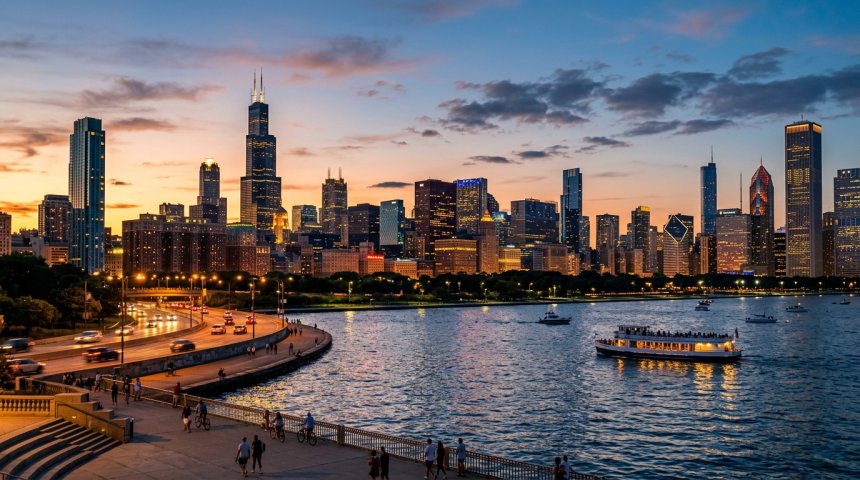
Chicago, Illinois, often referred to as the "Windy City," stands as a titan of industry, culture, and architecture in the heart of the American Midwest. With a population that remains one of the largest in the United States, Chicago is a global hub for finance, technology, and culinary innovation. In 2026, the city continues to evolve, blending its deep-rooted history with forward-thinking urban development. From the shimmering glass of its skyline to the deep-dish pizza that has become a global icon, Chicago offers a unique experience that balances grit with grandeur.
The Geography and Climate of Chicago
Situated on the southwestern shores of Lake Michigan, Chicago possesses a geography that is as beautiful as it is challenging. The city is built upon a flat, expansive plain, which allowed it to expand outward in a grid-like pattern that remains one of the most organized urban layouts in the country. The Chicago River, which famously flows backward due to a massive engineering feat in the early 20th century, serves as the city’s aquatic spine, connecting the lake to the Mississippi River watershed.
The climate of Chicago is categorized as humid continental. This means that residents and visitors alike must be prepared for the full spectrum of the four seasons. Summers are often warm and humid, providing the perfect weather for enjoying the 26 miles of public beaches along Lake Michigan. Winters, conversely, are legendary for their intensity. The "Windy City" moniker is not just a reference to the weather; it is also a nod to the long-winded politicians of the 19th century, yet the frigid winds coming off the lake during the winter months are very real. In 2026, the city’s climate adaptation strategies have focused heavily on green infrastructure to manage lakefront erosion and urban heat island effects.
A Brief History of the City
Chicago’s rise to prominence is one of the most compelling stories in American urban history. Incorporated as a town in 1833, it exploded in size due to its strategic position as a transportation hub. By the late 1800s, it was the primary gateway between the agricultural wealth of the Great Plains and the industrial centers of the East Coast.
The Great Chicago Fire of 1871 is perhaps the most defining moment in the city’s history. While it destroyed much of the central business district, it also provided a blank slate for architects to innovate. The reconstruction period gave birth to the skyscraper, a structural marvel that would forever change city skylines across the globe. By the time the World's Columbian Exposition took place in 1893, Chicago had cemented itself as a world-class city, a reputation it has fought to maintain and grow through the decades.
The Architectural Legacy
If there is one thing that defines the visual identity of Chicago, it is architecture. The city is essentially an open-air museum of design styles ranging from the Chicago School of architecture to contemporary postmodernism. Visitors are often encouraged to take a river cruise, which provides a unique vantage point to observe the transition of styles along the riverbanks.
The Willis Tower, formerly known as the Sears Tower, remained the tallest building in the world for 25 years. Even in 2026, its silhouette is synonymous with the Chicago skyline. Meanwhile, the Tribune Tower stands as a testament to neo-Gothic influence, featuring stones embedded in its facade from historical sites around the world. The city’s commitment to architectural preservation, while simultaneously embracing modern glass-and-steel structures, creates a dense, layered aesthetic that is unlike any other American metropolis.
Economic Powerhouse of the Midwest
Chicago’s economy is remarkably diverse. Historically reliant on manufacturing, meatpacking, and transport, the city has successfully transitioned into a modern center for finance, technology, and professional services. The Chicago Mercantile Exchange is a global leader in derivatives and futures trading, keeping the city at the center of international financial discussions.
In 2026, the tech sector in Chicago has seen significant growth. Often called "Silicon Prairie," the city attracts startups looking for a lower cost of living than the coastal hubs, combined with a highly educated workforce and proximity to major research universities. The city’s logistics sector remains robust as well, fueled by its status as the primary rail hub of North America. Chicago is where the nation’s freight moves, ensuring that its economic influence extends far beyond the borders of Illinois.
Cultural Vibrancy and Neighborhoods
Chicago is a city of neighborhoods. While the Loop serves as the central business district, the true soul of the city is found in its outlying areas. Each neighborhood—from the historic mansions of Gold Coast to the bohemian vibes of Wicker Park and the diverse, multicultural streets of Pilsen—tells a different story.
The arts scene in Chicago is legendary. The Art Institute of Chicago houses one of the most extensive collections of Impressionist and Post-Impressionist art outside of Paris. Beyond the walls of its museums, the city is a hub for improvisational comedy. The Second City, a world-famous comedy club, has served as the training ground for some of the most iconic names in television and film. This culture of creativity permeates the city, making it a destination for artists, writers, and performers who thrive in its supportive, albeit competitive, artistic climate.
Culinary Traditions: More Than Just Deep Dish
To talk about Chicago without mentioning food would be a disservice. The city’s culinary landscape is a reflection of its history as a melting pot of immigrant cultures. While Chicago-style deep-dish pizza—with its buttery crust, chunky tomato sauce, and abundant cheese—is the most famous export, the city offers much more.
The Chicago-style hot dog is a culinary institution. Served on a poppy seed bun, it is famously topped with yellow mustard, neon-green relish, chopped onions, tomato wedges, a pickle spear, sport peppers, and a dash of celery salt. Crucially, ketchup is strictly forbidden by local purists. Beyond these staples, Chicago boasts a high density of Michelin-starred restaurants, reflecting a growing scene of fine dining that utilizes the agricultural output of the surrounding Midwestern states.
The Sports Culture of Chicago
In Chicago, sports are a religion. The loyalty that residents feel toward their home teams is intense and often multigenerational. The Chicago Cubs and the Chicago White Sox represent the city’s baseball heritage, with Wrigley Field—home of the Cubs—standing as one of the oldest and most charming ballparks in the country. The Chicago Bears, playing in the heart of the city, carry the weight of the city’s blue-collar identity, while the Chicago Bulls remain globally iconic thanks to their golden era in the 1990s.
Attending a game in Chicago is an immersive experience. Whether it is a chilly afternoon at a football game or a summer evening under the lights at a baseball park, the atmosphere is electric. This sports culture is a key part of the city’s social fabric, providing a common language that bridges the gaps between the city’s diverse demographic groups.
Education and Research
Chicago is home to some of the most prestigious academic institutions in the world. The University of Chicago, located in the historic Hyde Park neighborhood, is renowned for its contributions to economics, sociology, and physics. Northwestern University, while situated just north of the city, maintains strong ties to Chicago’s professional and cultural circles.
These institutions do more than just educate students; they act as engines of research and development. In 2026, the collaboration between these universities and the private sector has led to breakthroughs in clean energy, medical research, and urban planning. This intellectual capital is one of the primary reasons why Chicago remains a competitive city in an increasingly globalized economy.
Parks and Public Spaces
Despite its status as a dense urban environment, Chicago is a city of parks. The city’s motto, Urbs in Horto, translates to "City in a Garden," and the planners of the 19th and 20th centuries took this seriously. Millennium Park, a centerpiece of modern urban design, features the famous Cloud Gate sculpture—often called "The Bean"—which has become the most photographed landmark in the city.
The lakefront trail is another jewel in the city’s crown. Stretching for miles along the shoreline, it provides residents with an escape from the concrete jungle, offering views of the lake that can rival any coastline in the world. These public spaces are not just for leisure; they are vital for the city’s environmental health, providing necessary green space that combats the heat and cleans the air.
Transportation and Infrastructure
Getting around Chicago is relatively straightforward thanks to its "L" train system. The elevated rail lines are an iconic part of the city’s landscape, weaving through the skyscrapers and over the streets. In 2026, the transit authority continues to modernize its fleet, focusing on accessibility and efficiency.
Chicago is also a major aviation hub. O’Hare International Airport remains one of the busiest in the world, serving as the primary gateway for international travel to the Midwest. Combined with its massive rail networks and extensive highway system, Chicago’s infrastructure ensures that it remains the logistical heart of the American economy.
The Future of Chicago: 2026 and Beyond
Looking toward the future, Chicago is positioning itself to be a leader in sustainable urban living. With projects focused on retrofitting older buildings for energy efficiency and expanding the public transit network, the city is addressing the challenges of the 21st century head-on. The goal is to maintain the city’s historical character while fostering an environment that is inclusive, technologically advanced, and resilient against the changing climate.
As a city that has always reinvented itself—rising from the ashes of fire and adapting to the changing tides of industry—Chicago enters 2026 with a sense of optimism. It remains a place where ambition meets reality, where the skyline is a constant reminder of what human ingenuity can accomplish. Whether you are visiting for the culture, the food, or the architecture, Chicago offers a depth of experience that is difficult to find elsewhere.
What is the best time of year to visit Chicago?
The best time to visit Chicago is generally from late spring to early autumn. During the months of May through September, the weather is pleasant, and the city truly comes alive. The lakefront is vibrant, the outdoor festivals are in full swing, and the patio dining scene is at its peak. While winters can be quite harsh, those who enjoy the holiday season may find the festive atmosphere and the lack of crowds to be a unique draw.
Is Chicago a safe city for tourists?
Like any major metropolitan area, Chicago has areas that are safer than others. The primary tourist destinations, such as the Loop, River North, and the Magnificent Mile, are generally safe and well-policed. It is always recommended that visitors practice standard urban awareness, such as keeping an eye on belongings in crowded areas and sticking to well-lit, populated streets at night. The city has a massive tourism infrastructure designed to keep visitors safe and informed.
What are the must-see landmarks in Chicago?
A trip to Chicago is incomplete without visiting Millennium Park, where you can see the famous Cloud Gate sculpture. Other essential landmarks include the Willis Tower for its Skydeck, the Art Institute of Chicago for its world-class art collections, and the Navy Pier for its entertainment and lake views. Additionally, a river architectural tour is highly recommended to get a comprehensive view of the city’s unique building styles.
How does the "L" train system work?
The "L" (short for "elevated") is Chicago’s rapid transit system. It is operated by the Chicago Transit Authority and consists of several color-coded lines that connect the city’s neighborhoods to the central Loop. Visitors can pay for rides using a contactless card or a mobile app. The system is efficient and covers most major tourist attractions, making it the most cost-effective and convenient way to travel within the city.
What is the deal with Chicago-style pizza?
Chicago-style deep-dish pizza is distinct for its high edges and thick layer of ingredients. Unlike the thin-crust varieties found elsewhere, this pizza is baked in a deep, round pan. The order of ingredients is often reversed: dough on the bottom, then a thick layer of mozzarella cheese, toppings like sausage or vegetables, and finally a chunky tomato sauce on top. It is a hearty meal that often requires a knife and fork and a significant appetite.
Can you swim in Lake Michigan?
Yes, swimming is a popular activity in Chicago during the summer months. The city maintains several public beaches along the lakefront, such as North Avenue Beach and Oak Street Beach. These beaches are monitored by lifeguards during the official beach season, which typically runs from late May through Labor Day. The water temperature is refreshing, providing a perfect escape from the summer heat of the city.
Conclusion
Chicago, Illinois, remains a city of profound depth and character. In 2026, it stands as a testament to the power of resilience and the beauty of architectural innovation. From the bustling streets of the Loop to the tranquil parks lining Lake Michigan, the city offers a diverse array of experiences that cater to all tastes. Whether one is drawn by the rich history of the Midwest, the cutting-edge developments in technology and finance, or the world-renowned culinary scene, Chicago provides a meaningful and memorable journey. As it continues to navigate the challenges and opportunities of the future, Chicago preserves its status as a vital, vibrant, and essential American city.
The Economic Engine: Beyond the Skyscrapers
While the skyline of Chicago is defined by its architectural marvels, the city’s true strength lies in its diversified economy. For decades, Chicago has functioned as the financial heartbeat of the Midwest, housing the Chicago Mercantile Exchange, one of the world's largest derivatives and futures exchanges. This financial prowess has fostered a robust ecosystem for fintech startups and established banking institutions alike. By 2026, the city has successfully pivoted toward a "digital-first" economy, attracting tech giants and venture capital firms that seek to leverage the city’s unique combination of lower operational costs compared to the coasts and a highly skilled workforce sourced from top-tier local universities.
Manufacturing, once the bedrock of the city, has not disappeared; it has merely evolved. Today, Chicago is at the forefront of advanced manufacturing and industrial automation. The "Greater Chicago" region serves as a massive logistical hub, utilizing its proximity to major rail lines, the Port of Chicago, and the expansive O’Hare airport network to facilitate domestic and international trade. This synergy between traditional industrial roots and the modern tech-driven service sector creates a resilient economic environment that is less susceptible to the boom-and-bust cycles that plague more specialized cities.
The Cultural Tapestry: Neighborhoods as Micro-Cities
To truly understand Chicago, one must step away from the polished glass of the Loop and venture into the neighborhoods. The city is a collection of 77 distinct community areas, each maintaining a strong sense of identity. In 2026, these neighborhoods have become the centers of a "hyper-local" movement.
In neighborhoods like Logan Square, the focus is on independent businesses, artisanal coffee shops, and repurposed industrial spaces that now serve as galleries and studio lofts. Meanwhile, the historic enclave of Hyde Park remains defined by its intellectual rigor and proximity to the University of Chicago, offering a quieter, more academic pace of life. Further north, the vibrant communities of Andersonville and Lincoln Square offer a nostalgic glimpse into the city’s immigrant past, with shops and restaurants that celebrate Swedish, German, and Eastern European heritages.
The strength of these neighborhoods lies in their ability to preserve cultural history while embracing contemporary trends. Community festivals, street fairs, and local farmers' markets act as the glue that holds these diverse populations together. In 2026, these gatherings are more than just social events; they are critical platforms for local artists, musicians, and small business owners to showcase their work, reinforcing the city's reputation as a place that values homegrown talent over national chains.
A Sanctuary for the Arts and Literature
Chicago’s literary history is as deep as its architectural foundation. From the gritty, honest storytelling of Carl Sandburg and Upton Sinclair to the contemporary voices that dominate the national bestseller lists, the city has always been a place where words matter. The Chicago Public Library system, with its network of neighborhood branches and the central Harold Washington Library, continues to serve as an intellectual sanctuary for residents.
In the realm of performing arts, Chicago’s theater scene is arguably the most active in the United States outside of New York City. The city is home to a staggering number of Equity and non-Equity theaters. The "Chicago Style" of acting—often characterized by its raw, ensemble-driven, and emotionally grounded approach—is known globally. The theater district, centered in the Loop, hosts major touring Broadway productions, but the real heart of the city’s performing culture is found in the storefront theaters scattered throughout the residential neighborhoods. These intimate venues provide a platform for experimental work, ensuring that the city remains on the cutting edge of dramatic expression.
The Science of Sustainability
As the world faces the complexities of climate change, Chicago has positioned itself as a laboratory for urban sustainability. The city’s commitment to "greening" the infrastructure is visible in the proliferation of rooftop gardens—the most famous being the one atop City Hall—and the implementation of permeable pavement systems designed to mitigate flooding.
By 2026, Chicago has invested heavily in "smart city" technology. Thousands of sensors across the city monitor air quality, traffic flow, and energy usage in real-time, allowing for data-driven decisions that reduce waste and improve the quality of life for residents. The city is also a leader in public transit electrification, with the Chicago Transit Authority (CTA) aggressively replacing its aging bus fleet with electric alternatives. This transition is not merely about reducing carbon emissions; it is about creating a quieter, cleaner, and more efficient urban environment that serves as a blueprint for other major cities in the American heartland.
The Medical and Research Corridor
Chicago is also a global leader in medical research and healthcare innovation. The Illinois Medical District, located on the near west side, is one of the largest urban medical districts in the world. It serves as a hub for academic medical centers, research laboratories, and pharmaceutical companies. This concentration of medical expertise has attracted a massive influx of investment, leading to major advancements in biotechnology and patient care.
In 2026, the synergy between the city’s hospitals and its tech sector has led to the development of new telemedicine platforms and AI-driven diagnostic tools. This, combined with a focus on public health equity, ensures that the city is not only a place of medical discovery but also a place where that discovery is translated into tangible benefits for the general public. The city’s medical prowess is yet another pillar of its economy, providing stable, high-paying jobs and reinforcing its status as a destination for the brightest minds in science.
Navigating the Seasons: A Guide for the Prepared
While the "best" time to visit is often cited as the summer, Chicago is a city that demands to be seen in all its phases. To ignore the winter is to ignore a fundamental aspect of the Chicago spirit.
Winter in Chicago is a test of character. When the temperatures drop and the winds whip off the lake, the city retreats into its cozy interiors. This is the time for world-class museums, symphony performances, and intimate jazz clubs. The "winter experience" in Chicago is about the warmth of a fireplace in a neighborhood pub, the glow of the holiday lights along Michigan Avenue, and the sight of the lakefront frozen into a surreal, jagged landscape. For those who embrace it, the winter is a period of reflection and intense cultural activity.
Conversely, the transition into spring is celebrated with a fervor rarely seen elsewhere. As the first tulips bloom in the parks and the outdoor cafes begin to set their tables, the city undergoes a collective transformation. The energy in the air is palpable, a signal that the city is ready to emerge and reclaim its outdoor spaces.
The Global Gateway: Chicago’s International Reach
Chicago’s influence extends far beyond the borders of the United States. As a major center for international business, the city is home to numerous foreign consulates and multinational corporations. O’Hare International Airport connects the city to every major continent, making it a critical node in the global aviation network. This connectivity has fostered a cosmopolitan environment where international students, diplomats, and business professionals feel at home.
The city’s diversity is its greatest asset. With significant populations representing virtually every corner of the globe, the cultural exchange in Chicago is constant. This is reflected in the city’s religious institutions, its international film festivals, and its diverse culinary offerings—which range from authentic Ethiopian and Vietnamese cuisine to high-end French and Italian dining. In 2026, Chicago continues to serve as a beacon for those seeking opportunity and a vibrant, multicultural community.
Final Reflections on the Windy City
The nickname "The Windy City" has many origins—some attribute it to the weather, others to the long-winded politicians of the past. Regardless of its source, the name fits the city’s restless, forward-moving energy. Chicago is a city that never stands still. It is constantly tearing down the old to build the new, constantly debating its future, and constantly striving to improve the lives of its inhabitants.
For the traveler, Chicago offers a unique balance. It is grand enough to feel like a world-class capital, yet it retains the approachable, neighborly feel of the Midwest. It is a city of intense contrasts: the quiet solitude of a morning walk on the beach versus the high-octane energy of a Friday night in a downtown nightclub; the brutalist architecture of the government buildings versus the delicate glass of the park conservatories.
Chicago is a city that challenges its visitors to look closer. It is not a place that reveals itself in a single weekend. It requires time, curiosity, and a willingness to explore the unfamiliar. From the deep-dish pizza joints to the high-tech research labs, and from the legendary sports arenas to the silent, snow-covered streets of January, Chicago is an experience that stays with you. It is a city of grit, grace, and an enduring, infectious optimism that is the hallmark of the American dream in the 21st century.
As we look at the trajectory of the city in 2026, it is clear that Chicago is not merely surviving; it is thriving. It has successfully navigated the turbulent waters of the early 2020s and emerged as a more cohesive, sustainable, and innovative metropolis. It remains, as it has always been, a city of big shoulders and an even bigger heart, ready to welcome anyone who is willing to brave the wind and discover the treasure hidden within its streets. Whether you are coming for business, education, or simply to take in the breathtaking skyline, you will find that Chicago is a place that manages to be both profoundly familiar and endlessly surprising. It is a testament to the resilience of the human spirit and the power of civic pride—a true jewel of the American Midwest.
Share
What's Your Reaction?
 Like
0
Like
0
 Dislike
0
Dislike
0
 Love
0
Love
0
 Funny
0
Funny
0
 Angry
0
Angry
0
 Sad
0
Sad
0
 Wow
0
Wow
0