7 Epic Family Travel Activity & Education Kits
Discover building a profitable business with Family Travel Activity & Education Kits. Learn product design, marketing, and scaling strategies for success today.

Picture this: A family is boarding a 10-hour international flight. The parents are exhausted before the journey has even begun. The children are already complaining about being bored. The parents pull out tablets and smartphones, silently surrendering to the "screen-time guilt" that plagues modern parenting.
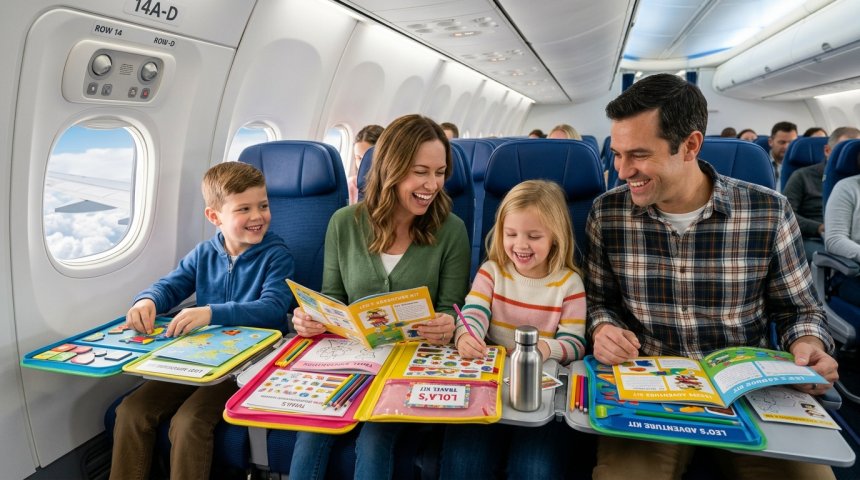
Now, picture an alternative scenario. The same family boards the same flight. But this time, the parents pull out a beautifully branded, compact, and meticulously curated box. Inside are culturally relevant crafts, mess-free STEM challenges, and interactive geography games. The children are instantly engaged, learning, and quietly entertained. The parents sip their coffee in peace.
This is the exact problem that Family Travel Activity & Education Kits solve. And more importantly, it is a massive, highly lucrative business opportunity.
The family travel industry has rebounded explosively in the post-pandemic era. Millennial parents, who now make up the largest demographic of travelers, prioritize experiential travel. However, the logistics of traveling with children remain a universal pain point. Parents are actively seeking solutions that keep their children engaged, educated, and off screens during transit and excursions.
For e-commerce entrepreneurs, subscription box founders, and educational toy manufacturers, the Family Travel Activity & Education Kits niche represents a golden intersection of three booming markets: family travel, the "edutainment" sector, and the curated e-commerce box model.
In this comprehensive business guide, we are not just going to talk about the concept. We are going to break down the exact blueprint for building a profitable brand in this space. We will explore the market dynamics, detail the 7 Epic Family Travel Activity & Education Kits you can create, dive deep into unit economics, and outline the B2B and D2C marketing strategies required to scale this business to seven figures and beyond.
Part 1: The Business Case and Market Opportunity
Before designing a single product, a smart entrepreneur must validate the market. Why is now the perfect time to launch a business centered around travel activity kits?
1. The Post-Pandemic "Revenge Travel" and Multi-Generational Trips
Family travel is no longer just a summer vacation; it is a year-round priority. There has been a massive surge in multi-generational travel (grandparents, parents, and kids traveling together) and "slow travel" (staying in one destination for weeks rather than days). Longer trips mean more transit time, which exponentially increases the demand for high-quality, portable entertainment and education.
2. The Shift in Millennial Parenting Psychology
Millennial parents are highly invested in "intentional parenting." They want their children to be global citizens who understand different cultures, speak basic foreign languages, and engage in tactile, hands-on learning. They are willing to pay a premium for products that align with these values. A travel kit is not just a toy; it is a tool for cognitive and cultural development. This allows businesses to charge premium prices based on value rather than just the cost of materials.
3. The "Screen-Free" Movement
There is a growing backlash against excessive screen time. Pediatricians and child psychologists are constantly advocating for more tactile, screen-free play. Parents feel immense guilt when handing over an iPad on a plane. A physical Family Travel Activity & Education Kit acts as a "guilt-reliever." Parents are buying peace of mind for themselves and developmental benefits for their children.
4. The Gap in the Market
While the market is saturated with general subscription boxes (like KiwiCo) and generic travel accessories (like inflatable pillows), there is a distinct lack of integrated, transit-specific, and destination-specific educational kits. Parents are still duct-taping together their own solutions by buying random items from Target or Amazon. A brand that offers a complete, aesthetically pleasing, and expertly curated solution captures the market by selling convenience and expertise.
Part 2: The 7 Epic Family Travel Activity & Education Kits
To build a dominant brand, you cannot just sell one generic box. You need a diversified product line that caters to different travel scenarios, age groups, and interests. Here are the 7 epic kit models you should develop to capture the maximum market share.
Kit 1: The "Transit Survival" Kit (The Core Product)
This is your bread-and-butter product, designed specifically for the hardest part of travel: the transit. Airplanes, long car rides, and train journeys require specific constraints.
- The Concept: A hyper-compact, 100% mess-free, and quiet kit designed to fit in the seatback pocket or a small toddler backpack.
- Target Audience: Ages 4-8.
- Key Contents: Reusable water-wow books, magnetic tangram puzzles, dry-erase activity boards, a compact audio story player with headphones, and a "I Spy" travel-themed book.
- Business Advantage: High repeat purchase rate. Because it is consumed during transit, parents will buy a new one for every major trip.
- Estimated COGS: $8 - $12 | Retail Price: $34.99
Kit 2: The "Destination Deep-Dive" Kit (The Premium Offering)
While the Transit kit keeps them quiet on the plane, the Destination kit keeps them engaged at the hotel and while exploring the city.
- The Concept: A culturally immersive kit tailored to a specific country or region (e.g., "The Italy Explorer" or "The Costa Rica Adventure").
- Target Audience: Ages 6-10.
- Key Contents: A beautifully illustrated, age-appropriate guidebook about the destination's history and landmarks. Language learning flashcards (essential phrases). A cultural craft (e.g., simplified Venetian mask painting using mess-free markers). A local recipe card for a simple snack they can make with parents in the hotel room. A custom "passport" to get stamped at local landmarks.
- Business Advantage: Allows for infinite product variations. You can launch a new destination kit every month, creating a "collect them all" mentality.
- Estimated COGS: $14 - $18 | Retail Price: $49.99
Kit 3: The "Eco-Explorer" Nature Kit (The Niche Specialist)
Sustainable travel is a massive trend. Families are increasingly taking eco-tours, visiting national parks, and going on camping trips.
- The Concept: A kit focused on environmental education, nature observation, and leaving no trace. Made entirely from biodegradable or recycled materials.
- Target Audience: Ages 5-12.
- Key Contents: A durable, waterproof nature journal. Seed paper that kids can plant. A compact, kid-sized magnifying glass and bug-viewing container. A "Leave No Trace" scavenger hunt card deck. Biodegradable colored pencils made from recycled newspaper.
- Business Advantage: Highly attractive to the eco-conscious demographic. Excellent for partnerships with National Parks, outdoor brands (like REI or Patagonia), and eco-resorts.
- Estimated COGS: $10 - $14 | Retail Price: $39.99
Kit 4: The "STEM on the Go" Kit (The Educational Powerhouse)
For parents who want to ensure their kids don't fall behind in math and science while on vacation, this kit turns the world into a laboratory.
- The Concept: Hands-on science, technology, engineering, and math activities that can be done in a hotel room or at a cafe.
- Target Audience: Ages 7-11.
- Key Contents: A compact microscope that plugs into a smartphone. Engineering challenges using lightweight, snap-together components. A "Physics of Flight" activity book explaining how airplanes work. A geometry scavenger hunt to find shapes in local architecture.
- Business Advantage: High perceived educational value. Allows you to partner with STEM influencers, science museums, and educational blogs.
- Estimated COGS: $15 - $20 | Retail Price: $54.99
Kit 5: The "Little Globetrotter" Toddler Kit (The Early Years)
Traveling with toddlers (ages 2-4) is notoriously difficult. Their attention spans are short, and they require constant engagement.
- The Concept: A sensory-focused, highly durable, and completely safe kit designed specifically for the developmental needs of toddlers.
- Target Audience: Ages 2-4.
- Key Contents: A quiet book with textured pages and Velcro interactions. Large, chunky wooden puzzles (no choking hazards). Silicone stacking toys that double as bath toys in the hotel. A reusable sticker scene.
- Business Advantage: Toddlers destroy things, so parents are used to replacing toys. The safety compliance (CPSIA) creates a high barrier to entry for cheap competitors, allowing your brand to stand out as a trusted, safe option.
- Estimated COGS: $9 - $13 | Retail Price: $36.99
Kit 6: The "Tween Adventurer" Kit (The Hard-to-Please Demographic)
Tweens (ages 9-12) are notoriously difficult to buy for. They think traditional "toys" are for babies, but they aren't quite ready for adult travel.
- The Concept: A sophisticated, independent, and slightly tech-integrated kit that makes them feel grown-up and gives them autonomy during the trip.
- Target Audience: Ages 9-12.
- Key Contents: A disposable digital camera or a high-quality smartphone lens kit for photography challenges. A complex, travel-themed escape room puzzle book. A journal with creative writing prompts. A high-quality, adult-style sketchbook with professional-grade drawing pens.
- Business Advantage: Tweens influence household spending. If the tween loves the kit, the parents will buy it for every trip. It also opens up cross-promotional opportunities with teen lifestyle brands.
- Estimated COGS: $18 - $25 | Retail Price: $64.99
Kit 7: The "Multi-Generational" Mega Kit (The High-Ticket Bundle)
With the rise of multi-generational travel, grandparents are often funding the trips and looking for ways to bond with their grandchildren.
- The Concept: A premium, large-format kit designed for shared activities that bridge the age gap between grandparents, parents, and kids.
- Target Audience: Families traveling together (Ages 4 to 80).
- Key Contents: A large, collaborative family map where everyone pins where they've been. A "Family History" interview journal for kids to ask grandparents questions. A cooperative board game that requires teamwork. A family recipe book template to record the meals they eat together.
- Business Advantage: High average order value (AOV). This is an excellent Q4 holiday gift item, as grandparents will buy it for the whole family's upcoming vacation.
- Estimated COGS: $25 - $35 | Retail Price: $89.99 - $119.99
Part 3: Product Development, Sourcing, and Manufacturing
Designing these 7 epic kits is only the beginning. The operational backbone of your Family Travel Activity & Education Kits business will determine your profitability and scalability.
1. The "Mess-Free" and "Compact" Mandate
This is the golden rule of travel product design. If your kit requires liquid paint, glitter, or creates a massive mess, parents will leave one-star reviews and never return.
- Materials: Use water-reveal pads, dry-erase markers, peel-and-stick components, and pre-measured, sealed craft kits.
- Footprint: Every item must be flat-packable. The physical dimensions of the kit must be optimized to fit into standard carry-on luggage. Remember, in e-commerce, you pay for dimensional weight (the size of the box), not just the actual weight. Compact design directly increases your profit margins.
2. Sourcing Strategies: The Hybrid Approach
Do not try to custom-manufacture every single item in your kit from scratch; the Minimum Order Quantities (MOQs) will bankrupt you. Use a hybrid sourcing model:
- Wholesale (70% of items): Source high-quality, generic items in bulk via platforms like Alibaba, Faire, or at trade shows. Buy standard magnetic tiles, high-quality crayons, and blank journals in massive quantities to drive down the per-unit cost.
- Custom Manufacturing (30% of items): Custom manufacture the items that carry your brand identity. This includes your branded activity books, custom passports, unique packaging, and proprietary cultural crafts. This gives you a unique product that cannot be easily copied by competitors.
3. Quality Control and Safety Compliance
Because you are selling products intended for children, you are subject to strict legal regulations. In the US, you must comply with the Consumer Product Safety Improvement Act (CPSIA).
- Third-Party Testing: Every item must be tested by a CPSC-accepted laboratory for lead, phthalates, and flammability.
- Children’s Product Certificate (CPC): You must generate a CPC for every product based on the testing.
- Small Parts Rule: If your toddler kit is marketed for children under 3, it must pass the small parts cylinder test to ensure there are no choking hazards.
- Never cut corners on safety. A single recall can destroy a small e-commerce brand.
4. The Unboxing Experience
In the D2C (Direct-to-Consumer) space, the unboxing experience is your primary marketing tool. The packaging should not be a flimsy cardboard box. Use a sturdy, reusable tin, a high-quality canvas travel bag, or a premium magnetic closure box. Include a personalized welcome note, a "Certificate of Exploration" for the child to fill out, and a beautiful insert card explaining the educational value of the kit. This emotional connection drives user-generated content (UGC) on social media.
Part 4: Unit Economics, Pricing, and Profitability
A beautiful product will not save a business with bad unit economics. You must price your Family Travel Activity & Education Kits to ensure healthy gross margins while remaining attractive to your target audience.
1. Understanding Your True COGS (Cost of Goods Sold)
Many beginners miscalculate their COGS. Your true COGS must include:
- The cost of all individual items inside the kit.
- The cost of the primary packaging (the box/bag) and secondary packaging (tissue paper, stickers, inserts).
- The cost of assembly labor (if you are paying a kitting facility).
- Inbound freight (the cost of getting the items from the manufacturer to your warehouse).
- Note: Outbound shipping to the customer and customer acquisition cost (CAC) are separate metrics, but must be factored into your net profit.
2. Pricing Strategies
- Cost-Plus Pricing: Calculate your total COGS and multiply by 2.5 to 3. If a kit costs you $12 to make, sell it for $30 to $36. This ensures a 60-70% gross margin to cover marketing, software, and overhead.
- Value-Based Pricing (Recommended): Price based on the psychological value to the customer. If your kit saves a parent from a stressful, screaming meltdown on a $1,000 flight, they will happily pay $45, even if your COGS is only $10. Premium, aesthetically pleasing kits can command prices upwards of $60-$90. Do not compete on price; compete on perceived value and brand prestige.
3. The Subscription Model vs. One-Time Purchase
To maximize revenue, you should offer both models:
- One-Time Purchase (Destination/Transit Specific): Customers buy a specific kit right before a trip. This yields a higher immediate profit margin and is great for capturing high-intent search traffic.
- Subscription Model (Armchair Travel): Customers pay $39/month and receive a new "Travel & Culture" kit every month, exploring a different country from their living room. This provides predictable Monthly Recurring Revenue (MRR), increases Customer Lifetime Value (LTV), and makes inventory forecasting much easier.
4. Maximizing Lifetime Value (LTV)
Implement a "refill" strategy. Once the child finishes the reusable components (like a magnetic board or a dry-erase book), sell them a cheap "refill pack" of new activity sheets or stickers for $12. This keeps the customer in your ecosystem, increases overall profitability, and reduces the friction of acquiring a new customer.
Part 5: Marketing and Customer Acquisition Strategies
You have a great product and solid margins. Now, how do you get it in front of millions of traveling parents? Marketing in the family travel niche requires a mix of emotional storytelling, practical problem-solving, and social proof.
1. Social Media: The Power of "Travel Hacks"
Instagram Reels, TikTok, and Pinterest are the undisputed kings of family travel marketing. Parents are constantly searching for "travel hacks" and "tips for flying with toddlers."
- Video Content: Create short-form videos showing the "Before and After" of traveling with kids. Show the chaos of a bored kid, then show the peace and quiet when they open your kit. Use trending audio and fast cuts.
- ASMR Unboxing: The tactile nature of the kits makes for great ASMR unboxing videos. Highlight the crinkle of the paper, the snap of the magnetic pieces, and the vibrant colors.
- Pinterest Strategy: Pinterest is a search engine, not just social media. Create tall, beautiful pins for keywords like "Toddler airplane activities," "Car ride games for kids," and "Travel packing list." Link these pins directly to your product pages.
2. Influencer and Affiliate Marketing
Partner with "Mommy Bloggers," family travel influencers, and pediatric occupational therapists.
- Send them free PR packages at least 6 weeks before the summer travel season.
- Set up an affiliate program (using apps like Refersion or GoAffPro) where they earn a 15% commission on every sale they generate. Influencers in the family travel space have highly engaged, trusting audiences. A recommendation from a trusted travel mom is worth more than any paid Facebook ad.
3. Search Engine Optimization (SEO) and Content Marketing
Capture parents when they are actively searching for solutions on Google. Create a comprehensive blog on your website targeting long-tail keywords:
- "Best screen-free activities for toddlers on a plane"
- "How to keep kids busy on a 10-hour car ride"
- "Educational travel games for 7-year-olds"
- "What to pack in a kids' carry-on for international flights" Write 2,000-word, highly detailed, and helpful guides. At the end of the article, naturally introduce your Family Travel Activity & Education Kits as the ultimate, all-in-one solution. This drives high-intent, organic, and free traffic to your store.
4. Email Marketing and Retention Funnels
Email is where you make your profit. Use an aggressive email capture strategy (e.g., "Get our free Ultimate Kids' International Packing Checklist in exchange for your email").
- Pre-Trip Sequences: When a customer buys a destination kit, put them on an automated email sequence that sends them tips for traveling to that specific country, building excitement and brand loyalty.
- Post-Trip Sequences: Two weeks after their estimated return date, send an email asking for a review, offering a 15% discount on their next kit, and inviting them to join your monthly subscription box.
Part 6: B2B Scaling: Selling to Airlines, Hotels, and Cruise Lines
Relying solely on Direct-to-Consumer (D2C) sales is a good start, but to build a true empire and scale to 8-figures, you must tap into the B2B (Business-to-Business) market. The hospitality and travel industry is constantly looking for ways to upgrade their family offerings and differentiate themselves from competitors.
1. Pitching to Airlines
Airlines are desperate to improve the family travel experience, as crying children are a major source of complaints from other passengers.
- The Pitch: Pitch your "Transit Survival" kits to airlines as a premium perk for Premium Economy or Business Class family travelers. Alternatively, pitch it as a paid "Kids Fly Fun" add-on during the online booking process.
- The White-Label Opportunity: Offer to white-label the kit (putting the airline's logo and branding on the box) for a premium B2B fee. This turns the kit into a marketing asset for the airline.
2. Cruise Lines and Family Resorts
Cruise lines are essentially floating resorts with hundreds of kids on board. Family resorts are constantly looking for unique amenities to justify their high nightly rates.
- The Pitch: Pitch your "Destination Deep-Dive" or "Eco-Explorer" kits to their kids' clubs. They can sell them in the gift shop, or include them as a premium welcome amenity in family suites.
- Bulk Orders: B2B clients will order in bulk (e.g., 500 kits at a time for the summer season). While the per-unit profit margin is lower than D2C, the volume and guaranteed cash flow are massive.
3. How to Pitch B2B Clients
Do not just send a cold email. Create a professional, 10-slide B2B pitch deck. Highlight how your kit reduces noise complaints on planes, increases guest satisfaction scores (NPS) for hotels, and provides a high-quality, branded experience. Offer them a physical sample box. Once they see the quality of the unboxing experience, the sale is 90% closed.
Part 7: Navigating Legalities, Compliance, and Operations
Operating a business that sells physical products to children comes with strict legal and operational responsibilities. Ignorance of these laws can result in massive fines, lawsuits, or business closure.
1. Intellectual Property (IP) and Copyright
Ensure that all the artwork, characters, and educational content in your kits are either created in-house, licensed properly, or bought with full commercial rights.
- The Golden Rule: Do not use copyrighted characters (like Marvel, Disney, or Bluey) without an official, expensive license. The cease-and-desist letters will be swift and financially devastating. Stick to original characters, public domain concepts, or licensed stock art.
- Trademarks: Trademark your brand name and logo early in the process to protect your brand identity from copycats.
2. Product Liability Insurance
Product liability insurance is an absolute must for this business. If a child somehow gets injured by a product in your kit (e.g., a sharp edge on a wooden toy, or an allergic reaction to a craft material), you need to be protected against lawsuits.
- Many B2B partners (like airlines, hotels, and retail stores) will require you to carry a minimum of $1M to $2M in product liability insurance before they will even sign a vendor agreement with you.
3. Supply Chain Resilience and Inventory Management
The global supply chain can be unpredictable. Never rely on a single supplier for your core components.
- If your main factory in China shuts down for the Lunar New Year or faces a shipping delay, you need a backup supplier, or at least a buffer inventory of your most critical items.
- Always order your holiday (Q4) and summer (Q2) inventory at least 4 to 6 months in advance. Use inventory management software like Stocky or SkuVault to track your COGS and prevent stockouts.
Part 8: Overcoming Industry Challenges
Every business faces hurdles. Here is how to anticipate and overcome the specific challenges of the Family Travel Activity & Education Kits niche.
Challenge 1: Seasonality and Demand Fluctuations
Family travel is highly seasonal, peaking during summer breaks, spring break, and the winter holidays. The months of January, February, and September can see a massive drop in sales.
- The Solution: Smooth out your revenue by pushing the subscription model, which provides year-round income. During the off-season, reposition your marketing. Market your kits as "Rainy Day Activity Boxes," "Screen-Free Weekend Kits," or "Homeschooling Supplements" to maintain sales velocity. Use the off-season to develop new products and secure B2B contracts for the upcoming peak season.
Challenge 2: High Shipping Costs (Dimensional Weight)
Shipping empty space is expensive. Carriers charge based on dimensional weight (the size of the box), not just the actual weight.
- The Solution: Design your packaging to be as compact and flat as possible. Use poly-mailers instead of rigid boxes for your refill packs. Negotiate volume discounts with shipping carriers (USPS, UPS, FedEx) as soon as you hit a certain monthly volume. Consider offering "Free Shipping" by baking a calculated average shipping cost into the retail price of the kit, as consumers psychologically prefer free shipping.
Challenge 3: High Customer Acquisition Cost (CAC)
The parenting, toy, and e-commerce spaces are highly competitive, and paid ad costs (Facebook, Instagram, TikTok) can be very high.
- The Solution: Focus heavily on organic growth (SEO, TikTok, Pinterest) and word-of-mouth. Implement a robust referral program (e.g., "Give $10, Get $10"). A recommendation from a friend has a much lower CAC and a significantly higher conversion rate than a cold social media ad. Build an email list from day one so you are not entirely reliant on paid ads to reach your customers.
Part 9: Future Trends and Scaling the Business
To future-proof your business and scale it to the next level, you must stay ahead of industry trends. Here is what the future of the Family Travel Activity & Education Kits business looks like over the next 3 to 5 years.
1. Integration of Augmented Reality (AR) and Tech
While the primary goal is screen-free time, technology can enhance the physical experience in magical ways. Imagine a physical coloring book where, when scanned through a companion app, the child's drawing comes to life in 3D Augmented Reality. Or physical flashcards that trigger an interactive audio story when scanned. Blending tactile, physical play with digital enhancement is the next frontier in edutainment and will allow you to charge a premium price.
2. AI and Hyper-Personalization
In the near future, successful businesses will use Artificial Intelligence to personalize the travel experience. Imagine a customer inputs their travel itinerary, the ages of their kids, and their specific interests (e.g., "dinosaurs" and "space") into your website. An AI algorithm then generates a custom, printable, and shippable activity kit tailored exactly to that specific trip and child. Hyper-personalization is the ultimate luxury in the modern e-commerce space.
3. Sustainability and Eco-Friendly Materials
Modern parents are highly environmentally conscious. The future of this niche belongs to brands that eliminate single-use plastics and reduce their carbon footprint. Transition to 100% recyclable or compostable packaging. Use soy-based inks, FSC-certified paper, and sustainably sourced wood for toys. Market this aggressively; eco-conscious parents will choose your brand over a competitor if they know your kit won't end up in a landfill.
4. Expansion into Corporate Gifting and Education
Once your brand is established, look beyond the direct consumer to unlock massive B2B revenue streams.
- Corporate Gifting: Pitch your kits to large corporations as premium holiday gifts for their employees with young families. Companies are always looking for unique, thoughtful gifts that stand out from the standard gift cards.
- Education: Adapt your destination kits for homeschooling co-ops, preschools, and elementary schools as supplementary geography, cultural, and STEM learning tools.
5. Building a Community and Media Brand
The ultimate scale is to transition from just selling physical products to building a comprehensive media brand. Launch a "Family Travel Podcast," create a YouTube channel reviewing family destinations, and build a massive, engaged community. When you own the audience's attention and trust, selling them physical Family Travel Activity & Education Kits becomes a natural, highly profitable extension of your brand. You are no longer just a toy company; you are a lifestyle authority.
Conclusion: Building a Business that Creates Lifelong Memories
Building a business centered around Family Travel Activity & Education Kits is about much more than just moving boxes from a warehouse to a customer's doorstep. It is about solving a profound, universal pain point for modern parents. It is about transforming a stressful, chaotic airplane ride into a journey of discovery, learning, and family bonding. It is about giving children the gift of exploring the world in a way that is fun, tactile, and deeply memorable.
From a purely business perspective, it is a highly scalable, deeply rewarding venture. By combining the high profit margins of e-commerce, the predictable recurring revenue of subscriptions, and the massive volume potential of B2B travel partnerships, you can build a resilient, multi-million-dollar company.
Success in this niche requires a relentless focus on product quality, a deep empathy for the traveling parent, and an uncompromising commitment to educational value. If you can design a kit that makes a parent's life easier and a child's eyes light up with curiosity, you won't just build a business—you will build a beloved brand that families will trust and recommend for generations.
The world is waiting to be explored. The market is ripe for the taking. It’s time to pack the bags, hand over the activity kit, and build your business empire.
Share
What's Your Reaction?
 Like
0
Like
0
 Dislike
0
Dislike
0
 Love
0
Love
0
 Funny
0
Funny
0
 Angry
0
Angry
0
 Sad
0
Sad
0
 Wow
0
Wow
0